
To be honest: Asterix with real people – despite the initial success with the public, that was a crazy idea! Even as Gérard Depardieu seemed to become more and more corpulent with his character Obelix, the live-action adaptations, with their glued-on beards and fake grimaces, always remained an expensive farce. In the fifth and so far last live-action film “Asterix & Obelix in the Middle Kingdom” (2023), Depardieu was even swapped for Gilles Lellouche, while the role of Asterix served as a challenge cup anyway after the first two films with Christian Clavier. Now a new Asterix is finally returning to the cinema – and luckily it’s another computer-animated cartoon.
“Asterix and the Kingdom of Nubia” is not based on any of the 41 comic volumes that have been published so far, but parallel to the cinema release, a special volume with full-page illustrations is being released under the same title. The last two computer-animated films – “Asterix in the Land of the Gods” (2014) and “Asterix and the Secret of the Magic Potion” (2018) – worked surprisingly well. What’s more: they even come closer to the spirit of the author René Goscinny (1926-1977) and the illustrator Albert Uderzo (1927-2020), who created their little Gaul in 1959, than the eight iconic cartoons that were created between 1967 and 2006.
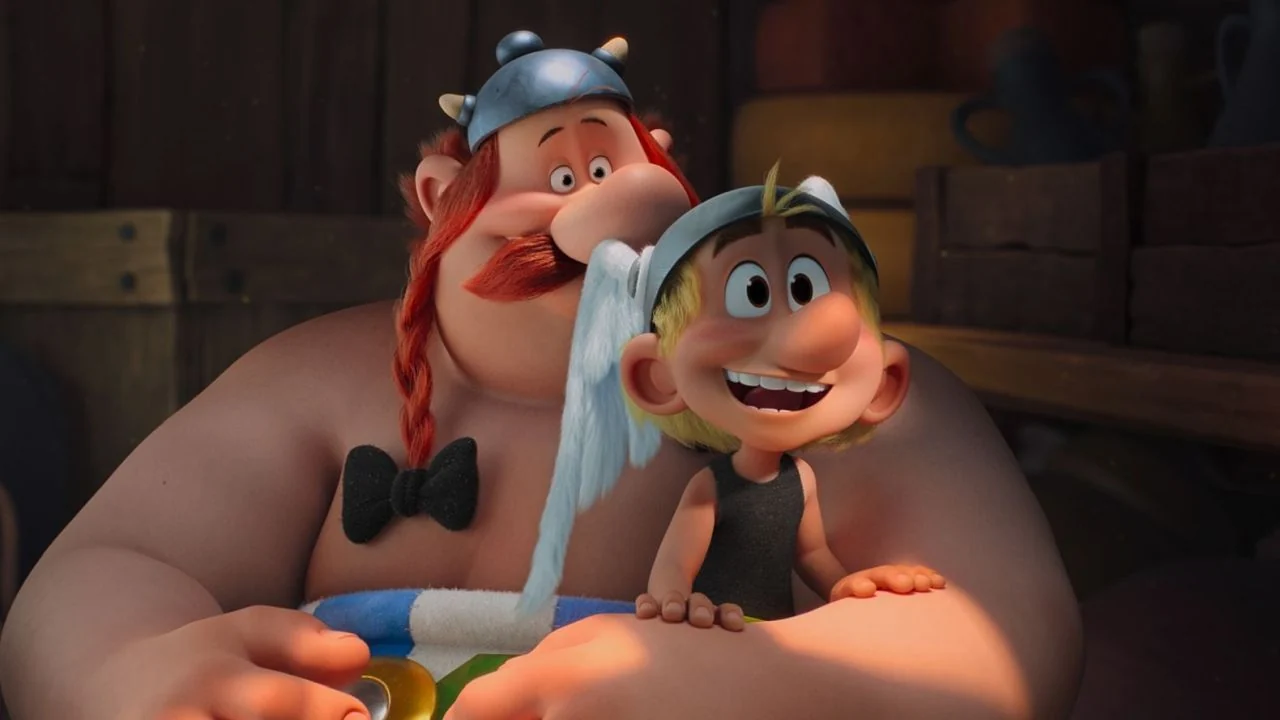
After Asterix turns into a toddler, Obelix, who is usually not so bright, is suddenly the adult in the team.
Why do we allow ourselves to be drawn into this opinion that borders on lese majeste? This can also be explained very well using “Asterix and the Kingdom of Nubia”: It starts with the plot, which has just the right amount of drama and dynamism. This time the druid Miraculix has a serious mishap, while Asterix (original voice: Christian Clavier, German version: Milan Peschel) and Obelix (François-Xavier Demaison, Charly Hübner) are once again on the hunt for wild animals: an elixir of youth falls unnoticed into the cauldron with the magic potion. Anyone who drinks it is instantly transformed into a child – without any superhuman powers, while outside the Romans are besieging the Gallic village.
A disaster! In order to brew an antidote, Miraculix needs the seeds of the baobab tree – and they only grow in the eponymous African kingdom of Nubia. Asterix and Obelix set off immediately. But Asterix isn’t spared either: When he takes a sip from his canteen on the way, he also turns into a little rascal. So only poor Obelix remains, who now has to carry the entire burden of the difficult mission on his broad shoulders alone…
Women in power
Just the idea that Obelix, who is rather comfortable in his head, suddenly has to cope with the situation without the clever and quick-thinking Asterix, results in a lot of comical moments that provide fresh tension and, at the same time, mercilessly serve the cuteness factor. You will probably never see Asterix so sweet and beardless again. Otherwise, the authors Matthieu Delaporte and Alexandre de La Patellière – who recently successfully dusted off the French literary classics “The Count of Monte Cristo” and “The Three Musketeers” based on Alexandre Dumas for the cinema – came up with a classic Asterix storyline with the tried and tested ingredients: the village is in danger, Asterix and Obelix go on a long journey and feel like the proverbial “Fish out of water“, which in turn leads to a number of comical entanglements. For example, in Nubia the women rule and fight, while the men are responsible for the household and raising children according to ancient gender principles.
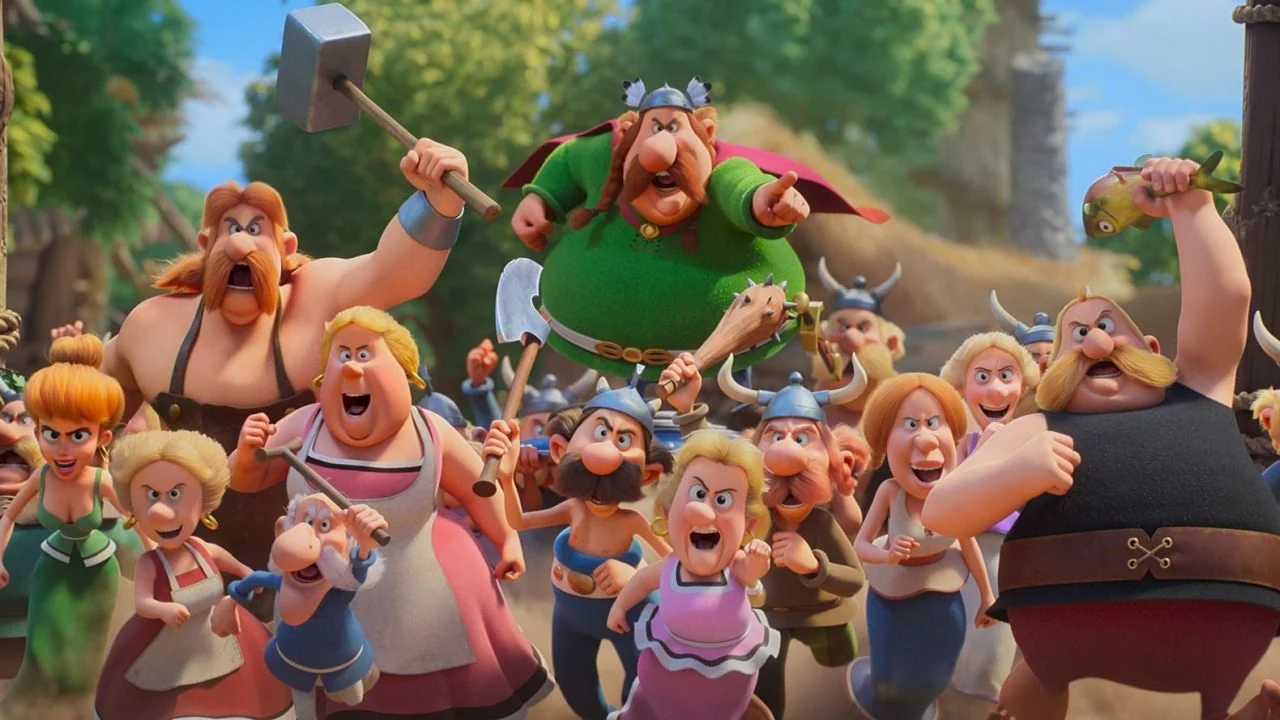
This picture will immediately remind everyone of the iconic comic panels by “Asterix” artist Albert Uderzo.
It is precisely such socio-political swipes that always gave the satirical bite of the original, but played a minor role in most Asterix cartoons because they were intended to serve children as a target group. But of course the young audience is not excluded in the new Asterix film either: Director Alexandre Heboyan (“Mune – The Guardian of the Moon”) can go all out when the completely overwhelmed Miraculix has to supervise a whole group of high-spirited children at home in the village who only have practical jokes in mind. This mix ensures that “Asterix and the Kingdom of Nubia” effortlessly wins over both long-established comic fans and younger audiences.
When it comes to the animation of the cartoon characters, special attention was once again paid to ensuring that our two heroes have significantly more facial expressions and gestures than in the comics, but appear so reduced that they remain true to Uderzo’s lines. This works even better than in previous animated films, where such subtleties were often left behind. Only the animals of Africa – from giraffes to elephants – are animated a little more simply in “Asterix and the Kingdom of Nubia”, but this does not detract from the viewing pleasure in the long term.
Conclusion: After eight animated and five live-action films, we now have the third CGI adventure about Asterix and Obelix, in which everything was done right again. The story takes us on a big journey, the characters are wonderfully cartoonishly exaggerated and the gags are brilliant. The magic works!