
One almost wants to write that Daniel Day-Lewis won his three leading actor Oscars – more than any other male actor in Hollywood history – EVEN THOUGH he only appeared in so comparatively few films. But it's the other way around: He probably got his Oscars for “My Left Foot”, “There Will Be Blood” and “Lincoln” precisely BECAUSE he chooses his roles so carefully. After his Oscar-nominated role in “The Silk Thread,” the British-Irish acting titan even declared (once again) his complete retirement from the business in 2017 at the age of “only” 60 – for unspecified “private reasons.” According to rumors, he is said to have developed a passion for carpentry (after he had already devoted himself to the craft of shoemaking during his first break between 1997 and 2002).
All of this fits perfectly with the Daniel Day-Lewis myth. But even mythical figures have a family – and that's where priorities sometimes shift: After an eight-year absence, the “Gangs Of New York” mime is now back – in the directorial debut of his son Ronan Day-Lewis, with whom he also co-wrote the script: The chamber play-like hermit drama “Anemone” is perfectly tailored to its star – with two central monologues in which Daniel Day-Lewis puts everything that has possibly been pure in recent years pent up gambling rage. Overall, however, one thing can be said: Day-Lewis is undoubtedly one of the best actors of all time and his son is, above all, a visually promising director – but unfortunately as a script duo they don't cut the best figure.
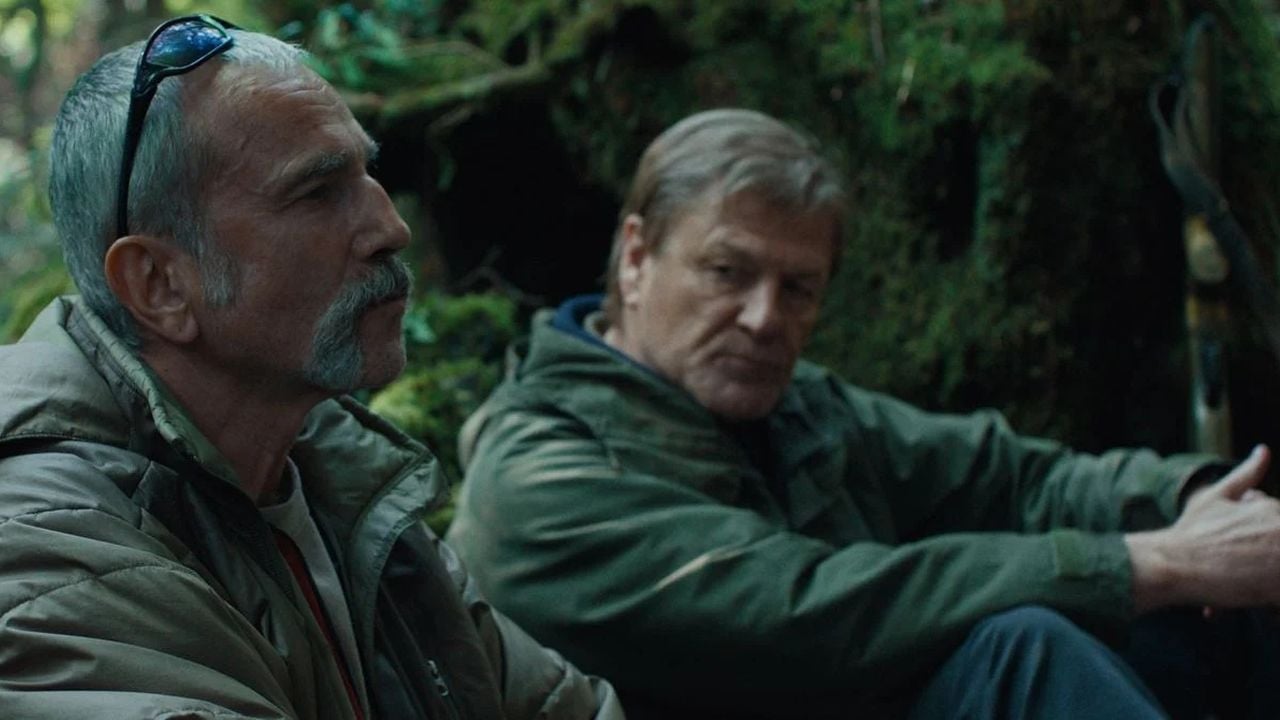
Cinema fans have been waiting for this for eight years: Daniel Day-Lewis can be seen on the screen again in “Anemone”!
Ray Stoker's (Daniel Day-Lewis) home has no address, just coordinates that his brother Jem (Sean Bean) wrote down on a conspiratorial piece of paper as he made his way through the wet Irish forest: Ray has lived in a hidden hut in the forest for 20 years – a bearded, brooding, wiry hermit like the one in the book. It's hardly surprising that the brothers initially keep quiet about each other, even though they obviously haven't seen each other for years. But Jem didn't come without a reason…
We don't want to reveal the “twists” (i.e. the brothers' past) at this point, but they really aren't difficult to guess: For example, “Anemone” begins with a series of colored pencil drawings that initially seem friendly, but then show the dark sides of recent Irish history – although it is their naivety that makes the images particularly disturbing: Even in a serene world, it is still frightening to see a child's limbs blown off, grieving mothers and abusive priests It's also obvious from the start that Ray has something to do with Jem's wife Nessa (Samantha Morton) and her teenage son Brian (Samuel Bottomley), who goes astray.
Learning from PT Anderson means making it rain
In its structure, “Anemone” has a strongly theatrical, chamber play-like vibe, even if it is not based on a stage play. However, the predominantly greyish scenes with Nessa and Brian seem as if they were more of a chore for Ronan Day-Lewis, while the film always blossoms visually when he can get out into nature: from the lush green of the always damp forest to the dunes caressed by the wind under the clear night sky – the debut director has a downright poetic eye for nature, which he can also make seem frightening at the same time.
Daniel Day-Lewis won his second Oscar for There Will Be Blood and chose The Thread as his final film – two pivotal works directed by One Battle After Another mastermind Paul Thomas Anderson. Is it therefore a coincidence that in by far the most spectacular scene of “Anemone” a millennium hailstorm descends on Ireland – creating a similarly cleansing and demonic effect as the rain of frogs in “Magnolia”? No matter, the fist-sized hailstones literally hit hard – and you really wonder how they managed to do it with such visual force on a budget that was certainly not overly extensive.
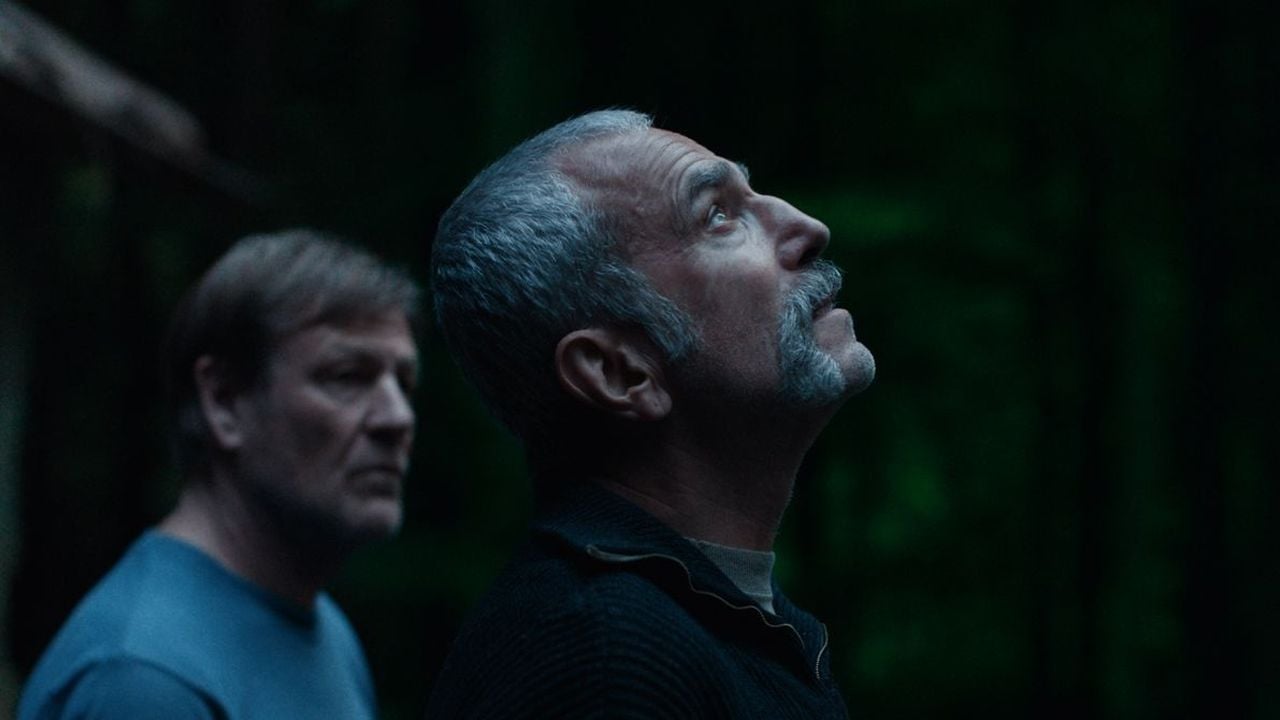
Sean Bean (“Game Of Thrones”) is of course also a great actor – but in “Anemone” he puts himself entirely at the service of his screen partner.
Daniel Day-Lewis is also a stunner, even if you have to look twice to see if he really is: Even when he's just trying to dig up a tree root with a spade in front of his hut, he radiates such a larger-than-life intensity that you immediately understand why larger-than-life filmmakers like Martin Scorsese, Steven Spielberg or Paul Thomas Anderson knew what to do with him the most. And this effect is even increased in the two extensive dialogues, when the great silence is finally broken:
For minutes, Ray talks about his revenge on a priest who abused him as a child – and Daniel Day-Lewis makes maximum use of every profanity that his report primarily consists of. This extends to a comprehensive description of the different phases of his excrement, which he places right in the priest's face after a curry diet lasting several days. The problem is that the mystery surrounding Ray, his family and his past is nowhere near as interesting as the sheer force of nature with which Day-Lewis heaves the lines of dialogue onto the screen.
Conclusion: The script is definitely not the strongest. But the way Daniel Day-Lewis delivers his two central monologues (including about a shit-filled pedophile priest) alone is worth the price of admission. The fact that his son Ronan Day-Lewis, as a director, has a particularly good eye for packing the rainy Irish nature into the most spectacular shots possible also proves to be a nice bonus.