
“How is the alcohol problem going?” Oscar Restrepo (Ubeimar Rios), the protagonist of Simón Mesa Soto’s “Un Poeta”, is once asked by a rather disapproving sister. “Things are going badly,” Oscar replies, annoyed but very honest, and that can’t be overlooked. Too often he wakes up in the morning on the street after an intoxicated night in the company of his drinking friends, who tend to be homeless. Oscar himself only has a roof over his head because he moved back in with his elderly mother in his mid-50s. “I'm a poet,” he says to his sister Yolanda, who keeps urging him to take a job as a substitute teacher. And in fact, Oscar once published two highly praised and award-winning volumes of poetry – but that was decades ago and is not enough to make up his life. “You’re unemployed,” Yolanda replies.
This Oscar is at first a ridiculous figure, and we watch her wallow in megalomaniacal ideas about the noble existence of a poet and at the same time fail again and again in the dreary everyday life. When the manager of the local literary house sends him on a television show to promote sales figures, he ends up on breakfast television next to a YouTube rapper. The relationship with his estranged teenage daughter, which Oscar would like to intensify again, does not get better, but is increasingly heading towards escalation and a final break.
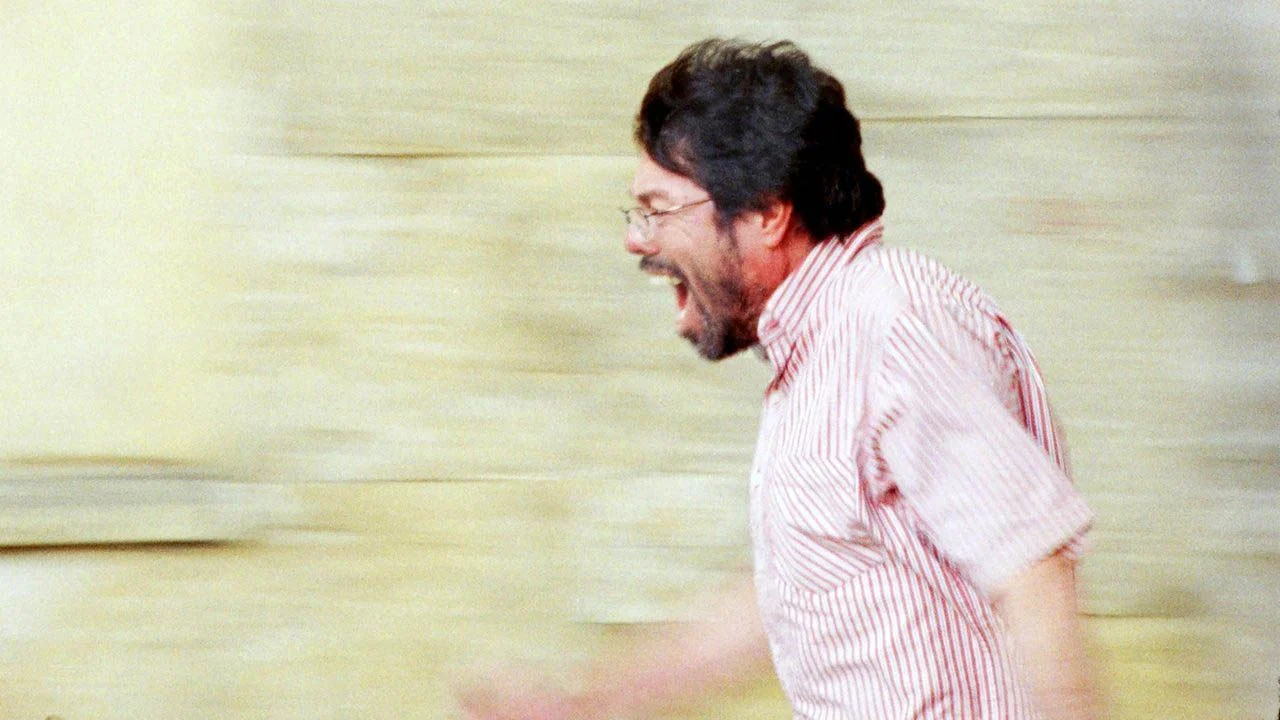
Oscar Restrepo (Ubeimar Rios) is a failed poet, alcoholic and lives with his mother again in his mid-50s – yet the film never completely exposes him to ridicule.
The greatest feat that the Colombian director Simón Mesa Soto achieves with “Un Poeta” is to show Oscar in all his ridiculousness and his human flaws and weaknesses, without the view of this anti-hero ever becoming cynical or pitiless. According to Mesa Soto himself, this Oscar is a nightmare vision of one's own existence as an aging, failed artist. This includes two things: firstly, the disgust of ending up like this character. And on the other hand, the fundamental possibility that this very future is in the room for you.
There's something gnome-like about Oscar and he's a caricature, yes. But he is also an alter ego – and therefore someone who is not easy to get rid of and to whom you simply owe a certain amount of love. Consequently, the film's plot at least gives him an opportunity for rehabilitation. Because in the end Yolanda forces him to take up the unpopular position as a teacher.
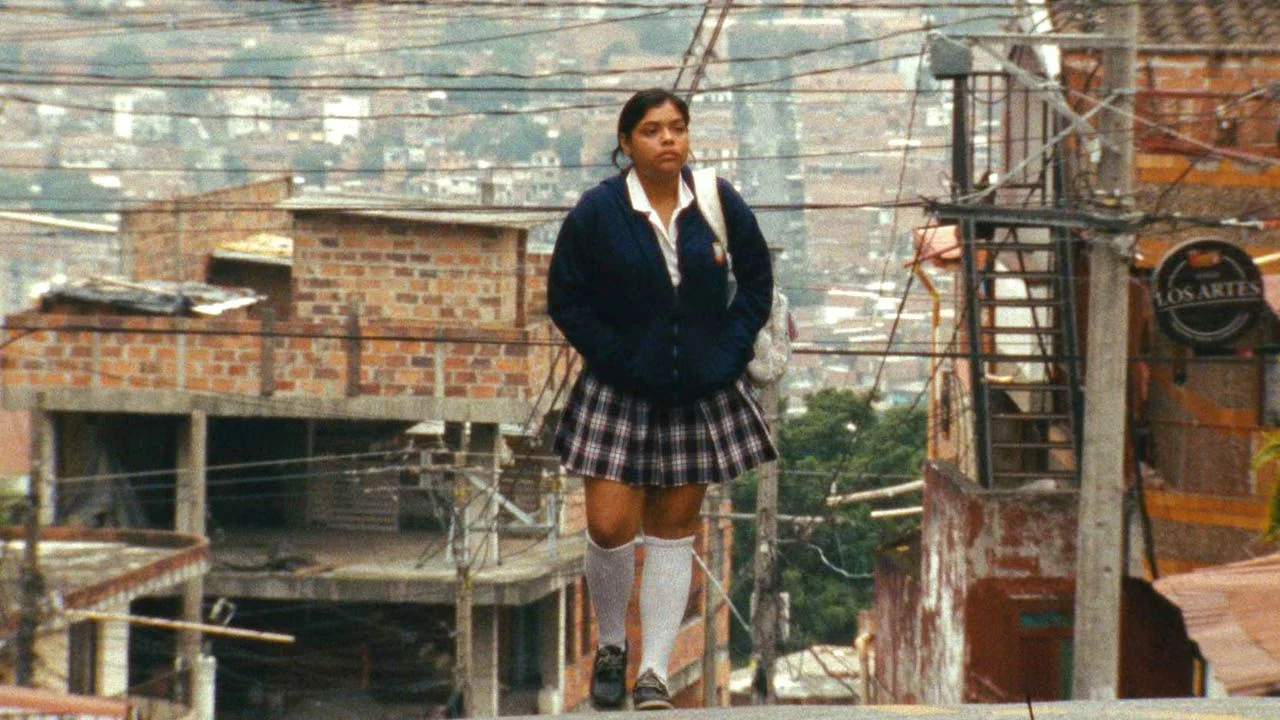
Is the poetry-gifted Yurlady (Rebeca Andrade) actually the key to Oscar's redemption – or is the teacher projecting a little too much into his student?
He begins this immediately with a disastrous but still undiscovered misstep when – fueled by the schnapps in the thermos – he launches into one of his slurring, bawling rants about “poetry” in front of the laughing school class. But at the same time Oscar discovers an unexpected talent: the student Yurlady (Rebeca Andrade) comes from a poor family and writes notebook after notebook full of poems in which she processes her life, her dreams and perceptions. Oscar likes these poems so much that he sees his own chance for redemption in publishing them and promoting Yurlady's gift.
What follows is a very grotesque game with seriously felt remorse and the fight for Yurlady's future on the one hand and the newly growing connection to her own daughter Daniela (Allison Correa) on the other. Because Oscar is actually trying to improve himself and, for once, stand up for someone other than just himself – but Oscar is unable to recognize that Yurlady's dreams may be completely different than the ones her flawed teacher has to offer her and have more to do with nail salons than with literary houses. And so everything boils down to an inevitable escalation…
It always has to go on
However, “Un Poeta” is not yet over when this escalation occurs, and that actually sums up the perspective of this sometimes brutally funny but not heart-cold film quite well. There is always an after – after Oscar's success as a young poet, there is still a long life that needs to be dealt with somehow. But even after the rather catastrophic failure of the great plan for self-redemption, things continue unstoppably.
The rubble of one's own existence has to be cleared up again and again; between the unsuccessful results, a good intention comes to light here and there, but then the next stroke of fate happens again – and Oscar has to face that too. It doesn't stop because this is his life. And even though we're leaving Oscar in a deeply sad moment, we're strangely optimistic that he won't stop trying, at least.
Conclusion: The second film by the Colombian director Simón Mesa Soto is one of the funniest films of the year – and at the same time manages to never look at its flawed, often ridiculous and constantly failing protagonist with such a loveless eye. This is no small feat and this film, photographed in beautiful 16mm images, is not to be missed. No matter how you feel about poetry.
We saw “Un Poeta” as part of the Around the World in 14 Films 2025 festival.