
The scene almost gets lost a bit in between: When father Jay (Romain Duris) and daughter Lily (Mei Cirne-Masuki) finally get together about three quarters of the way through, it is pointed out in a brief moment that it is actually the children who suffer the most from adults who think they know what is best for them. Be it parents or officials who issue rules such as the custody law, because of which Jay drives through the mega-metropolis of Tokyo at night as a taxi driver. He hopes to find his daughter, with whom he has lost all contact since his divorce from his Japanese wife nine years ago.
Romain Duris (“The Three Musketeers: D’Artagnan”), who can be seen in almost every scene, makes the pain but also the lostness of the Frenchman, who despite all his efforts will never really belong to this country, palpable with nuanced acting. “A Missing Part” carefully avoids any kitsch pitfalls. There are no forced dramatic twists, emotional outbursts are rare, tears flow cautiously, even the atmospheric illustrations leave out the most typical Tokyo motifs. It is precisely this reserve, broken up only by occasional gentle humor, that makes “A Missing Part” so incredibly haunting.
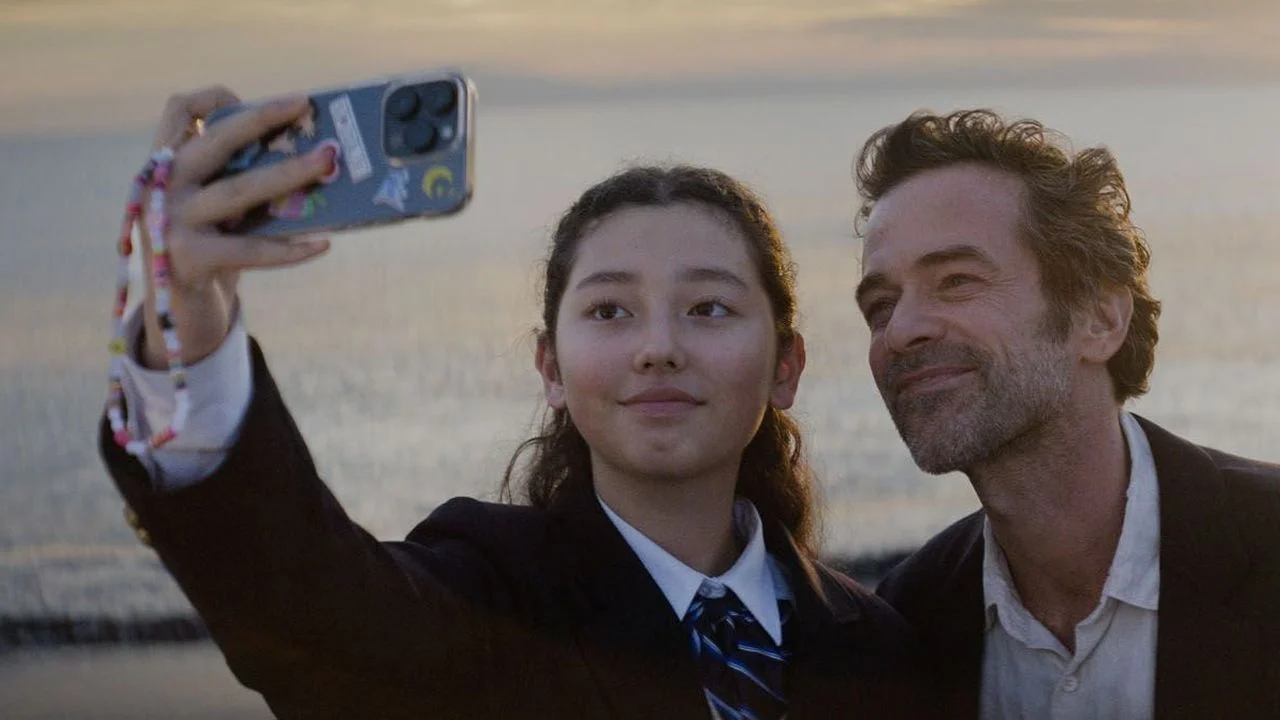
Jay (Romain Duris) has been looking for his daughter Lily (Mei Cirne-Masuki) for nine years.
Jay is no longer allowed to see his daughter. He only knows that it still exists because alimony is deducted from his account every month. His ex-wife took the then three-year-old with her from Paris to Tokyo – and in Japan, custody has a special regulation: children are only allowed to have one legal guardian – and Gaijins (Japanese for foreigners) have a particularly bad hand. Jay can’t legally meet his daughter until her 18th birthday, but that’s still six years away. And so he constantly roams Tokyo in his taxi, hoping for the actually impossible to become reality one day.
One day Lily gets into a taxi in front of a school. He immediately senses that his daughter is sitting in the back seat, but doesn’t want to identify himself for the time being because he has concerns about her reaction. But Jay is not alone – the film makes it clear that one-sided custody is a problem that affects others too, not just foreigners. A desperate acquaintance, Jessica (Judith Chemla), is going through the same thing: her Japanese husband has left her and taken their son with him, and she is now part of a self-help group of excluded parents…
About the difficulty of arriving in a country
“A Missing Part” not only tells of a father looking for his daughter, but also of unsuccessful efforts at integration. Films about foreigners who lose themselves in Japanese culture have almost formed their own small subgenre since Sofia Coppola’s “Lost in Translation” (2003). But strangeness as a motif has rarely come to the fore as clearly as it does here: Jay isn’t one Fish out of waterJapan has become his home. He speaks Japanese impressively well (hats off to Duris!) and is so familiar with the area that even local drivers get tips from him.
He even owns a property, is involved in the community and was previously married to a Japanese woman. Nevertheless, he is repeatedly told that he is not a part of society – whether from Jessica or his mother-in-law, who tells him that he should “go back to his country”. He is constantly made aware that he is always one Gaijin will stay, although, as he says during the argument with his mother-in-law, he also sees it as his country.
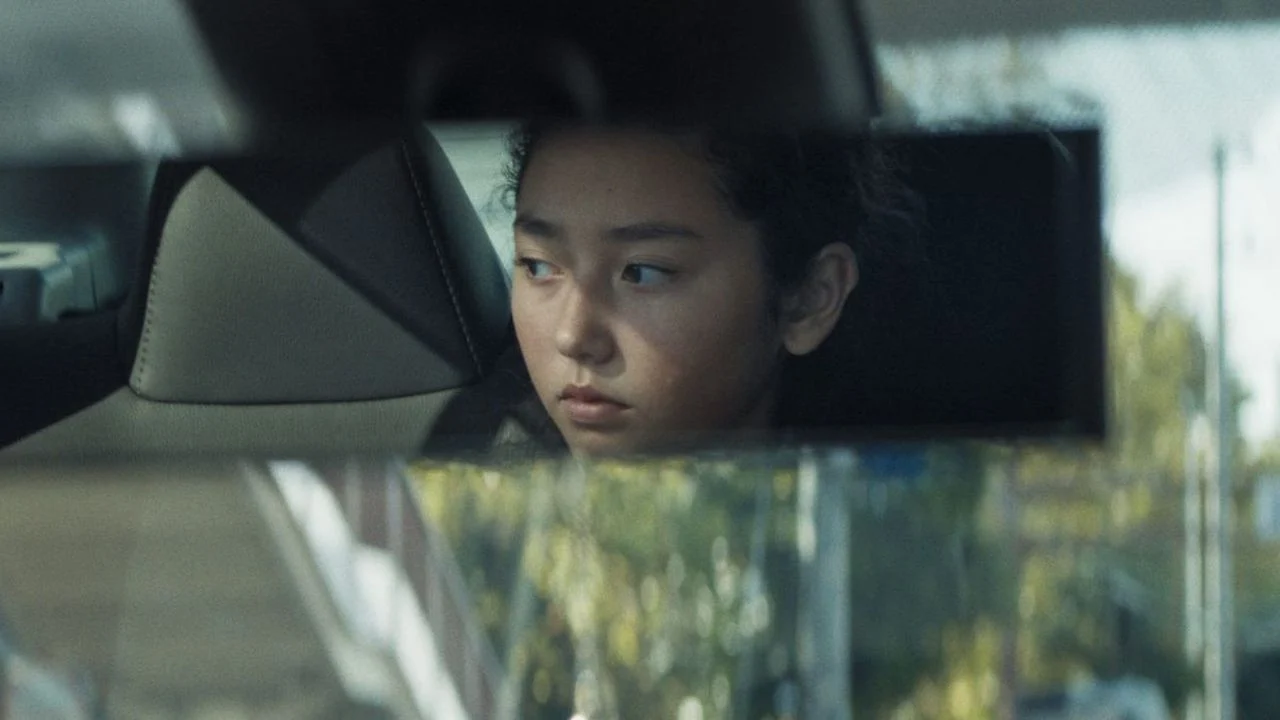
One day Lily suddenly finds herself sitting in the back seat of the taxi.
This gives the figure an additional tragedy and reflects local integration debates. But “A Missing Part” does not take refuge in bitterness, but looks at its story with optimism. Lily is a level-headed twelve-year-old who refuses to be deterred and whose growing longing to see her father again is made palpable by the fantastic young actress Mei Cirne-Masuki with small gestures such as a fleeting kiss on the cheek. It is also Lily who ultimately finds a way to possibly permanently put the two “missing parts” of the title back together.
Conclusion: Emotional, but never cheesy, occasionally even humorous divorce drama that not only tells of the effects of rigorous custody laws, but also of the difficulty of really arriving in a country. A great Romain Duris, who practically shoulders the entire, beautifully illustrated film, but also the no less convincing young actress Mei Cirne-Masuki make “A Missing Part” perhaps one of the most beautiful European Japanese films ever.