
In 2003, the Dr. Seuss live-action adaptation “A Hangover Makes Theater,” which was torn apart by critics, was released in cinemas. “Austin Powers” comedian Mike Myers jumped through brightly colored sets in a grotesque cat costume and also angered Audrey Geisel with his crude humor: the widow of the author of the children’s book of the same name banned all further live-action adaptations of her husband’s works after the box office flop. That’s why only animated film adaptations of Seuss books like “Horton Hears a Who!” have appeared in the last two decades. (2008), “The Lorax” (2012) or “The Grinch” (2018).
The directing duo Erica Rivinoja and Alessandro Carloni are now following up with an animated new edition of “A Tomcat Makes Theater”, whereby the children’s book written in rhymes for beginning readers is expanded into a larger film world: “The Tomcat in the Hat” is intended to serve as a franchise starter for an entire shared universe (the so-called “Seussiverse”) – and despite certain starting problems, they have actually managed a poppy, wild debut.
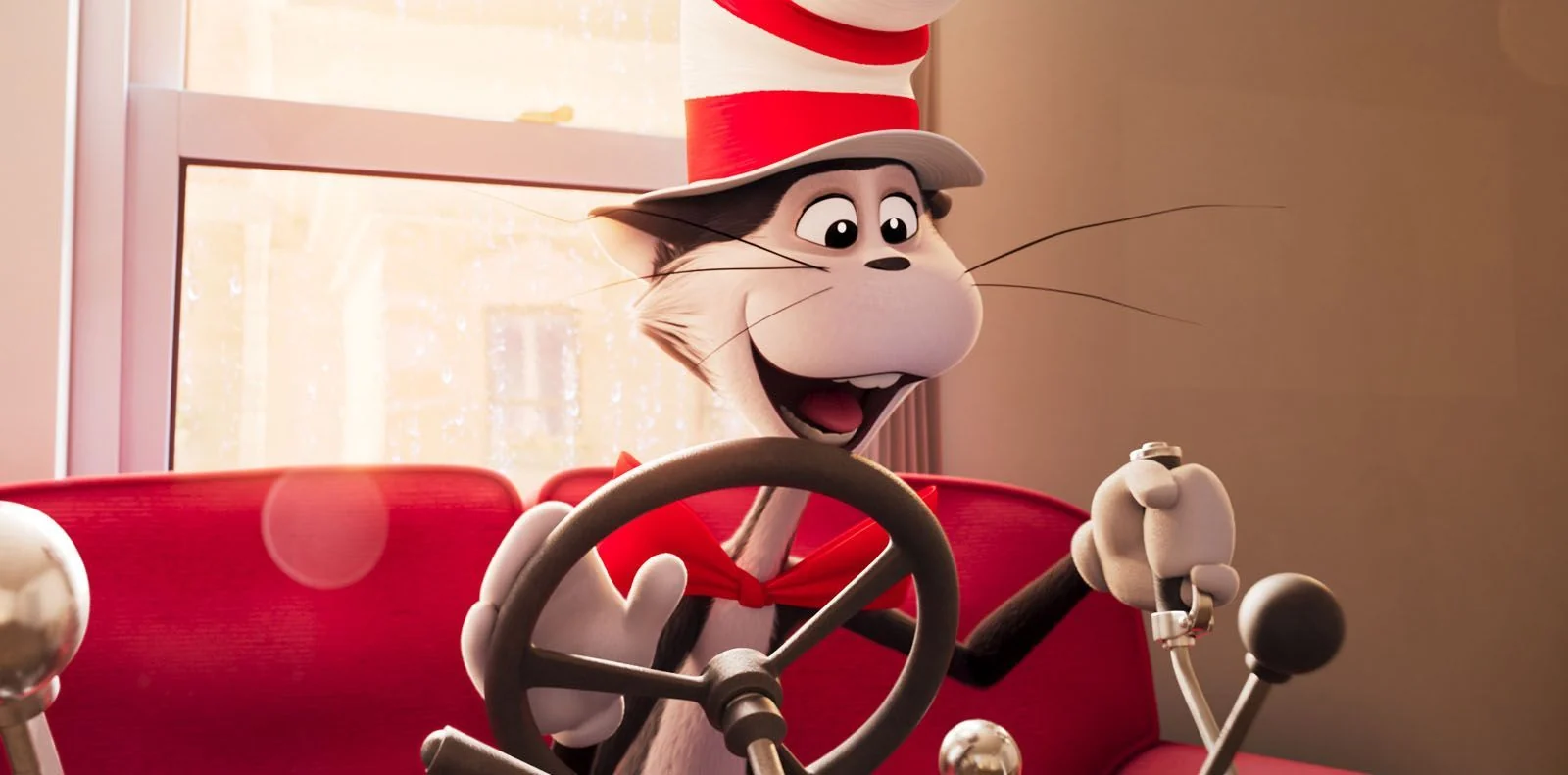
This time the cat in the hat experiences many more different adventures on the big screen than in the original book.
Unlike the infamous live-action film from 2003, which has almost become a bizarre cult film due to numerous reels and memes, the plot of the children’s book in “The Cat in the Hat” turns out to be just one of the title hero’s many adventures: The Cat in the Hat (voice in the original: Bill Hader) is just one of many fantasy characters that can walk through walls and make sad children laugh again. They work for IIII GmbH (Institute for Imagination and Inspiration) and their performance is measured by how much joy they bring and how little damage they cause during their operations.
However, avoiding accidents isn’t exactly the Cat in the Hat’s strong suit. That’s why he now has one last chance to prove himself – otherwise he will be fired. He’s supposed to cheer up Gabby (Xochitl Gomez) and her younger brother Sebastian (Tiago Martinez). Both have moved into a new apartment with their single mother Carmen (America Ferrera) and are deeply sad about it. But when the cat in the hat loses a magical stopwatch in one of the moving boxes during his mission, he and the children have to dive into the boxes on a moving sofa and with the goldfish Waffles (Matt Berry) in order to find the clock again. Four fantastic worlds open up to you…
It takes a while for the film to really get going
The children’s books by Dr. Seuss are known for their crazy, surreal ideas, anarchic plots – and their brevity! No wonder, then, that film adaptations often find it difficult to build a full-length plot from the short templates. Many new characters and even an entire backstory were added for the most famous live-action film “The Grinch” (2000) with Jim Carrey. Something similar happens with “The Cat in the Hat”, which pays tribute to its original book in the first few minutes, but then creates a whole new cinematic universe around the main character. However, for the sluggish first third of the children’s film, this seems more attempted than successful.
It starts with the characters, who remain thinly drawn, predictable and one-dimensional throughout. In the original, the cat in the hat was just an anarchic force that wanted to provide fun – by any means imaginable. In the film, the cat in the hat is now more of a slob, who suffers as a small employee at the hands of his scheming boss at the fun agency. This is all very clearly reminiscent of the horror factory from “Monsters AG”. None of the other agency employees are really remembered and the introduction of the human protagonists is also not very exciting: Gabby is the always nagging teenage sister for whom everything is embarrassing – and Sebastian is the always invited little brother. You know everything.
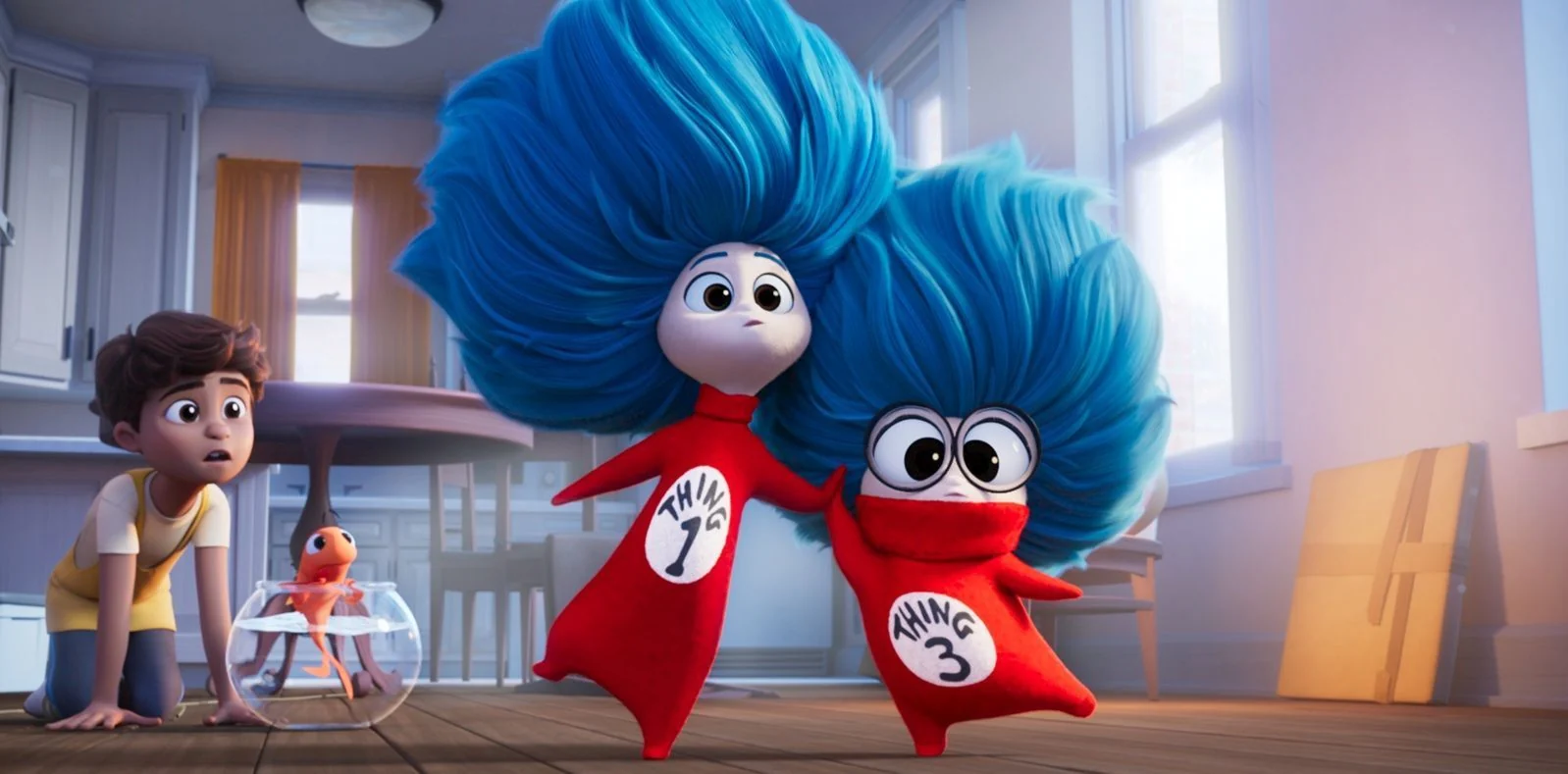
The Backpfeifen fans Thing 1 and Thing 3 are clearly the funniest thing about “The Cat in the Hat”!
But then it happens and “The Cat in the Hat” can enchant with new worlds and imaginative images as soon as the group of heroes dive into the magical moving boxes. In these surreal dreamscapes you can see how Sebastian’s underwear glides gently through an ocean like giant whales – or how the children’s homemade toys made from hard noodles come to life and fight against evil. At this point the film opens up into an imaginative, unpredictable universe. These worlds are also more visually fun with their more abstract design.
It almost seems as if the mechanical plot and the routine character design are competing with the impressive imagery and technical strength of “The Puss in the Hat”. The film only works in spurts. Whenever the makers are allowed to unleash their imagination and don’t have to worry too much about the plot, the film comes close to the anarchy of the original. The humor, on the other hand, is surprisingly weak: most of the gags are to be expected and hardly work (which is particularly surprising given the well-known ensemble of the original version including comedy stars such as Bill Hader, Quinta Brunson and Bowen Yang).
Two numbered slobs save the film
But what saves the film and is almost worth the cinema ticket alone is the appearance of Thing 1 and Thing 3. The mute, blue-haired slobs slap each other like the Three Stooges – and introduce many more things into the story. All the moments in which they communicate by clapping and slapping each other are real slapstick highlights – that’s by far the funniest thing “The Cat in the Hat” has to offer. The film also picks up the pace in the home stretch: the finale brings the story to an end with crazy moments, fast-paced action and even a touching conclusion.
Conclusion: “The Cat in the Hat” starts off a bit bumpy, but then improves and delivers a satisfying finale. If you ignore the pale characters and the predictable plot and instead devote yourself entirely to the imaginative visual implementation, then you will be rewarded with a strong ending in the last third. Whenever the film unfolds its surreal world of images in the moving boxes and the numbered things cause mischief, “The Cat in the Hat” comes surprisingly close to the anarchic charm of Dr. Seuss approach.