Quentin Tarantino only wants to direct one more work before he ends his directing career. Anyone who knows the “Pulp Fiction” cult director knows that he wants to say goodbye with a great masterpiece. After all, his career consists of a whole series of exceptional titles. More than half of his films received the rare top rating of five stars at FILMSTARTS.de. Therefore, after watching “The Further Mis-Adventures Of Cliff Booth” you immediately understand why he rejected this loose sequel to “Once Upon A Time… In Hollywood” as his final project. At the same time, one can be happy that Tarantino gave in to lead actor Brad Pitt’s request and left the material to “Seven” director David Fincher.
Because the Netflix film, which is shown exclusively in IMAX cinemas a month before streaming starts, is clearly not in the league of its epic, impressive predecessor, but that doesn’t matter at all. With “The Further Mis-Adventures Of Cliff Booth” Fincher and Tarantino don’t even try to tell a big story, but rather deliver a relaxed hangout film that gets lost in its own digressions with great pleasure. Even if the violent sequences are effectively escalated by Fincher, the result is a Tarantino film through and through: replete with great dialogue, countless film references, wonderfully bizarre characters and sudden outbursts of violence. And with a Brad Pitt in absolute best form, although a sensational Elizabeth Debicki even steals the show.
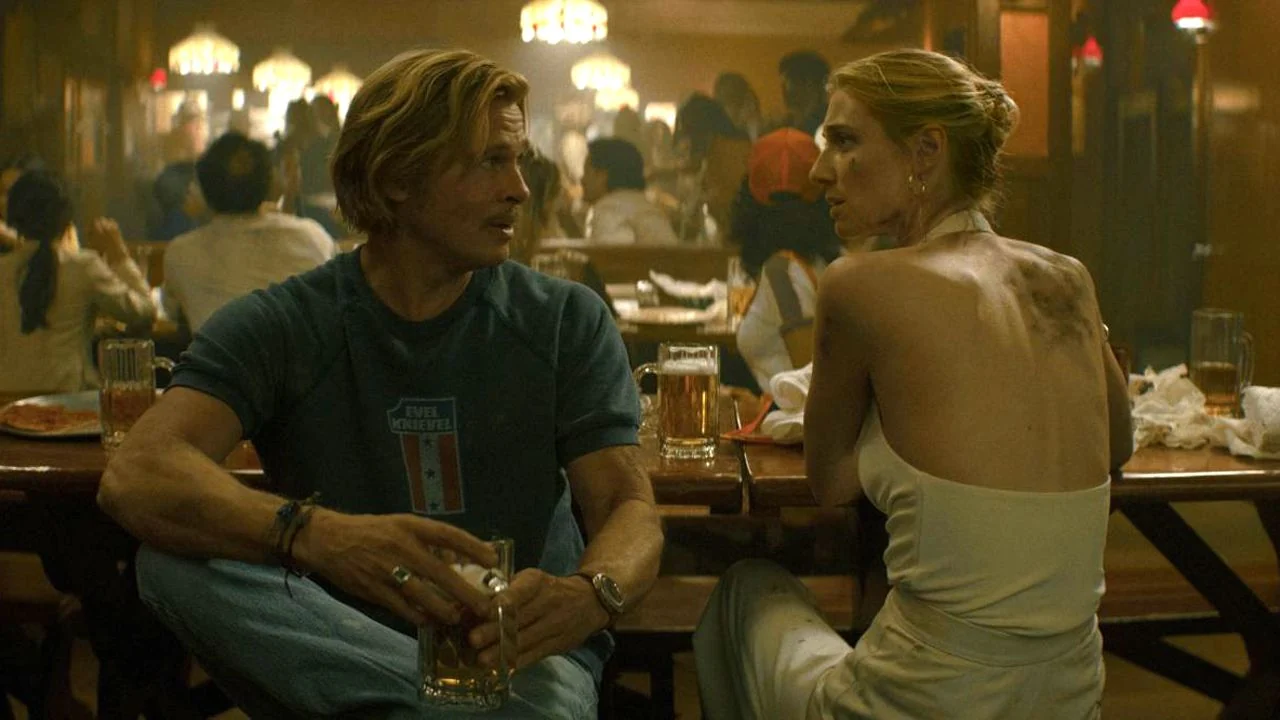
The outstanding duo at the center of the film
The story begins on a Tuesday in June 1977. Former stuntman Cliff Booth (Brad Pitt) now works as a projectionist in a cinema. However, this is just one of numerous jobs with which he stays afloat. Only those in the know know about one of his jobs: As a so-called fixer, he discreetly solves the problems of Hollywood celebrities. For example, when an aging director’s wedding ring and Oscar are stolen after an amorous adventure with a young man. Otherwise, Cliff looks after his father Gus (Peter Weller), feeds his cat and enjoys life – and, last but not least, the reputation that precedes him as a casual and dangerous fellow.
As Agent Karen Crosby (Elizabeth Debicki) tracks him down on behalf of her client, the celebrated TV star Charlie Peters (Scott Caan), and asks for a meeting, Cliff quickly suspects that his special skills as a problem solver are at stake. But Charlie doesn’t really want to speak up at first, which gives Cliff plenty of opportunity to flirt with the attractive Karen. As the two get closer and closer, two unscrupulous gangsters, the Verdusco brothers Eddie (Matt Groove) and Fernando (JB Tadena), leave a bloody trail through Los Angeles…
A wonderfully relaxed stroll through Hollywood
It takes around 90 (!) minutes until something like a main plot takes up more space. What problem Charlie Peters actually has and how Cliff is supposed to solve it is ultimately surprisingly uninteresting. However, the rest of the pleasure is so great that this hardly matters. We are only too happy to accompany Cliff on his tours through Los Angeles and the suburbs. When it turns out every few minutes that he apparently has another job, it becomes one of the many likeable running gags.
Although the events are told in strict chronological order and overlays constantly inform us what day it is or how many hours have passed, time itself does not seem to play a role. The actual story is always pushed into the background to give space to the people who populate it. It’s just incredibly fun to watch them talk, argue, flirt and fool around.
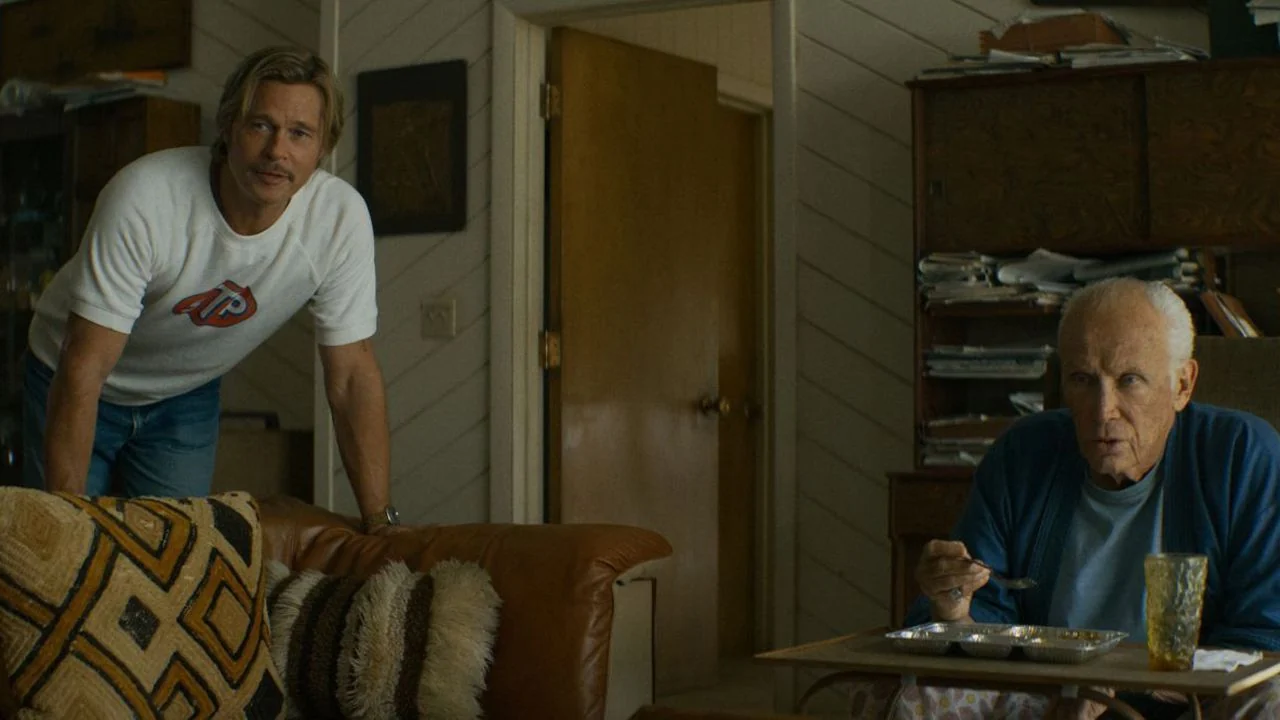
Cliff Booth now lives with his dad.
This is especially true of the wonderful dynamic between Brad Pitt and “Tenet” star Elizabeth Debicki. Cliff flirts constantly, dodges questions about his age, and enjoys the stories circulating about him, although you can never be sure how much of it is actually true. Debicki is the perfect counterpart to the extremely casual Pitt. She gives her intelligent, quick-witted agent, who has long been disillusioned with Hollywood business, an incredible amount of personality with a barely noticeable eye roll or a slightly different facial expression.
As in “Jackie Brown,” Tarantino proves that he can write beautiful love stories without even having to tell a classic romance. The clever situations, the pointed dialogues and, above all, the simply sensational chemistry of the duo ensure that every scene they share together crackles. When things get more serious and passionate between the two, a delicious joke interrupts the action.
A real Quentin Tarantino – but by David Fincher
“The Further Mis-Adventures Of Cliff Booth” is full of rambling, Tarantino-typical conversations. A highlight is a great discussion on the tennis court, in which the former film critic Karen fundamentally denies that cinema has any artistic character. After all, “Star Wars” is just a better version of “Flash Gordon” and even “The Godfather” is just a film adaptation of a pulp novel. For them, art is literature, while in their view films are purely for entertainment. There is a wonderful irony in this debate in a film that is so obviously not the great artistic masterpiece that Tarantino had in mind to end his career, but simply great entertainment.
Meanwhile, the opening dialogue about the right way to “fuck” a woman is immediately reminiscent of “pulp Fiction“. It is also one of the many self-referential moments with which the film begins. Brad Pitt is standing here again in a screening room, as he once was in “Fight Club”, and the cinema is, of all things, the New Beverly Cinema, which now belongs to Tarantino. There are references like this all the time. While westerns like “The Magnificent Seven” or old war films are shown on television, we also come across a whole series of fictional films and series, in which Scott Caan in particular gets to play the role of vain TV superstar Charlie Peters. It’s uninhibitedly meta at times, but because the film continually derives wonderful gags and character drawings from it, it never gets tiring.
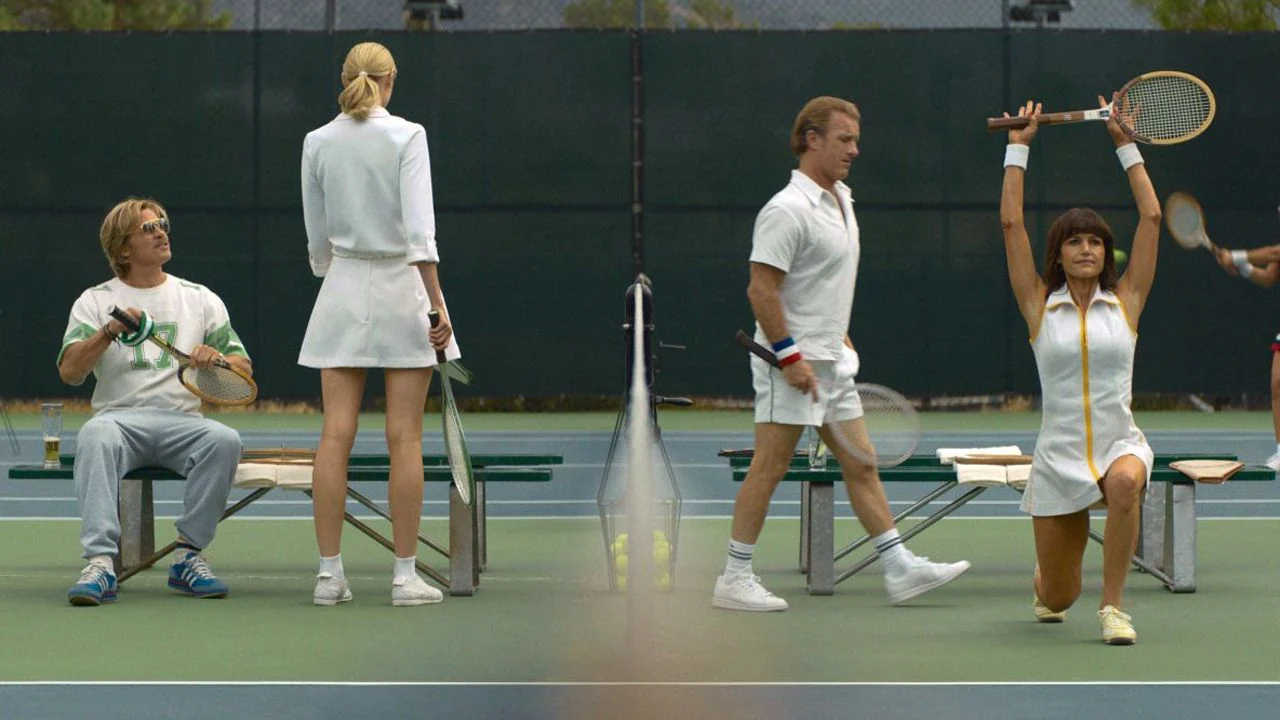
After tennis, the “art vs. entertainment” debate rages.
There is a reason why so much has been written about Quentin Tarantino and so little about David Fincher. When Tarantino was still unknown at the beginning of his career and had to hand over scripts, his signature was still visible in “True Romance” and “Natural Born Killers”, but they are unmistakably films by Tony Scott and Oliver Stone. Fincher seems to be withdrawn here, but still makes a crucial contribution. According to his own statements, “The Social Network” director struggled for a long time to find the right version, deleted over 60 pages from Tarantino’s script, created three different versions of the film and scheduled extensive reshoots.
Precisely because “The Further Mis-Adventures Of Cliff Booth” meanders along without a clear dramaturgical goal, it is the directorial precision of the filmmaker, who is known for his meticulousness, that holds everything together. The scenes are allowed to breathe and sometimes take a detour, but are still always staged precisely for a gag, a surprise or an escalation.
When things get bloody, Fincher can be felt
However, Fincher’s handwriting becomes particularly clear in the short action and thriller scenes. When the Verdusco brothers brutally murder a family relatively early on and without any visible connection to the rest of the events, there is also Tarantino humor in it, but unlike his well-known violent excesses, the events are not exaggerated into the grotesque. The violence is comparatively sober, terse and unrelenting, giving Fincher a chilling effect. This immediately establishes the killer duo as a real threat that is constantly in the back of their minds.
While in “Once Upon A Time… In Hollywood” While much about Cliff’s past was still unclear, no secret is made of his deadly abilities here. He murders early on, and characters repeatedly discuss in conversation how many people the ex-stuntman has already killed. So it becomes clear from the start that “The Further Mis-Adventures Of Cliff Booth” must lead to a bloody confrontation at some point.
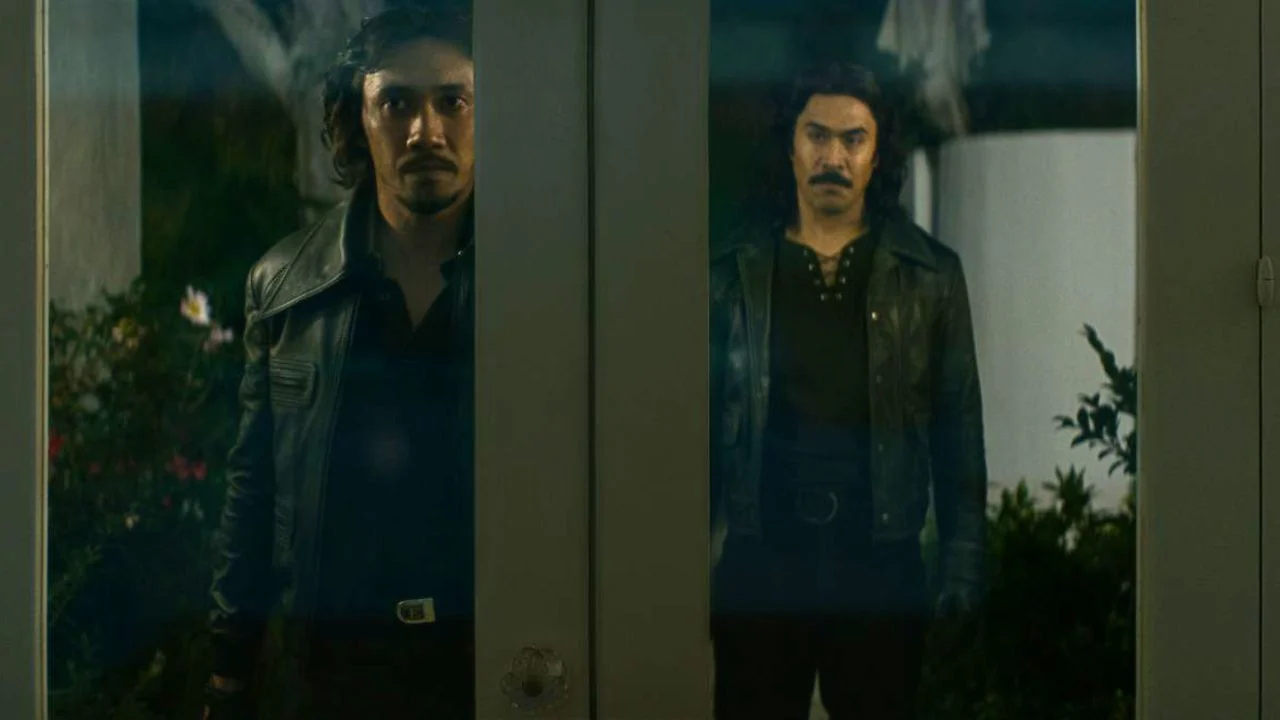
What role do the Verdusco brothers play? Definitely that of a constant threat…
Visually, Fincher’s loose sequel is noticeably different from “Once Upon A Time… In Hollywood”. Tarantino had put enormous effort into resurrecting Los Angeles in 1969. Entire streets, the countless neon signs and the long journeys through the city made it feel like you were actually immersing yourself in a bygone era. This time this journey through time is a little less overwhelming. The locations are more spatially limited, the action often takes place at night and the really big, sprawling sequences are missing.
This is sobering, especially since the scenes with fictional characters in historical recordings are less successful. A photo montage showing Karen alongside various Hollywood stars on a red carpet is simply unnecessary – beyond an already raging discussion about the use of AI. However, the dreary image of the city also fits the film. Eight years later, the sun-drenched, almost fairytale-like Hollywood of 1969 has become a dirtier, more cynical city. “Star Wars” has just turned the industry on its head, an actor like Charlie Peters prefers doing series rather than films and in the end it’s all about doing business anyway. And the fact that the best times for a Cliff Booth may already be over always resonates anyway.
Conclusion: “The Further Mis-Adventures Of Cliff Booth” is not a second “Once Upon A Time… In Hollywood” and certainly not the great masterpiece with which Quentin Tarantino would like to end his directing career. On the other hand, David Fincher’s film is an incredibly casual, funny and always surprisingly exciting pleasure that thrives on a terrific acting duo. The actual crime plot remains surprisingly irrelevant. But who needs a big story when it’s so much fun to just follow Cliff Booth and Karen Crosby around Los Angeles?