
With the exception of “Fahrenheit 9/11,” there has never been a documentary that has created as much buzz as “You Can See Everything.” After the surprise premiere of the previously kept secret film by meta-comedian Nathan Fielder (“Nathan For You”) and filmmaker Lance Oppenheim (“Primetime”) at the Telluride Film Festival, the project was immediately on everyone’s lips – and after the first teaser with the meme-ready eyes of billionaire fraudster Elizabeth Holmes, there was finally no stopping it. Record grosses were achieved at the North American box office – with an almost three-hour documentary. The enthusiasm is even so great that “You Can See Everything” became the highest-rated film ever on Letterboxd, ahead of classics like “The Godfather” or “The Twelve Jurors” – and even the Oscar nomination for Best Film now seems within reach, although no documentary has ever managed to break into the top category.
At the same time, it is at least conceivable that the work will end up without a nomination in the Best Documentary category – simply because “You Can See Everything” is not “documentary” enough for the very traditionally thinking electorate, especially this group of the Oscar Academy. Because what initially sounds contradictory is at least clear to those who know Nathan Fielder and his previous work – especially the brilliant HBO series “The Rehearsal”. With his elaborate productions, the Canadian blurs the boundaries between fiction and reality – and in doing so forces the audience to question the supposed reality again and again. In the second season of “The Rehearsal,” when asked whether he wanted to make a documentary, he answered tellingly that he interpreted this term very generously. This approach is now being taken to the extreme. The result is so extraordinary that “You Can See Everything” marks nothing less than one of the most impressive and important cinematic experiences of the year.
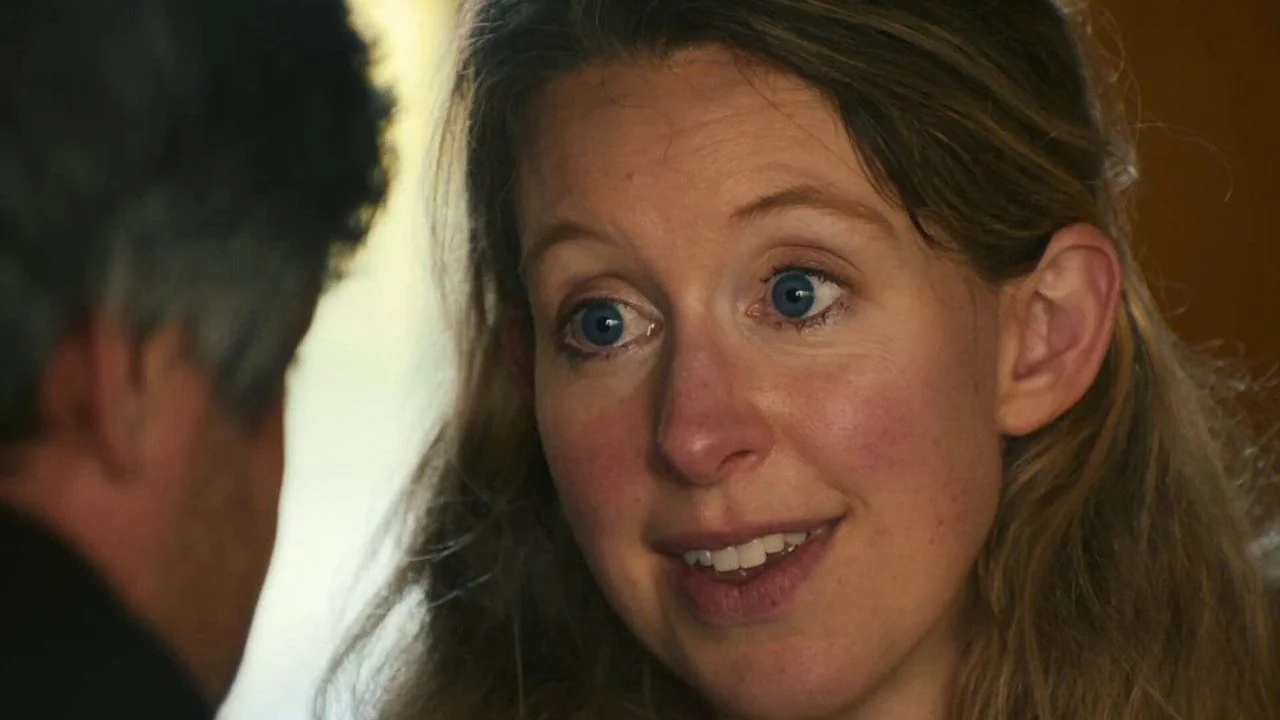
Already one of the most famous images of the cinema year: Elizabeth Holmes, with her eyes wide open, asserts her honesty to filmmaker Nathan Fielder.
Elizabeth Holmes was once considered one of Silicon Valley’s greatest prodigies. When she was just 19 years old, she founded the company Theranos, which was supposed to change medical diagnostics with a supposedly revolutionary technology. A few drops of blood were reportedly enough to carry out hundreds of different tests. Holmes was hailed as the next Steve Jobs figure, and her company was at one point valued at several billion dollars. But the promised technology never worked as claimed. The meteoric rise ended with one of the biggest scandals in recent economic history. In 2022, Holmes was convicted of fraud, and a year later she began a prison sentence of eleven years and three months shortly after the birth of her second child.
34 days before this start in prison in spring 2023, Holmes allowed Nathan Fielder and Lance Oppenheim to accompany her, her partner Billy Evans and their children with the camera. The transparency promised in the film’s title even goes so far that Billy allows himself to be filmed in the shower. Nevertheless, Fielder soon realizes that there are numerous pitfalls hidden behind the demonstrative openness. Billy repeatedly intervenes in conversations with Elizabeth or her father, later stopping questions and trying to control the situation. 14 days before starting prison, Fielder then moves into the family’s small beach house so that he can be there with his camera around the clock…
Has Elizabeth Holmes never lied?
In the first half, “You Can See Everything” is a real struggle for words. Despite her conviction, Holmes continues to maintain her innocence. Of all people, the woman who is considered the greatest fraudster in recent history firmly claims that she has never lied in her entire life. Her partner even claims that she is completely incapable of lying. But what is a lie anyway? With his usual direct, sometimes almost childishly naive questions, Fielder tries to get to the bottom of things at the beginning. Even a lengthy discussion about a prototype of their blood testing machine is all about the interpretation of individual words. Holmes insists that he “can” carry out the promised investigations. But what exactly does this “can” mean? The debate about this is becoming increasingly absurd.
Is the cheating scandal just based on a communicative misunderstanding? In a terrific scene, Fielder shows the couple the legendary Abbott and Costello sketch “Who’s on First?”to find an answer. But the result suddenly raises completely different questions, because Holmes simply doesn’t understand the point of the famous joke. “How does the perception of this woman actually work?” is not the first time we have wondered about the protagonist together with Fielder.
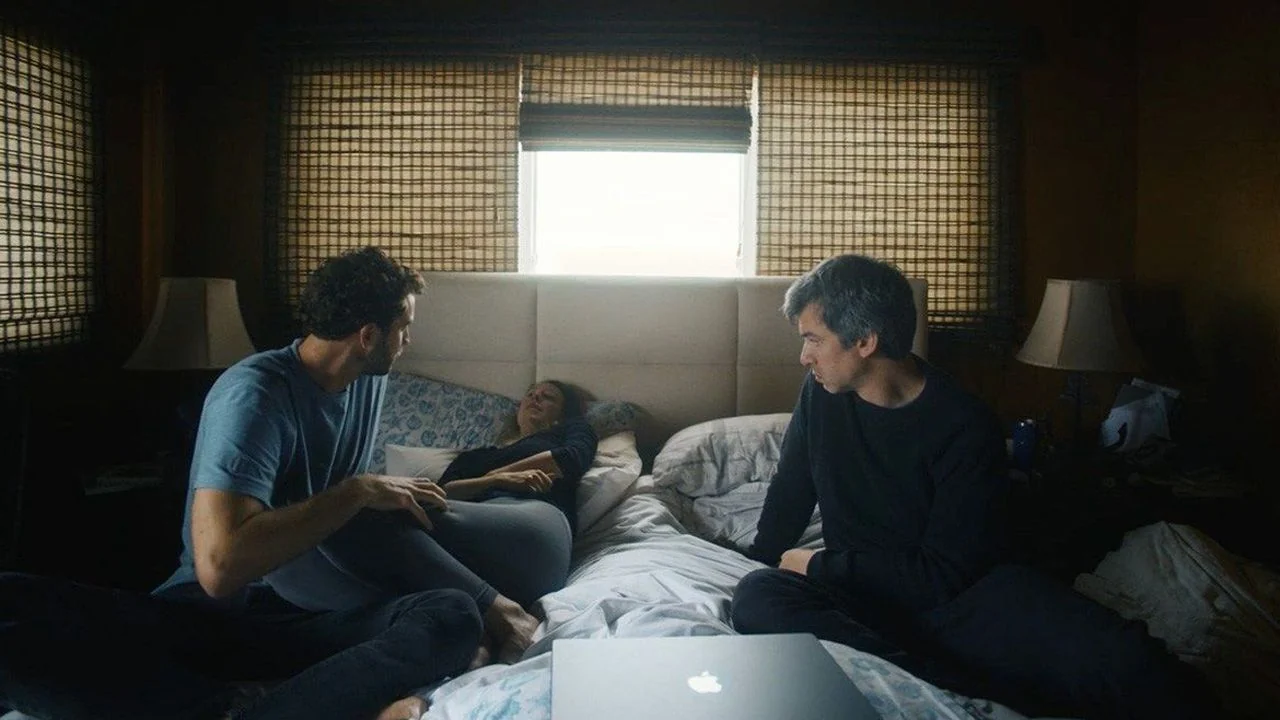
Nathan Fielder becomes part of the family life of Elizabeth Holmes and Billy Evans.
This part of the film is already remarkable and captivating. Even though we’re just watching people sitting in a house and talking to each other, it’s always reminiscent of a thriller. Intense stares, repeated confrontations and uncomfortably long pauses in conversation create an almost unbearable tension. This is reinforced by the visual staging. The tight 4:3 format and the many close-ups literally force us to study facial expressions and body language and interpret every brief smile, every irritation and every silence.
One of the fascinating elements is once again Fielder’s own, often deliberately awkward-looking presence. He is not always part of the conversation himself, but instead stands in a pose with headphones that has long become legendary from other projects in a dark corner or peeks out from behind a door frame. His very first appearance is almost reminiscent of a horror film when he is suddenly discovered in the shadows. His notorious social awkwardness (whether played brilliantly or not) and his penetrating curiosity not only create absurdly funny moments, but also always elicit more from the couple than they actually want to reveal.
A film about the failure of a film
However, the enormous fascination for “You Can See Everything” comes primarily from the surprising twists and turns that continually give the story a new direction. Experiencing this yourself is an essential part of the cinema experience. So a warning at this point: Although we avoid major spoilers, we have to address some developments below. Therefore, the advice here is to see “You Can See Everything” in the cinema and only then read the rest. Because this much can be revealed: the actual Theranos scandal is increasingly receding into the background. It’s already covered enough with documentaries like Alex Gibney’s “The Inventor – Bad Blood in Silicon Valley” or the Hulu miniseries “The Dropout.”
Instead, when Holmes begins her prison sentence, the project is not over as planned. Fielder and Oppenheim failed. They didn’t really get close to this woman. Two years later they resumed their work with Billy Evans as their main contact. He now runs the couple’s new start-up, which is intended to continue the work of Theranos. But that’s only a minor aspect, because what fascinates Fielder is Evans’ continued relationship with his imprisoned partner. To explore this, he chooses a radical new approach – and that is the real stroke of genius of “You Can See Everything”. The boundaries between documentary observation, fictional production and personal interpretation are finally blurred. Fielder consistently develops his approach known from “The Rehearsal” and thus repeatedly creates surprising but also deeply moving situations.
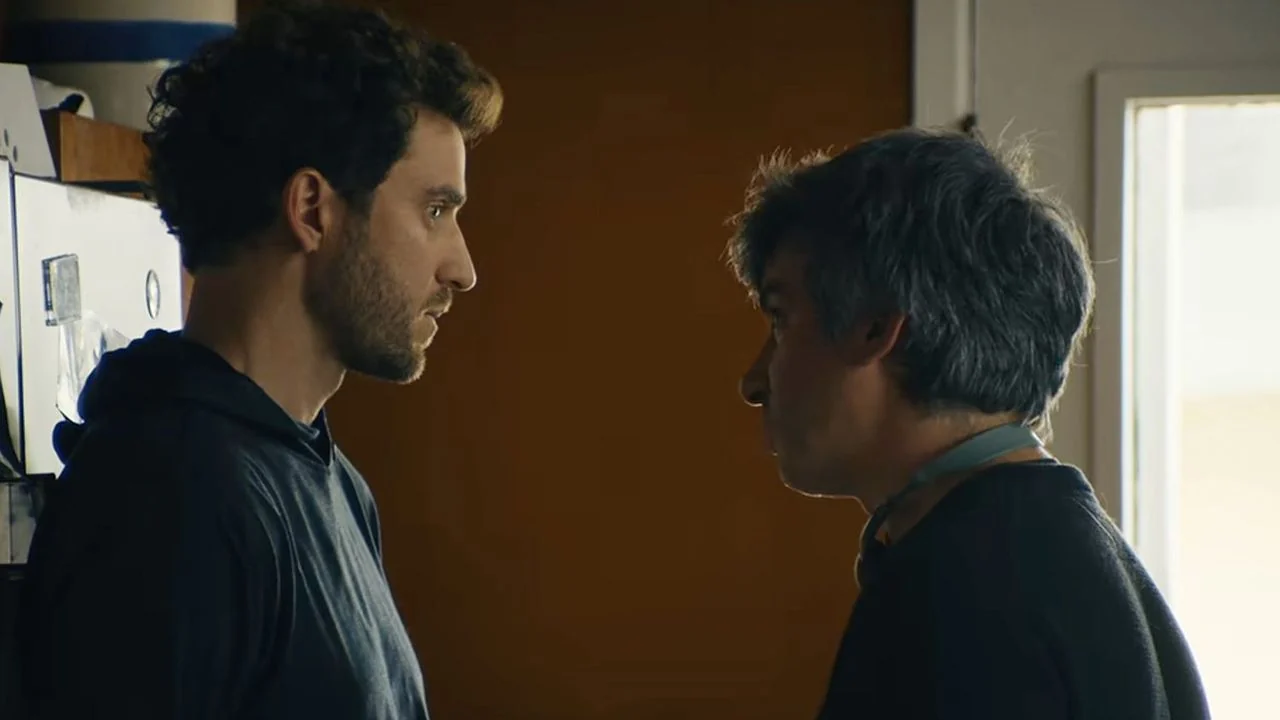
Who is in charge here? Billy Evans and Nathan Fielder in a clinch.
As Billy Evans increasingly becomes the central figure, Fielder repeatedly returns to scenes from the first half. Even casual everyday moments, such as when Billy unceremoniously takes the bowl out of his partner’s hand while mixing eggs, take on a new meaning. The man who consumed everything at double speed and was willing to be filmed naked tried to take control from the start – and now it’s becoming more and more apparent. “You’re not the director,” Nathan finally snaps at him in a confrontation.
But does Billy Evans really have too much power? A major revelation ultimately calls the integrity of the entire film project into question. There is also a discussion about the extent to which Fielder himself may have lost the critical distance. The Canadian comedian’s works are always an examination of his own insecurities. He knows that Holmes and Evans only invited him to show their side of things and manipulate him into it. But did his protagonists’ plan possibly work? Has he at least developed sympathy for Holmes that leads to him portraying the imprisoned woman in a better light? In the second half, not only a central companion asks him this question, but also us in the cinema – especially when Fielder allows unfilmed conversations to be freely recreated from memory. Additionally, many in the audience may find themselves suddenly feeling compassion for the convicted fraudster, who may be able to let out tears on command. But why actually?
How much truth is there in a documentary?
“You Can See Everything” is not only aware of the limitations of documentary film, but also impressively shows us them. After all, a documentary always presents a constructed reality, determined by camera perspectives, editing and the music, which is also used extremely effectively. But while we usually forget this fact while watching, Fielder forces us to keep it in mind all the time. Not only every gesture and every statement of the protagonists is questioned. At some point we also have to decide whether we can trust the filmmakers themselves.
In the end, it is left to the audience to judge who Elizabeth Holmes actually is, whether she believes in her claims of innocence and how her relationship with Billy Evans really works. This refusal to provide a clear answer may seem highly unsatisfactory. But it is precisely how we deal with this that is the greatest achievement of this extraordinary film. Because instead of presenting us with a supposedly definitive truth, Oppenheim and Fielder ask us to continually question our own observations and conclusions. The result is a viewing experience that is as intelligent as it is emotionally overwhelming, making “You Can See Everything” a film that is far from over with the credits, but will continue to run in your head for a very long time.
Conclusion: “You Can See Everything” is a masterpiece that is as fascinating as it is disturbing, combining documentary observation, psychological thriller, absurd comedy and downright philosophical reflections on the core of filmmaking in an extraordinary way.