
It was one of the most beautiful moments in recent Oscar history. At the 2024 ceremony, the award for the best visual effects went to the Japanese team from “Godzilla Minus One”, who could hardly believe their luck and joyfully raised the mini Godzillas they had brought with them into the air. It was the first Oscar win for the nearly 70-year-old Godzilla franchise. During his emotional acceptance speech, director Takashi Yamazaki compared his team to Sylvester Stallone’s legendary screen underdog Rocky Balboa. In fact, the comparison isn’t that far-fetched: With a modest budget, which was downright puny compared to the competition like “Napoleon”, “Mission: Impossible 7” or “Guardians Of The Galaxy 3”, the effects crew prevailed – thanks to passion, ingenuity and enormous personal commitment.
The special effects in the sequel “Godzilla Minus Zero” look fantastic again. Rarely has the Japanese cult figure been portrayed in such an impressive and menacing way – even if this time she has noticeably less screen time than in the previous film. On the one hand, this is due to a new Kaiju who steals the show from Godzilla, and on the other hand, because director Yamazaki gives more space to the story of his human characters. The result is visually stunning monster cinema that lacks the moments of great suspense of its predecessor, but makes up for this with a lot of heart and a surprisingly radical approach to the atomic horror of the Second World War.
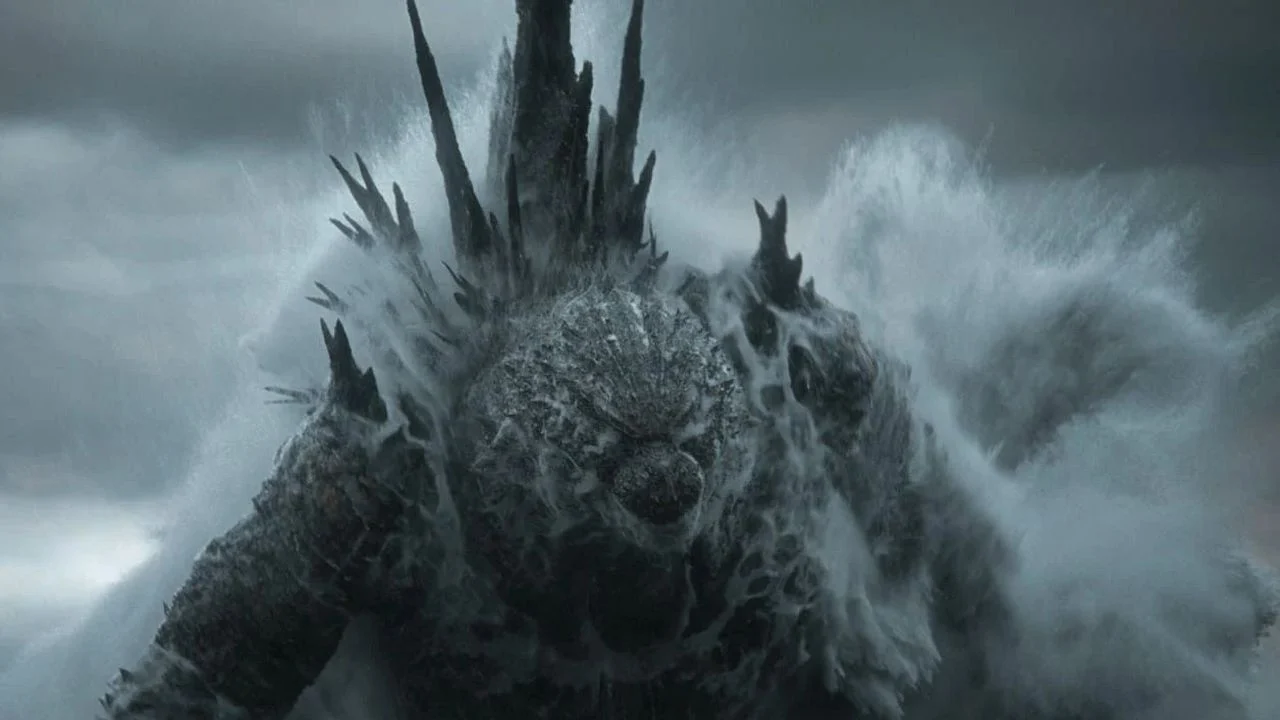
Godzilla is back – and how!
Two years have passed since Godzilla’s momentous attack. Japan is still facing the ruins of its existence, and there is still hardly any sign of an upswing. At least the pilot Koichi Shikishima (Ryunosuke Kamiki), the former thief Noriko Oishi (Minami Hamabe) and their war orphan foster daughter Akiko (Sae Nagatani) have managed to come to terms with the traumatic events and allow some peace to return to their lives.
But the family idyll is suddenly destroyed because a new, gigantic creature appears and threatens to plunge the country into chaos again. This creature seems to be even more powerful than Godzilla. Will it be possible to defeat the monster again – or is Japan doomed once and for all?
People are the heart of Godzilla Minus Zero
How close “Godzilla Minus Zero” is to its human characters becomes clear from the very first scene. Here a dragon-like monster rages in a small Japanese town. But the monster is only a minor character; instead, the camera stays close to the two refugees who try to find protection from the incoming force of nature in the explosive chaos. Rather by chance, the creature that causes this destruction in the first place always comes into view (almost like in the first hour of the South Korean monster blockbuster “Hope”).
It is one of director Takashi Yamazaki’s great qualities that he never allows the impressive destruction sequences in his Godzilla films to degenerate into a mere showpiece spectacle, but always links them with concrete consequences for the people affected. While in Hideaki Anno’s “Shin Godzilla” a true symphony of terror was celebrated and a Japan paralyzed by bureaucracy was dismantled with visible joy, in Yamazaki’s contributions to the monster cosmos there is no show value without sacrifice.
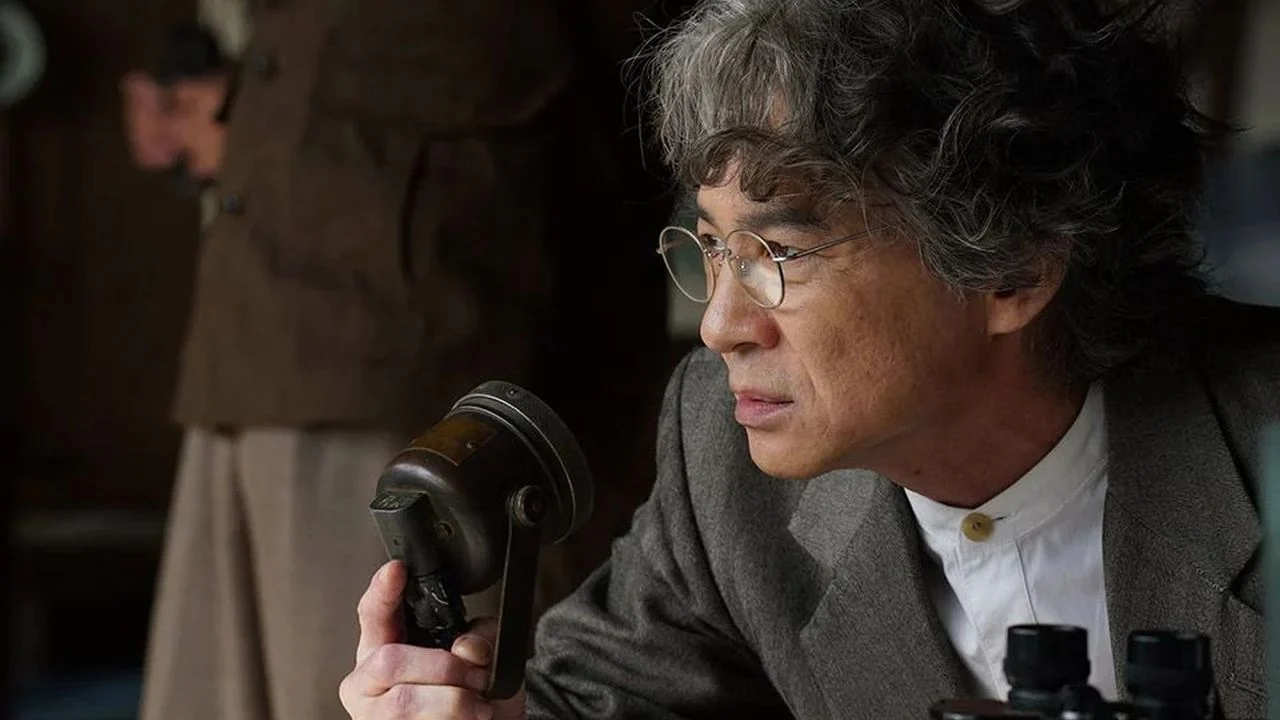
Can the new threat actually be stopped in time?
In one of the best moments of “Godzilla Minus Zero”, for example, Koichi flies through a village that has been torn to dizzying heights by anti-gravity rays – and has to watch helplessly as the residents in the still completely preserved houses face their inevitable death. This is fascinating, beautiful and tragic at the same time. In any case, “Godzilla Minus Zero” is a lot more emotionally gripping than its predecessor…
…even if it loses some tension. The story of the central community of fate surrounding Koichi, Noriko and their adopted child is credibly deepened and noticeably gains height. After all, the newfound family happiness is a fragile asset, especially in these times of crisis – and is put to the test not only by illnesses, but also by the renewed fight against the new Kaiju. And if your heart doesn’t break during the touching farewell scenes with daughter Akiko, you probably have one made of stone.
Warning: SPOILER warning
“Godzilla Minus Zero” ran a really strong advertising campaign in the run-up to the cinema release that arouses curiosity without giving too much away – just: Godzilla at the Statue of Liberty and the carefully teased new Kaiju. These points in particular have to be discussed in a discussion about the film, otherwise a critical discussion is hardly possible. If you want to enjoy the monster madness in the cinema without any prior knowledge, then it’s better to jump straight to the conclusion and read the rest of the review after watching the film!
There was a lot of speculation in advance about whether we would be dealing with another Kaiju in “Godzilla Minus Zero”. Of course, hardcore fans realized by the second trailer at the latest that this could only be the three-headed space dragon King Ghidorah, who has been one of the most striking opponents in the Japanese giant lizard’s arsenal of figures since his first appearance in “Frankenstein’s Monster in the Fight Against Ghidorah” from 1964. However, it was not yet clear how big Ghidorah’s role would be or whether it might even just be a short cameo appearance.
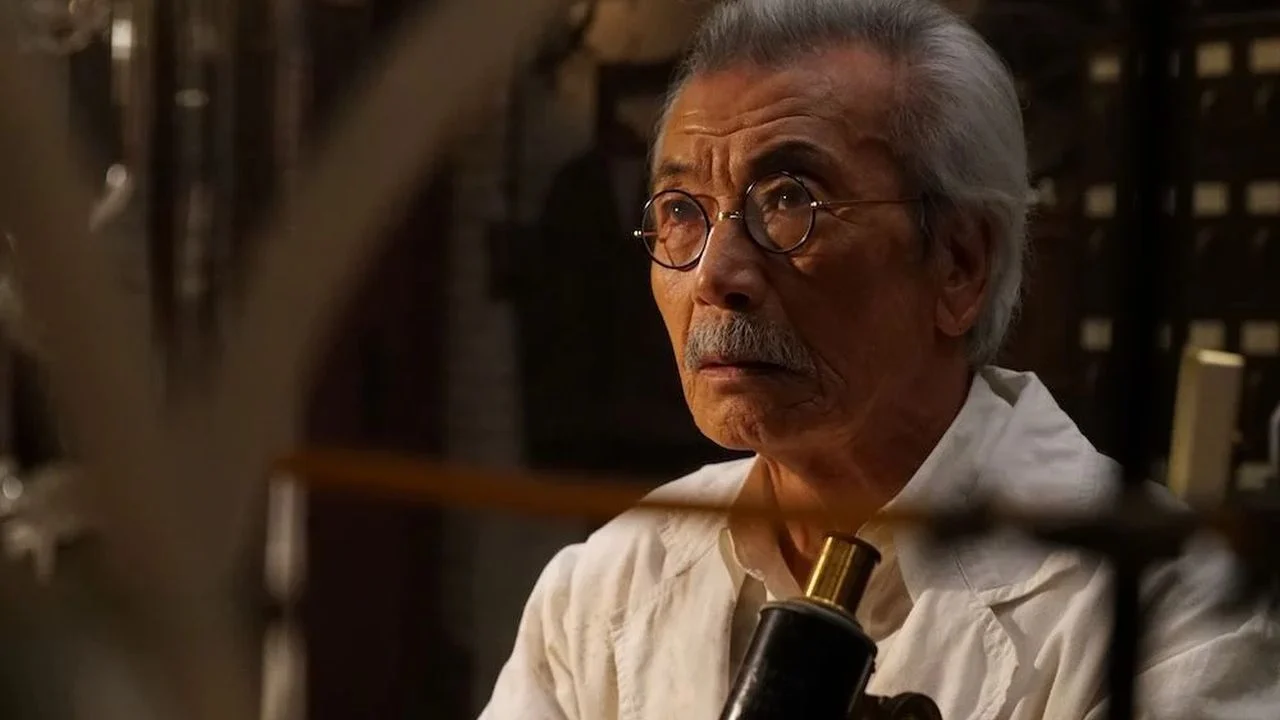
One of the most exciting new characters: Kanji Murakami (Min Tanaka)!
In fact, the giant winged monster takes on the role that Godzilla was given in the first part, while the eponymous dire lizard is pushed into the second row this time. However, that’s not a big deal, because the franchise has a rich and extremely exciting cast of characters. In addition, one of the most impressive adversaries, King Ghidorah, was chosen for the sequel. When the three-headed dragon alternately devastates the landscape with lightning and then tears entire villages into the air with his blue anti-gravity beams, he certainly doesn’t have to hide from Godzilla in terms of destructive power.
In a successful air combat sequence, memories of Steven Spielberg’s “Jaws” are even awakened: Ghidorah repeatedly dives into the sea of clouds to eliminate the pilots one by one. But the big highlight is undoubtedly the final encounter between the two Kaiju legends, where things get extremely bloody. This is big monster cinema for which fans buy their tickets and which should ideally be enjoyed on the largest possible screen. How fitting that “Godzilla Minus Zero” is even being shown on many IMAX screens.
Unusually radical images
The examination of the horrors of Hiroshima and Nagasaki is similarly powerful. Nuclear fear is still alive in Japan and has received an iconic manifestation in the cinema with Godzilla. In “Godzilla Minus Zero” the atomic bombing and the consequences of this attack are addressed surprisingly directly – after all, Kanji Murakami (Min Tanaka) is a survivor of the bombing. In a depressing flashback, we see the scientist staggering through the shattered remains of Hiroshima while around him, horribly disfigured and burned beyond recognition, people scream for help.
When he finds the charred remains of his family in the rubble, these are images that seem unusually drastic, especially for a Godzilla film. The fact that Murakami from now on takes refuge in delusional revenge fantasies and even dreams of setting the giant atomic lizard on the Americans’ necks as personal revenge makes him one of the most interesting (and pleasantly ambivalent) new additions to the recent franchise history. It’s almost a shame that the researcher is only allowed to play third fiddle behind Koichi Shikishima and Noriko Oishi – a little more screen time for this character would have made the whole film even stronger.
Conclusion: “Godzilla Minus Zero” is a worthy successor to the modern cult hit “Godzilla Minus One”. Even if Godzilla is relegated to a supporting character this time, thanks to a new Kaiju, the sequel offers visually stunning creature cinema in which the human fate and the consequences of the monstrous destruction are always in the foreground.