
In 2007, screenwriter Tony Gilroy (“The Bourne Identity”) brought his directorial debut to the screen with “Michael Clayton” – and was almost unanimously celebrated for it. However, the follow-up films “Duplicity – Shared Secret Matter” and “The Bourne Legacy” lacked the tonal and content-related complexity of the legal thriller with George Clooney. After returning to his old strength as showrunner of the “Star Wars” series “Andor,” Gilroy is now trying to build on “Michael Clayton” with another character study. Pedro Pascal fans in particular can be happy about this, after all, the Chilean is playing his first real leading role in the cinema outside of various franchises.
The word “Behemoth” in English describes something colossal, huge – the origin goes back to the name of a land monster in the Jewish Tanach. “Behemoth” is also the name of the film for which cellist Alex Serian (Pedro Pascal) is supposed to record the film music as part of a session orchestra. In “Behemoth! Pieces of a Life” Gilroy doesn’t care about anything more than the fact that it is a project of monumental size and importance. Details about the plot or cast don’t play any role in the small studio where the music is supposed to give the pictures the final emotional touch. In order to reveal as little as possible about the production, the individual compositions are only named after their respective number of minutes.
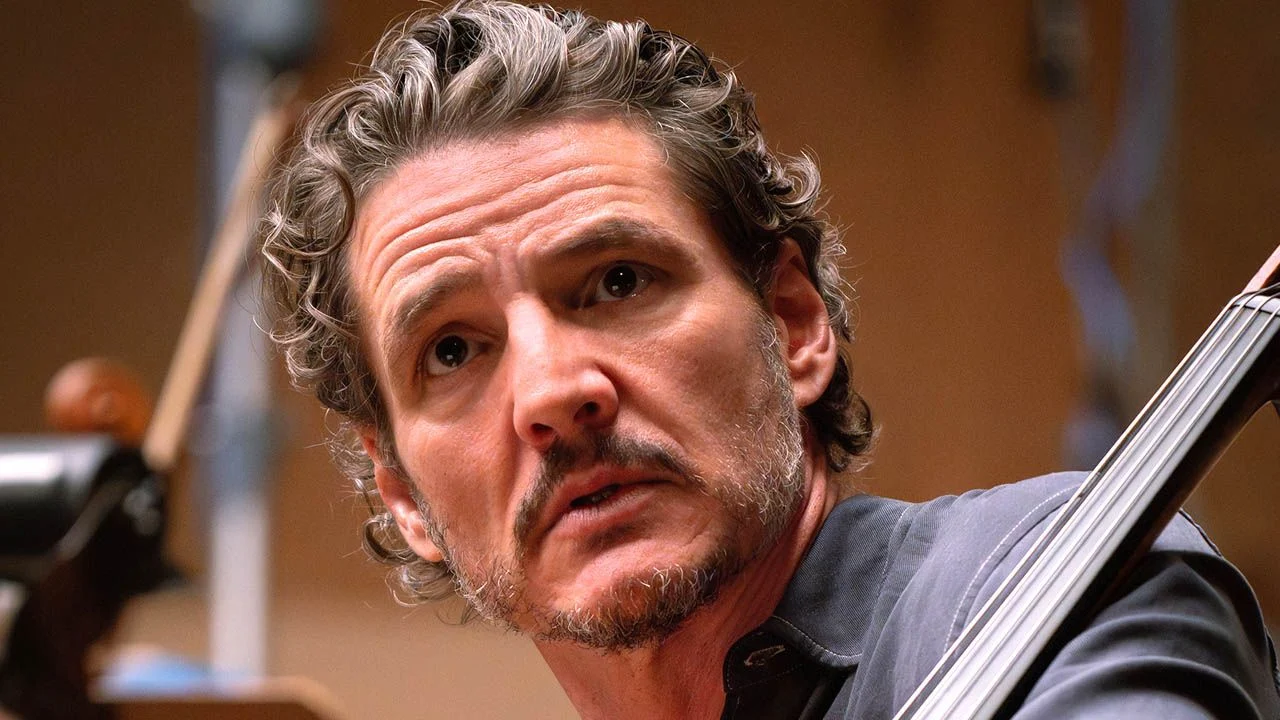
Alex Serian (Pedro Pascal) only finds himself through music.
Alex Serian just returned to Los Angeles – officially because he has to care for his aging mother. But his return home is also an escape from his intrusive ex-affair Carol (Olivia Wilde, “The Invite”). In California, however, the musician is by no means safe from personal conflicts. His brother Andy (Will Arnett, “Is This Thing On?”) didn’t just sell instruments that were of great emotional value to Alex. He now earns his money by publicly sharing their family history as a podcaster. Because Alex and Andy are the children of the world-famous composer Peter Serian (played by “Simpsons” legend Hank Azaria), who was buried in the star cemetery “Hollywood Forever”.
“He was a Peter who wanted to be a Pierre,” it is once said about the man who was considered a genius – a sentence that directly brings back memories of the conductor psychogram “Tár” from 2022. One instinctively understands that it was not paternal fame alone that made the two brothers’ childhood difficult. Peter apparently carried a deep dissatisfaction with himself and his own roots – and was therefore hardly able to show his sons unconditional love. The fact that they both became musicians themselves to impress their father doesn’t seem to have changed anything. They had to get the applause from somewhere else. In the spirit of Sigmund Freud, who wrote extensively about the consequences of absent father figures, Alex’s fear of commitment and his almost helpless inability to let people into his life can probably be traced back to this blank space. Although he has a number of liaisons, he specifically looks for women who already have richer men at their side who would definitely not swap them for him. If they do express their intentions, he is ready to pack up all tents, not only to end the affairs, but also to pack his bags for the next city.
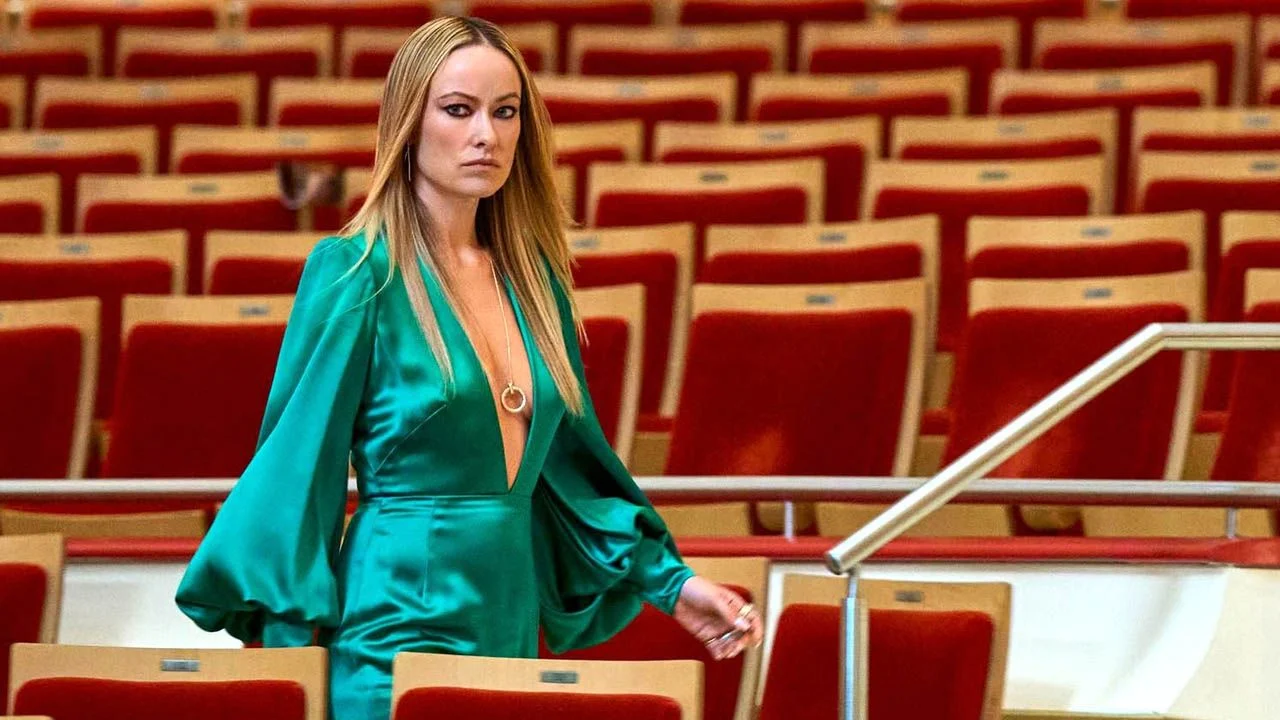
Olivia Wilde (“The Invite”) plays Alex’s ex-affair Carol – and unfortunately has to make do with a one-dimensional role.
One of these women is the aforementioned Carol, who apparently doesn’t want to give up Alex so easily. As in the Hollywood epic “Babylon – Rush of Ecstasy”, Olivia Wilde is not granted any particular multi-dimensionality in her role. Carol is simply shown as a possessive fury – the audience is meant to laugh at her desperation rather than empathize with her. Since the film does not show the relationship between Alex and Carol directly, only its aftermath, their view of the relationship remains an unverifiable assertion.
In general, the plot of the film is not only told in a convoluted and non-linear manner, but also relies heavily on lingering notes. We meet Alex on his various stints with the Chicago, Dallas and Boston orchestras. Nevertheless, we don’t really seem to be part of this journey, but often only see the aftereffects of his actions without experiencing the events ourselves. The audience only gets an insight into the inner world of the protagonist through his music. It’s as if he’s recording the score to his own life. Where he lacks words, strings and bows are his mouthpiece. As an acoustic barometer of mood, his cello playing reflects his panic as he runs away from a confrontation with Carol. The wild sounds build up a breathless tension that is most reminiscent of the chase in an action thriller – even though Alex is not running for his life here, but rather just running away from his responsibilities.
Nine well-known composers – and yet no Oscar chances!
In order to give the various fictional film projects that Alex works on over the course of his career, some of which we experience in flashbacks, an individual touch and to avoid a uniform sound, Gilroy hired a total of nine different composers for the film music of “Behemoth!”, including greats like Alan Silvestri (“Forrest Gump”) and James Newton Howard (“The Hunger Games”). Due to current restrictions on the number of people who can be nominated, “Behemoth!” Therefore, the music will not be considered at the Oscars. Nevertheless, this experiment is worth it, as the work is clearly intended as a declaration of love for the power of film music. The powerful tones not only accompany the content in a subtle way, but also form an independent narrative element.
In one scene, Alex explains that each note sequence can basically be played in two different ways: either the musician is a train or a flow – either he takes the lead (which creates a nice pun in the English original, since the word “conductor” means both music conductor and train conductor) or he allows himself to be carried. As an artist, Alex shines and is fully capable of setting the direction. But on a human level he swims. He constantly seems to be caught up in his past, and he constantly seems to want to avoid it instead of actively shaping his future.
Pedro Pascal is convincing across the board
Pedro Pascal, who always has a playful strand of hair hanging over his face as he plays the cello intensively, succeeds in making the uncertainty surrounding his character tangible. With a strong presence and great sensitivity for the quiet nuances, he carries the film and supports its complexity. The brilliant thing about “Behemoth!” is how the individual set pieces of the film ultimately condense into the emotional core of the piece – even if a pathetic montage that brings up images that have already been shown again in order to clearly visualize this connection is ultimately unnecessary.
Instead of sticking to the portrait of an artist with daddy issues, the film continually sprinkles in glimmers of hope through Alex’s relationships with his younger fellow musicians that improvement might still be possible. His search for the recognition that was denied him by his parents seems to have finally found a healthy outlet: on the one hand, he supports his younger colleagues with his years of experience, and on the other hand, he also learns from their fresh perspectives.
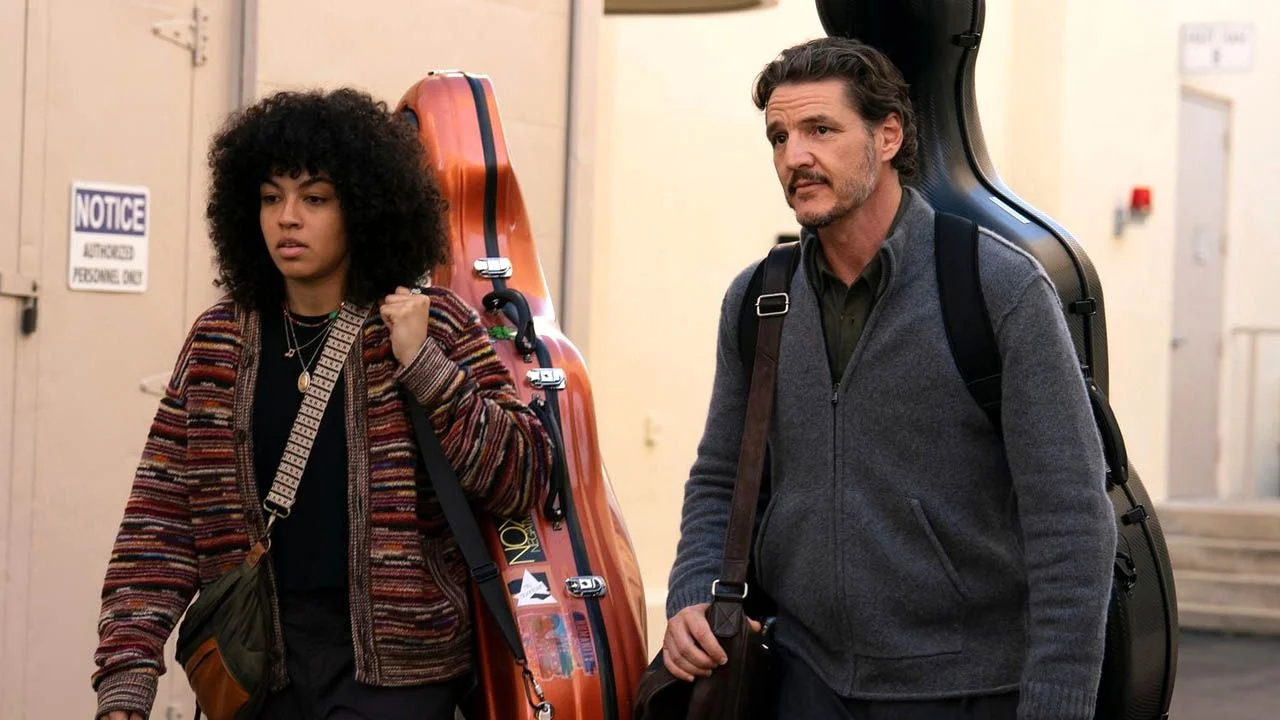
Although Alex doesn’t get the recognition he longed for, he at least passes it on to the next generation of musicians.
The musical gene alpha Internet phenomenon Viviana, who ultimately plays a significant role in the soundtrack of “Behemoth”, is portrayed by 17-year-old Alexa Swinton (“Maestro”) – incidentally a distant cousin of “Michael Clayton” Oscar winner Tilda Swinton. Her character combines the extraordinary talent of a classical prodigy like Mozart with the approachable sensitivity of Billie Eilish. The gentle way Viviana treats other musicians is in direct contrast to the aggressive demands of the German director Timo (Thomas Kretschmann), who is initially supposed to oversee the recording of the film music. Although “Behemoth!” At no time does the film seem didactic, but it still raises the question of whether our society could learn from the mistakes of previous generations if the toxic behavior patterns of our fathers were no longer repeated at the levers of power.
Conclusion: “Behemoth!” is a cleverly branching film that turns the often misguided search for recognition on its head and captures music as a communication tool. Pedro Pascal achieves one of his most nuanced portrayals to date.