
Mark Wahlberg has got a new face. The Hollywood star appears with a false nose and additional make-up to transform himself into the gangster and informant Gregory Scarpa, who died in 1994. Clearly, with his character’s non-conformist, unscrupulous and clever demeanor, he is supposed to be the secret attraction of the film “By Any Means”. But the transformation isn’t entirely convincing. At least it took a lot of getting used to.
At the latest when Wahlberg mumbles with a toothpick in his mouth and makes faces, his acting seems to be trying hard and his character even just barely misses being a caricature. In the scenes of “By Any Means” she sometimes seems downright strange and over-the-top. But at least the strangeness, at times almost comic-like, fits in quite well with the unusual constellation of characters that director Elegance Bratton (“The Inspection”) tells about.
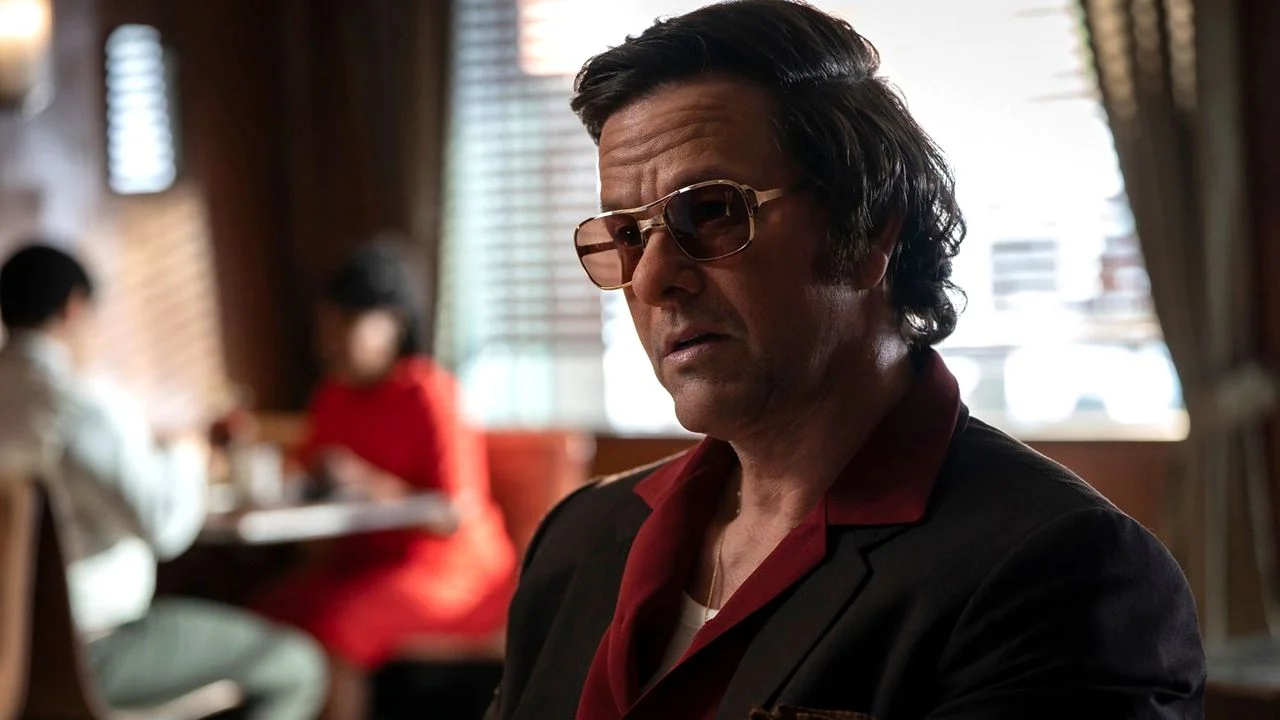
Mark Wahlberg has a different face in “By Any Means.”
“By Any Means” takes place in Mississippi in 1966. Civil rights activist Vernon Dahmer falls victim to a racist hate crime. Members of the Ku Klux Klan set fire to his family’s home at night. The black FBI agent Wayne Strider (Yahya Abdul-Mateen II) is now supposed to investigate the case and find the perpetrators.
He is not only confronted with hostility because of his skin color. His work becomes even more complicated when he is approached by the shady mafia hitman Greg (Mark Wahlberg) is brought in as a partner to do the dirty work where the FBI fails…
The difficult path to equality
“By Any Means” fails a little in casting its political observations into the form of a crime novel and thriller. Especially as a crime thriller, the film is extremely sluggish for long stretches. The question about whodunit only works to a limited extent. This rarely invites you to puzzle along and get excited. Ultimately, it’s more about showing a symptomatic case of the depths of American society in the 1960s.
The more interesting aspect is therefore the historical panorama that “By Any Means” creates. The film takes place at a time in which the civil rights movement and political changes in the USA have improved the situation of non-white people – but only in some areas and especially on paper. The distortions of segregation are still noticeable everywhere in everyday life. Racist violence, stigma and prejudice are commonplace.
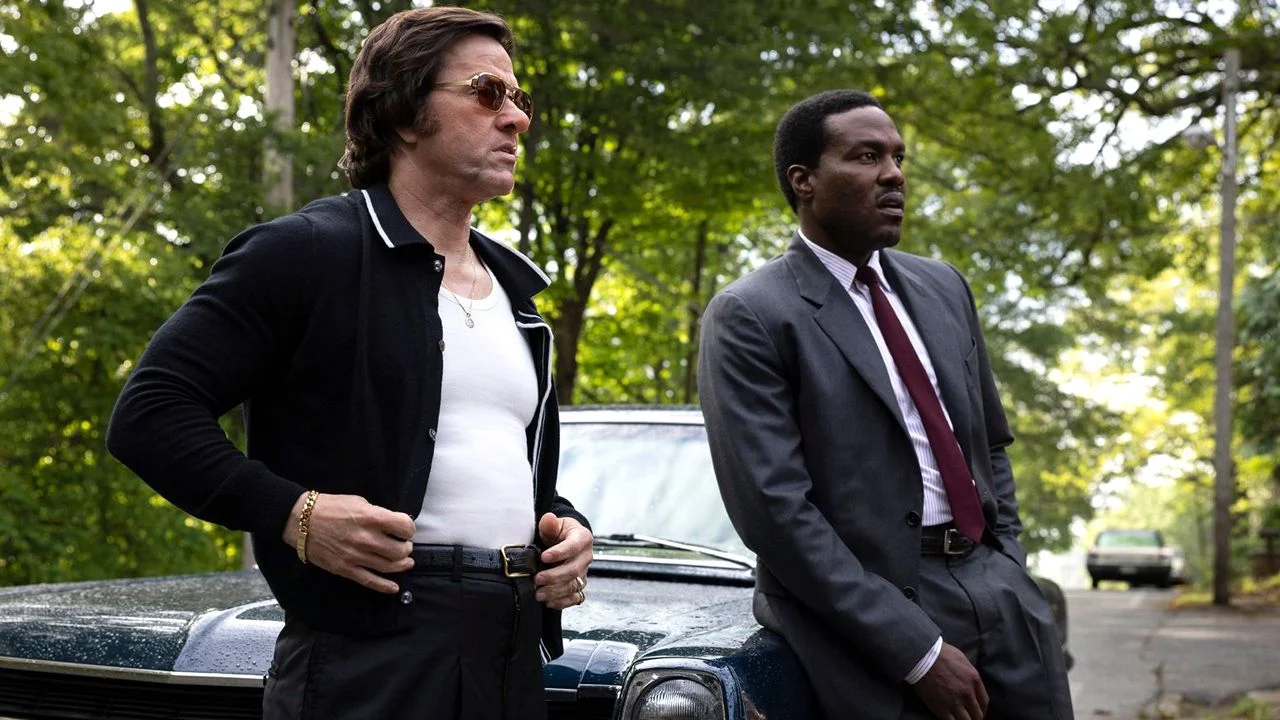
An unlikely duo is at the center of “By Any Means.”
The small observations on the sidelines are striking. For example, when the camera films the door of a shop that allows entry with a marking for whites only. Wayne is hardly taken seriously as an FBI agent. When he arrives at a crime scene and reaches into his pocket to show his badge, his white colleagues are immediately on alert. They’re afraid he’s about to pull out a gun.
The investigator himself repeatedly becomes a victim. Because he is black, the racist society sees him primarily as a threat and an enemy that they want to control or brutally beat up. He can only trust the torturer and killer at his side to a limited extent. In general: How are the two of them ever supposed to work together if they have completely different views on how to achieve their goals? How can it be that the authorities rely on someone like Greg as a secret weapon?
A fine line between morality and violence
Meanwhile, in his free time, Wayne practices shooting with his wife (Nicole Beharie). A brief, tender moment in nature, made all the more disturbing because their romance appears to be in a constant state of self-defense and alert. At some point both are faced with the difficult decision: do you leave your home to the oppressors and flee, or do you prepare for battle?
But apart from such snapshots, “By Any Means” repeatedly falters as a portrait of the era. What is missing is a critical form and aesthetic for the violence. When Ku Klux Klan supporters meet and the light shines through small blind openings or when a burning cross passes by as a reflection on a car window, these are stylish images. But is the stylish and pretty really the appropriate approach to telling about such cruelty?
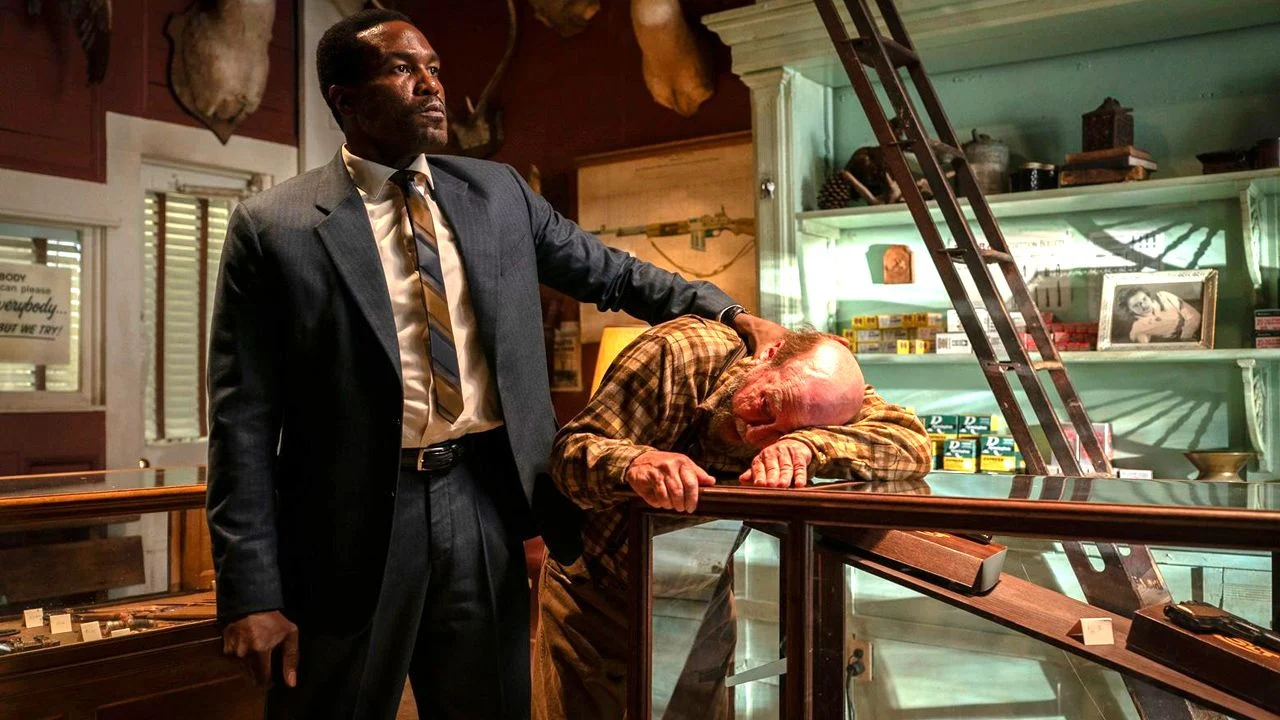
Wayne Strider (Yahya Abdul-Mateen II) can also dish it out.
The film becomes exciting when the question suddenly arises as to the extent to which one abandons one’s ideals in order to stand up for what is good and just. “By Any Means” initiates a discourse on torture. But here too the film makes things a little too easy for itself and its audience.
Initial skepticism and doubts turn far too quickly into satisfaction and relativization. Performed coolness masks the character ambivalences. It doesn’t help that the scenes in question are pretty hard to watch, especially towards the end: the development of the unlikely male duo at the center of the film remains poorly constructed, especially in this context, although their taunts, their mutual distrust and their test of strength here and there result in gripping situations and dialogues.
A documentary might have been better
An aha moment follows when the credits roll. Not only is the title song, written by multiple Oscar nominee Diane Warren, straight to the ear. If text panels explain the real background on which the film is only vaguely and speculatively based, then a question arises: Wouldn’t this material have been much more fascinating and insightful as a documentary? So the impression remains that Elegance Bratton and the screenwriter Sascha Penn (“1992”) have improved the simplistic and pointed fictionalization of their sources of inspiration.
Conclusion: “By Any Means” impresses with a promising acting duo of Mark Wahlberg and Yahya Abdul-Mateen II. The film also tries to vividly portray how deeply rooted racism was in the USA in the 1960s. But as both a crime thriller and a historical film, it remains too frayed to stand out from the crowd and do full justice to its motifs and themes.