
The corona pandemic of 2020 and 2021 caused an (even deeper) division in society in almost all nations around the world. Not only virologists and politicians, but sometimes even entire families were at odds over distance and hygiene rules, vaccinations and their side effects, and the requirement to wear masks. This uncertain and frightening time has not left its mark on filmmaker Mariku Minoguchi (“My End. Your Beginning.”). The Munich native was of course initially frustrated that a planned film project was postponed indefinitely shortly before filming began…
… but then used the time that suddenly became free to write a script that deals with the human and social consequences of a (fictitious) pandemic. The result is an incredibly oppressive dystopia, precisely because of its reduced nature, set against a rugged and archaic autumnal Alpine backdrop, in which Nina Hoss (“Cicadas”) can once again demonstrate her full acting class as a protagonist who is as tough as she is cold.
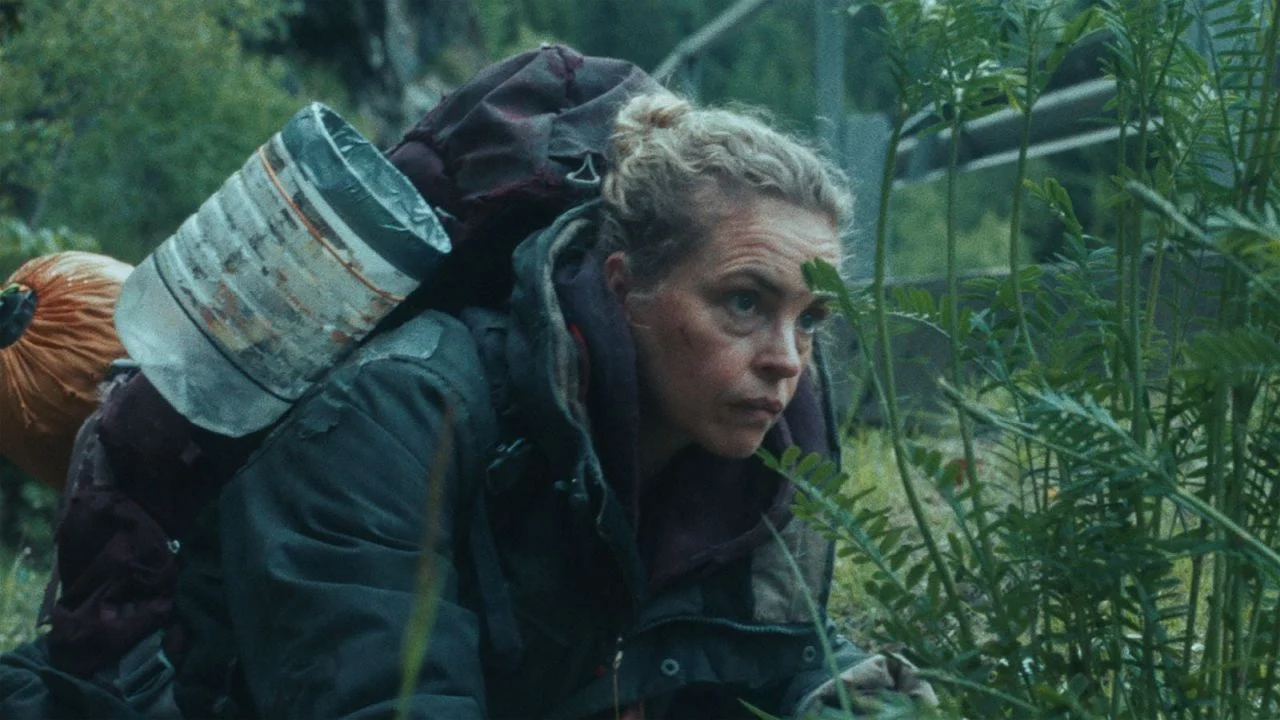
Nina Hoss delivers again in her usual style in “The Other Side”!
After the outbreak of a highly contagious and often fatal epidemic, all European countries have closed their internal borders – and are still increasingly sinking into chaos. The infected are interned in camps where their chance of dying only increases through contact with further virus mutations.
The doctor Hanna (Nina Hoss) was also infected, but survived – and from now on leads a life in secret in the Alps. In a camp with other infected people who strictly maintain safety distances, she meets the heavily pregnant Lila (Precious Mariam Sanusi), her son’s former kindergarten teacher. Together they want to make their way across the Alps to Italy…
Survival between the Alpine peaks
Mariku Minoguchi revealed in an interview that she originally had a woman vs. wilderness film in mind – like “Into The Wild” (2007), only with a female protagonist. This initial idea is certainly noticeable in “The Other Side”: for a good two thirds of the film we follow a single woman in her fight for survival in the loneliness of the barren nature; while hunting, peeing, cooking. Despite the panoramas, Alpine romance is out of the question when Hanna, isolated in a mountain hut, chokes down dry potatoes as a meager meal in the evening by the light of burning logs – or treats a splinter in her shin that she caught while fleeing from the security forces.
Nina Hoss shows the courage to be unsympathetic under subtle abrasion make-up: Even though she has repeatedly embodied brittle and dismissive characters in her career, she has rarely acted as pragmatically and lackluster as she does here in a winter jacket only held together by duct tape. Especially when it comes to Hanna’s rare human encounters, Minoguchi doesn’t skimp on his bitter humor: a skier who has had an accident and is paralyzed can’t quite decide whether he wants to accept help from the infected person or whether he would rather die a certain death from frostbite.
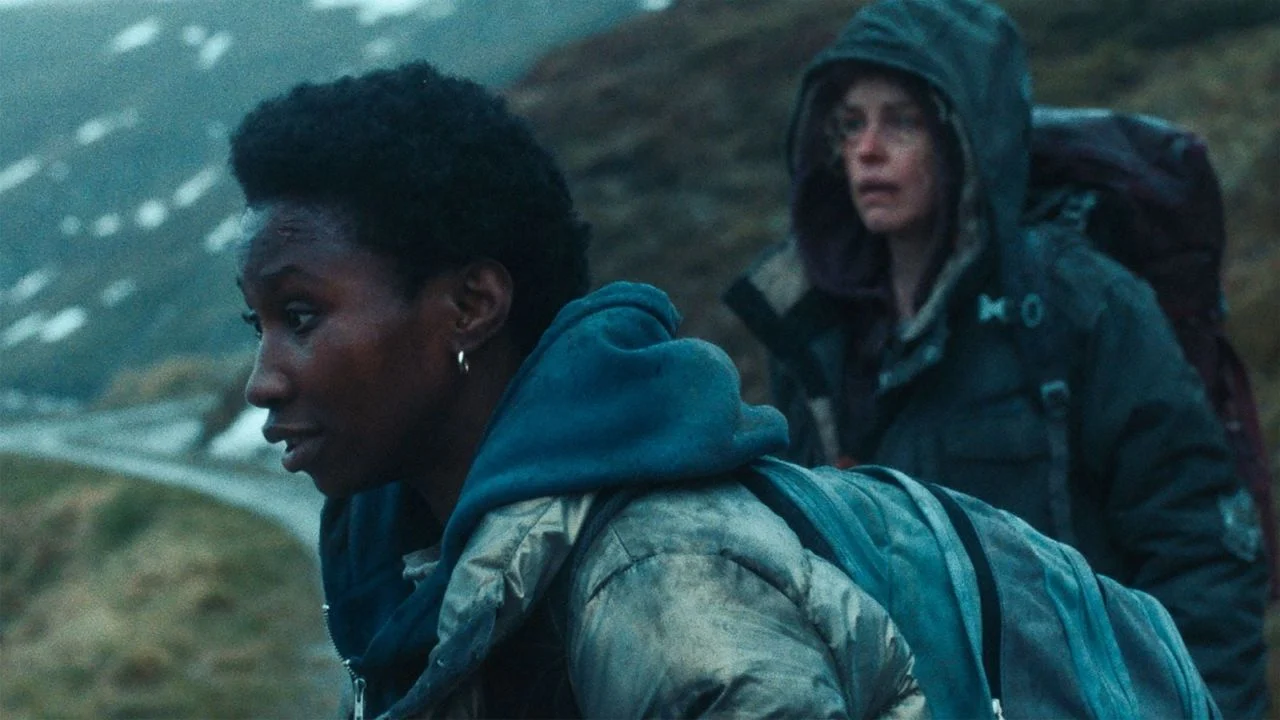
The former kindergarten teacher Lila (Precious Mariam Sanusi) has it even harder – she ultimately has to survive the hardships while heavily pregnant.
Later, Hanna meets an old farmer’s wife (Barbara Petritsch) on a dilapidated farm, who replies succinctly that she is “more afraid of every staircase” than the plague – and invites her to dinner together, where the tragic fate of both women is tentatively revealed. This encounter provides human warmth – the first hug for Hanna in months! – for stirring in the otherwise so reduced scenario with its cool images, in which the background music is also limited to the bare essentials. This also applies to the background to the pandemic: the causes of the epidemic remain unclear from the short radio announcements as well as the exact transmission channels.
Despite the genre, there are no elaborately staged action scenes or rough gore interludes – survival film or not. Minoguchi doesn’t want to commit too much: her dystopia, which only has impressive mountain panoramas in places, but is enriched with plenty of waterfalls, can also be understood as a commentary on the refugee crisis of 2015/16. Dysfunctional social structures, ostracism of population groups and human alienation can also be applied to this. “The Other Side” lives all the more from its dense atmosphere and the subtle horror when, on one of Hanna’s forays, a broken trampoline in the garden and maggots in the pantry of a single-family home show that once again only death is lurking…
Conclusion: An oppressively realistic dystopia against an archaic Alpine backdrop! Even if there are empty spaces in the plot of “The Other Side”, the protagonist’s fight for survival is gripping, especially thanks to Nina Hoss, who is once again extremely strong.