
A sonata was originally a purely instrumental piece – in contrast to the cantata, which also involves singing. In the Viennese classical period (Haydn, Mozart, Beethoven) it became its own art form in three or four movements, usually composed for piano or violin. One of the most famous pieces by the Polish-French composer and pianist Frédéric Chopin was his “Funeral March”, the 3rd movement of his Piano Sonata No. 2 in B minor. The iconic melody became the accompaniment to numerous funerals of heads of state, including Winston Churchill and John F. Kennedy, as well as many Soviet heads of state including Josef Stalin.
But the first funeral service with the so-called “Marche funèbre” was that of Frédéric Chopin himself. In the biopic “Chopin – A Sonata in Paris” about the composer who died early, his greatest hit does not appear at all – and there are good reasons for this: On the one hand, the evergreen does not fit into the opulent drama by Michał Kwiecinski in terms of mood, which is by no means a tragedy, but rather tells a story that is quite tragic, but also full of optimism and joy of life. Furthermore, his death is not shown – and that would probably have been the only appropriate occasion. After all, not every expectation necessarily has to be fulfilled, which in a way underlines the quality of the film.
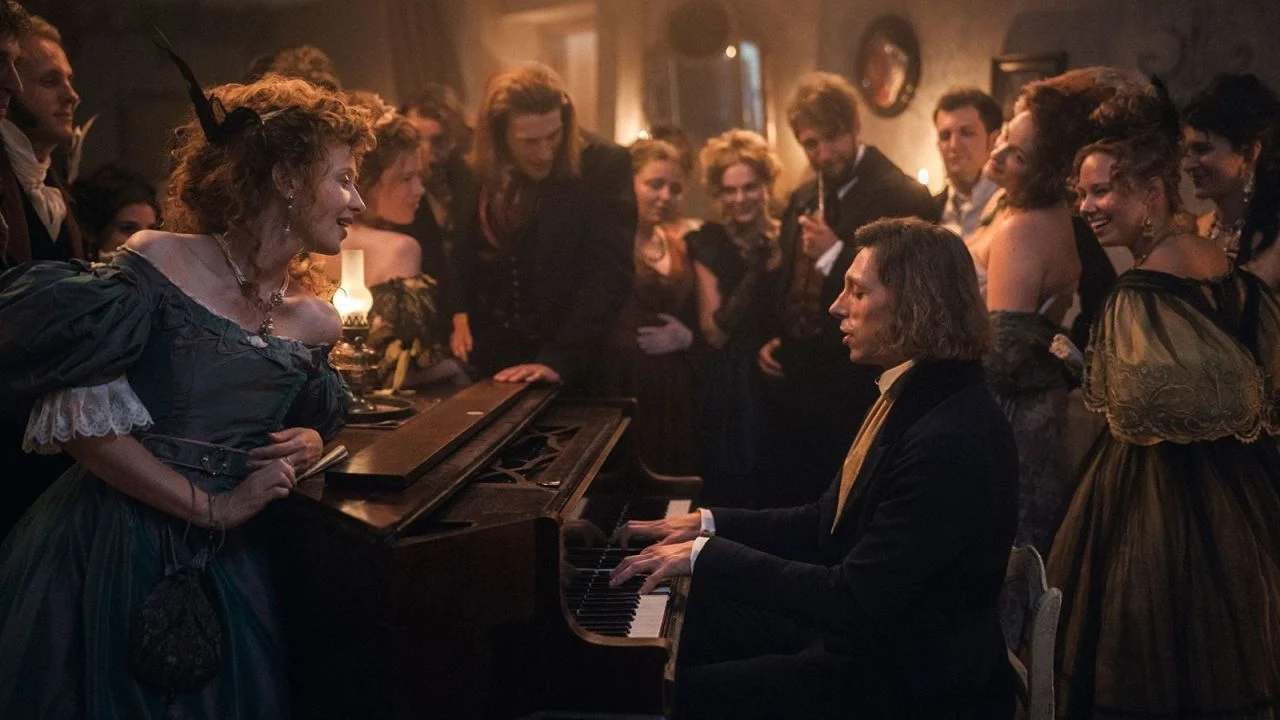
No matter where Chopin (Eryk Kulm) appears, the atmosphere is always exuberant.
Right at the beginning of the film, Chopin (Eryk Kulm) keeps spitting blood. He has tuberculosis, which was still incurable at the time. But Chopin doesn’t think about taking it easy, taking the recommended medication or traveling south. Between bouts of illness he is brimming with energy. He skillfully covers up his weaknesses, even if he is occasionally shaken by fears. He continually builds himself up with his music and presents himself as a pop star who enjoys his fame: everyone knows him, everyone loves him, the Polish-French bon vivant with entertainer qualities who switches expertly between his two native languages and even tries his hand at German.
Together with his best friend Franz Liszt (Victor Meutelet), he is a welcome and celebrated guest in the salons of the high society as well as in poor pubs. Wherever Chopin appears, he appears to be a bon vivant who likes to party, tell jokes and also do canvassing for his piano lessons – after all, the artist also has to earn money. While Liszt appears as a womanizer who cannot escape groupies, Chopin is more reserved. He once says that he cannot love. Only when he meets George Sand (rather inconspicuous and actually not in men’s clothing: Joséphine de la Baume), who is his intellectual equal and conquers his heart by smoking cigars, does it seem as if he has finally found his emotional anchor and his great love…
A walk through deserted Paris
Just as the illness influenced Chopin’s life, it also influenced the film. Some things are fatally reminiscent of the Covid 19 epidemic. Tuberculosis was not even considered an epidemic. It only broke out in 5 – 10% of those infected, and the course – see Chopin – sometimes lasted for many years. This was different with the cholera that broke out in Paris in 1832, when Chopin had just created a fairly solid basis for himself through performances and piano lessons. This is where current parallels become particularly clear. In depressingly clear images, Chopin walks through a suddenly deserted Paris, the streets white with slaked lime. The only noise comes from the carts used to collect the bodies.
Soft singing can be heard from a church, and Chopin spots a choir of nuns singing Mozart’s Requiem. It is such moving images in combination with the music that give the film a melancholic atmosphere full of longing and sympathy for the sick artist through the repeatedly highlighted contrast between glamor and misery. Eryk Kulm plays Chopin as a strong-willed optimist who only has one bad day. His appearance becomes increasingly ethereal and pale. He defends himself against the emerging weakness as best he can, but he retains his humor and exuberance until the end.
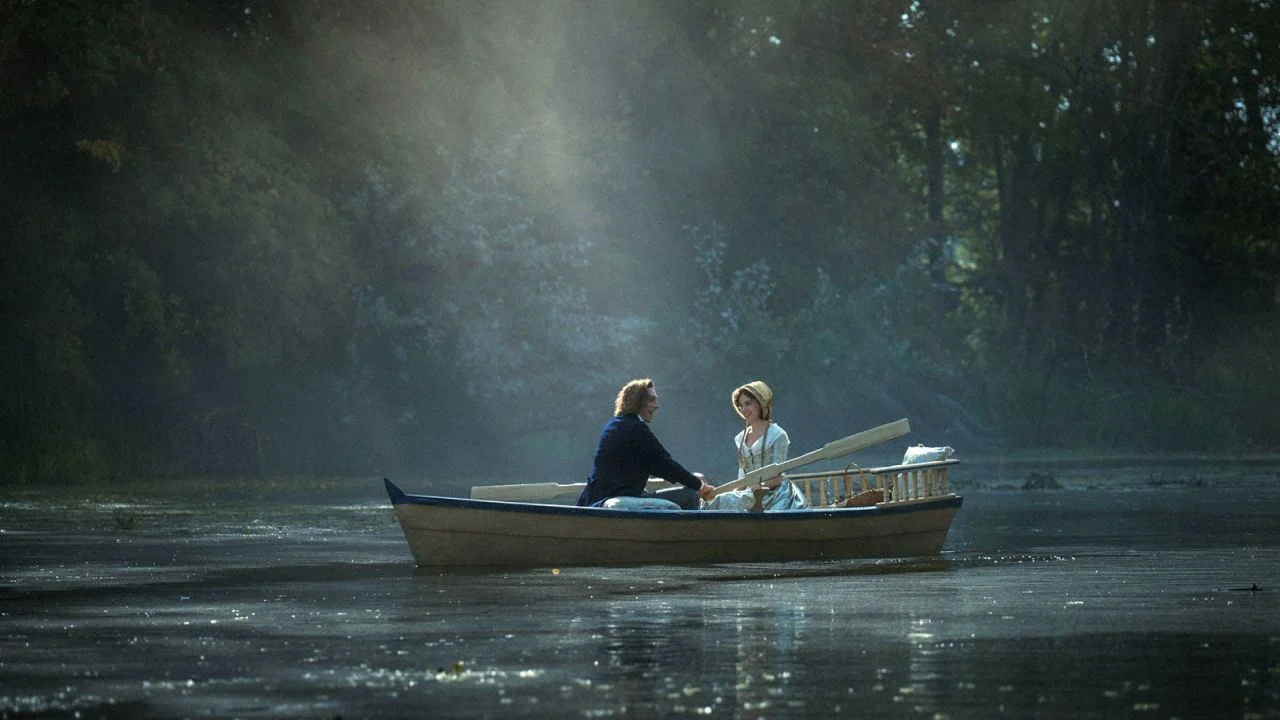
With George Sand (Joséphine de la Baume), a late potential love comes into the star composer’s life.
It’s more about Frédéric the person than Chopin the musician. After all, there are already enough embarrassing film scenes about composers and their work, see “Copying Beethoven” with the pitiful Ed Harris. Or even parodies like in a scene from Ken Russell’s legendary music film classic “Tchaikovsky – Genius and Madness”, when the composer sits at the dinner table with his brother Modest and the latter – smacking his lips and nibbling chicken bones from his full cheeks – suggests that he call the nameless new symphony “Pathétique”. The Polish director Michał Kwiecinski thankfully avoids any clichéd depiction of art and genius in his musical drama, which is lavishly equipped with many effects.
Only occasionally – see the cholera epidemic or Chopin’s morphine-induced hallucinations – “A Sonata in Paris” takes up Ken Russell’s exuberant imagery, but without his pompous and provocative extravagance. Instead, Kwiecinski tells the story of Chopin in Paris – after all, 18 years and almost half of his life. Kwiecinski does not show any dates. They are not important because historical accuracy is not important here. The focus is on Chopin’s personality as someone who lives for his music. And the second main role is played by the city of Paris – a juggernaut, a multicultural metropolis in which the contrasts between rich and poor are just as obvious as the almost manic need of all classes and circles for art and distraction.
Conclusion: Not just for classical music fans, but for everyone who loves opulent cinema: The biopic about Frédéric Chopin is an expressive, atmospheric drama that tells of art and transience in an atmosphere between shimmering lightness and melancholic melancholy.