When the Louis Armstrong classic “It’s A Wonderful World” plays over the opening credits, “trees of green” and “red roses” are sung about, but all we see are escalators and glass facades. In his mercilessly authentic working world trilogy “The Value of Man” (from the perspective of an unemployed person), “Strike” (from the perspective of a trade unionist) and “Another World” (from the perspective of a factory boss), the French director Stéphane Brizé has already sufficiently established that global capitalism sucks for (almost) everyone.
Nevertheless, with “A Good Little Soldier” he’s upping the ante again – with the same clarity and harshness, but also, for the first time, with bitter irony. The missing trees and roses are just the beginning. Like “Stromberg,” “A Good Little Soldier” is set in an insurance company. But at Brizé you don’t need a completely insensitive idiot like Bernd Stromberg as the boss to make everyone’s life hell. Quite the opposite: Capable managers are particularly bad – especially when they (supposedly) mean well.

When Carla (Alba Rohrwacher) looks at her new colleagues, she believes for a long time that she is the problem.
When Carla (Alba Rohrwacher) takes up her new, prestigious position as HR manager, the internal feedback round on an advertising film begins, with which the Paris insurance company wants to improve its image as an employer for top talent. It features employees with physical disabilities who can develop their full potential in the workplace thanks to the company’s inclusive attitude.
Once around the table, everyone reports how touching and important they found the message, at least until it is the CEO’s turn (Vincent Lindon). He collapses the entire concept of the campaign with a simple question: “Does a top talent at the end of a business degree really want to work with a paraplegic person when entering the job market?”
No more funny
In the best scenes of “Stromberg” you’re left laughing in your throat – in “A Good Little Soldier” it goes even further, at a certain point you’re literally vomiting. Brizé also has a precise eye for the absurd and comical aspects of team building measures, in which the participants first have to report on a small moment of happiness from their past 24 hours (an elevator that was right there; or an extra chocolate bar that accidentally fell out of the candy machine).
But whenever the laughter in the cinema gets louder, you already know that it’s about to change again: When a particularly shy employee refuses to take part, her colleagues put her under harsh pressure in search of moments of happiness. And when exactly these moments later end up as mini snippets in the newly edited image film, then the cynicism really can’t be surpassed given the slogans used: “We care about our customers. We care about our employees.”
The problem is the system, not the people
Carla starts with good intentions. For example, when she finds out that the shy woman from the team exercise is also being badly beaten and humiliated by her team leader because of her below-average performance (she only achieves 100 percent). She is even given a secret audio recording of such a shouting attack (“What you are doing is shit, and you are shit”). It’s actually pretty clear what to do in such a situation…
… but Carla is consciously told by her own bosses that in this case the person being bullied is the real problem. Carla will therefore later talk to her in a conversation that is one of the most beautiful examples of Gaslighting in cinema history, suggest that she might have to leave the company.
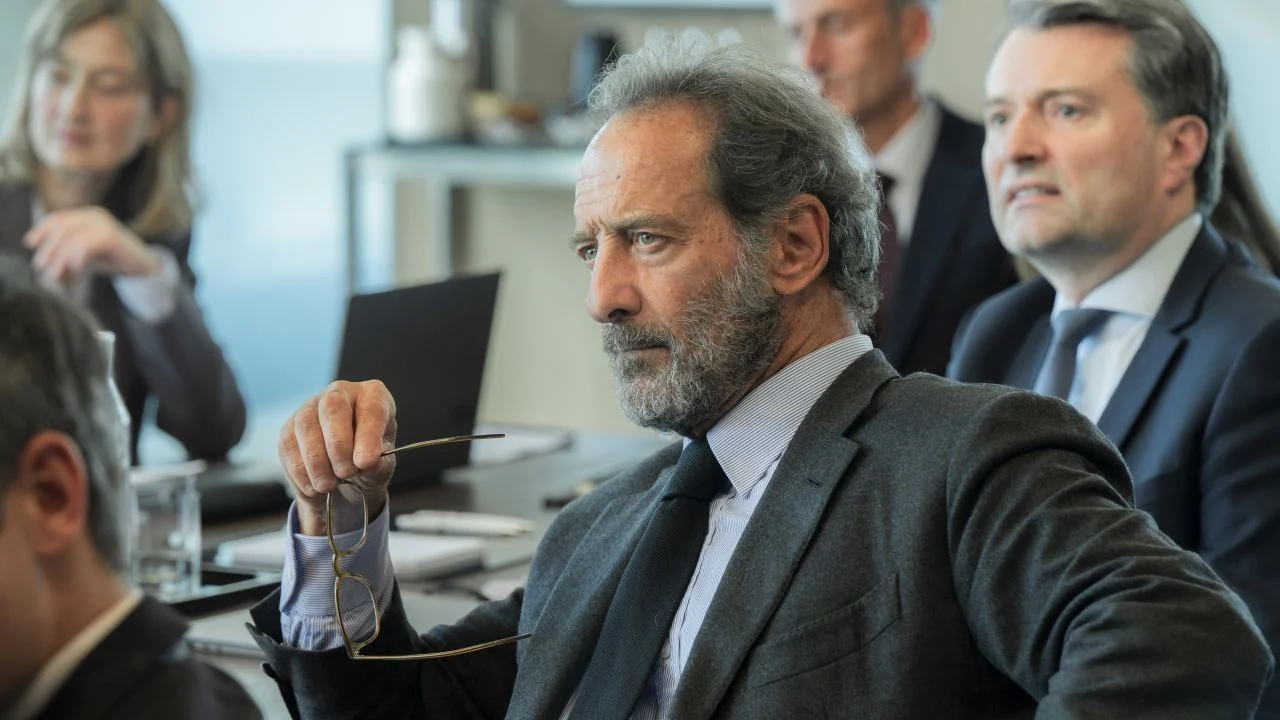
In all three parts by Stéphane Brizé, Vincent Lindon embodied a losing battle against the system. This time he’s just playing a huge asshole.
When Vincent Lindon (“Titane”), as always great, rails against political correctness at the beginning, it’s actually funny and even sounds plausible at first. But later you’re almost ashamed for having laughed at his comments. Nobody can escape the system, which primarily demands the “good little soldiers” of the title.
And while we’re on the subject of martial language, it only makes sense that when Carla has a panic attack, her sister suggests breathing exercises that were actually developed for US Marines in stressful situations and not for an average day in the office.
Conclusion: Stéphane Brizé has long since taken off his kid gloves when it comes to reckoning with the modern working world – and he doesn’t put them back on again by working with plenty of (very bitter) humor for the first time in “A Good Little Soldier”. He uses a wooden hammer instead of a scalpel – and still hits the bull’s eye again.
We saw “A Good Little Soldier” at the Venice Film Festival, where it had its world premiere as part of the official competition.