
Most recently, “The Transporter” director Louis Leterrier was involved in numerous Hollywood productions, often with gigantic budgets. His material battle “Fast & Furious 10” is said to have swallowed up an estimated $340 million (which, by the way, is one of the main reasons why fans have to continue to wait for the planned franchise conclusion “Fast Forever”). Even the production costs of the ten episodes of the Netflix series “The Dark Crystal: Age of Resistance” scratched the $100 million mark due to handmade puppets, built sets and the lack of CGI. Nevertheless, the Frenchman groaned to The Hollywood Reporter that the comparatively modest sci-fi thriller “The Last House,” which has now been released directly on Netflix, was his most difficult shoot to date because of the effort involved.
And this time he actually relies largely on practical effects again: Not only was the building, which changes increasingly over the course of the film, built in the studio with disposable concrete and wood, the garden and the neighborhood were also recreated. And that despite only having a fraction of the budget available for it compared to his other projects. The result is still mixed: the set design of the eponymous hovel actually looks great, while at the same time the filmmaker repeatedly fails in the intimate moments of everyday family life in his enigmatic mystery scenario – and these make up almost half of the entire running time.
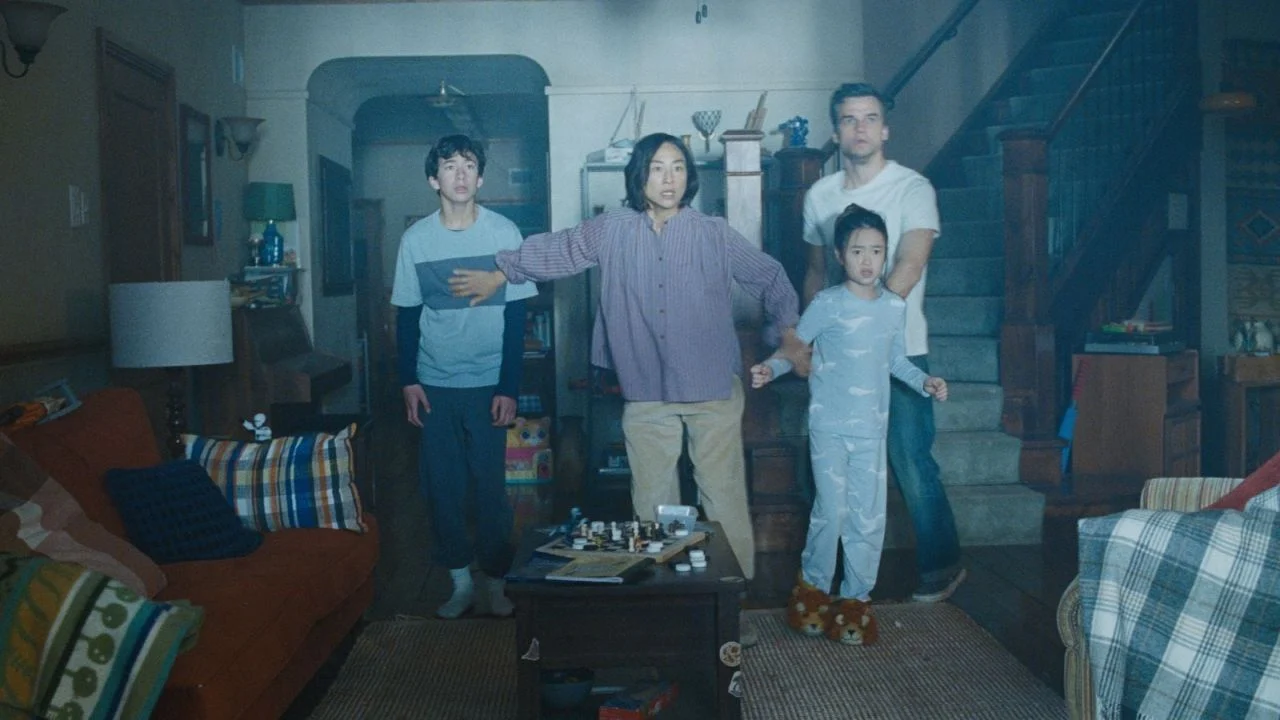
From one moment to the next, the Delgado family is trapped in their house.
The Delgado family is about to go Christmas tree shopping when they notice that both the doors and windows of their house are locked. Since the onset of continuous rain, there seems to be a mysterious barrier around their own four walls, not only in their home but also in their neighborhood, which is keeping the residents prisoner.
As their imprisonment increases, father Jason (Wagner Moura), mother Ann (Greta Lee) and their children Ruth (young: Riley Chung, later: Emma Ho) and Graham (young: Noah Alexander Sosnowski, later: Gabriel Barbosa) develop new survival strategies to avoid the threat of starvation. But it soon turns out that the real danger is lurking outside in the rain…
Some people will switch off when it comes to the dog scene
Fish and water are the main metaphorical motifs in the script by Matthew Robinson (“Love And Monsters”), who appropriately developed the first ideas for his script during the Corona pandemic. To pass the time, the passionate angler Jason shows his children how to gut a fish – but without the Internet there are no YouTube videos and there are no real animals either, which is why he simply uses tattered stuffed animals as illustrative material. The first half of the film is full of such community activities, which are initially strung together with little tension until the first vague clues are scattered about what is actually going on outside the locked windows in the rain.
The family also includes the dog Cassidy, who has a heart condition and is soon running out of medication. The lovable four-legged friend is soon just whimpering, which is why Jason is supposed to put him out of his misery with his handgun. Meanwhile, the rest of the family sits in front of the television and watches the 1982 musical “Annie” (one of two DVDs in the house), which is turned up to full volume to drown out the gunshots. Actually a moving, dramatic scene – but like most of Leterrier’s potentially touching moments, it is completely dramatized without empathy and hastily. Restless shots that are only a few seconds long, accompanied by swelling string music – that’s simply not enough to allow us to be emotionally involved in the fact that the four protagonists suddenly have tears in their eyes.
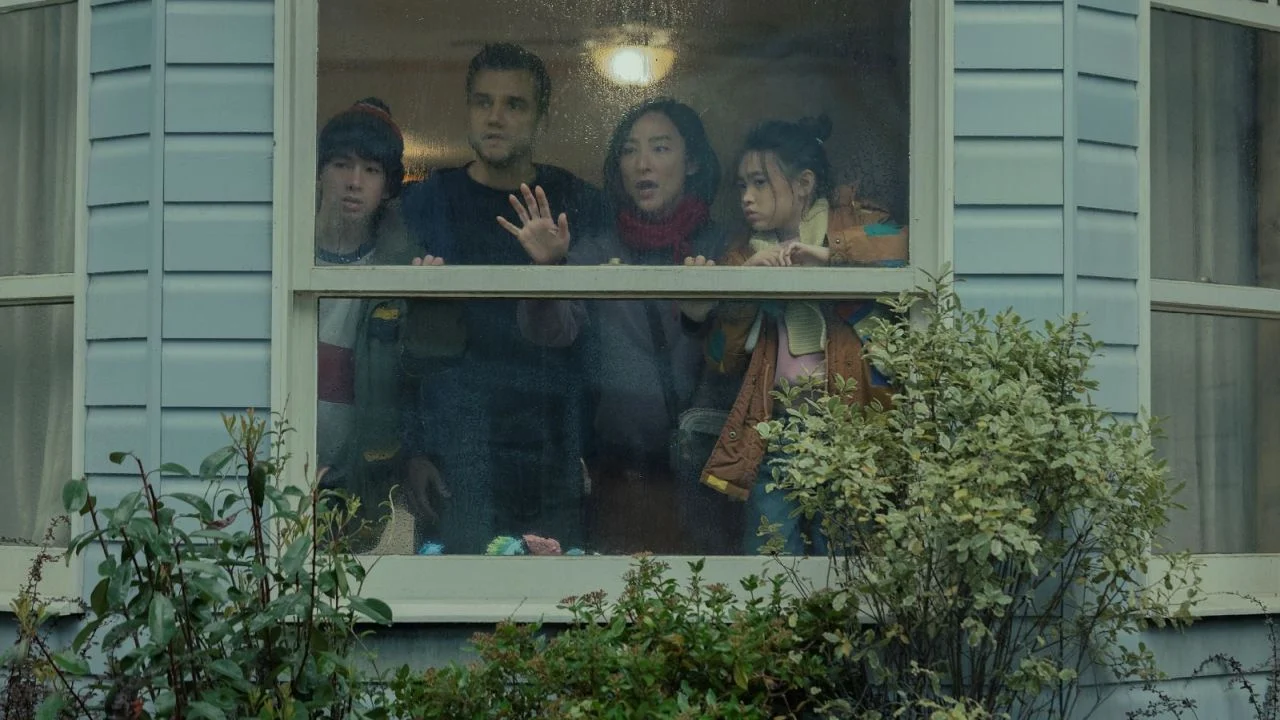
Is it just raining incessantly – or is there perhaps a completely different threat hidden in the ongoing storm?
Even if a montage about the increasingly perfected “chimney fishing” with improvised traps creates a bit of drama in view of the approaching starvation: It is difficult to sympathize when “Narcos” series star Wagner Moura as the impulsive engineer and “Past Lives” discovery Greta Lee as the cold moralizer mother have just as unlovable qualities as their pubescent film children. Emotionally, this is only very, very distantly reminiscent of the Steven Spielberg classics such as “Close Encounters of the Third Kind” (1977) or “ET – The Extra-Terrestrial” (1982), which Leterrier says he also based the technical setup on.
So far, Leterrier has appeared primarily as a genre director with a penchant for spectacle – from the martial arts brutality in “Unleashed” to the illusion overkill in “Now You See Me”. That’s exactly what you notice in “The Last House” after a jump in time in the noticeably more effects-heavy and less slow second half. The Delgado family’s ruined building, which has now been transformed into an improvised indoor vegetable patch of the brand’s own construction, pulls out all the stops when it comes to set design, the scenario becomes increasingly oppressive due to the rising masses of water – and that’s where the action-focused finale comes. At this point at the latest, Leterrier is completely back in his element, like a fish back in the water – while he continues to noticeably alienate himself from human emotions.
Conclusion: In the first half a rather tough chamber drama with a few survival tips, “The Last House” turns into solid sci-fi action in the noticeably faster-paced second half. Directed by Louis Leterrier, the impressively versatile house set leaves a lasting impression – while the four protagonists remain largely interchangeable.