
It has now been ten years since Swedish director Hannes Holm created a modern cult figure in comedy cinema with the grumpy, bitter pensioner Ove. The protagonist of the heartwarming and melancholic drama “A Man Called Ove” quickly had the sympathies of critics and audiences on his side. And that despite – or because of? – his rugged nature. In the US remake, the character was even played by superstar Tom Hanks. It remains to be seen whether the main character in Holm’s latest work can achieve cult status comparable to that of Ove Lindahl.
But one thing is already certain: Ove and the grumpy, withdrawn outsider from “The Rain Master” would have gotten along wonderfully. Both are solitary loners who really offend those around them – much to the delight of the cinema audience. Holm’s eleventh feature film almost exactly matches the tone of popular Swedish tragicomedies such as “The Hundred-Year-Old Man Who Climbed Out of the Window and Disappeared” or “Britt-Marie Was Here”. “The Rain Master” also mixes serious topics and profound, universal questions with subtle, light humor. As the icing on the cake, the filmmaker treats us to a story with a surrealistic, fantastic touch that provides a touch of screen magic.
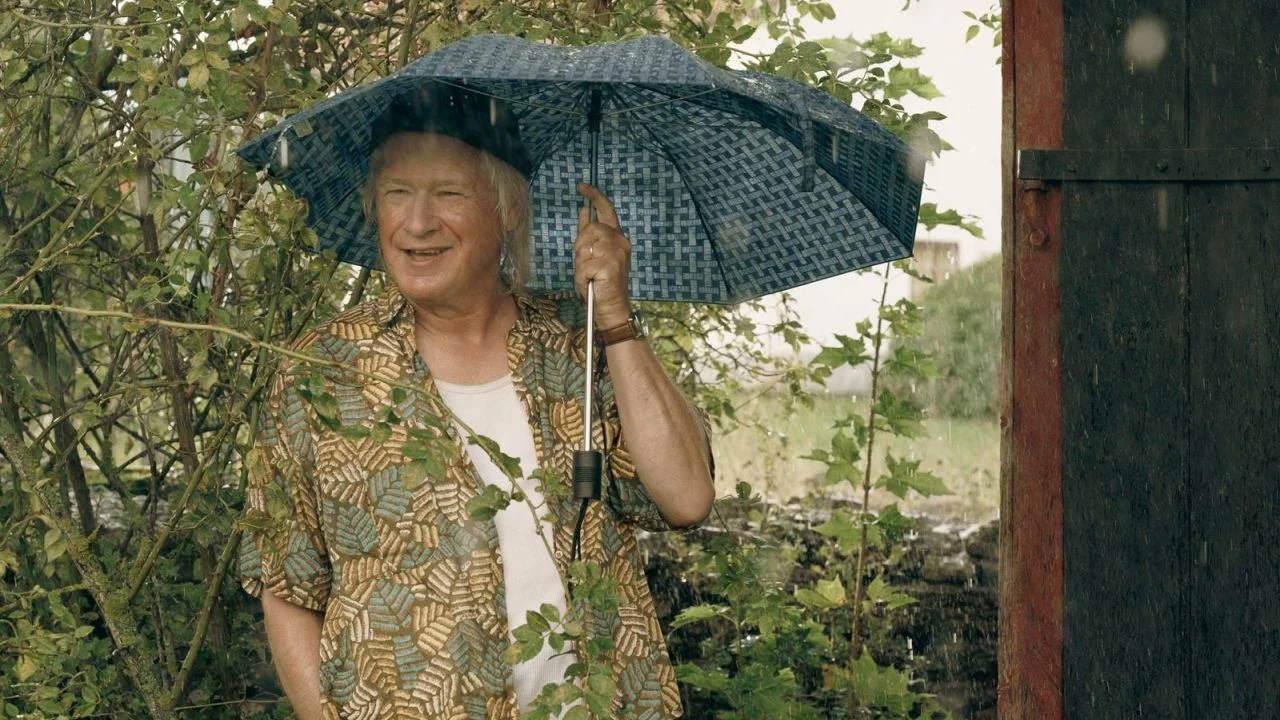
After “The Hundred-Year-Old Man Who Climbed Out of the Window and Disappeared,” Swedish comedian Robert Gustafsson also turns “The Rain Master” into an event!
Ingmar Karlsson (Robert Gustafsson) lives in a quiet community in southern Sweden. Since his wife’s death, however, the stubborn pensioner has withdrawn. The relationship with his daughter Erika (Emelia Sallhag) has cooled down. The only consolation and distraction are his wife’s roses – and his neighbor Rolf (Jonas Karlsson), who keeps Ingmar on his toes with his pushy manner. As the hottest summer of all time dominates Sweden, the entire region waits in vain for the relief of rain. But there is only one who can make it rain: Ingmar! He himself doesn’t know how he does it, but he has this special ability. Couldn’t he possibly make the whole world a better place with his rain talent?
In the headlock of the climate crisis
The Swedish comedian Robert Gustafsson, who became internationally known for “The Hundred-Year-Old Man Who Climbed Out of the Window and Disappeared,” is an absolute ideal choice. The actor achieves a real feat with his nuanced performance. He plays a strange, taciturn hermit who has been arrested in the past, who watches old VHS recordings and, with his mood swings, makes things anything but easy, especially for his daughter Erika. Nevertheless, you immediately fall in love with the “Rain Master”. How does Gustafsson manage this? Through subtle humor, quiet irony and a very differentiated facial expression. The 62-year-old conveys a wealth of sensations with a single thoughtful look or the furrow of his eyebrows.
The emotional effect here is not created by the sweeping gesture, but rather by the intensity and precision of the main actor’s reduced non-verbal communication. This is the greatest acting art! Furthermore, the rest of the cast is in no way inferior to Gustafsson. The interplay of the wonderfully performed ensemble harmonizes perfectly from minute one. What will be particularly memorable are the expressive co-screenwriter Jonas Karlsson as the annoying (but kind-hearted) neighbor and Simon Gregor Carlsson as Erika’s partner Daniel. He is the connecting link in the cold father-daughter relationship – and distinguishes himself as an invigorating element with a penchant for pragmatism, whose hands-on, rational nature fits wonderfully with Erika’s reason and unselfish nature.
Let it rain! With superpower against extreme weather
In the tradition of magical realism, Holm interweaves the – rather unspectacular – everyday life of his protagonist with his unexpected superpower to make it rain at will. These mysterious, supernatural events happen naturally and without much explanation. The other villagers react to this with both disbelief and fascination. “Is it true that you can make it rain?” asks one of the residents. Ingmar’s reaction to this speaks volumes and fits very well with the mysterious aura and enigma of the film, which deliberately leaves much unclear and to the viewer’s imagination.
The fantasy touch sets “The Rain Master” apart from most other bittersweet tragicomedies and feel-good movies from Scandinavia. And: Holm does not use this plot element purely as a means to an end. Ingmar’s sudden ability to become a “Rain Man” serves the dramaturgy and is symbolic of his inner sensitivities. Because the emotional states and mental states he experiences sometimes seem just as inexplicable as Ingmar’s newly discovered gift.
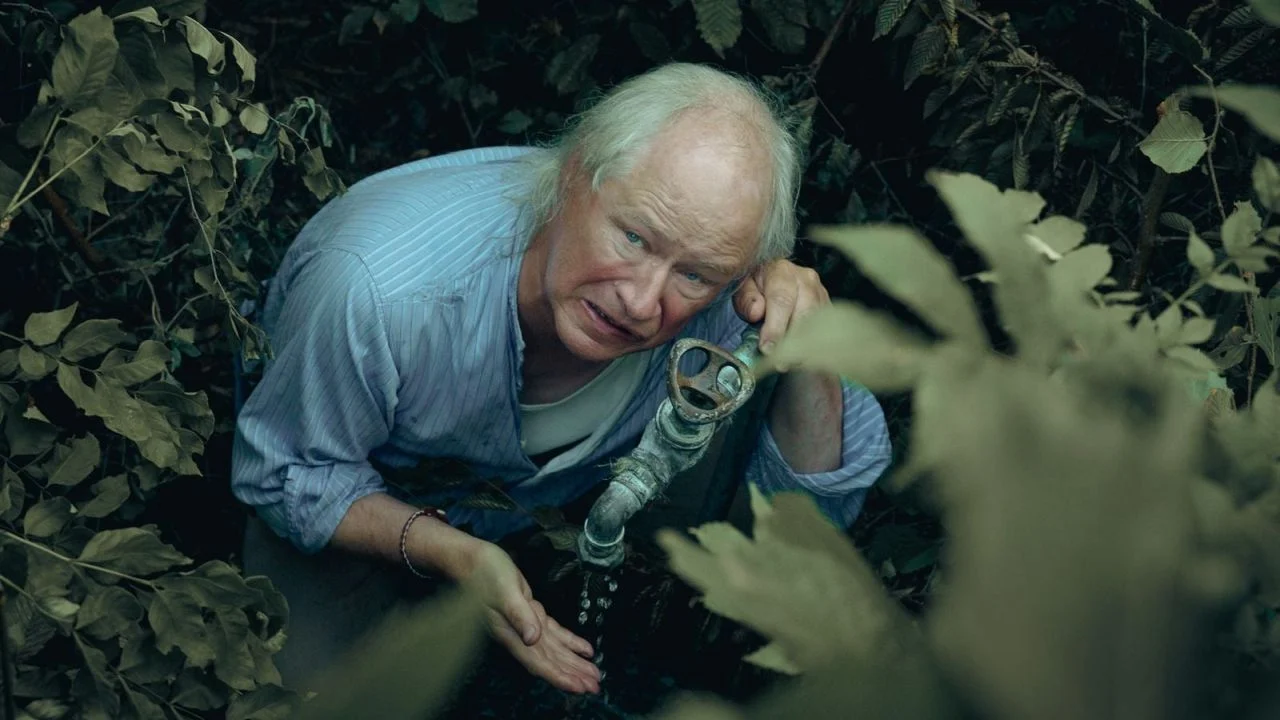
“The Rain Master” celebrates magical realism – and thus always creates magical feel-good moments.
The thematic range that Holm covers is considerable and makes it clear that “The Rain Master” is much more than “just” an entertaining dramedy. It’s about loneliness in old age, dealing with grief, a complicated father-daughter relationship, the chance for a new beginning, community and cohesion. The residents rely on this “feeling of togetherness” and strong togetherness in order to jointly address the climate crisis and the associated water shortage.
The extreme weather manifests itself in the form of a relentless period of drought and inhumane heat, which causes beads of sweat to form on people’s foreheads just by doing nothing. Through his bright imagery and the scenery bathed in blazing light, Holm makes the sultriness and tormenting warmth almost physically noticeable for his audience. We see soaking wet people, dry fields, heat haze, sticky asphalt. Sound familiar? Exactly, and that’s why the film couldn’t be better suited to the summer of the century in 2026 in terms of content alone.
Conclusion: A sophisticated and light-hearted charm trip for fans of melancholic comedies and poetic film art. With “The Rain Master,” director Hannes Holm creates a small film gem of considerable dramaturgical originality about a stubborn older gentleman who can influence the weather. In terms of quality, the film even surpasses Holm’s two-time Oscar-nominated Swedish box office hit “A Man Called Ove” – and proves to be a carefully staged, well-timed arthouse tip.