
If there is one nanogenre that has been underrepresented in cinema, it is witch films. Hardly any other archetypal figure offers such a versatile projection surface: The witch effortlessly combines horror, fantasy and coming-of-age with stories about (female) self-empowerment, social control and questions about the authority to interpret a narrative. With the success of “Wicked,” witches recently moved back into cultural consciousness – a development that is now obviously bearing fruit.
Before “Magic Sisters 2” celebrates the return of the Owens matriarchy in September, we now get a sugar-free witch alternative with “Forbidden Fruits”, in which Lili Reinhart follows in Nicole Kidman’s footsteps with a red wig. Despite premiering at the renowned South by Southwest Festival in the USA, Meredith Alloway’s directorial debut secretly and quietly opens in German cinemas without any significant marketing.
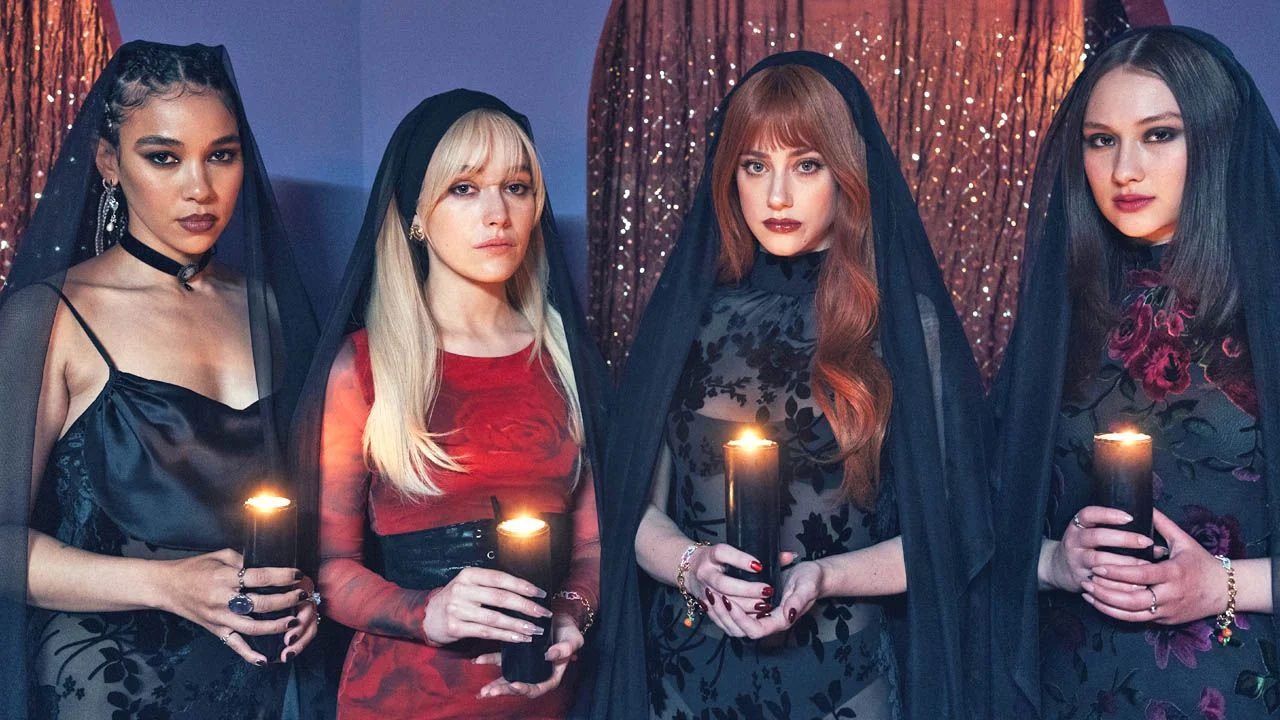
Mall employees by day, coven by night: Fig (Alexandra Shipp), Cherry (Victoria Pedretti), Apple (Lili Reinhart) and newcomer Pumpkin (Lola Tung).
“Forbidden Fruits” takes place in the microcosm of a Texas mall. While food court employees make up the bottom of the social food chain, the employees of the fashion boutique Free Eden are at the top of the department store’s internal hierarchy. During the day, the trio around Apple (Reinhart), Cherry (Victoria Pedretti) and Fig (Alexandra Shipp) assess wealthy Bobo mothers and would-be influencers and quickly give the decor items a higher price tag. After work, the young women form a coven and pray to the “ultimate martyr”: Marilyn Monroe. After pretzel seller Pumpkin (Lola Tung) tries to become part of the coveted Free Eden team, their carefully maintained facade of female cohesion and “sisterhood” begins to crumble.
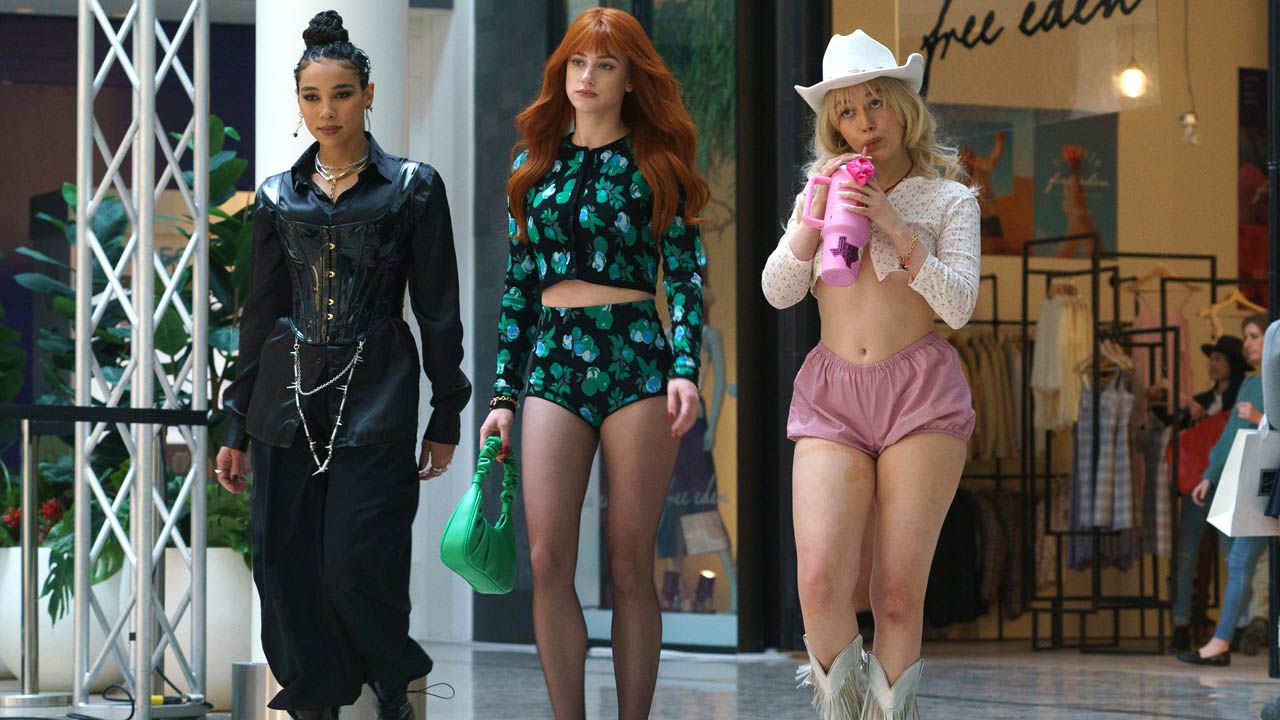
Of course, watching attractive people in extravagant costumes always has its appeal – but does “Forbidden Fruits” offer more than that?
The cast list reads like a parade of stars from all the teen series of recent years: “The Summer When I Became Beautiful” meets “Riverdale” and “You” as well as the British version of “House of Anubis”. The target group of the film is therefore unmistakably set: the generation that only knows biting young adult comedies like “The Witch Club,” “Heathers” and “The Sugar-Sweet Death” second-hand (if at all) and is now about to experience a similar pop culture phenomenon themselves. Ultimately, all attempts to revive the originals in the form of remakes or series spin-offs have failed.
The fact that “Forbidden Fruits” was filmed in the same mall as the high school comedy classic “Girls Club” almost seems like a direct reference to the tradition of these well-known darkly humorous dissections of female group dynamics. It’s probably not for nothing that the fruity clique also has special rules for Wednesdays, which inevitably brings back memories of the cult quote “We wear pink on Wednesdays.” The sometimes sharp-tongued dialogues are reminiscent of Diablo Cody’s script work for “Jennifer’s Body” or “Juno”, although the author only acted as a producer here. In fact, “Forbidden Fruits” is based on the Off-Off-Broadway play “Of The Woman Came The Beginning Of Sin, And Through Her We All Die” by Lily Houghton, who also co-wrote the screenplay with director Meredith Alloway.
Lots of style, little substance
Since the entire film takes place in this shopping center, the production has a deliberately artificial character, which is further reinforced by the sterile environment and artificial lighting. The characters only see daylight when they leave their store, and even then it shines in a faint, filtered form through the building’s ceiling windows. The only exterior shots are limited to the parking lot. This creates a feeling of temporal disorientation – not only for the characters, but also for the audience. This results in less fascination than an emotional distance from the event.
The almost arbitrary direction of the clique’s magic reflects the real trend towards the marketing of esoteric practices, in which individual spirituality is increasingly made consumable (Urban Outfitters and its offshoots actually carry tarot cards, altar candles and healing stones alongside their classic clothing range). Ultimately, however, the shop’s consumer culture is nothing more than a decorative background and serves as a stage for extravagant costumes and stylized staging. Like a runway show in Paris, there’s a certain appeal in seeing attractive people in spectacular outfits, but there’s little substance behind the celebration of sequins and glittery miniskirts.
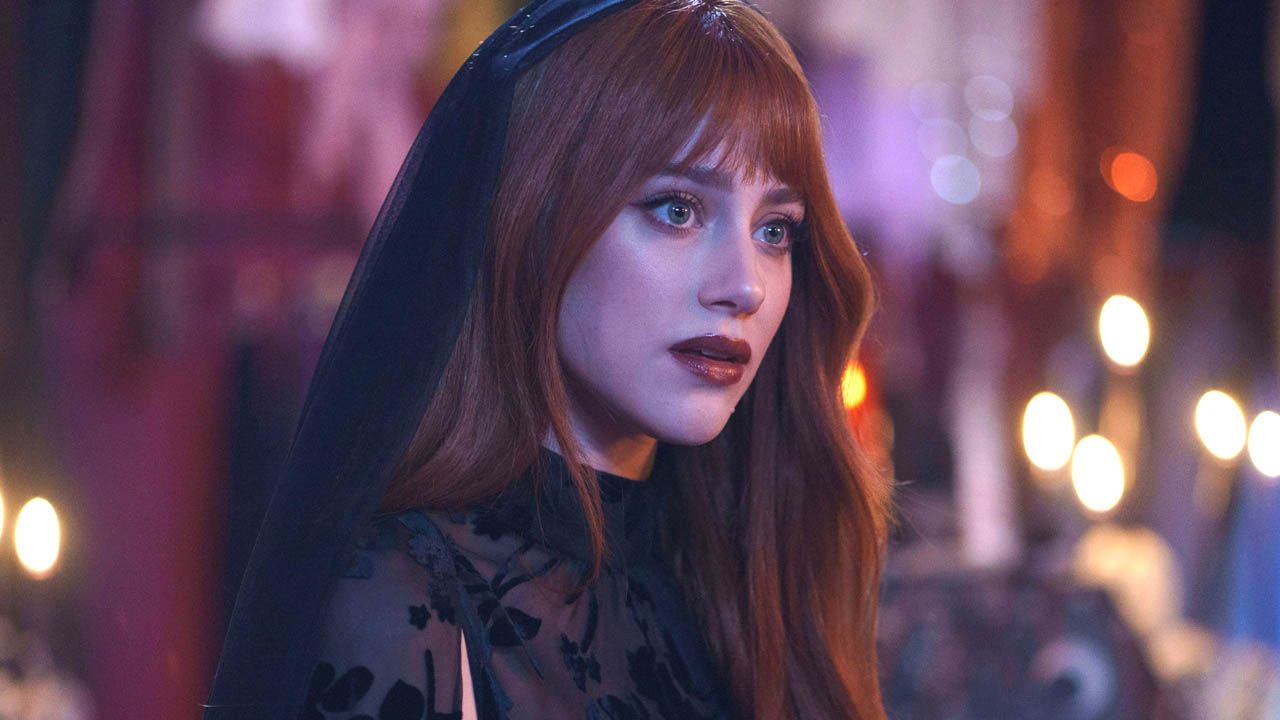
Lili Reinhart understands exactly what kind of film she is starring in – but Apple remains a rather pale leader.
Despite the clearly dark direction, Apple remains a pale variant of the spokesmen typical of this genre. Although Lili Reinhart manages to compensate for some narrative weaknesses through her understanding of the campy, exaggerated tone of the film, her character’s asserted dominance comes primarily to the fore in the scenes with Cherry, who is deliberately drawn as a counterpoint. Victoria Pedretti is nevertheless the acting highlight of the film, giving her role of the naive orphan who looks for recognition in the wrong places a noticeable vulnerability instead of reducing her to the stereotype of the blonde idiot.
The starting point is charmingly idiosyncratic, but the characters’ motivations remain too schematic to really surprise or captivate in the long term. The attempt to shed light on the dark sides and problematic side effects of female friendships is an immensely exciting approach, but the film remains frustratingly superficial in this area. Instead of actively dealing with the uncomfortable aspects of these relationships, the film avoids the courage to be ambivalent and ultimately takes refuge in old-fashioned clichés. In view of the deliberately used provocative elements of black magic and willingness to murder, this restraint seems all the more incomprehensible.
Too tame to become a future cult film
The first shot shows that consistency is in short supply in this film. Following the “If you know, you know” principle, we see Apple’s fingernails in close-up: the index and middle fingers of one hand are filed noticeably shorter and flatter than the rest of the manicure. This practical adaptation for intimate practices is considered a discreet reference to lesbian sexuality. However, the implied queerness of her character remains in the subtext of the film.
Ultimately, this gives the impression that “Forbidden Fruits” flirts with queer and feminist perspectives, but shy away from the complexity of its own themes. What remains is a reasonably entertaining film, but one that only uses breaking taboos as a stylistic accessory. It should largely appeal to its young target group, but despite its attractive aesthetics and pointed lines of dialogue, “Forbidden Fruits” lacks the decisive punch to join the ranks of the cult films on which it is so obviously based.
Conclusion: “Forbidden Fruits” is more sticky fruit candy than fresh fruit: bright, seductive and full of synthetic stimuli. The morbid craving for artificial flavors is served, but there is little narrative substance hidden beneath the gaudy surface.