
Anyone who wants to loosen blockages in a deadlocked system or uncover unconscious entanglements can do so with the help of a family constellation: In this method, which has been established in psychotherapy for decades, an affected person chooses around ten to 20 strangers to represent the family members, who arrange themselves in a room in relation to themselves. Conflicts and internal dynamics are visualized and – in the best case – resolved sustainably. However, that doesn’t always work…
Even in Pauline Roenneberg’s (“Sooner or Later”), the deeply black and precisely observed, but ultimately a bit too long, tragicomedy “Cold Dog” (“Sooner or Later”), such a family constellation worsens the overall situation considerably – because in addition to juicy secrets, it also brings unexpected claims to power and open hostilities to light. During a busy and often funny, but also bitterly bitter family dispute, the frequent laughter sometimes freezes us – not least because we may remember our last celebration with our dear relatives.
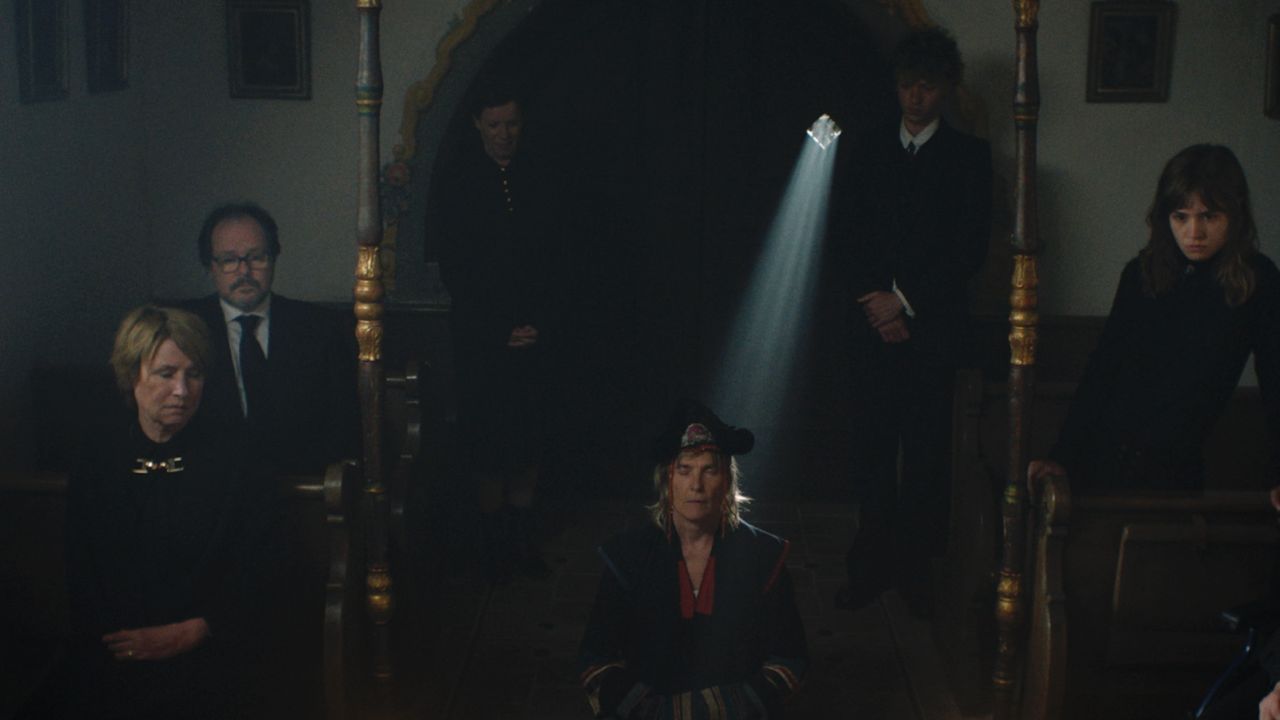
In Cold Dog, the concept of family is not necessarily something bright and cheerful.
Everything is set up for the celebration of Hermann Mann’s 100th birthday: his wife Marianne (Corinna Harfouch) has baked him his favorite dessert “Cold Dog”, the sparklers are sparkling and all the relatives gather in the family villa where the celebration is to take place. In addition to Marianne’s biological daughter Valerie (Victoria Mayer) and her granddaughter Fanny (Lea Drinda), Hermann’s children from his marriage to his ex-wife, who died under mysterious circumstances, Karoline (Karoline Eichhorn) and Kasimir (Thomas Mraz), also want to convey their congratulations to the patriarch. And even the mayor has announced his presence.
It’s just stupid that Hermann committed suicide that night and is now lying dead in his bed: The Vietnamese housekeeper Joy (Mai Duong Kieu), who quickly makes his will disappear, initially successfully keeps this secret from the other guests together with Marianne, Valerie and Fanny. However, when the death of the head of the family can no longer be denied, the celebration escalates and brings many unsaid things to light: led by alternative practitioner Ingo Fleischmann (Niels Bormann), a family constellation is intended to resolve the conflicts. However, this only works to a limited extent…
Brass concert for a corpse
Dramaturgically, “Cold Dog” can be roughly split into three parts and begins as a turbulent game of hide-and-seek with pitch-black humor, good timing and some slapstick moments: keeping Hermann’s death a secret from parts of the family, local journalist Anna (Lara Mandoki) and the part-time guests from the village generates many successful gags in the first three quarters of an hour and culminates in a crazy sequence in which the local brass band as a corpse disguised as alive in a wheelchair plays a solemn serenade in the garden. However, it only becomes really interesting – because it is emotional and disturbing instead of cheerful and pleasant – afterwards. This is also why the film is a whole lot too long at 138 minutes.
When the cat is out of the bag and the death for Karoline and Kasimir is no longer news, director and screenwriter Pauline Roenneberg, who wrote the story together with Britta Schwem, takes on an increasingly serious tone: the previously light-hearted laughter at the strange game of hide-and-seek gets stuck in our throats more and more often. As in some German we-eat-together-and-fiddle-our-opinion comedies in the style of “The First Name” or “The Perfect Secret”, sometimes more and sometimes less successfully tested, many accusations come to the table in a chamber play-like atmosphere that question the power relations in the family and lure the parties involved out of their reserve – whether they want it or not.
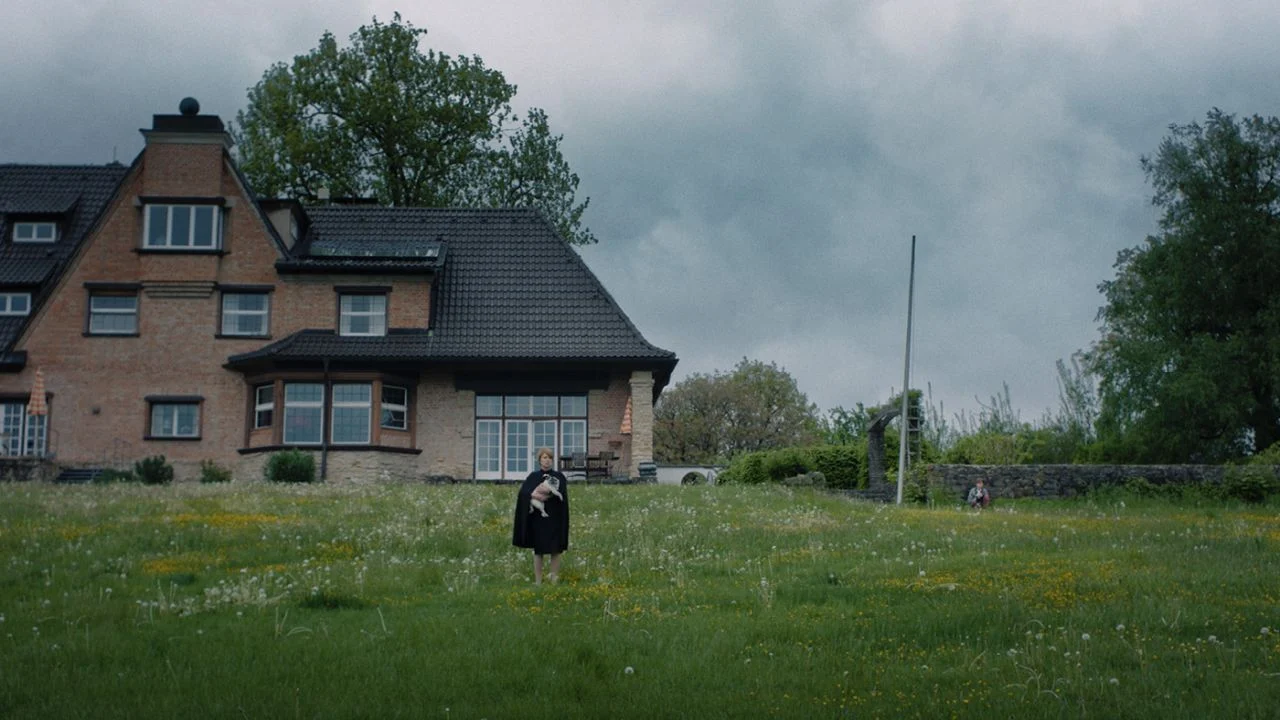
Marianne (Corinna Harfouch) can only really trust her pug!
Each of the family members has character traits and characteristics from which their behavior and many conflict situations are derived: the embittered veterinarian Valerie, who sits in a wheelchair, has very little to do with the esoteric practices of her egocentric stepsister Karoline, who can only be called “Oonagh”. Tie wearer Kasimir, on the other hand, did not look after the finances of the family foundation quite as reliably as one would expect from him. Meanwhile, the single parent Joy bravely endures Marianne’s everyday racism, while Fanny, who is about to come of age but has not yet been privy to anything, feels like she is in the wrong film.
With the convening of the family constellation, “Cold Dog” heads towards its first climax after a good hour – unfortunately the script then indulges in repeated extra rounds (e.g. a second, methodologically varied constellation). All of this generates some idle time and could certainly have been tightened significantly. The deputies appointed by Karoline fulfill their roles convincingly from the first attempt and reveal that there is more smoldering beneath the surface than was previously discussed at the coffee table.
Resolution without aha effect
The central twist about secret paternity can also be guessed at an early stage – so the late realization hardly causes any surprise, but at least offers the chance for a funny, nostalgic allusion to the spy adventure “James Bond 007: The Man with the Golden Gun”. A central role in the ensemble is played by the astonished Fanny, who befriends the refreshingly realistic undertaker Max Fromm (Jeremias Meyer): In the shattered three-generation clan, the teenager is the welcome, likeable exception among power-hungry opportunists, quarreling sisters and buttoned-up grandmothers.
From the already strong cast, the young Lea Drinda (“We Children from Bahnhof Zoo”) stands out with her great performance – but it’s also a lot of fun to watch the established TV and cinema greats Corinna Harfouch, Victoria Mayer and Karoline Eichhorn getting into trouble in their ironically exaggerated roles. And then there is the magnificent Niels Bormann (“Sunny Places”): As a wonderfully diplomatic but also invasive therapist, he steals almost every scene in which he appears.
Conclusion: As a deep black tragicomedy, “Cold Dog” takes us on numerous swimming laps in the family shark tank – but one or two laps less would certainly not have detracted from the enjoyment, on the contrary.
We saw “Cold Dog” at the Munich Film Festival 2026, where it celebrated its world premiere in the “New German Cinema” section.