
At least it was clear from the start that Steven Spielberg’s “Disclosure Day – The Day of Truth” would be about aliens in some way. After all, the project was considered a UFO film early on. However, what exactly Spielberg intended remained a mystery. A marketing campaign designed for maximum secrecy kept all details under wraps – including the title. A mixture of cryptic hints and promising slogans like “Everything Will Be Revealed” sent the rumor mill churning. Some fans were even convinced that the new film could be a late sequel to the sci-fi classic “Close Encounters of the Third Kind.”
An advertising that relies so aggressively on mystery naturally not only arouses curiosity, but also quickly raises expectations to astronomical heights – and this could be the biggest stumbling block for many viewers. But even if Steven Spielberg’s return to classic science fiction cinema ultimately turns out to be significantly less mysterious than the marketing machine long suggested, “Disclosure Day – The Day of Truth” ultimately turns out to be a remarkably coherent blockbuster summary of a still visionary filmmaker, peppered with memorable moments.
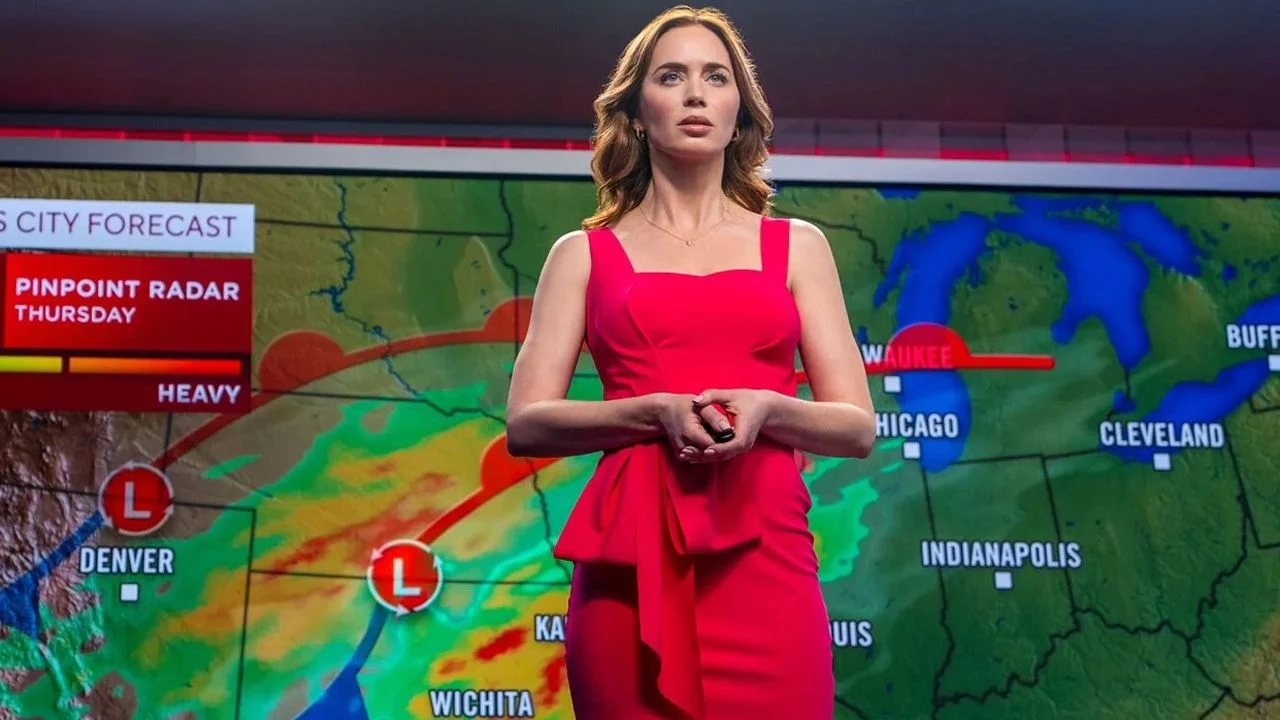
Margaret (Emily Blunt) can’t explain why she suddenly makes such inexplicable noises in front of the camera.
Margaret Fairchild (Emily Blunt) works as a weather anchor at a Kansas City television station, but dreams of a career as a serious journalist. During a live broadcast, she is suddenly struck by a mysterious phenomenon that seems to have no scientific explanation. While the authorities do everything they can to keep the incident under wraps, Margaret becomes increasingly suspicious that there is much more to it than is officially admitted.
At the same time, the activist Dr. Daniel Kellner (Josh O’Connor) to inform the public about the truth. The former cybersecurity expert was once in prison for a hacker attack and now works for the secret non-governmental organization WARDEX, which collects and archives information about UFOs and extraterrestrial life. However, their leader Noah Scanlon (Colin Firth) has completely different goals: He really wants to keep this knowledge hidden from the world…
Why wrestling?!
If the title of the film hadn’t stretched across the entire screen letter by letter, you might think right from the start that you’d ended up in the wrong cinema. “Disclosure Day – The Day of Truth” throws the audience into the middle of a wrestling match. The camera takes the perspective of a fighter who is being beaten across the ring. Meanwhile, Daniel sits in the spectator stands, watching the brutal spectacle almost motionless in the middle of a frenetically cheering crowd.
Even in these first minutes, Steven Spielberg’s great strength in describing characters not through dialogue, but through movement and images becomes apparent. It quickly becomes clear that Daniel is only attending the fight because a handover is supposed to take place here. However, Spielberg only needs a few shots to make the mistrust, constant tension and unbending activism of his main character tangible. At the same time, he manages an almost seamless transition into an escape scenario, which characterizes large parts of “Disclosure Day – The Day of Truth” and consistently intensifies over the running time of almost two and a half hours.
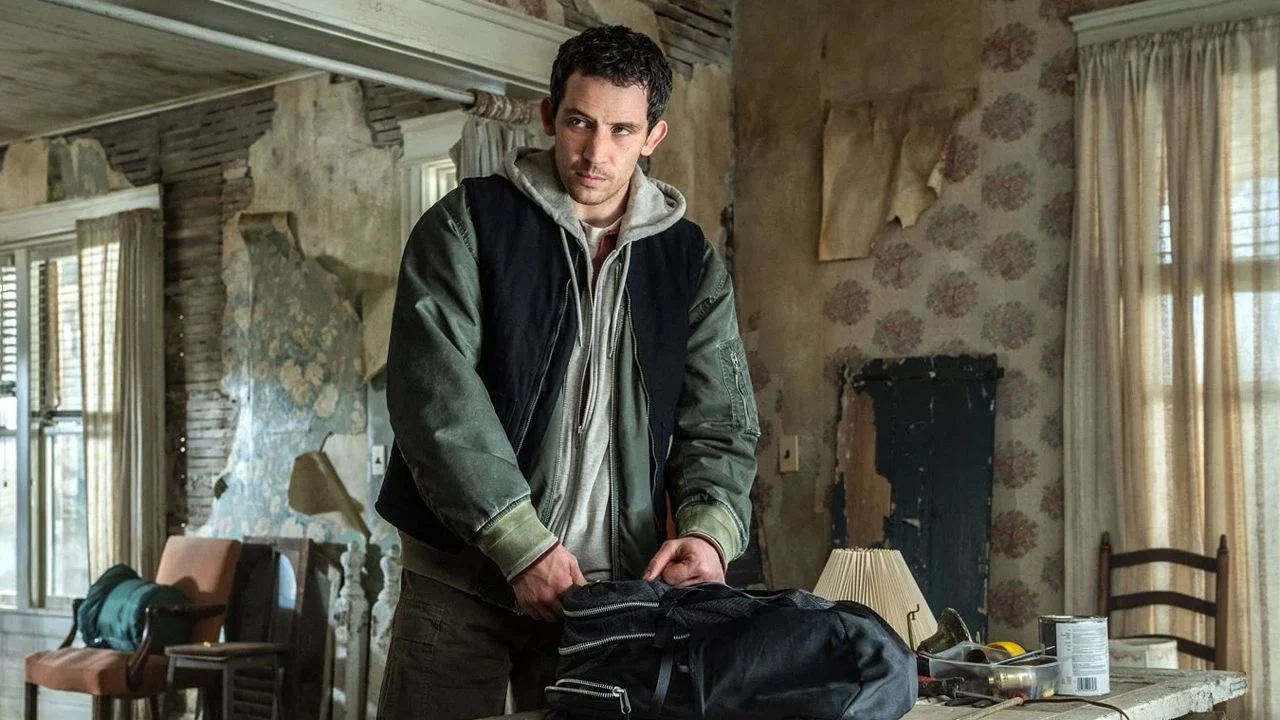
Daniel (Josh O’Connor) does everything he can to inform the world about the UFO contacts.
The special quality that Steven Spielberg has stood for for more than five decades is already evident here: the combination of overwhelming show value and emotional truthfulness. “Disclosure Day – The Day of Truth” also delivers spectacularly staged blockbuster cinema. One sequence in particular, in which a freight train drags a car along the tracks while another train races along on the neighboring track, develops a force that literally pushes you into the cinema seat. The agile camera work – including the repeatedly fantastic one shots – of the two-time Oscar winner Janusz Kaminski (“Schindler’s List”, “Saving Private Ryan”) must be particularly praised. An absolute pleasure.
At the same time, the film remains firmly anchored in its characters and draws its emotional power from their humanity. This is where the always fantastic Emily Blunt comes into play. Your TV meteorologist Margaret, who has to deal with funny weather dances at work and is actually pursuing a serious career, is the heart of the film. The way the “Devil Wears Prada” star portrays the complete overwhelm, the fears, but also her deep understanding of being called to something greater is incredibly moving in this vulnerable, approachable openness.
An ode to empathy
In fact, “Disclosure Day – The Day of Truth” is entirely in the tradition of those science fiction visions freed from any hint of cynicism that have already distinguished “Close Encounters of the Third Kind” and “ET – The Extra-Terrestrial”. Whether there is actually a concrete connection between these films in terms of content should not be anticipated at this point. However, as deeply human stories of empathy, understanding and the hope for understanding, they are unmistakably related to each other on a spiritual level.
At the same time, Spielberg goes one step further. “Disclosure Day – The Day of Truth” sees itself not only as a plea for compassion, but also as a passionate commitment to humanity’s right to know fundamental truths about the universe. The search for knowledge becomes a deeply humanistic concern: in the eyes of the 79-year-old filmmaker, institutions and organizations that withhold information are dark, almost terrorist forces that propagate fear, control and isolation.
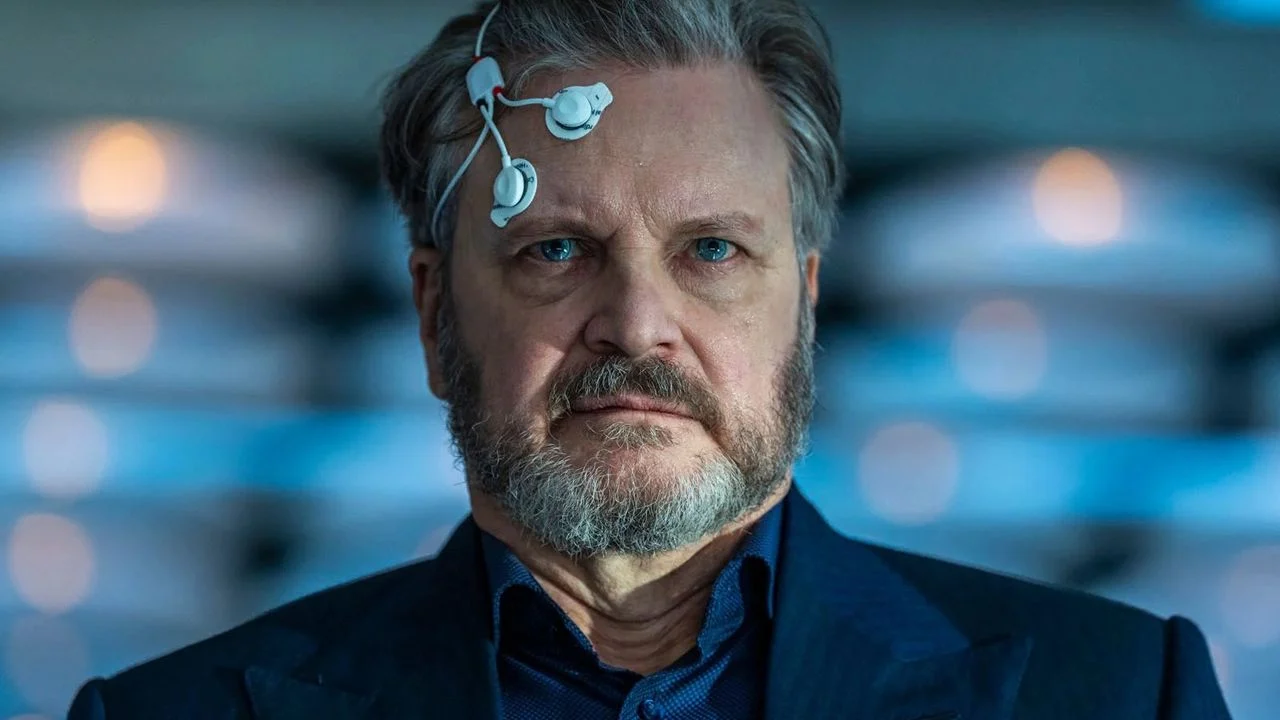
Noah Scanlon (Colin Firth) is ready for anything as WARDEX leader.
Even though “Disclosure Day – The Day of Truth” seems like a classic Spielberg blockbuster that could have been made in the 1990s, it is also firmly anchored in the present. With his unmistakably activist attitude, he is directly linked to the geopolitical upheavals of the present. The world that Spielberg draws is noticeably on the edge of the abyss. Wars, disinformation and a profound loss of trust in authorities form the background to a fragmented world order.
What is remarkable is that these themes are less reflected in explicit comments, but rather find expression in the design of the film itself. The constant unrest, the underlying tension and the feeling of a world that is out of control are reflected again and again in the aesthetics of “Disclosure Day – The Day of Truth”. The vivid 35-millimeter images have a strikingly cool, rough and often rain-drenched feel. This may seem unusually sad at first glance, but it follows a clear stylistic idea: the images should not tell of a world that is waiting for a revelation, but of one that has long since lost faith in it.
A memorable finale
Not a word too much should be said about the last third, because I certainly don’t want to contribute to the large-scale mystery marketing campaign being a total waste in the end. An impression from the Berlin press screening captures the effect of the finale better than any description of the scene: In the largest hall of the Zoo Palast, which was more full than at any press screening in a long time, an almost reverent silence spread as Steven Spielberg ushered in the last minutes of his film. What could be felt here was like a moving form of coming home – as if after decades a director was finding his way back one last time to the wonder, hope and humanity that have always characterized his work.
This makes it easier to overlook the weaknesses of “Disclosure Day – The Day of Truth”. This doesn’t just mean the computer-generated animal effects that appear conspicuously artificial in the trailers. Precisely because the film otherwise relies on wonderfully breathing analogue shots, these moments seem like a foreign body and take away some of the depth of the visual power.
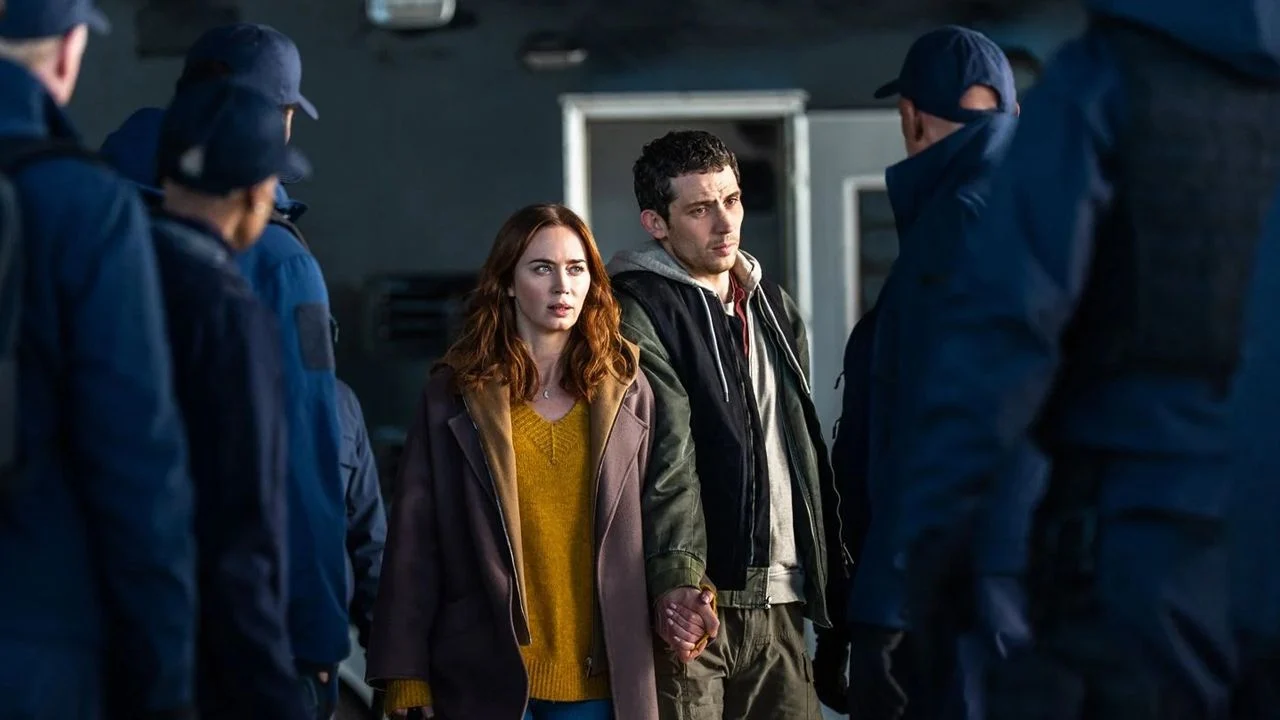
Only together can Margaret and Daniel manage to prevail against their pursuers.
In addition, there is a sometimes surprisingly pronounced tendency towards religious charge, as is more familiar from the work of Spielberg epigone M. Night Shyamalan (“Signs”). The film also shows a preference for detailed exposition. “Disclosure Day – The Day of Truth” repeatedly loses itself in outright info dumping, which unnecessarily takes the air out of the film. This is precisely what is irritating because Steven Spielberg has proven over the decades that hardly anyone is better at telling stories through pictures instead of words.
Conclusion: With “Disclosure Day – The Day of Truth” Steven Spielberg impressively returns to the science fiction genre. At times overwhelmingly staged, deeply rooted in the emotional worlds of its characters and supported by an unshakable belief in humanity. Not a masterpiece, but moving, spectacular and expressly personal blockbuster cinema – the largest possible screen is an absolute must.