
On the afternoon of December 8, 1980, four radio journalists Dave Sholin, Laurie Kaye, Ron Hummel and Bert Keane gathered at the legendary Dakota Building in New York to interview one of the most famous pop couples in history: John Lennon and Yoko Ono. For the album “Double Fantasy”, released a few weeks earlier, Lennon’s first record in five years, the duo wanted to end their even longer radio silence. Nobody could have known that it would be John Lennon’s last interview. Just a few hours later, the ex-Beatle was shot dead by Mark David Chapman.
46 years later, Steven Soderbergh (“Magic Mike”) uses the interview as the basis for a portrait film. It’s called “John Lennon: The Last Interview”, but it’s less of a pure portrait of the brilliant Beatles songwriter. Rather, the focus is on a dazzling couple who had been together longer than the legendary Mushroom Heads band at this point, had experienced ups and downs together and had just recorded a new record. Above all, it is a look at two people who are full of optimism about a future that they would never experience together.
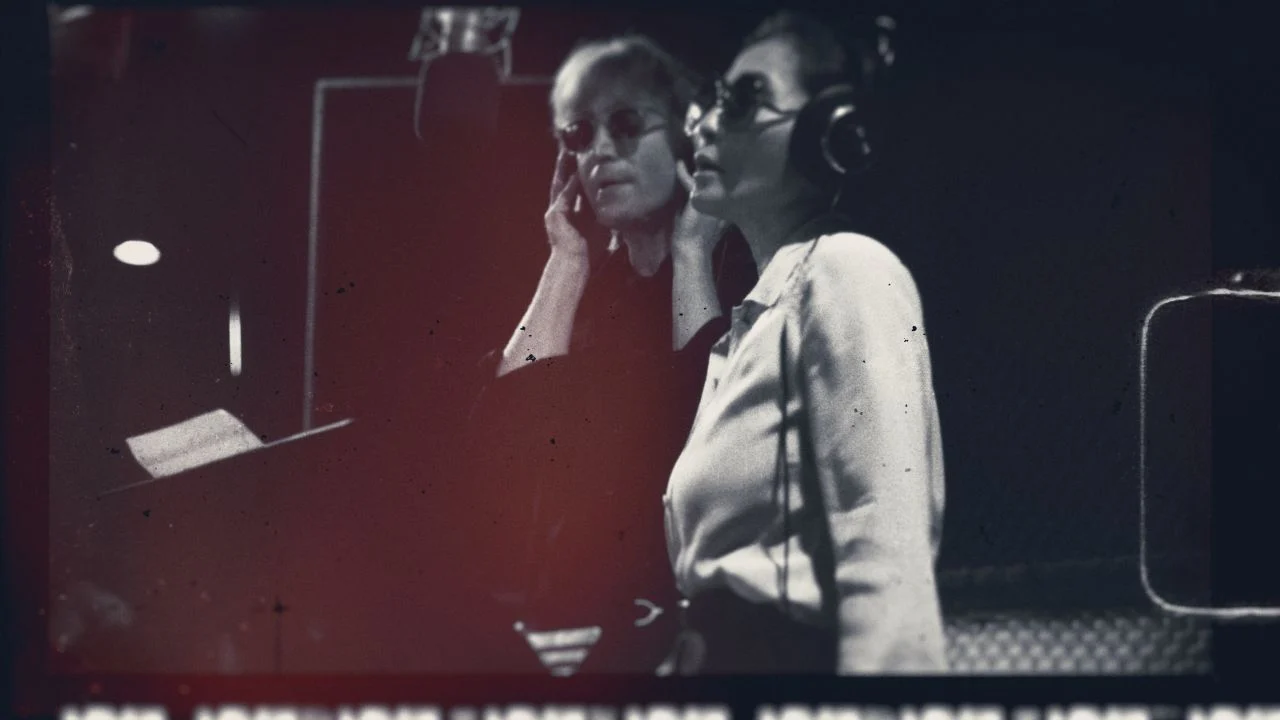
John Lennon and Yoko Ono in the studio.
It may seem surprising at first glance that Steven Soderbergh, of all people, made a film about John Lennon. On the other hand, given one of the most diverse oeuvres of the last few decades, it is not surprising that this documentary is now joining major Hollywood films, thrillers, dramas, sports films and much more. Perhaps Soderbergh also felt like Lennon’s brother in spirit, emphasizing several times during the interview how much he rejects categorization. For him it’s not about rock, blues or new wave, just music. And it is precisely with this attitude that Soderbergh seems to approach his career. Like Lennon once did, he doesn’t do what is expected of him, but simply what interests him at the moment.
With “John Lennon: The Last Interview,” however, Soderbergh faced a problem: How to illustrate an audio-only interview that was over two hours long (shortened to a good 100 minutes in the film)? With the editor Nancy Main, he put together tons of archive material, photos and newspaper clippings into a cacophonous montage. These are particularly helpful when it comes to the musician’s childhood or his time with the Beatles. There was also an enormous amount of photos available for the relationship between Lennon and Yoko Ono, which exist of the sometimes somewhat exhibitionistic couple. Things get more difficult with the abstract, philosophical passages of the conversation: to illustrate these, the filmmaker and his team make extensive use of artificial intelligence.
Where there is no archive material, an AI slop Hitler has to help out
It is not surprising that Soderbergh, who is always keen to experiment, has no reservations about making contacts here. However, the results are pretty mixed and only prove that it will probably be a while before AI competes with CGI animators for Hollywood jobs. The images of kaleidoscopic whirring flowers and patterns, but also of autocrats like Caesar, Napoleon and Hitler walking through lines of soldiers, used for cost and time reasons, look exactly as one imagines AI slop. These sequences seem completely unreal, artificial and are in no way convincing.
Fortunately, these failures can be overlooked. It’s rather annoying that Soderbergh isn’t able to gain any new facets from his theme in the end. Most of the stories and anecdotes are familiar to anyone who studies John Lennon, Yoko Ono and the Beatles. Instead, the greatest appeal lies in hearing it here, unfiltered, as an original sound from Lennon’s own mouth. The radio people from back then interviewed for the documentary also add little that is enlightening. An exception is the goosebumps description of the moment when they met the future murderer on the street.
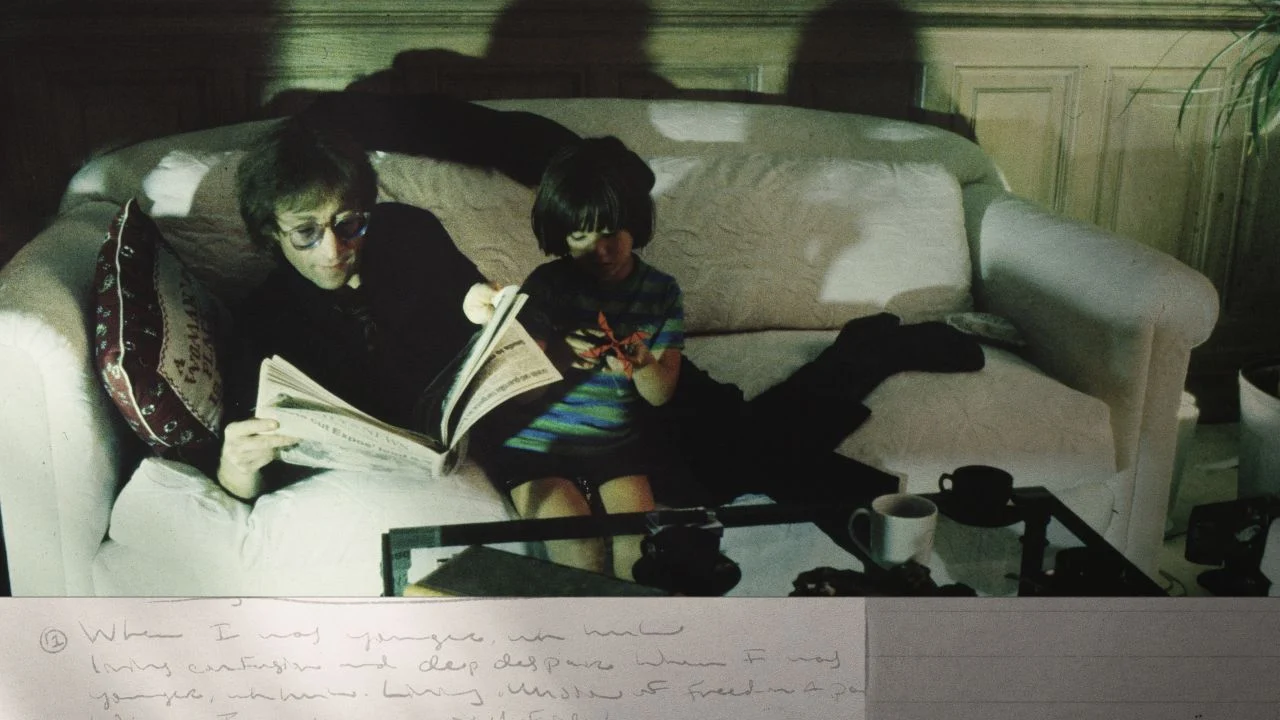
John Lennon and his son.
And it is precisely against this tragic background that the film ultimately develops an emotional power. The tragic fact that Lennon was never able to answer questions again hovers over the entire film like an invisible veil. At the end of the interview and film, when Lennon speaks enthusiastically about the future and makes plans to play his music in front of an audience again, the documentary becomes a touching portrait of one of the most influential, complicated and exciting artists of the 20th century.
Conclusion: The last interview that ex-Beatle John Lennon gave with his wife Yoko Ono a few hours before his murder on December 8, 1980 forms the backbone of Steven Soderbergh’s portrait film, with which he doesn’t really add anything to the legend. The work is still a must for every Beatles and Lennon fan.
We saw “John Lennon: The Last Interview” at the 2026 Cannes Film Festival, where the film celebrated its world premiere as a special screening.