
“I’m making an action film that will shake the world,” said influential film producer Bill Kong (“Tiger & Dragon,” “Hero,” “Kung Fu Hustle”) when “The Furious” was announced, adding: “If we fail, it will only be as good as ‘The Raid’.” Of all things, to declare one of what many consider to be the best martial arts films of the millennium as the lowest bar? Surely this can only go wrong? But Kong and his team around director Kenji Tanigaki (“Enter The Fat Dragon”) and action choreographer Kensuke Sonomura (“Ghost Killer”) have delivered: “The Furious” is the martial arts spectacle of the year!
One sensational fight follows the next, in which the talents of the specialists Tanigaki and Sonomura, especially their love for a clear spatial geography, come into their own. This is also possible because they can rely on an outstanding cast made up of people who can really fight, and extremely physically. The fact that they all have different fighting styles provides the necessary variety and you are always surprised at what damn brilliant idea comes next – right up to an impressive five-way fight in the finale, which has already secured its place in the Olympus of the best action scenes of all time.
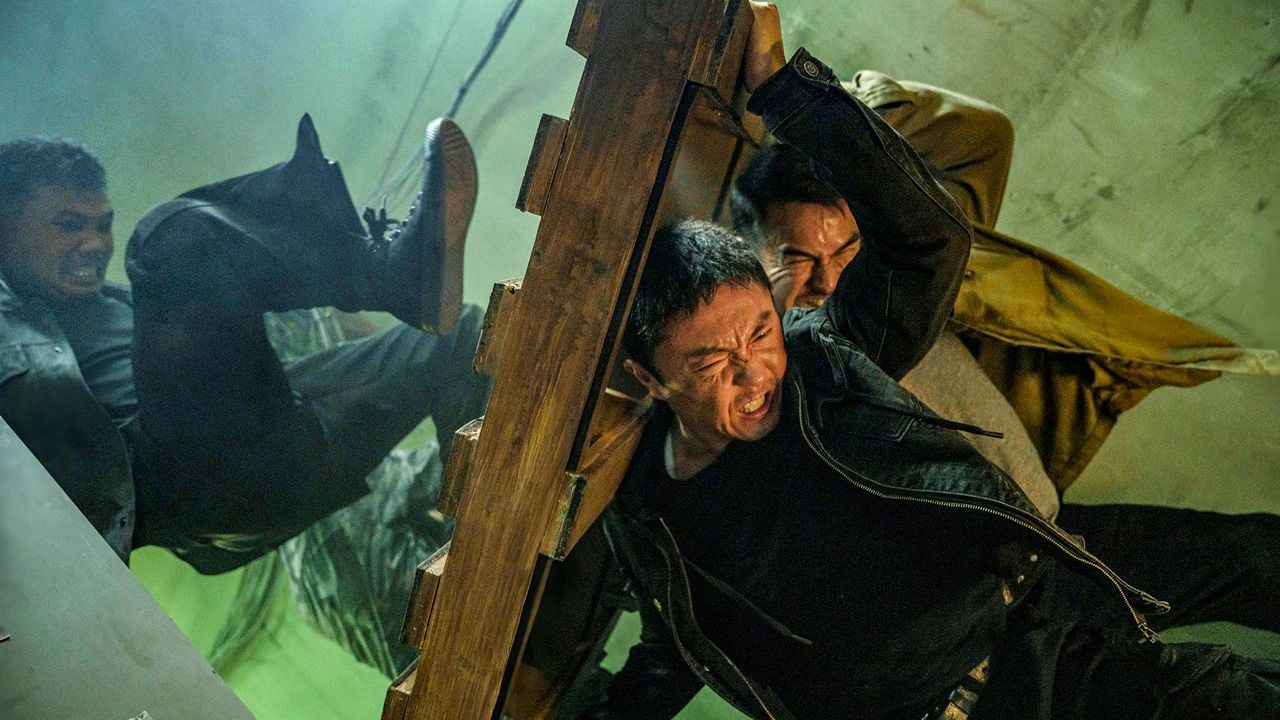
“The Furious” delivers plenty of rough action.
Somewhere in Southeast Asia, a child trafficking ring, backed by powerful masterminds and covered by the local police chief, is up to mischief. Despite his martial arts skills from a mysterious past, mute craftsman Wang Wei (Miao Xie) cannot prevent his young daughter Rainy (Enyou Yang) from becoming the next victim and being kidnapped on the street. When he realizes that the police won’t help him, he swaps his flip-flops for his steel-toed work shoes and sets out on a merciless search mission.
There he soon comes face to face with Navin (Joe Taslim) and after a short argument he has to realize that they are on the same side. Navin is also looking. His wife (JeeJa Yanin) got very close to the criminals as a journalist before she disappeared without a trace. Now he’s trying to continue their work and was just about to infiltrate the organization before Wang Wei came onto the scene. Now they become allies who will not shy away from a fight to fight their way to the people behind them and find Rainy.
Two action maestros deliver the perfect brawl
Especially with the action choreography and stunt work in the five-part manga adaptation “Rurouni Kenshin,” Kenji Tanigaki has proven that only a few people in the world can stage action so well. But the Japanese, who originally comes from the Hong Kong school around Donnie Yen, has so far missed a lot of this in his own directing work. Not only does a lot of idle time between fights make them pretty tough. Even during the strongest action moments in “Enter The Fat Dragon” you were left with the impression that you had only seen an excerpt from an even more impressively staged fight. How did Tanigaki deal with this problem when he was now tasked with delivering not just a very good action film, but the ultimate one? He brought his compatriot Kensuke Sonomura on board.
So two action maestros who come from stunt work and who have earned a reputation as choreographers of being among the best in the world are working hand in hand on “The Furious”. Both are linked by a dogma that also dominates the choreography of “The Furious”: clear spatial geography comes first. There is no chaotic editing here, but in the longer shots you always know where the characters are standing, how they move, who is attacking whom and why a hit works. This is also ensured by the camera, which constantly stays in motion, meandering through the fights, sometimes getting closer to the characters or retreating at the perfect moment to fully show off the next hit. Sonomura’s love for hard physicality and showing the brutal impact of hits complements Tanigaki’s precise timing and a rhythm that sometimes turns action into a dance
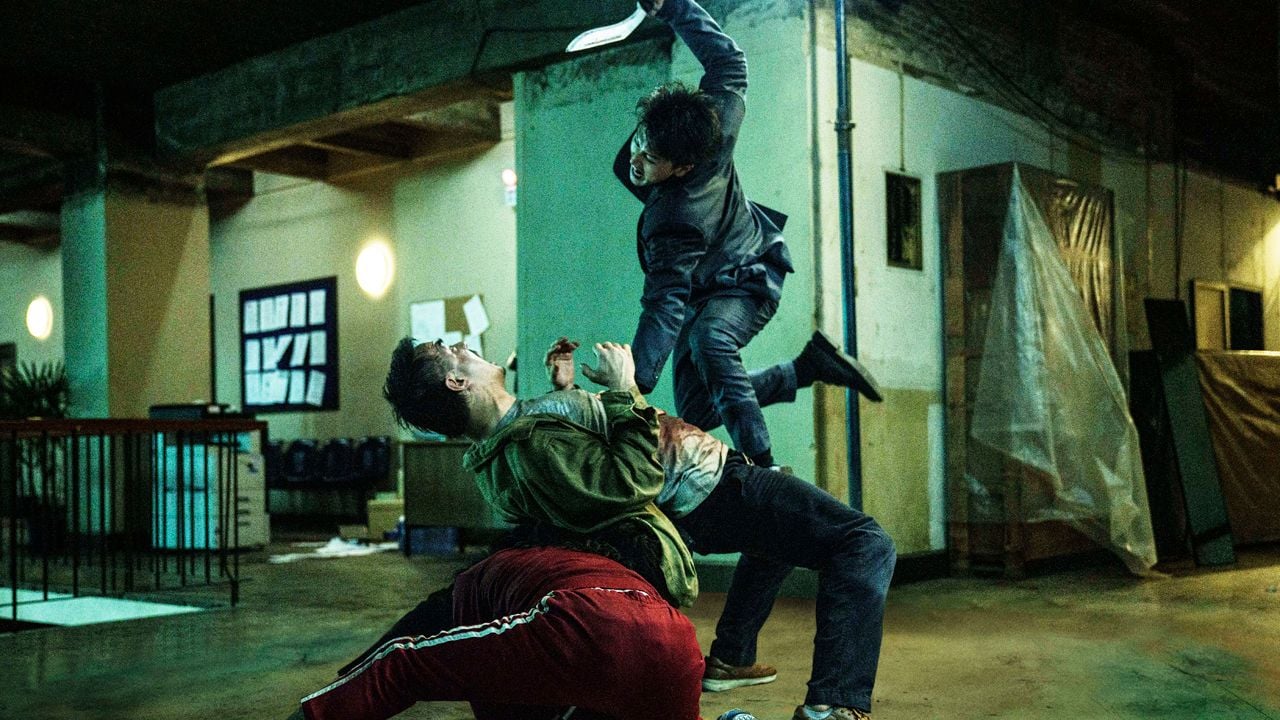
Every movement is in the wild action choreographies of “The Furious”.
This is particularly evident in the outstanding final fight, in which five people with completely different styles meet. A wild back-and-forth ensues not only because of the number, but also because of their division into three factions. Conflicts take place in parallel and confrontations change every second. One moment two characters are fighting side by side against a common enemy, the next moment they are attacking each other. Nevertheless, in this chaos you always know what’s going on – and you can’t help but be amazed. The fight always takes a new direction, and those involved constantly surprise with new ideas. And as you know from Tanigaki, the entire environment becomes part of the action.
But for spoiler reasons, we don’t want to reveal much more about this final fight, which is best experienced for yourself anyway. After all, the path to get there is already high-class. “The Furious” delivers almost non-stop action that continues to escalate in complexity and brutality. Hardly a moment allows you to take a deep breath, but this doesn’t seem tiring like it does with other martial arts spectacles. Rather, the constant movement and constant energy is electrifying. Because most of the filming was done in English for maximum global marketability, the short story cutscenes suffer somewhat from bumpy dialogue, and some supporting characters (like the police chief) are drawn very simply. But “The Furious” still develops a lot of heart and an emotional impact.
Movement instead of words
This is also due to the strong interaction between Miao Xie and Enyou Yang, who already harmonized in “Eye For An Eye 2”. The fact that the young actress, who was only ten years old during filming, does not disappear from the film after her kidnapping, but instead takes her rescue into her own hands parallel to her father’s search, provides a captivating second perspective. The Wushu fighter Miao Xie, who is trained in traditional Chinese martial arts cinema, was in front of the camera as a child with action legend Jet Li in “Master of Shaolin” and has 50 roles in his CV. Nevertheless, many people probably first became aware of him through “The Furious”. The fact that Wang Wei is mute not only conceals language barriers, but also fits perfectly into a film that prefers to talk about movement and action rather than words.
An example of this is Rainy’s kidnapping, in which her father first sprints after a truck in flip-flops and then with increasingly bloody feet. The fact that Kenji Tanigaki’s characters often move superhumanly quickly may fit better with the sword movements of a wandering ex-samurai in the anime film adaptation “Rurouni Kenshin”, which plays with fantasy elements, than with the running father in “The Furious”, but in the end it works out. Even if the extremely accelerated scene seems absurd for a brief moment, the filmmaker tells an incredible amount about the determination of this desperate man. And so it is not surprising that even in normal mortals, precipitation that leads to at least a day-long coma only lasts a short time.
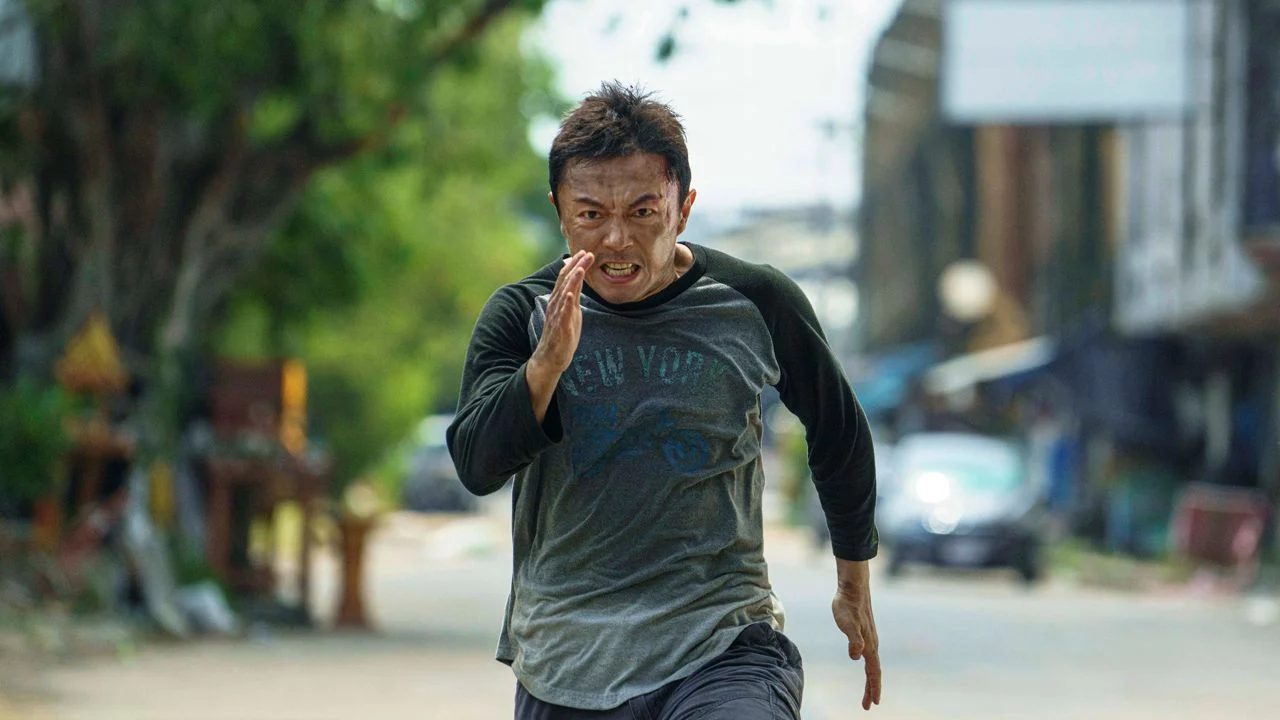
One could mistake him for a Terminator: Wang Wei sprints determinedly after his kidnapped daughter.
A little exaggeration is a must in “The Furious”. It loosens up this dark, hard film, which sometimes makes you swallow hard when you make a decision, at the right moments. Brian Le (“Everything Everywhere All At Once”) also contributes to this as an unkillable villain henchman who uses his body as a powerful steam ram. The beefy American, who taught himself martial arts, founded an internet stunt team and attracted the attention of the film industry with YouTube videos, counters the precise style of Miao Xie with a raw force of nature.
“Chocolate…sweet and deadly!” star JeeJa Yanin, on the other hand, provides further elegance, as she defends herself against physically superior opponents with acrobatic movements and uses everything she can get her hands on as a weapon. That the duo known from “The Raid” is an ex-judoka Joe Taslim and Silat fighter Yayan Ruhian delivers a great performance here again, which no longer surprises anyone, with Ruhian once again acting as the psychopathic killer with a bow and arrow and knives.
Everyone can fight here
As the main villain, ex-karate master Joey Iwanaga (“Alice in Borderland: Season 3”) is the real discovery. While he’s already proven his talent in previous work with both Tanigaki and Sonomura, we wouldn’t be surprised if his performance in The Furious lands him a major Hollywood villain role soon. The Japanese, who grew up in America, not only puts on an impressive performance, with which he goes from hiding behind his henchmen to an angry, angry fury himself, but also delivers a series of kicking sequences in his fight scenes that make you wonder how that was possible. He fits perfectly into this exceptional cast of people who can really fight.
Conclusion: Supported by long takes, clever camera work and creative action choreography that constantly throws out new ideas, “The Furious” is the must-see action highlight of 2026. With pure kinetic energy, this film rolls over even the few small weaknesses that you can certainly spot on closer inspection.