
Gilles de Maistre travels around a lot. The French filmmaker has filmed in a wide variety of locations. Most recently, mostly with animals, which is reflected in the titles of his immensely successful works. “Mia and the White Lion” was created in South Africa, “The Wolf and the Lion” in Canada, “Moon the Panda” in the Chinese province of Sichuan. And the most successful of the films, “Ella and the Black Jaguar” (more than 1.1 million visitors in Germany alone), is set in the Amazon region and in New York, but was shot in Mexico and Montreal.
His new adventure drama “The Legend of the Desert Child” now takes de Maistre’s audience to the Moroccan Sahara. As in the aforementioned films, in whose scripts de Maistre’s wife Prune de Maistre was always at least involved, this time too it’s all about the connection between people, animals and nature. But this time it happens in a particularly transfiguring way.
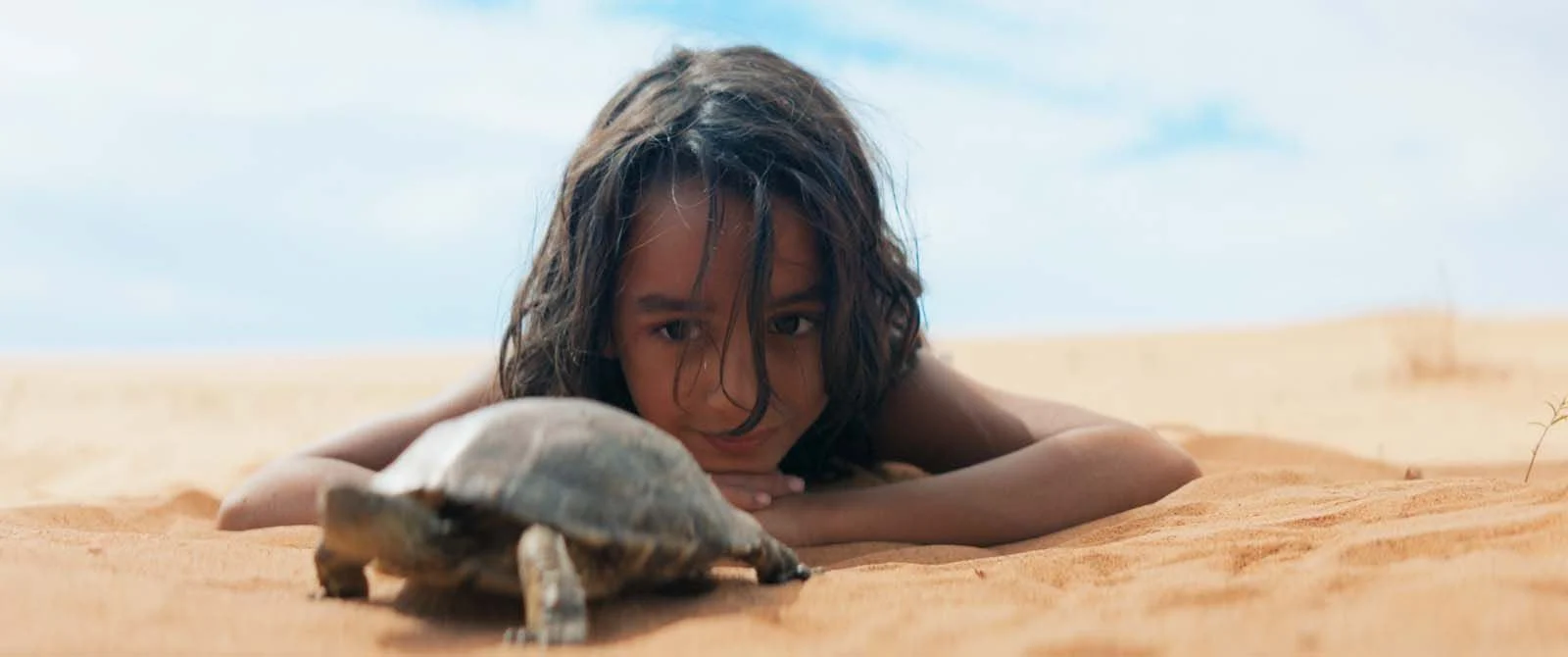
The foxes, who grew up in captivity, were handed over to an animal refuge in Marrakech after filming.
Sun (Neige de Maistre, the director’s daughter), only 15 years old, is in New York for an awards ceremony. The young author is being honored for “The Book of the Desert,” which was inspired by a story she once heard from her grandfather. The story is about the boy Hadara (as a two-year-old: Nahil Bouazzaoui, as a six-year-old: Zayn Sekkat, as a twelve-year-old: Nahel Tran), who is lost to his mother Fatma (Salma Sairi) in a sandstorm as a toddler. However, he is rescued by a herd of ostriches and befriends a young desert fox, whom he calls “Sahara”.
Hadara is now 160 years old and is a legend as the “King of the Desert”. 160 years? King of the desert? “Nonsense!” replies the 15-year-old nomad girl Kharouba (Moon Ghazali), whose community Sun visits at the invitation of a non-governmental organization. It wasn’t quite that easy. And: “Hadara’s story is our story!” Kharouba feels the need to modify and supplement Sun’s book story…
Slow habituation of the foxes and ostriches
The topic of “cultural appropriation” may resonate a little here, but it won’t be explored further. The story of the child’s survival in the desert is said to have been told by one of Hadara’s sons to the writer Monica Zak, who was born in 1939. The Swede wrote a book about it, which in turn inspired de Maistres to make her film. But no matter how much or how little truth there is in the film’s plot: Although the main setting is the Sahara, it is a little reminiscent of Disney’s “The Jungle Book” from 1967. Animal friends and survival helpers also appeared to Mowgli. And like Mowgli in the panther Bagheera, his desert counterpart also finds a surrogate father in the wilderness, with whom the relationship is not always easy: for Hadara it is the male ostrich Hoc. In addition, both outdoorsmen inevitably have identity problems at some point.
As with Gilles de Maistre’s previous films, a lot of time was invested in advance to get the animals used to get used to the circumstances of filming and to familiarize the animal and human cast with each other. Around ten ostriches were purchased from a breeding farm, with which an animal trainer slowly built up relationships. The work has paid off. The impressive birds fit in perfectly alongside the three Hadara actors, of whom the eldest, Nahel Tran, is particularly enthusiastic. After filming ended, the ostriches, which were actually intended for the leather goods industry, as well as the two desert foxes used, which had previously lived locked up with a family, were handed over to an animal refuge in Marrakesh.
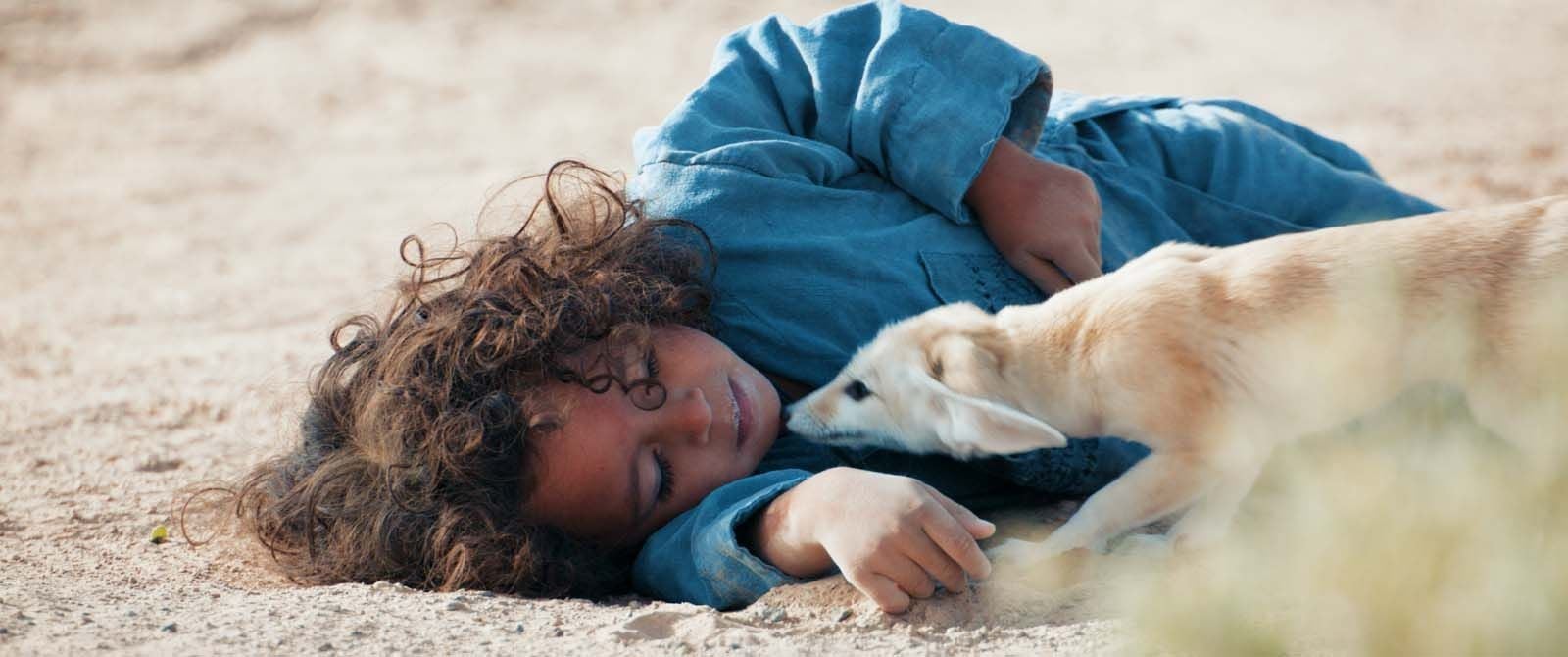
Hadara (Nahel Tran) makes many animal friends in the desert.
So mindfulness was very important. This is to be welcomed, but it does not protect the film from some very pathetic tendencies and other slip-ups. In connection with the desert child, for example, there is talk of a “free being” who grew up away from civilization. Maybe so. On the other hand, Hadara can count himself lucky that he survived his first few years in the Sahara sand, given his adverse living conditions. And of course: the desert backdrop is extremely impressive. Nevertheless, some of the images by cameraman Vincent van Gelder lean heavily towards kitsch. A limit that Armand Amar’s score rarely stops from crossing.
The storyline about a filmmaker named Chris (Kev Adams), who, despite the reservations of his local assistant Ibrahim (Faical El Kihel), wants to use money from an American producer to realize a project with twelve-year-old Hadara that could harm the boy psychologically, is also not without its annoyances. A “wise” Bedouin who always has full insight, an unscrupulous capitalist for whom only his own will is the law, and a naive but also well-meaning and insightful director who is prepared to risk his career in the name of good: it couldn’t be more cliché.
Conclusion: Strong visuals, ultimately touching coming-of-age story with animal-human interactions worth seeing. However, “The Legend of the Desert Child” also has to contend with pathos, kitsch and clichés.