
Her debut novel, “The Devil Wears Prada,” was by no means showered with critical praise after its publication in 2003 – but that is unlikely to have impressed Lauren Weisberger. The readership reacted even more enthusiastically: the book stayed on the bestseller list for a whole year New York Times. The final accolade followed in 2006 with the film adaptation of the same name, which became a worldwide success and has long since enjoyed cult status. Nevertheless, Weisberger took a full ten years before she finally published a sequel to her bestseller – and there are now around twenty years between the first film and “The Devil Wears Prada 2”.
The question of where the iconic characters stand after such a long time alone is what makes the sequel so appealing. With a good dose of nostalgia and many allusions to the first part – which turquoise blue belt should it be? – you can definitely enjoy “The Devil Wears Prada 2”. But despite the excitement of seeing the iconic characters again and an interesting new focus on the media landscape and the difficult situation of journalism, the legacy sequel disappoints. Not only does the film basically just vary the plot structure of the first part, but too many purpose-driven supporting characters stretch out the plot unnecessarily.
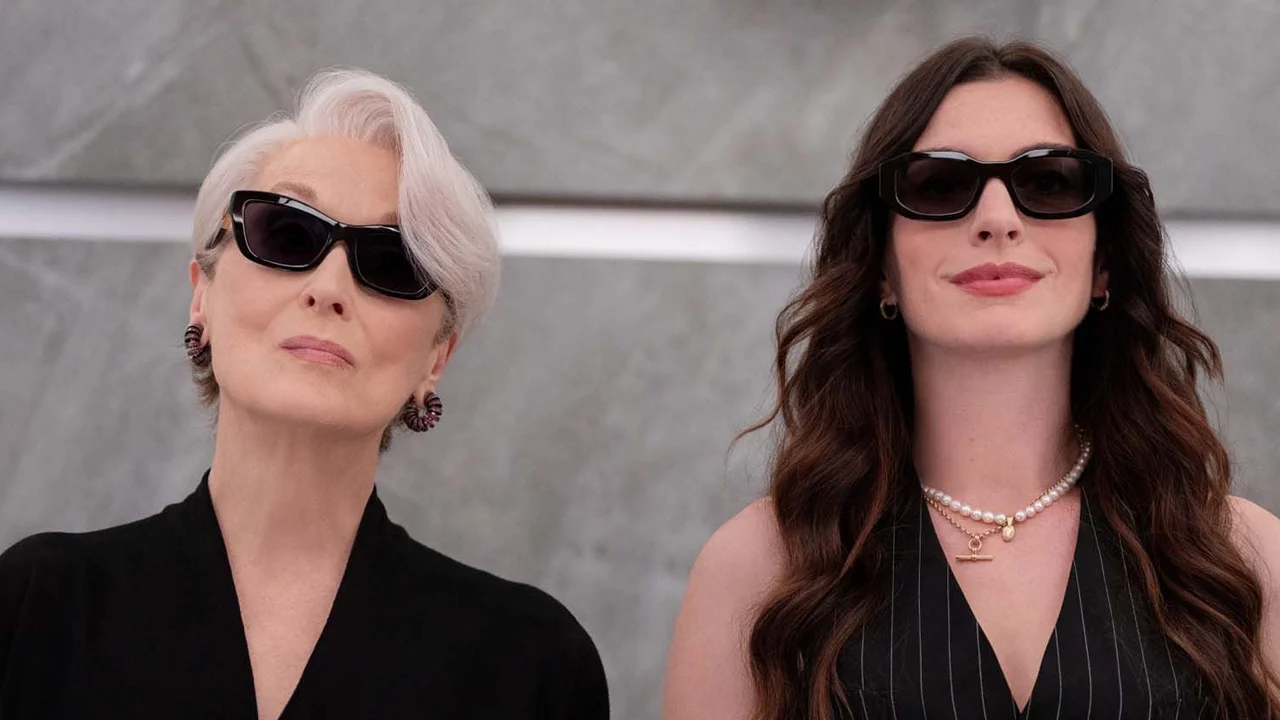
After 20 years, fans can look forward to seeing Miranda Priestley (Meryl Streep) and Andrea “Andy” Sachs again.
It’s been around two decades since Andrea “Andy” Sachs (Anne Hathaway) and Emily Charlton (Emily Blunt) suffered as assistants under the feared fashion magazine boss Miranda Priestley (Meryl Streep). Both women have now taken their own paths: Andy has become a successful journalist, while Emily has made a career as a manager of a luxury brand. For Miranda, however, the days of effortless success are over – in the digital age, her classic print magazine “Runway” is increasingly losing importance. But as fate would have it, Miranda, Andy and Emily’s paths cross again. Art director Nigel (Stanley Tucci) is also back when the fashion circus gets moving again in New York.
In contrast to many other so-called legacy sequels, “The Devil Wears Prada 2” manages to take a reflective look at the now partly outdated perspectives of the first part without seeming didactic or forced. The film definitely recognizes the questionable dynamics of the working world or the problematic body image, but instead of blatantly criticizing these aspects, it subtly condemns them. It is precisely this restraint that ensures that the sequel does not seem like a subsequent correction, but rather like a natural development of the characters and their world.
Too much nostalgia, too few surprises
Despite successful modernizations, Part 2 revels too much in the success of the original. Anyone who remembers the first film well will recognize a lot of things here – but as soon as the pleasant, nostalgic feeling is gone, it becomes apparent that the constant repetitions are accompanied by a significant loss of tension. The plot hardly offers any surprises, because at least as a fan you can recognize most of the twists and turns from a distance.
This lack of narrative elan is also reflected in the ensemble: Although the film constantly introduces new supporting characters, they largely remain pale and seem as if they were designed on the drawing board. The new assistants Jin Chao (Helen J. Shen), Amari (Simone Ashley) and Charlie (Caleb Hearon), for example, are only there to help the already known characters and provide them with material for gags – which also rely a little too often on the recognition value of the first part. This ultimately means that the sequel lacks that painful, human closeness that made the original so special. Even the intimate moments seem more staged than real.
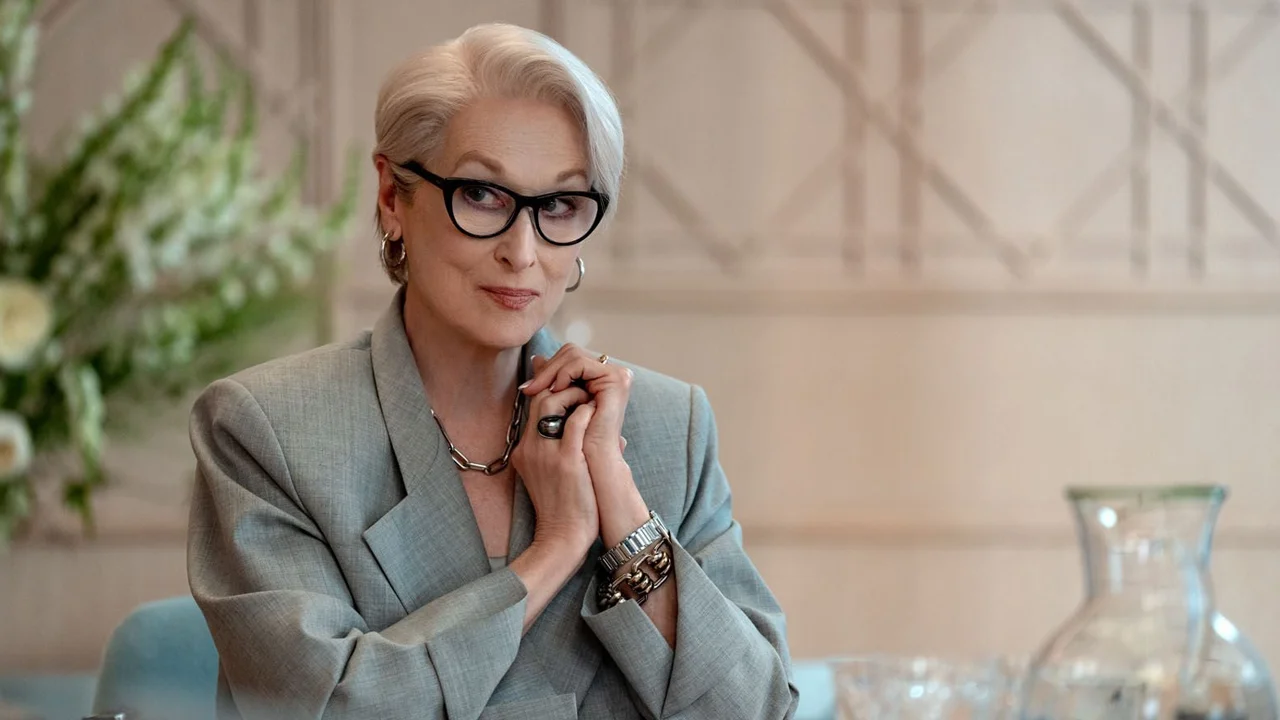
Meryl Streep is also an absolute highlight in the sequel.
The core cast, however, remains a clear plus point. It’s remarkable how effortlessly Anne Hathaway, Meryl Streep, Emily Blunt and Stanley Tucci find their way back into their roles – it almost seems as if no time has passed. Their interaction is still great fun, even if it occasionally seems a little artificial. Streep in particular gives her character an enormous presence with the smallest changes in facial expressions and gestures.
The fact that the same director, David Frankel, was hired is evident in the sequel: with its elegant, fast-paced production, the comedy veteran (“Like the First Time”) follows directly on from the original. Nevertheless, the look has been carefully modernized so that the sequel still feels contemporary. The choice of music underlines this balancing act: With “Vogue” by Madonna, Frankel takes up an iconic element of the first part, while a new single by Lady Gaga and Doechii, recorded especially for the film, provides modern accents.
Conclusion: Despite the reunion with the iconic cast and some successful modernizations, the sequel falls short of its potential in terms of narrative. Although “The Devil Wears Prada 2” always provides stylish and nostalgic entertainment, the predictable plot and the pale supporting characters prevent the film from becoming anything more than an emotionally cooler echo of its predecessor.