
The “Five Friends” series has long since grown into a multimedia franchise, and author Enid Blyton also shaped the childhoods of several generations with “Hanni & Nanni”. However, a much less well-known work from her pen is the “Wunderweltenbaum” saga, the first volume of which was published in 1939.
Anyone who has not yet come into contact with the four-part fantasy series has the opportunity, 87 years later, to discover the adventures surrounding the eponymous magical plant on the big screen. The script comes from Simon Farnaby, who recently demonstrated with “Wonka” and “Paddington 2” how traditional children’s book material can be transferred into the modern era without losing the charm of the original. He also transplants the story of “The Wonder World Tree” largely convincingly into the present.
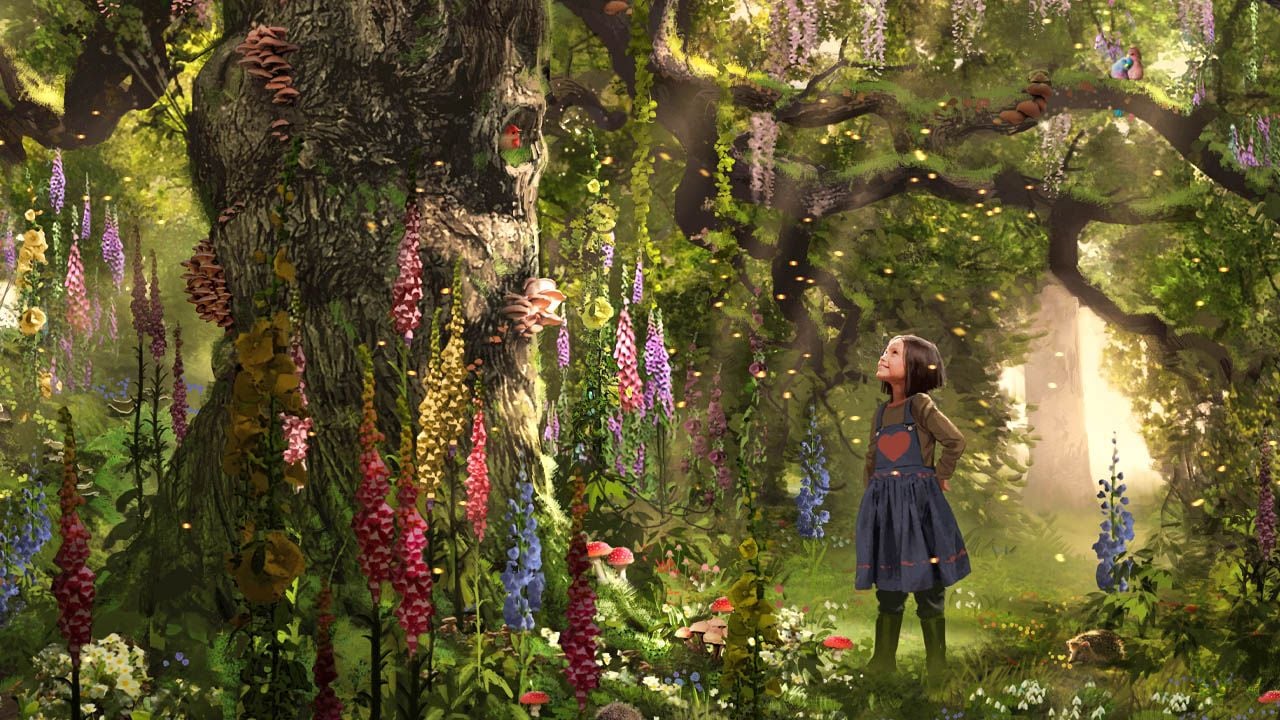
Fran (Billie Gadsdon) and her siblings find a magical world of wonder in the supposedly dangerous forest near their home.
The pasta is on the table, the children are on their cell phones, the parents are exhausted from work and secretly long for nothing more than to just open a bottle of wine in peace: this scene is probably everyday life for many people. This also applies to the Thompsons, consisting of mother Polly (Claire Foy, “The Crown”), father Tim (Andrew Garfield, “Spider-Man”) and siblings Beth (Delilah Bennett-Cardy), Joe (Phoenix Laroche) and Fran (Billie Gadsdon).
But when Polly discovers that the high-tech refrigerator she developed is spying on its users, the big city family makes a radical decision: They move to the country, where Tim wants to make his Italian ancestors’ tomato sauce and bring the isolated family members back together. Unfortunately, the rented farm turns out to be a dilapidated barn, and the children are urgently warned about a forbidden part of the forest where strange things are said to be happening. Little Fran, of all people, dares to go in – but instead of scary figures, she finds the Wonder World Tree…
An ode to the power of imagination
If you stand in front of it, close your eyes and say “I believe in magic” three times in a row, it opens its branches and reveals a magical realm. His tribe includes an angry goblin (Hiran Abeysekera), the fairy Silkhair (played by “Bridgerton” star Nicola Coughlan), the leader Moonface (Nonso Anozie, “Game Of Thrones”) and the pan man (Dustin Demri-Burns). At the top of the treetop you meet Mrs. Wasch (Jessica Gunning), who not only constantly scrubs her laundry, but also guards the entrance to heaven. Directly above her washing place there is a hole in the clouds where a new magical land docks every day. Little Fran is amazed when she climbs a ladder to reach various fantastic worlds – from a candy land where marshmallows grow to a birthday land where it snows powdered sugar and you can make a wish every day.
A special feature of the film, directed by director Ben Gregor (“Fatherhood”), is that the tree and the magical lands appear just as real as the adults’ money worries – and both worlds influence each other: Only through the children’s imagination can the adults’ dream become reality. Despite its clear message and some moral lessons, the fun in “The Wonderful Tree” is never lost – this is ensured by successful puns, great costumes and the consistently playful ensemble. The colorful family film even sets feminist accents with surprising accuracy. One of the film’s strengths is the dynamic between teenager Beth and the fairy Silky Hair, who finally give their opinion to the male residents of the tree.
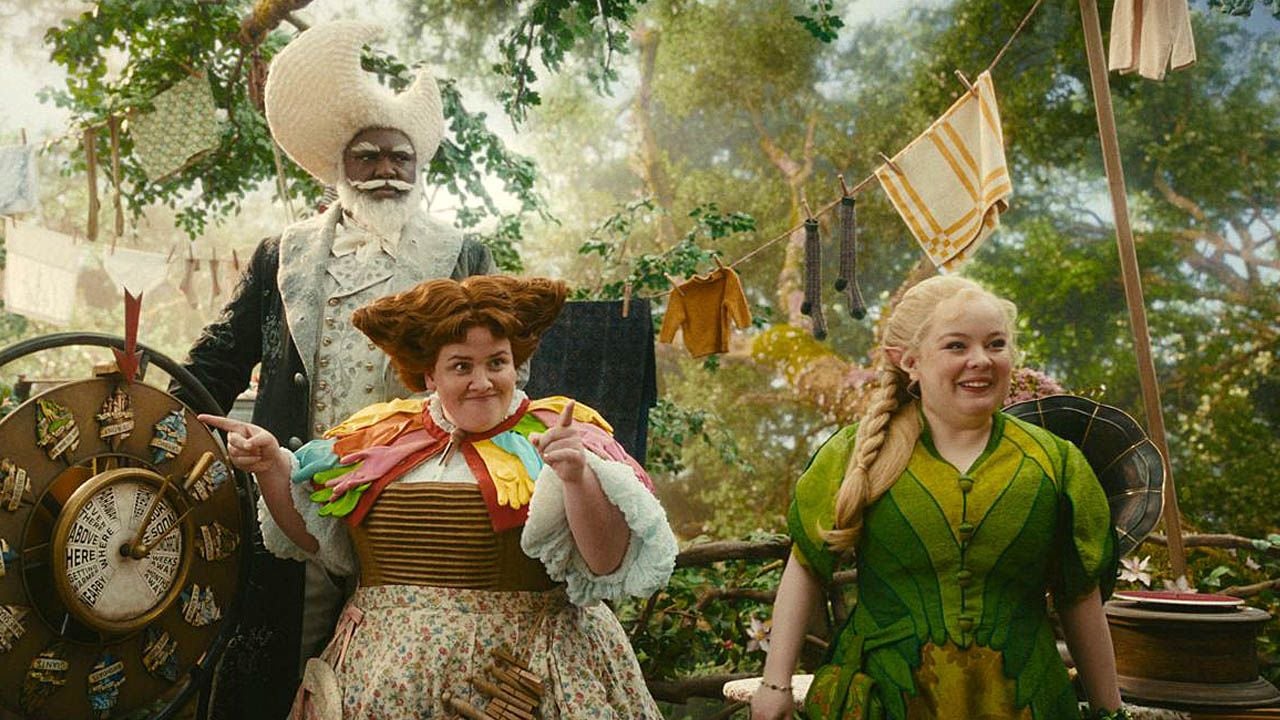
Moonface (Nonso Anozie), Mrs. Wash (Jessica Gunning) and Silky Hair (Nicola Coughlan) are just three of the fantastic characters that populate the Wonder World Tree.
Against this background, some racist and stereotypical depictions seem all the more irritating. A Native American sells a plant-based drink to children and doesn’t want any money for it. Here it would have been better to read the script again critically – because although there are no limits to imagination, there are certainly no limits to clichés. Even with the depiction of country life, some viewers are more likely to smile than nod in agreement: teenager Beth, for example, complains that a boy of the same age only wants to talk about his rubber boots.
However, the wonderfully well-oiled family dynamics help to overcome almost all of these weaknesses. Where one family member loses courage, the next one starts singing. When dad Tim loses himself in his reverie, mom Polly brings him back down to earth without ever becoming a hindrance to the fun. Teenager Beth, on the other hand, learns to take responsibility without robbing her siblings of their joy. Together with Joe and Fran we can have fun with sleeping airplanes, all-knowing men with bushy beards and human-sized fairies without wings. It’s just a shame that you can’t take the film’s message straight out of the cinema. Country life is not a perfect solution to the city grind and cell phone addiction, and most of us can only dream of wonderful trees. But maybe that’s exactly the solution: dreams – and pasta with very good tomato sauce.
Conclusion: Imaginative and modern adaptation of the children’s book classic, which should have avoided some unnecessary stereotypes. Despite all the magical worlds of wonder, the warm-hearted family remains the real heart of the story.