
In the very first shot, a referee blows his whistle with all his might during a basketball match between two high school teams. But that’s not the “Whistle” of the title, but a cursed Aztec artifact that – how could it be otherwise in this genre – falls into the hands of a group of inexperienced teenagers. Historically, such death whistles, whose sound is frighteningly similar to a human scream, were probably used for psychological warfare. But as a slasher MacGuffin, everyone in the film who has heard her shrill screech is now doomed to die.
From the VHS tape in “Ring” to the mystery box in “Hellraiser” to the embalmed hand in “Talk To Me” – the list of cursed objects that set a horror plot in motion could certainly go on forever. And even though “The Hallow” director Corin Hardy obviously attached great importance to designing the death whistle as elaborately as possible, it is certainly not the reason why all horror fans are now suddenly looking forward to his film. But there are certainly reasons to be excited: the death scenes are much less about the “why” than about the “how” – and it’s no coincidence that the two leading actresses are celebrated online as a dream couple.
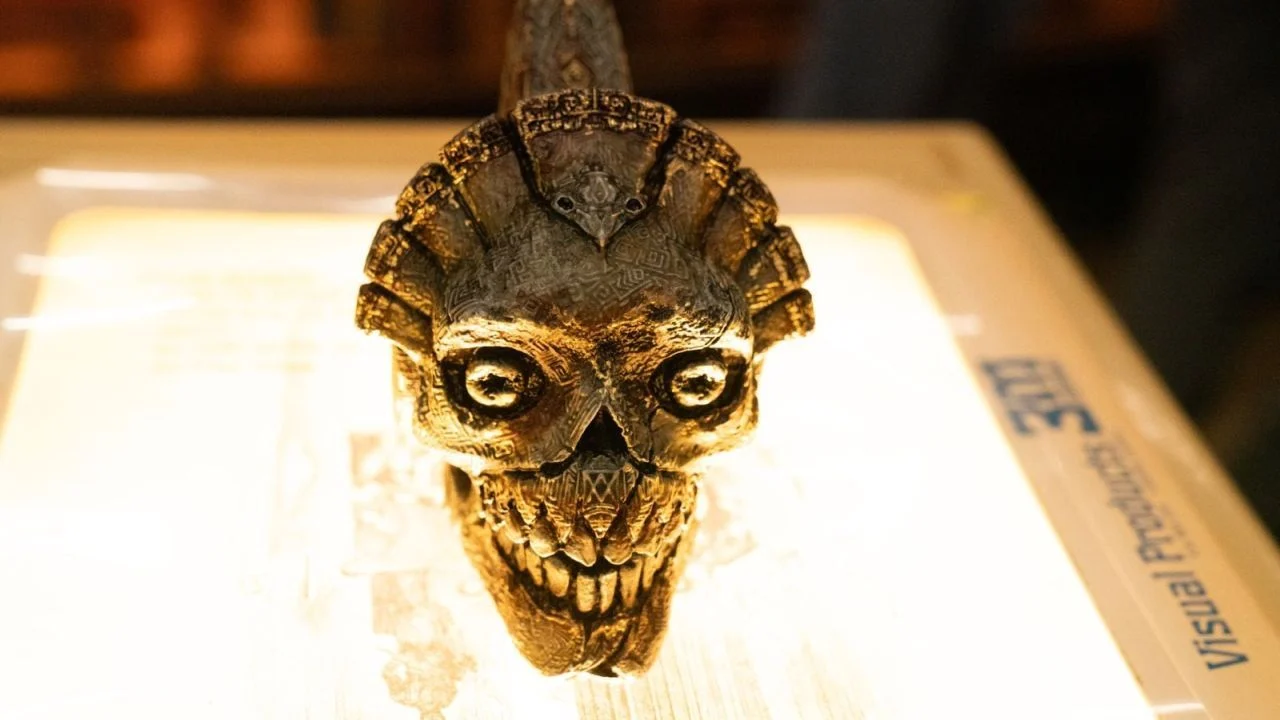
Anyone who has ever seen a horror film in their life would hardly blow into this thing, would they?
After a classmate spontaneously bursts into flames while showering after school sports, a group of high school teenagers stumble upon a mysterious antique pipe. While their history teacher Mr. Craven (Nick Frost) is already researching how much money he can sell the Aztec artifact for at an online auction, his students first want to try out their chance find for themselves – and so they immediately get blown away at a lively pool party.
But of course that wasn’t a good idea. Finally, from now on, one after the other dies – in a way that is as crazy as it is violent. Apparently the inexplicable deaths have something to do with the inscription on the pipe. Because even if Google translates the saying as “Summon the dead,” the warning should actually read “Summon your death”…
Two new scream queens
When you read online comments about teen slashers, the questions are usually: Is this exciting? How creative are the kills? Are there any surprises? But in the case of “Whistle”, the main thing that is celebrated – completely unusual for the genre – is the central love story. The film itself doesn’t make any fuss about the fact that two young women, Dafne Keen (“Logan – The Wolverine”) and Sophie Nélisse (“Yellowjackets”), fall in love with each other for a change – which means that “Whistle” gives us two new scream queens. Apart from the new dream couple, however, the circle of friends characters are hardly worth mentioning – just the usual high school archetypes that are primarily there to be picked off like a slasher.
But that brings us to the film’s real unique selling point: the kills. After delivering one of the most successful horror films of all time with “The Nun”, Corin Hardy first spent a few years working on his never-made version of “The Crow” with Jason Momoa before he was able to really let off steam as director of eight episodes of the super-brutal gangster series “Gangs Of London”. But apparently a lot has built up in the meantime – because he now implements the death scenes in the script by Owen Egerton (“Blood Fest”) both brutally and brilliantly.
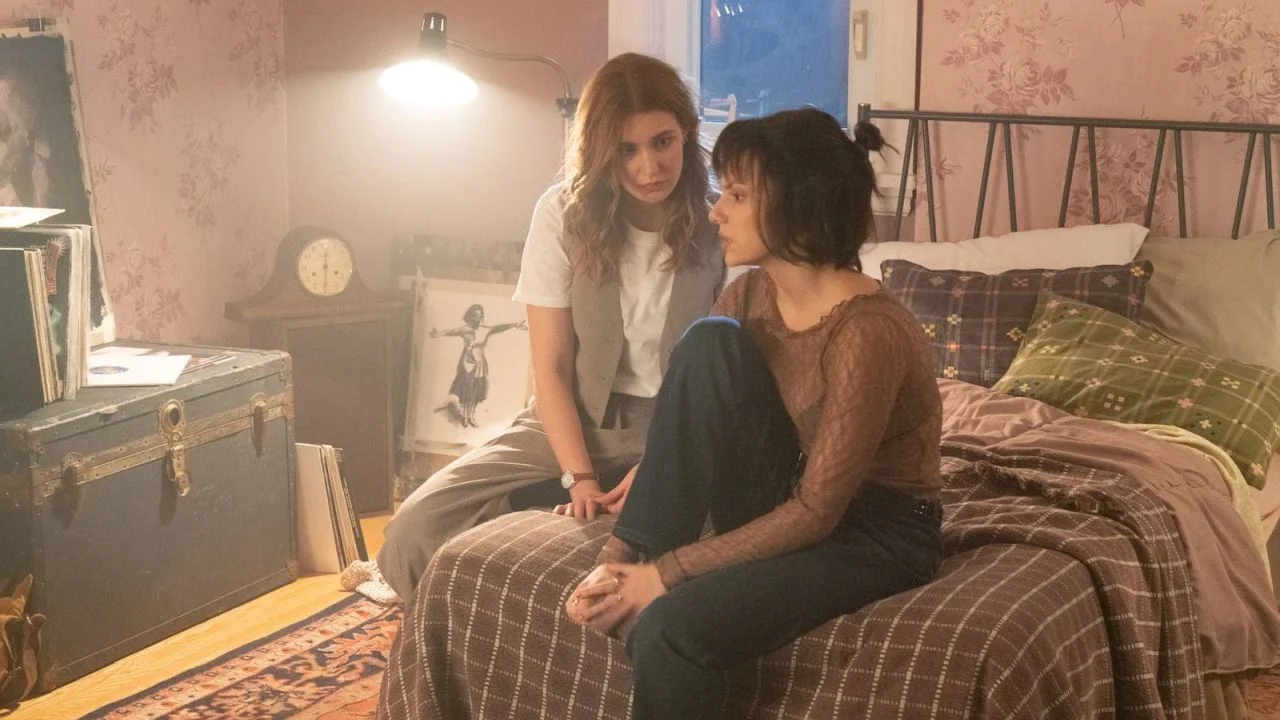
Scream queen team Dafne Keen and Sophie Nélisse are apparently the real reason for many to watch “Whistle.”
Attention: From here we reveal the basic concept of “Whistle”. Those who prefer not to know anything about a film in advance should perhaps continue reading after they have seen the cinema.
The victims in “Whistle” are not haunted by a psychopathic killer, but by their own death – which, due to the death whistle, comes a few decades earlier than planned. The highlight: the teenagers die exactly as they would otherwise have died – just in a completely different situation! In other words: If someone had died in a house fire 50 years from now, they would now burn to death – even if they were standing in the shower and there was no source of fire nearby. The possibilities of what you can do with this concept are almost endless…
… and luckily Corin Hardy shows no restraint! If at first it’s more creative, for example if you think about what it might look like if a teenager who was just cheerful suddenly were to waste away due to old age, it becomes more and more brutal as it progresses. If you almost think that “Whistle” could be one of those artificially anemic PG-13 horror films for a young audience, this impression is completely dispelled towards the end: Have you ever imagined, for example, what a body looks like at the exact moment when a car drives at full speed into a wall – without a car, just a body in a room, bones and limbs bursting included?
Conclusion: The idea for the death scenes is not only brilliant, it is also implemented mercilessly and consistently – and that’s at least half the battle in a slasher!