
Victor Hugo’s novel “Les Misérables”, published in 1862, is considered one of the major works of French literature. The epic story combines social criticism, action, adventure and romance against a realistic historical background. The material became known worldwide especially from 1980 through the musical version composed by Claude-Michel Schönberg, affectionately called “Les Miz” by fans. In 2012, the musical was again adapted for the cinema, with a fantastic cast starring Hugh Jackman as Jean Valjean. The result was eight Oscar nominations and three Oscar wins – including… for Anne Hathaway as Best Supporting Actress. There are also countless other film adaptations – the oldest from 1905. After Robert Hossein, Bille August, Tom Hooper and Claude Lelouch, to name just a few, the “Pear Cake with Lavender” director Éric Besnard has now dared to tackle the material – albeit in an unusual way.
But first of all: the experiment was a success! First of all, this is thanks to the script, which only deals with the first and second parts of the novel. This not only means that at least one sequel can be expected, but also that Besnard limits himself to relatively few aspects of the extensive narrative. Essentially, it’s about the tragic and exciting career of Jean Valjean (Grégory Gadebois) from good to bad person – and back again: The poor but honest Jean becomes a thief as a young man because he wants to help his sister and her starving children. He steals a loaf of bread, is caught and sentenced to four years of forced labor in a quarry. The reason he spends a total of 19 years in captivity is because he repeatedly attempts to escape, which leads to an extension of the already drastic sentence.
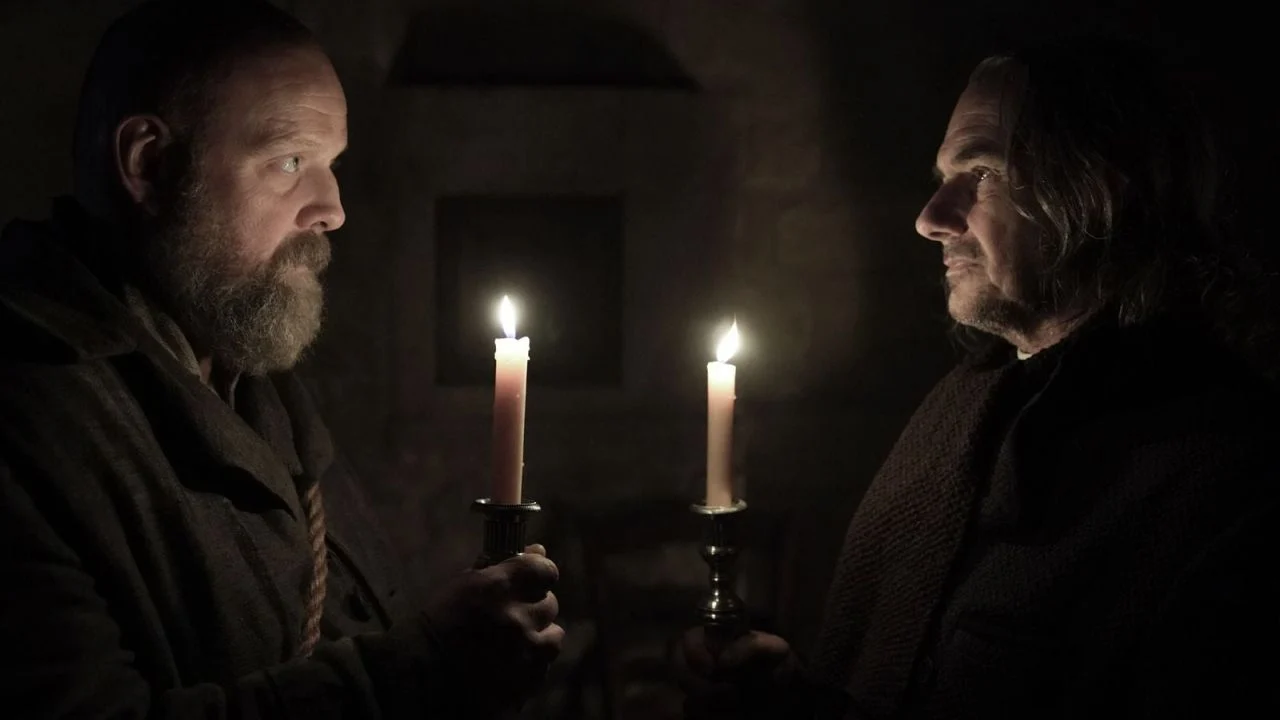
Grégory Gadebois and Bernard Campan encourage each other to achieve top acting performances!
At the beginning of the film, Jean Valjean is traveling across country – finally released from forced labor, but branded as an ex-prisoner, so he can find neither work nor a place to stay. Captivity has almost broken him, he is hard-hearted to the point of cruelty, but not completely callous, but filled with anger at the society that has rejected him. Only one person is friendly to him: Bienvenu (Bernard Campan), who lives in self-imposed poverty. The priest, whose name already means “welcome,” welcomes Jean Valjean and invites him to dinner. His obvious friendliness confuses the deeply suspicious Jean. While Bienvenu’s sister Baptistine (Isabelle Carré) supports her brother, the energetic housekeeper Magloire (Alexandra Lamy) would prefer to throw the uninvited guest straight back out the door…
The Andorra Effect
“I am what people expect of me,” says Valjean. This behavior is also known as the “Andorra effect”, after the play “Andorra” by Max Frisch, which deals with anti-Semitism: A man who everyone thinks is a Jew behaves the way the prejudiced people around him expect him to – a self-fulfilling prophecy, so to speak. It’s about the fatal effect of prejudice and ultimately about the identity of those affected – a timeless problem with very current references, which is also discussed in “Les Misérables”. Tolerance and understanding, once elements of the Enlightenment, have long been forgotten in post-Napoleonic French society. At the beginning of the 19th century, the country was characterized by newly awakened feudalism and at the same time by economic decline as a result of the Napoleonic Wars.
Poverty and hunger are the order of the day. The poorest are forced to sell their teeth and hair or become prostitutes in order to survive. Even the smallest offenses are punished with draconian punishments, both unsuccessfully and brutally. Valjean becomes a symbol of the oppression of the people by those in power in restorative early capitalism – and thus also of the anger in the country. Most are too tired and exhausted to fight back. But Valjean still has fire in him, he is fighting a battle of his own, choosing to become a good person instead of reacting to violence with violence. Bienvenu becomes his role model: the sturdy Valjean and the almost delicate Bienvenu embody two different types of people who ultimately want to achieve the same thing using different means: justice for all. One believes in himself and the other believes in God.
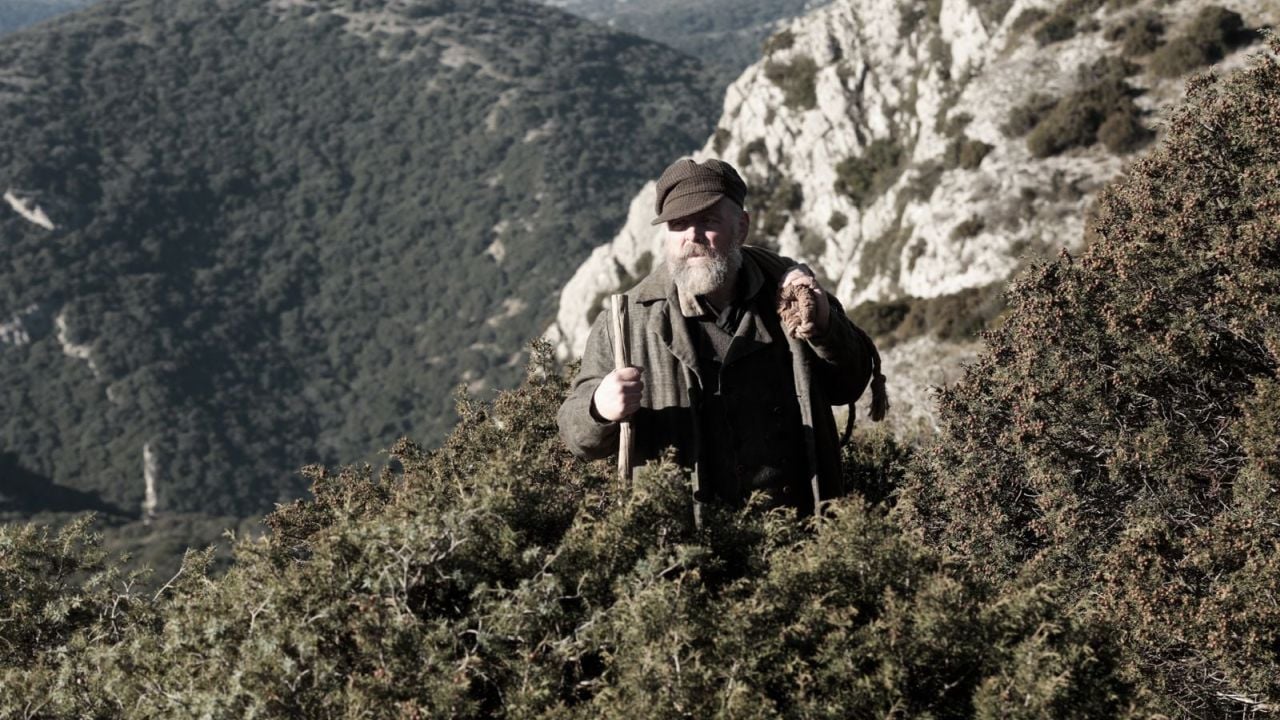
Jean Valjean (Grégory Gadebois) struggles to see the good in people.
Éric Besnard captures the atmosphere of the 19th century in dark, soft colors. The mood is melancholic, with faint glimmers of hope. This “Les Misérables” is more of a powerful character drama than an epic story, because the focus here is on the development of Jean Valjean. As in Besnard’s previous works “Louise and the School of Freedom” or “À la carte – freedom goes through the stomach” there are interspersed beautiful landscape shots that further emphasize the loneliness of the title hero. What’s also immediately noticeable is the accuracy of the costumes and props. However, the equipment occasionally seems too smooth, which also applies to the flashbacks to Valjean’s past. The brutality and sadism of the guards in the quarry are more than clear, but the prisoners seem pretty clean and well-fed, which also applies to Valjean.
Grégory Gadebois plays him with an incredible presence as a simultaneously frightening and shy guy who has seen too many terrible things and yet cannot take his eyes off the injustices around him. He tries to show humility, but it doesn’t work. Nobody takes the submissive beggar from him. He is hardened inside, but his eyes reveal that there is still life and resistance within him. Gadebois shows this very movingly and with a seemingly natural ease. But there is the highest level of acting behind it, which especially applies to the development process that Valjean goes through.
Two great main actors
His opponent and partner is Bernard Campan as Bishop Bienvenu – the two men act on the same wavelength, but with different guidelines: Campan is not a sullen pastor, just as Gadebois is not simply a jaded giant baby. Rather, Campan plays the bishop as a not-so-nice, rather cool pragmatist who has realized that you can get further with kindness than with meanness. It is precisely in their interaction that the two characters become more and more likeable as the plot progresses. The men start a kind of competition: Who is right with their image of humanity? In the end, Bienvenu wins – Valjean changes. But his search for inner peace continues.
Conclusion: Éric Besnard turns the epic original into a concentrated character drama that is sometimes a bit pleasing, but at the same time boasts two outstanding acting performances from Grégory Gadebois and Bernard Campan.