Pitchforks are out. Nevertheless, one could well imagine that one or two multiplex mobs will form in the coming days. Because anyone who expects a similarly faithful new edition of “Frankenstein’s Bride” just a few months after Guillermo del Toro’s “Frankenstein” will experience a blue miracle in “The Bride! – Long Live the Bride”. Despite a rumored budget of $80 million, Maggie Gyllenhaal’s second directorial effort after the three-time Oscar-nominated Netflix production “Woman in the Dark” delivers anything but typical blockbuster cinema.
Last year, despite all the prophecies of doom, the risk of shelling out $100 million for an epic historical horror film more than paid off for Warner Bros.: More than $350 million in box office and the record-breaking number of 16 Oscar nominations for “Blood & Sinners” speak for themselves! With “The Bride,” produced by the same studio, however, it could be difficult to achieve a similar mainstream triumph, because Maggie Gyllenhaal turns out to be a whole lot more (over-)ambitious than Ryan Coogler: The result is a tragic gothic romance, swinging set extravaganza, feminist rage, declaration of love for classic Hollywood cinema and surreal hallucination all in one.
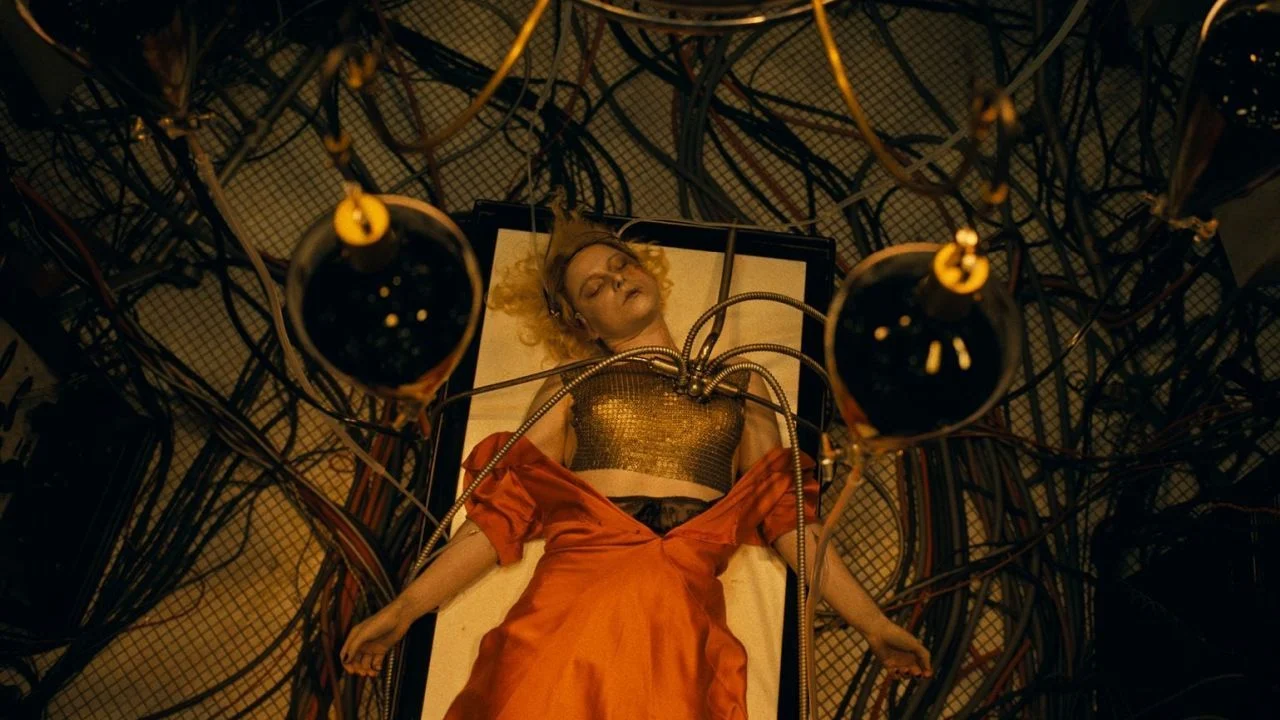
Jessie Buckley received her first Oscar nomination for her first collaboration with Maggie Gyllenhaal in “Woman in the Dark.”
After wandering alone for more than 100 years, Frankenstein, aka Frank (Christian Bale), who was brought back from the dead, simply can’t stand the endless loneliness anymore. In his agonizing desperation, he turns to the “mad scientist” Dr. in Chicago in 1935. Euphronius (Annette Bening) so that she can create a companion for him who he can love not only until death, but beyond. The fresh corpse that is dug up for the experiment powered by the electricity from the street lamps comes from a young woman (Jessie Buckley) who was previously dumped by the henchmen (Matthew Maher, John Magaro) of the local mafia godfather.
After successful resuscitation, the reanimated person initially cannot remember anything, but Dr. Euphronius lies to her that she was Frankenstein’s bride before “her accident”. However, after their first night of partying together, the couple is approached by two guys for whom the confrontation doesn’t end well at all. From then on, the bride and her passenger are on the run across the USA, with investigator Jake Wiles (Peter Sarsgaard) and his partner Myrna Mallow (Penélope Cruz) always close on their heels…
A surprising double role
“The Bride” begins immediately with a surreal black and white sequence in which Jessie Buckley can be seen – but not in her role as the bride. Instead, the two-time Oscar-nominated “Hamnet” star embodies the “Frankenstein” author Mary Shelley herself. After her death, she is stuck in a form of afterlife, from where she will repeatedly enter into a kind of dialogue with the title character (or possibly just her own brain tumor). I almost just wrote “with her creation,” but in the original novel from 1818, the companion is destroyed before she is reanimated.
It wasn’t until 117 years later that she finally came into her own in the Universal Classic Monsters series. “The Bride”, however, is not a remake of “Bride of Frankenstein”, but rather a version of how Maggie Gyllenhaal imagines a sequel written by Mary Shelley herself, enriched with plenty of film history references. This meta-dialogue between “The Bride” and the various originals is also evident in the fact that Frankenstein and the bride in the film were born in exactly the same years in which they first appeared in the real world on the pages of a book or on a cinema screen.
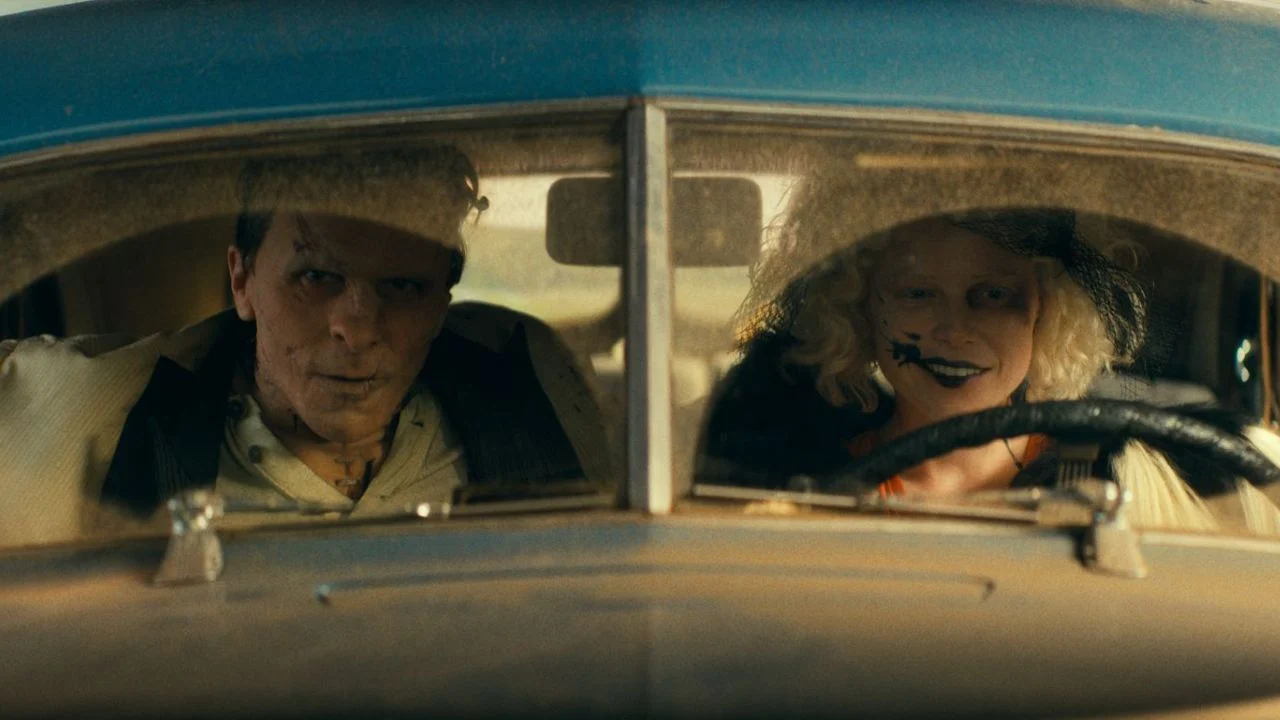
The parallels between “The Bride” and “Bonnie & Clyde” are obvious.
Jessie Buckley is nothing less than an event! The costume, make-up and wig are pure punk rock, but it’s still not that easy to classify the character: the bride with lost memory and a limping leg could easily have become a kind of manic gothic dream girl, but instead she remains a flapper girl with an allergy to oysters and a mind of her own that is almost impossible to predict until the end – including a kind of Tourette’s, in which she often involuntarily uses suggestive but above all sophisticated rhyming words expels.
This bride is guaranteed to please no one, including those watching. So even the art house audience, which might still be on fire at the hallucinogenic black and white opening, will be offended by the time Frankenstein reenacts the curb scene from “American History X” (in only a slightly weaker form). Apart from that, Christian Bale brings an astonishing amount of warm-hearted, melancholic humor to the film as a bundled-up teddy bear who looks at his bride in love and admiration.
Definitely not a musical
At the time of writing this review, the German Wikipedia still contains the long-debunked rumor that “The Bride” is a musical. Instead, there is only one major dance scene in the film, namely in a New York ballroom, where the iconic “Putting On The Ritz” number from Mel Brooks’ parody masterpiece “Frankenstein Junior” is recreated almost exactly. Just one of many such meta moments. After all, Frankenstein in the film himself is a huge cinema fan – especially when his, among other things, Fred Astaire’s favorite star Ronnie Reed (Jake Gyllenhaal) plays the lead role. Anyway, almost all of the names in the film sound like they come from studio productions from the 1920s to 1930s…
… and the parallels between the fleeing couple and the New Hollywood classic “Bonnie & Clyde” are obvious anyway. Despite all the joy about this 130-year-old Hollywood hotpot, the question remains where it will all lead. Especially since some things in the film itself remain of a rather theoretical nature: for example, a femicide rage speech by the bride triggers a nationwide protest movement, whose members, following her example, paint their faces with black tar splatters. So “The Bride” is – like so many things happen here – a kind of anti-incel answer to Joaquin Phoenix’s “Joker”. So everything is included, except as I said, there are no original songs.
Conclusion: A wild ride with (too) much baggage, which becomes an event especially thanks to Jessie Buckley’s punk rock performance.