
There are already more than enough animated films about penguins – a thought that Pixar creative director Pete Docter also had when director Daniel Chong (“We Bare Bears”) approached him with the idea of making another film about the tailcoat wearers. After all, there were already such different titles as “The Penguins of Madagascar”, “Happy Feet” and “Kings of the Waves”. Chong himself realized that the topic had already been exhausted enough – and made the logical decision: the flightless birds were quickly replaced by beavers in the script for “Hoppers”.
The fresh choice of animals seems refreshing – at the same time, the original character concept does not completely hide the fact that the animated film company Pixar, which is part of the Disney Group, used to tell stories in a more courageous and independent way. Nevertheless, the sci-fi adventure fun impresses with its accessible and entertaining narrative style – and conveys an important message in a pleasantly unobtrusive way.
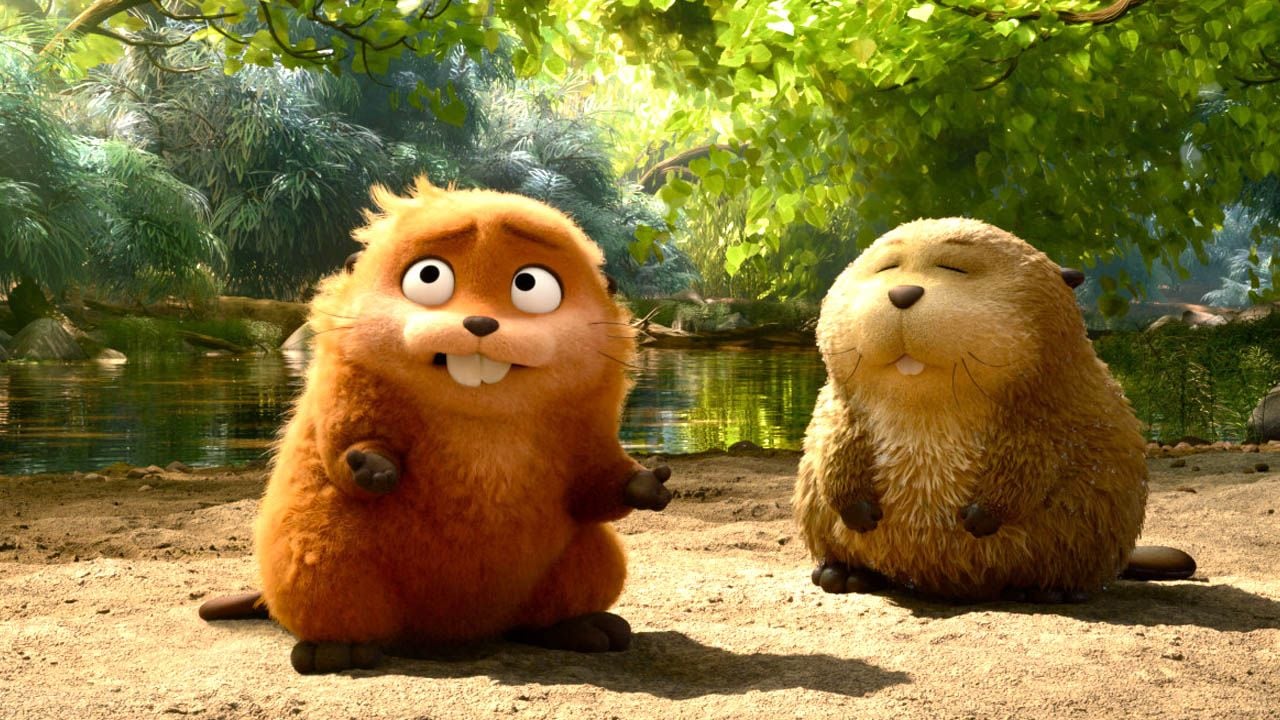
If you have to eat, eat: Just one of the pond rules that Mabel (left) has to learn.
Mabel (originally spoken by Piper Curda/German voice by Magdalena Montasser) has been committed to protecting animals since she was a child. After her grandmother’s death, she is the only one left in her family to fight for the preservation of a remote biotope with a pond, beavers and adjacent forest. While Mayor Jerry (Jon Hamm/Markus Pfeiffer) wants to let the area be developed and sees the disappearance of the animals as a license, Mabel initially lacks the solid arguments to stop the project.
The decisive twist comes with a scientific sensation: Mabel’s professor Dr. Sam (Kathy Najimy/Martina Treger) develops a technology that can transfer human consciousness into robotic animal models. Even speaking in all kinds of different ways becomes possible. The nature lover uses this opportunity to become part of the animal world as a beaver herself – and thus possibly encourage the animals to return to their habitat…
Jump into a foreign body
After the world logic and social metaphors of the Pixar hit “Elemental” were recently conspicuously based on “Zoomania”, the Disney studios are once again using their own portfolio: The basic constellation of the film is borrowed from one of the most successful blockbusters of all time – “Avatar – Departure for Pandora” (2009). Mabel even points this out herself at one point. As in James Cameron’s science fiction epic, the heroine leaves her human body to fight in an artificial shell to protect an endangered ecosystem.
“Hoppers” varies this motif: Unlike the Na’vi, who defend their homeland uncompromisingly, the animals initially approach Mabel’s concerns with surprising distance. In this way, the film shifts the conflict from an epic battle for homeland to a debate about what importance is still given to nature today. In terms of narrative, “Hoppers” quickly picks up the pace and maintains it consistently. At times, however, this high speed of the story costs emotional depth, as quieter moments are not given enough time to fully develop their effect.
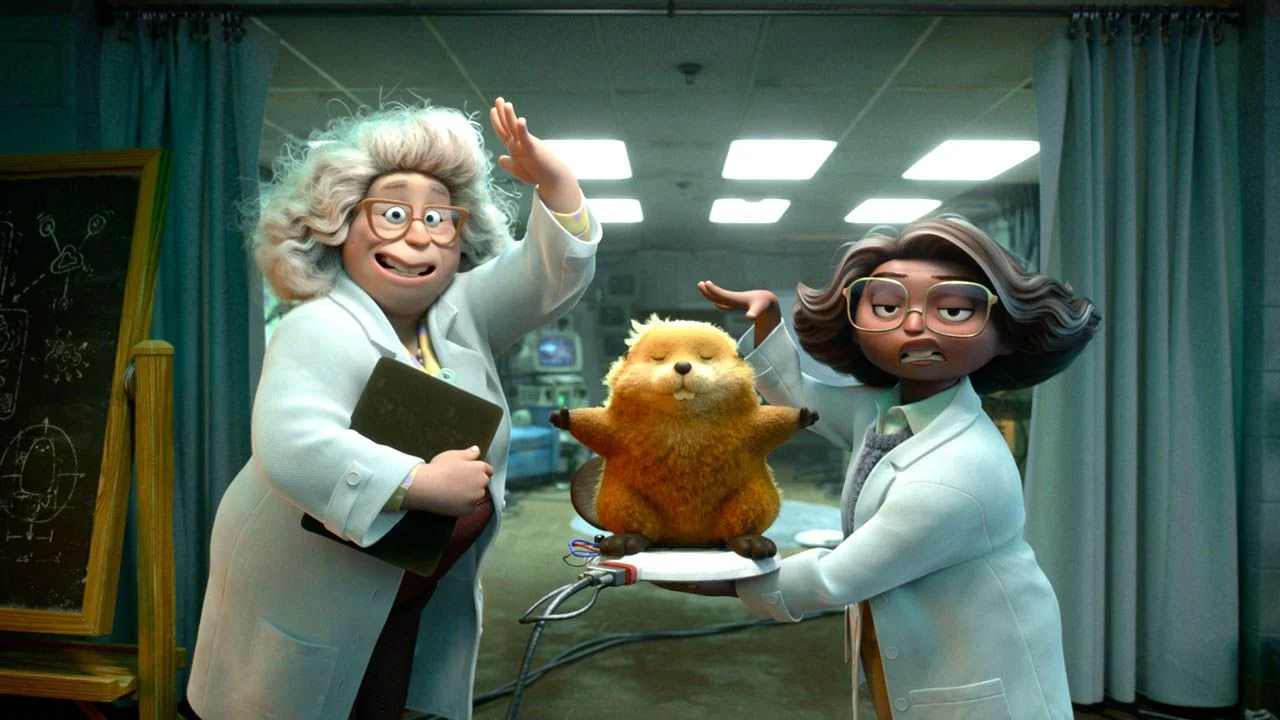
The technology is quickly explained: Just like in “Avatar”!
At the same time, the film relies a little too heavily on the main character’s motivation in order to sensitize the audience to the fate of the animals. The animal characters themselves remain mostly passive and make hardly any visible efforts to actively advocate for the preservation of their habitat. This means that their individual suffering remains abstract. But the film always manages to surprise with some clever twists. So the plot – true to the motto “Nature takes everything back” – even develops towards horror when the animals start a revolution and literally want to “crush” the people.
Shortly before the climax, Hai-Di, dubbed in German by Heidi Klum, is introduced, a character who represents the animal horror genre like no other, but seems a bit out of place in a film about pond animals. While the film doesn’t always keep the balance narratively, Pixar remains visually above all doubt. Compared to more recent works such as “Elio” or “Inside Out 2”, the colors are much more muted and less excited. Instead of bright contrasts, natural colors, soft transitions and an overall earthy palette dominate, creating a strong connection to nature. This visual restraint ensures that the images offer a counterpoint to the sometimes somewhat hectic narrative style.
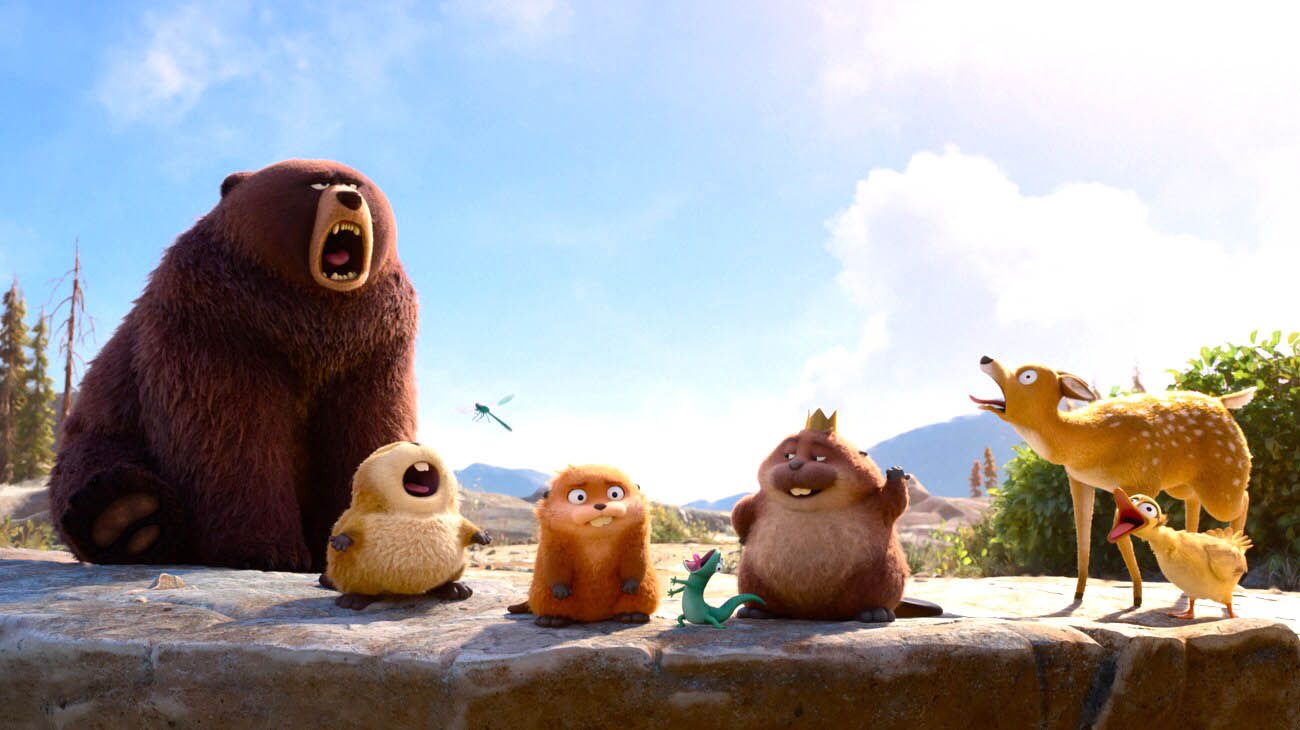
Mabel (middle) sometimes has a hard time understanding the animals.
“Hoppers” also finds a particularly clever approach in the depiction of communication between people and animals. While many animated films simply use animal noises instead of spoken words to illustrate communication problems, “Hoppers” goes one step further: As soon as animals are shown from a human perspective, their faces visibly change. Eyes and mouth become smaller, facial expressions and gestures are greatly reduced – a simple but effective trick that makes the perspective clear without much explanation.
Conclusion: “Hoppers” impresses as an entertaining animated adventure with an unusual animal focus, the usual strong visual design and a friendly, unobtrusive nature conservation message. Despite the high pace, surprising genre branches and clever ideas, the film remains on a familiar narrative path and does not always reach the emotional depth of previous Pixar studio highlights.