
Many years ago, the old Viennese blues musician Al Cook built the ultimate man cave in the basement: an analog recording studio and a music listening room at the same time. Pictures of blues legends Robert Johnson and Charley Patton hang on the walls, Cook plays his vinyl collection on a wood-paneled Victrola record player, next to which there is a small bust of Elvis. He enjoys listening to a few recordings, swaying his body and looking transfigured into the distance, before heading back to his apartment a few floors up with a Christmas tree he had just bought.
Al Cook's real name is Alois Koch. With his meticulously coiffed hair, teased up with old-school spray and his outdated love for the archaic American blues of the early 20th century, he was a popular sensation in Austria for many years. With “The Loneliest Man In Town,” Tizza Covi and Rainer Frimmel have now given him a wistful filmic homage: a fictionalized story shot on 16mm film material, into which Cook's long, eventful life is repeatedly interwoven and retold in a documentary manner with an elegant hand.

Al Cook built a career as a blues musician in Vienna, of all places.
There's a reason why Christmas is called the “loneliest season” for those who are alone. On Christmas Eve of all days, the power goes out in Cook's apartment as he is about to pour himself a glass of champagne and toast to the portrait of his late wife. At this hour, even an emergency service can no longer help: someone will only be able to take care of it after the holidays, he is told on the phone. “I have candles and that’s enough for the festive mood,” he replies in a cozy Viennese dialect and instead, to lift his spirits, he plays the Christmas classic “Silent Night, Holy Night” on the slide guitar.
But the next day two untrustworthy guys suddenly show up at the door. One on behalf of the property management, the other for its psychological, i.e. emphatic support: Cook was the last remaining tenant for a long time and should soon be evicted so that the house can finally be properly demolished. Otherwise, the turned off electricity would soon be subject to further harassment if it did not voluntarily waive its rental rights. And the two crooks soon get serious about it, show up for breakfast in the morning (“I’ll eat your sausage sandwich”) and camp out in Cook’s booth with Jägermeister and beer cans. The old musician will soon only be able to shave electrically in the inn around the corner.
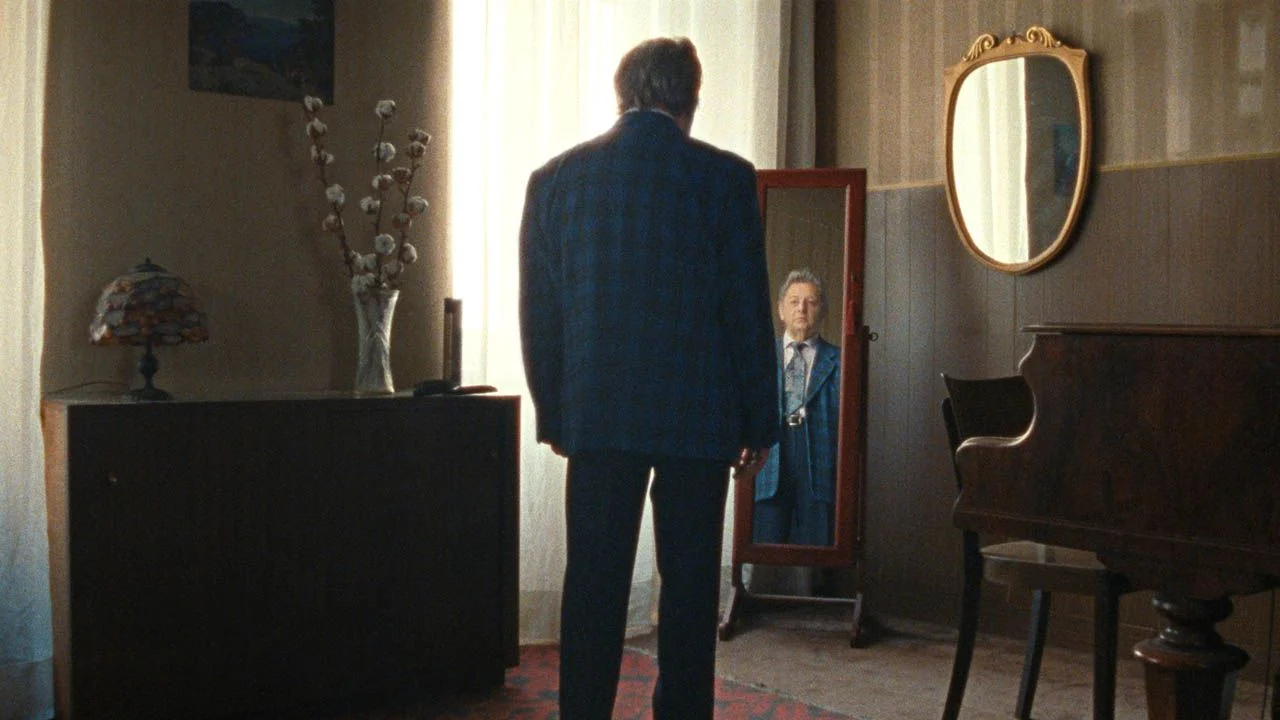
Alois Koch, as Cook's actual name is, plays himself in “The Loneliest Man In Town” – and, last but not least, deals with his own past.
In an old VHS recording you can see the artist at his peak at the age of 35. In a TV documentary, he talks engagingly about his dislike of the music industry's industrial disposable products and contrasts this with his passionate live performances and recordings: When he plays, he says, he tears out his heart and throws it on the stage floor. He wants to leave small-minded Austria behind him as soon as possible. But things turned out differently: Cook never left Vienna and his apartment in the third district. Instead, he played for decades in the city's blues clubs with passing American musicians, thereby making friends with the legends he admired. Instead of the Mississippi Delta, the branches of the Danube become his creative inspiration.
“The Loneliest Man In Town” tells of this long life with a laconic joke that is sometimes reminiscent of the cinema of the Finnish director Aki Kaurismäki (“Falling Leaves”) – a cinematic world that is also populated by lonely bon vivants and a love of music from times long past. With a deliberate but never drowsy pace, you see a contemporary Vienna in which the former living spaces are disappearing and are being subjected to the proverbial demolition. On the road and homeless, Al Cook meets people from his past: he sees a woman he was with 50 years ago passing by on the street. He asks why she suddenly left him and got on the tram without saying a word. Well, she replies, what would have occurred to him back then, wanting to give an Elvis record to a Beatles fan like her?
Melancholic, but never mournful
Many films find it difficult to find a deeply melancholic tone that does not slip into nostalgic romanticism or whining. Tizza Covi and Rainer Frimmel have completely succeeded with this wonderful documentary fiction (a narrative format in which the two have been working for years). This is certainly thanks to the main character, whose attitude is characterized by an indomitable gentleness: If you are disgusted from the house in which you were born many years ago, even in old age you can still buy the one-way ticket to New Orleans that you have dreamed of your whole life.
Conclusion: A melancholic, deeply touching swan song to an artist's life between defiance and tenderness: With the documentary fiction “The Loneliest Man In Town”, Tizza Covi and Rainer Frimmel create a laconic and warm-hearted memorial to the Viennese blues veteran Al Cook.
We saw “The Loneliest Man In Town” at the Berlinale 2026, where it celebrated its world premiere in the official competition.