
Noah Segan, best known as an actor from almost all of his friend Rian Johnson's projects (“Knives Out” series), has staged a loving and painful swan song to his hometown with his new film. The opening credits to “The Only Living Pickpocket In New York” make this clear. Because the thriller drama – produced by Johnson – begins with the song “New York, I Love You But You're Bringing Me Down”, a lament about the transformation of the metropolis. It used to be dirty and dangerous, but also creative and wild. Today the city has become so expensive that real New Yorkers can no longer afford it. Investment bankers and rich kids have taken over and made it boring.
Like LCD Soundsystem singer James Murphy, pickpocket Harry (John Turturro) in “The Only Living Pickpocket In New York” mourns the good old days, but makes it clear that he will still love the city forever. And just like the character reminiscent of Muppet frog Kermit in the music video for “New York, I Love You but You're Bringing Me Down,” Harry goes on a final journey through her. The fact that it is actually a race against time is becoming more and more obscure. Segan deliberately removes the tension from his intimate character piece. Instead of a thriller, he mostly stages a melancholic gem with an outstanding leading actor in a very stylish manner. It's so likeable that you can forgive even small missteps.
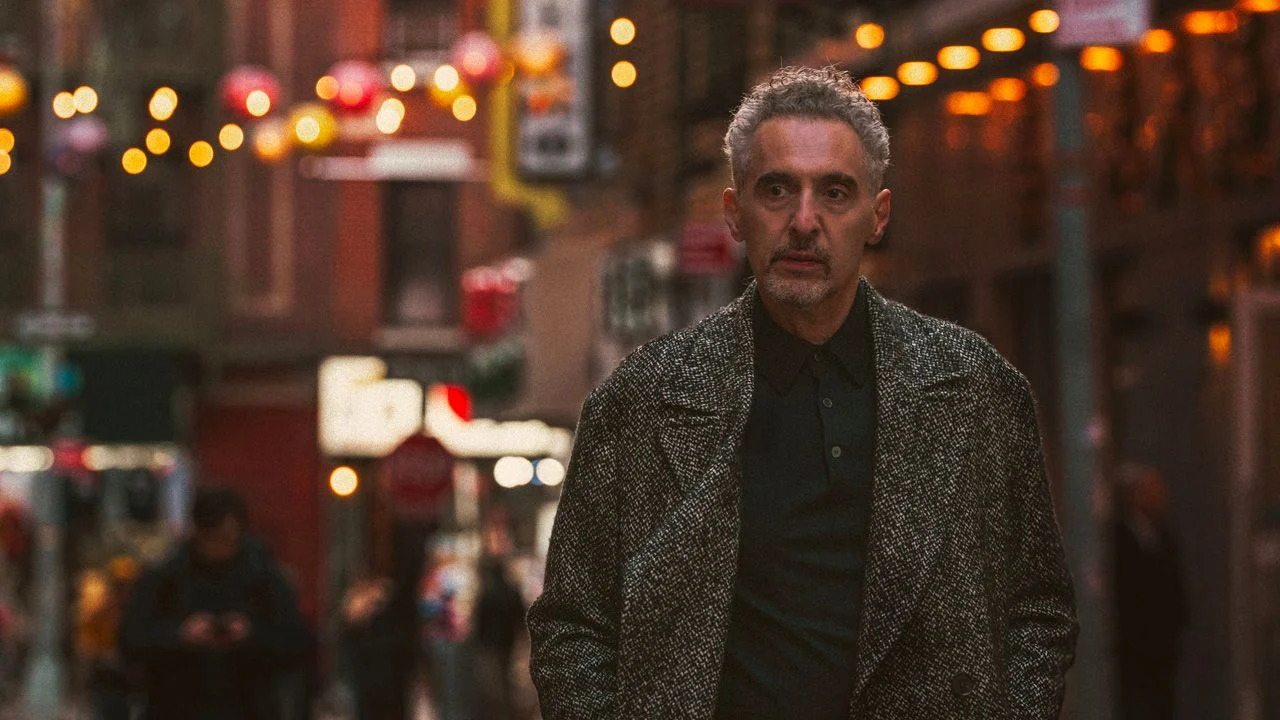
Harry is looking in (and for) his New York.
Harry Lehmann (John Turturro) is a veteran pickpocket who has been roaming the streets of New York City for decades. He still practices his craft in the classic way using old tricks and analogue techniques. It's just that the prey is often no longer there. In the age of digital payment systems, there is less and less cash in stolen wallets, and supposedly luxury watches on the wrists of his regular fence Ben (Steve Buscemi) often turn out to be cheap goods. But when he relieves the hard-partying Dylan (Will Price) during a night-time foray, it's a jackpot. The wallet is well filled, the watch is worth a small fortune. But he stole from the wrong person.
Because the well-connected youngster and his crew track him down and immediately recognize Harry's weak point. They threaten to kill his lovingly cared-for wife Rose (Karina Arroyave), who is so seriously ill that she lies in bed unable to communicate and largely apathetic. Within a few hours, Harry has to bring back a USB stick that was also stolen but carelessly given away in order to at least save her. Knowing what fate awaits him personally upon his return, the small-time crook sets off on one last journey through his New York.
A classic thriller only on paper
Harry has until 4 p.m. to get the USB stick. He keeps looking at his watch to make sure how long he has left. It's a classic thriller premise – but Noah Segan is surprisingly uninterested in it. Of course, the difficulties of finding the USB stick and then getting it back from its new owners play a role – but the focus at every moment is on the atmosphere of this farewell trip. Because Segan is more interested in mood than in dramaturgical exaggeration.
Once again Harry sees his New York, which no longer exists. It's certainly not a coincidence that it goes through a wide variety of parts of the city – from the Bronx to Chinatown and even to Queens. Segan shows the metropolis away from its tourist landmarks. The city doesn't look glamorous here, but rather like it has become a little tired of all the change. She is also almost a stranger to Harry, and even the experienced thief has to ask for directions once when his search leads him to one of the gentrified neighborhoods that he has deliberately avoided.
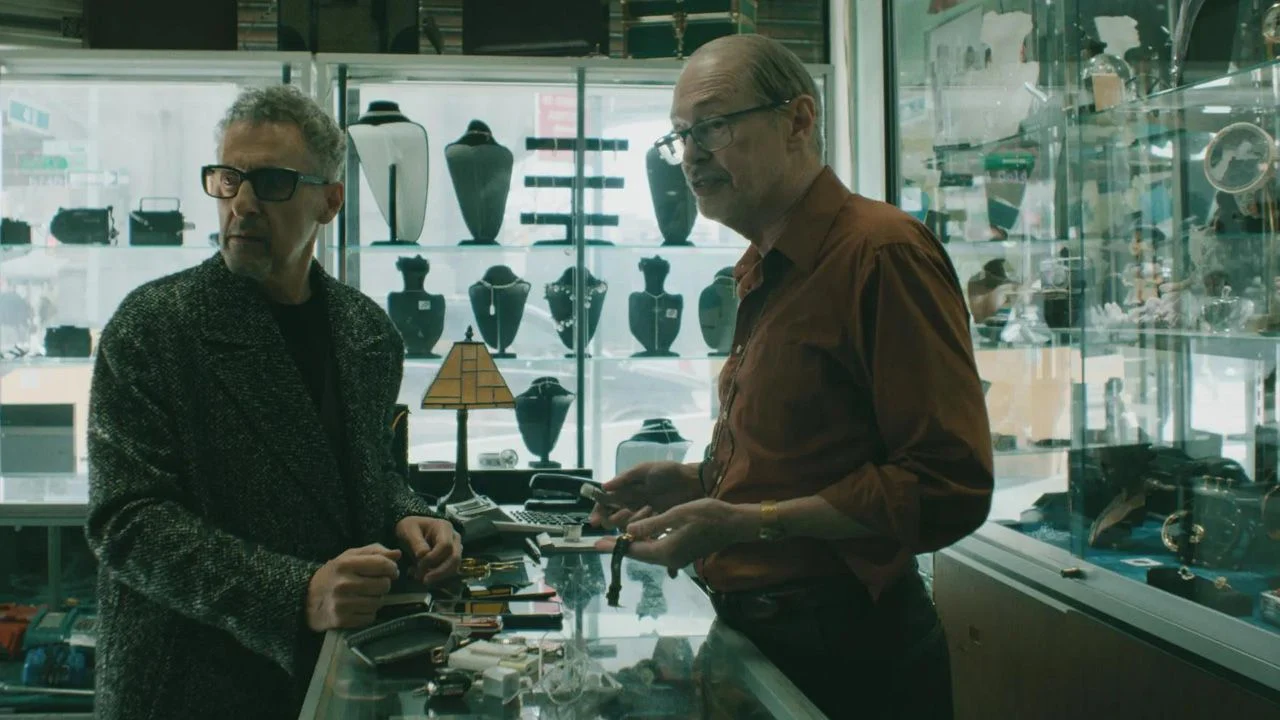
Even Harry's regular fence, Ben, can no longer use most of what the thief stole today.
Even though New York is the focus, it is also a universal story about one of the last analog people in a fully digital metropolis. Segan doesn't use this character, who doesn't even have a cell phone and thinks a computer virus is a communicable disease, to reckon with progress. He neither glorifies nostalgia nor demonizes modernization. It is an inventory of change that makes even the most clever thieves' trick no longer worth anything if it can be traced hours later thanks to omnipresent camera surveillance. And so it is, above all, a quiet, bittersweet portrait of aging – and what happens when even crime is overtaken by technological progress.
Sometimes Segan gets a little too lost in this melancholic swan song. Harry's brief detour to his estranged daughter (Tatiana Maslany) is a rather unnecessary episode that primarily serves to squeeze in a little more sentimentality. The fact that it still works is thanks to John Turturro. With minimal gestures, the “Barton Fink” star carries a film that is strongest when Harry’s little routines and tricks take center stage. One can also be forgiven for the fact that the actual crime plot remains deliberately sketchy and that the supporting characters are rather functionally integrated despite the top-class cast with stars like Giancarlo Esposito (“Breaking Bad”) and the surprise appearance of a cinema legend.
Conclusion: “The Only Living Pickpocket In New York” is far less a thriller than a touching, melancholically beautiful portrait of aging in a rapidly changing world. Driven by an outstanding John Turturro, the film is easily forgiven for its occasional excursions into sentimental kitsch.
We saw “The Only Living Pickpocket In New York” at the Berlinale 2026, where it celebrated its European premiere in the Berlinale Special Gala series.