
The Austrian director Markus Schleinzer has already told twice, in “Michael” and “Angelo,” about characters who want to be something other than what they are. They deceive, partly out of criminal energy, partly out of existential necessity. In this respect, his third film “Rose” fits perfectly into his previously narrow oeuvre, as it is about a woman who pretends to be a man in the 17th century.
Sandra Hülser (“The Astronaut”) plays her with her typical boyish manner, which fits particularly well with a character who resists the suspicious gaze of a patriarchal world. Filmed in brilliant black and white, Schleinzer's distant approach often seems as if he were looking at a diorama. But it is precisely this cool, almost academic look that turns Rose's story into a diversely readable allegory about the desire to be a different person.
Freedom only exists as a man
In the years after the end of the Thirty Years' War, in the middle of the 17th century: Rose (Sandra Hülser) wears her hair short and a hat that is usually pulled low over her face, which not only hides her gender but also a scar from wartime. She accepts an inheritance that is not actually hers and takes over a farm that has been empty for ten years. She is met with suspicion, but her knowledge of a storm that once devastated the country calms people down, at least for now.
Rose laboriously brings the farm into shape, supported by a few farmhands and maids from whom she stays away, especially at night. When she acts bravely when attacked by a bear, her social position rises. She feels safe and wants more. There is a stream on a neighboring property whose water she needs for her plans, but the owner only wants to give the land to her on one condition: Rose should marry his eldest daughter Suzanna (Caro Braun) – a deal that Rose agrees to against her better judgment and with which fate takes its inevitable course…
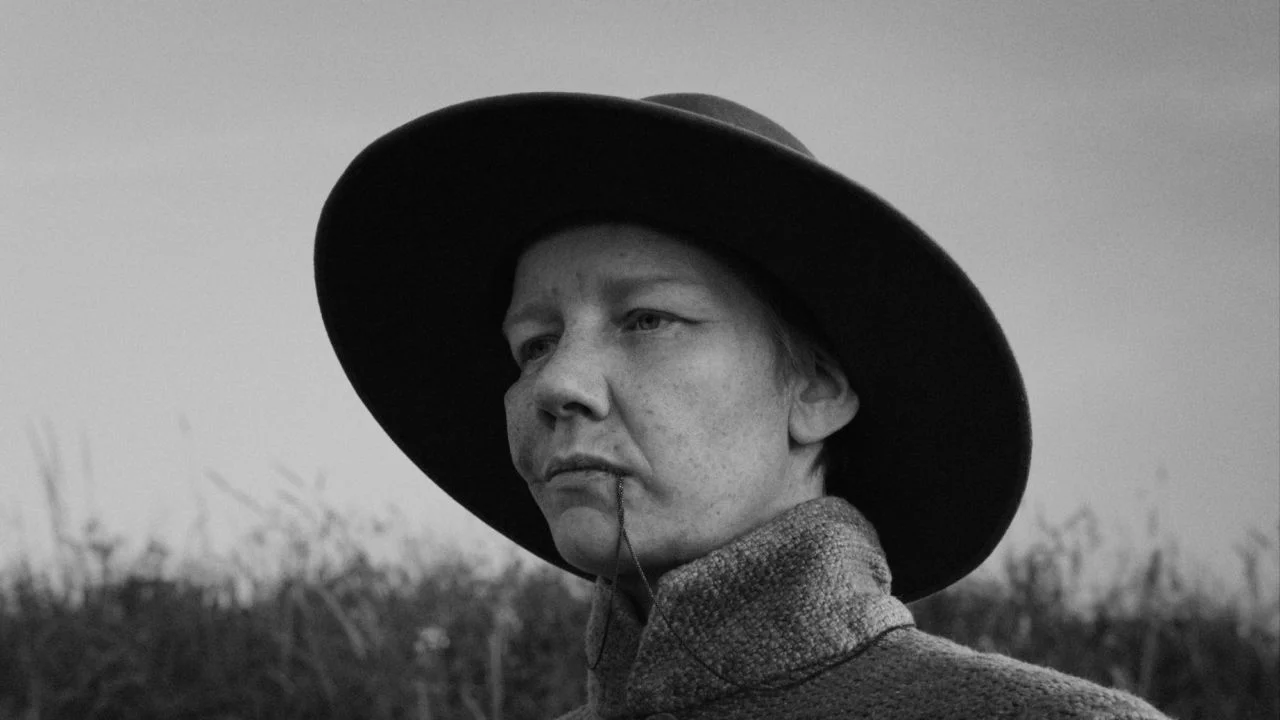
Another brilliant role from “Toni Erdmann” star Sandra Hülser!
“Rose” is only the third feature film that the Austrian director Markus Schleinzer has made in 15 years. At first glance, all three films seem very different, but upon closer inspection they have clear parallels. It's always about characters who hide their true intentions or abilities. “Michael” tells the story of a seemingly blameless man who lives in the Austrian provinces, seems like a nice, reserved neighbor, but is a sex offender who keeps a little boy hidden. “Angelo,” in turn, was about a young man from what is now Nigeria who was abducted from Africa to Vienna. In the 18th century, he was exhibited and examined at the court as an exotic creature, but in reality he had intellectual abilities that went far beyond what was expected of him.
So now Rose is a woman who, in the patriarchal world of the 17th century, demands a level of self-determination and freedom that was not granted to her gender at that time. As a way out, she chooses a path that seems unbelievable, but is actually based on historical facts. Markus Schleinzer and his co-screenwriter Alexander Brom did not choose the specific case of a single woman as a model for Rose. Rather, they formed a universal character from various stories that they came across during their research. Much remains undetermined, especially since Rose is silent for obvious reasons, only speaks what is necessary and her past and the motivation for her actions also remain in the dark for a long time.
Despite concrete models, a universal fable
Even the setting of the action remains vague; the action takes place somewhere in Germany. It was shot in the Harz Mountains, filmed in a stylized, high-contrast black and white, which gives the story an additional distanced aura. “Rose” often seems like a fable, especially since a slightly smug narrator’s voice accompanies the action from the beginning to the inevitable end. From the start, this leaves no doubt that Rose is a fraud. But she also makes it clear that in the world in which Rose lives, there is little choice for a woman with her needs. Schleinzer shows this world in a distanced and cool manner, exhibits it, evades any judgment about Rose's behavior and in doing so opens up a variety of possibilities for understanding the story as a universal allegory.
Conclusion: In his drama “Rose”, which is loosely based on historical facts, Markus Schleinzer tells the story of a woman who pretends to be a man in stylized black and white images and with a perfectly cast Sandra Hülser. Who lies and cheats, but not out of baser instincts, but to gain a level of freedom that the world in which she lives would otherwise deny her gender.
We saw “Rose” at the Berlinale 2026, where it celebrated its world premiere in the official competition.