
A lesbian relationship would probably only cause a scandal in deeply conservative regions of Great Britain. Things were different a good 200 years ago, when the mere suspicion of inappropriate closeness between two women could destroy careers and lives. This is what happened to the teachers Marianne Woods and Jane Pirie, who are the focus of Sophie Heldman's historical drama “The Education Of Jane Cumming”.
The friends founded a school in Edinburgh, Scotland, one of the few opportunities for women to live a somewhat free and independent life in a patriarchal society. But this freedom is destroyed in the atmospheric drama by the eponymous character – even though Jane Cumming, as a half-Indian, is actually an outsider herself.
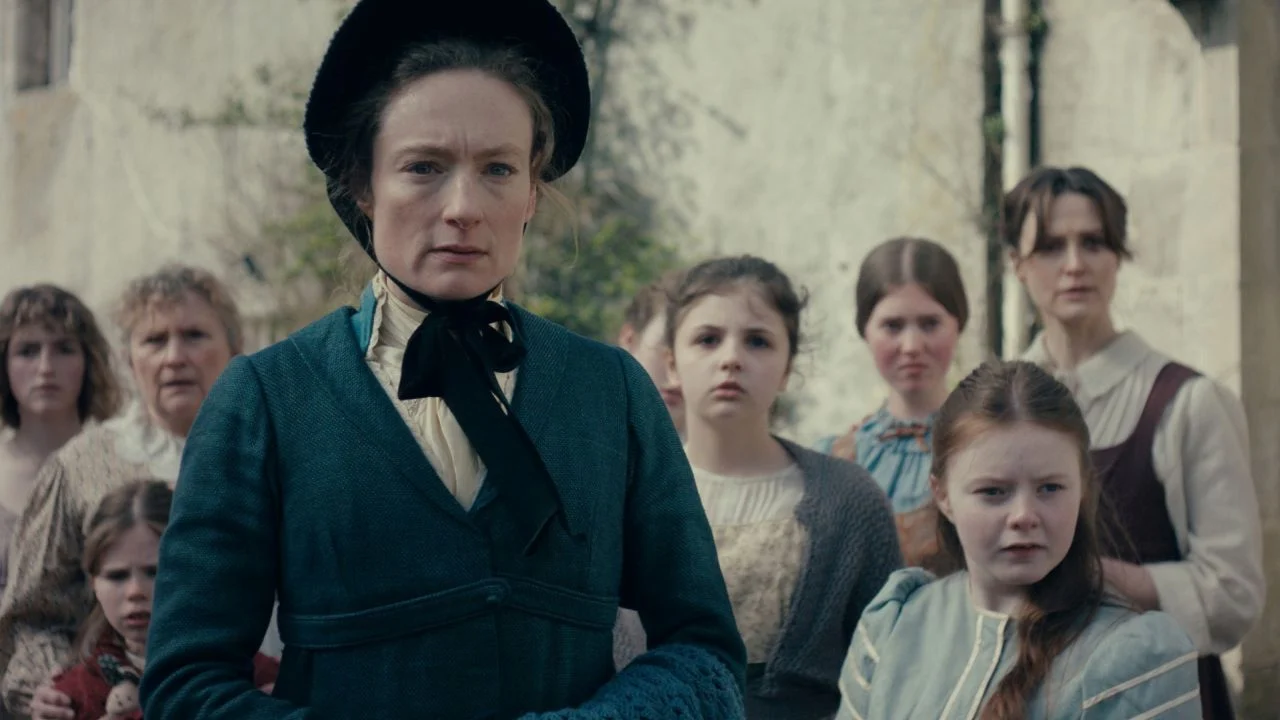
At the beginning of the 19th century, many still did not understand why young women needed school and education.
Edinburgh, 1810. On the outskirts of the Scottish city, Marianne Woods (Clara Dunne) and Jane Pirie (Flora Nicholson) run a small private school for girls and young women. Too many students don't yet live in the sprawling house that their friends converted into a school. The meaning and purpose of education for women was strongly doubted in early 19th century society. The noble Lady Cumming Gordon (Fiona Shaw) also sends her granddaughters to school without much enthusiasm.
It may be that she would rather use the chance to get rid of an unwanted granddaughter: Jane Cumming (Mia Tharia), the illegitimate child that her late son fathered during his time in India. In many ways, Jane Cumming does not fit into the British society of her time and she initially has difficulty adjusting at school. But then she finds trust in her teachers – to an extent that soon tests the fragile construct of a free life that Marianne and Jane have laboriously fought for…
Locked away for 100 years
The second feature film by German director Sophie Heldman (“Rich Colors Before Black”) is based on a true story. As a result of the allegations against the teachers, there was a trial against Marianne Woods and Jane Pirie, after which the files were initially sealed for 100 years – the case was apparently too controversial for the tender souls of the 19th century. At the beginning of the 20th century, this had changed – at least to some extent – and so in 1934 the author and playwright Lilian Hellman was inspired by the files for her play “The Children's Hour”. This in turn served as a template for William Wyler's 1961 film of the same name, in which Audrey Hepburn and Shirley MacLaine played the two teachers in a modern adaptation. The film, listed as “Infamous” in Germany, is considered one of the first Hollywood films to address lesbian desire – even if the question of whether the two teachers are actually lesbian remained even vaguer at the time than in the new version.
This is nominally based on the non-fiction book “Scotch Verdict” by Lilian Faderman, which was published in the early 1980s, but also has some striking similarities to William Wyler’s film. What is particularly striking is the complete lack of depiction of the court process, which abruptly ends the story of the two women. The results of the process and the further fate of those involved are only briefly communicated on final text panels. Through this dramaturgical decision, Heldman voluntarily foregoes a dramatic climax, but also evades the need to address the diverse moral ambivalences inherent in the story.
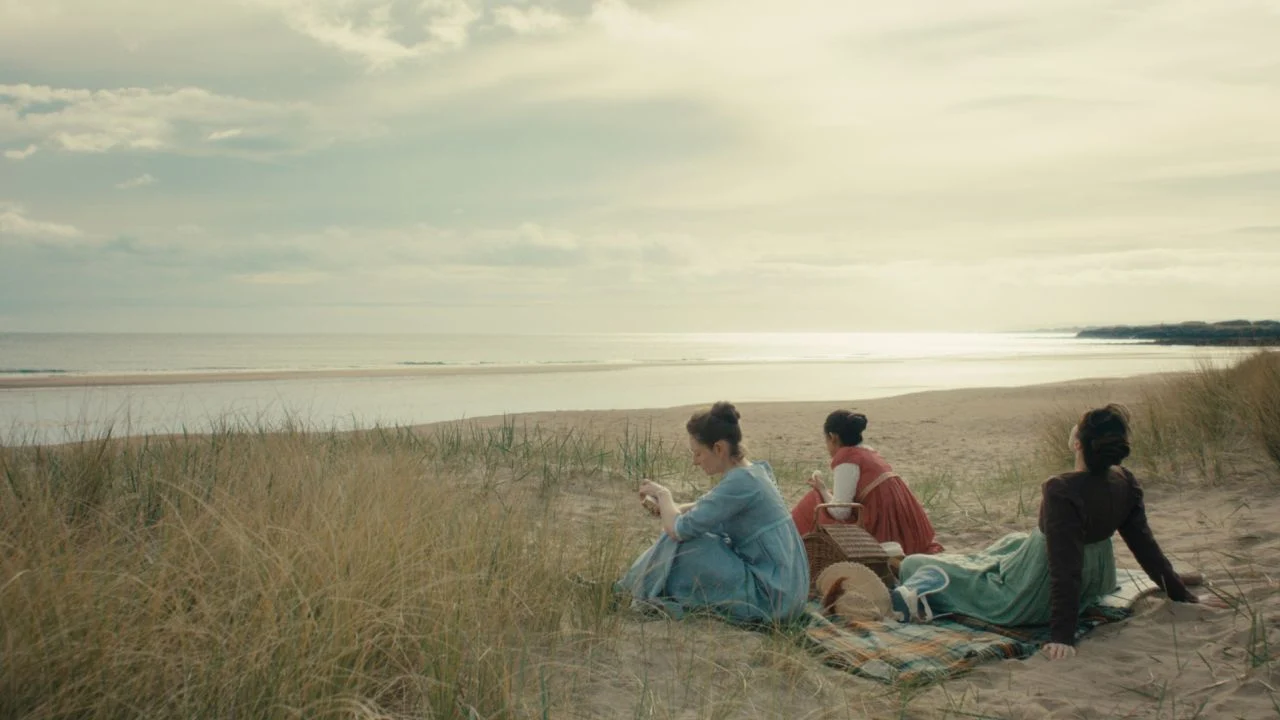
“The Education Of Jane Cumming” is particularly strong in terms of atmosphere.
In a conservative world, Marianne and Jane have built a refuge for themselves and also offer women the opportunity to learn and acquire knowledge. This had hardly any practical consequences at the beginning of the 19th century; it was only in the rarest of cases that even educated women were able to take up an independent profession. In soft images that are somewhat reminiscent of old, faded photos, Sophie Heldman tells of this world, showing moments in which Marianne, Jane and the young Jane Cumming, who soon becomes the teachers' favorite student, live in carefree freedom. But the constraints of the world in which they fight for these freedoms are always visible:
Because of her origins, Jane Cumming, in contrast to her all-white classmates, seems like an outsider whose role in society seems more than uncertain. The construct of the independent school appears just as fragile, with the suspicion of an unseemly connection between the teachers always lingering. Especially since the conventions of the time almost forced an often erotic-tinged closeness: due to the lack of financial resources, sleeping in the same bed was just as normal as helping each other open or button high-necked, tailored clothing, which made it almost impossible for women to dress themselves.
Coast out instead of sharpening
However, with Jane Cumming's growing desire to become a teacher herself, the problems begin that lead to the school's closure. In a thoughtless moment, she accuses her teachers of overhearing them having sex. An outrageous accusation that tests the trust between the student and the teacher.
But Heldman largely avoids the conflicts that arise from this constellation, only very carefully hinting at the ambivalence that the half-indian, who is herself an outsider, has betrayed her teachers, the other outsiders. Perhaps the more intensive thematization of this ambivalence seemed too sensitive; the omission of this potential narrative climax leaves “The Education Of Jane Cumming” somewhat bland at the end, which is unfortunate given the particularly strong atmospheric first half.
Conclusion: Even if she runs out of narrative power at the end, Sophie Heldman's drama “The Education Of Jane Cumming”, based on true events, is a stylistically and atmospherically convincing film that tells the story of two women's attempt to fight for freedom in a patriarchal society at the beginning of the 19th century.
We saw “The Education Of Jane Cumming” at the Berlinale 2026, where it celebrated its world premiere in the Panorama section “The Education Of Jane Cumming”.