
It's hard to believe that “Salvation” is based on a real event. But this is not due to the fatal extent of the horrific events, but rather to the almost perfect arrangement, which could hardly have been invented more harmoniously for a parable about the fragility of supposed civilization: two clans, two villages, a poorer one up in the mountains, a wealthier one down in the valley – and a long, fermenting feud that is inevitably heading towards its final eruption.
“Burning Days” director Emin Alper uses intoxicatingly beautiful images to stage an incredibly cruel story that always makes you swallow deeply because so much of it feels so incredibly close. It doesn't matter that the action is set in an epically rugged area somewhere in the remoteness of the Turkish mountains. In any case, one can hardly simply dismiss this clear analysis of how terribly close even the worst massacres seem to be to human nature.
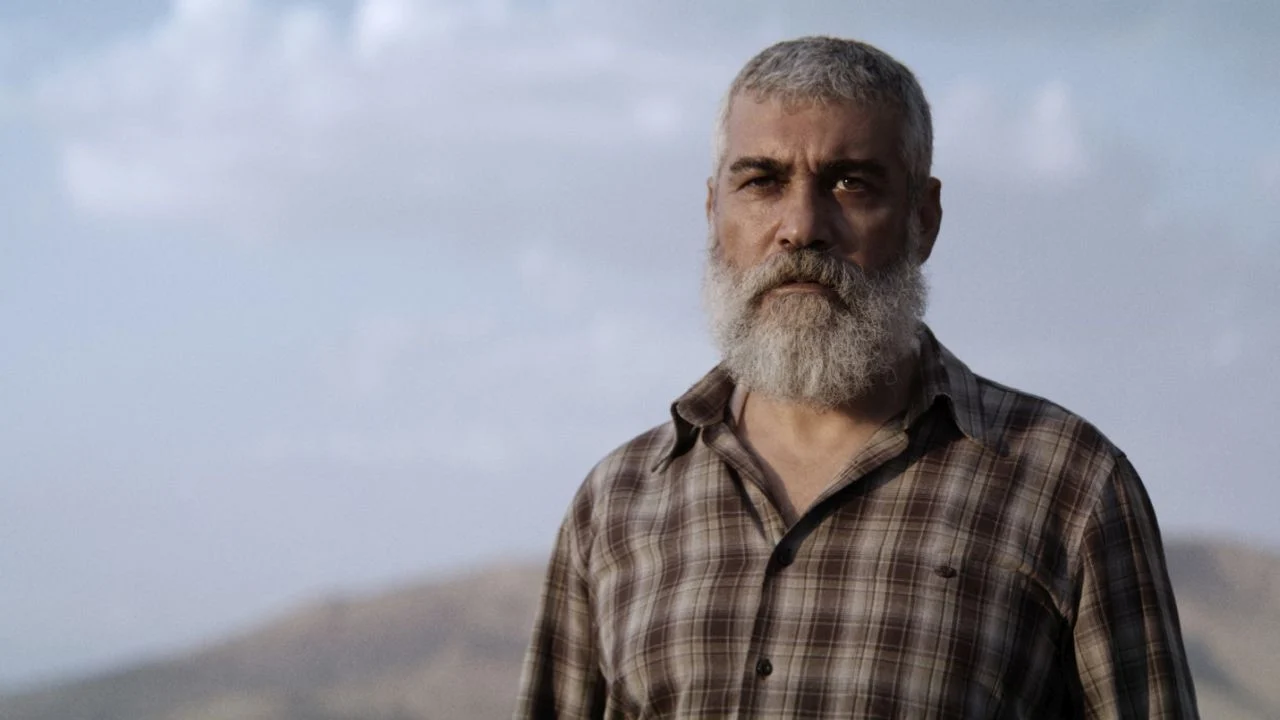
Mesut (Caner Cindoruk) is consumed by hatred and paranoia. Will he drag his entire village into the abyss?
Years ago, when attacks in the region increased, the Hazeran took on the role of village protectors. Although the former servants and farmers suffered many losses in the fight against the terrorists, they have now largely achieved victory alongside the state troops. But now that the area is safer again, the Bezari who previously migrated to the city are returning to the village in the valley. They demand the handover of their fields, which officially belong to them but were cultivated by the Hazeran during their absence.
The frustration in the already poor mountain village is growing, and the incidents – sometimes violent – are increasing. The moderate local leader Sheikh Ferit (Feyyaz Duman) tries everything to prevent the situation from boiling over – he is even prepared to hand over men suspected of criminal offenses to the authorities. Quite different is his older brother Mesut (terrific: Caner Cindoruk), who has long since been unable to sleep due to anger, jealousy and paranoia – and interprets his nightly, nightmarish visions as a mission to wipe out the hated Bezari once and for all…
A consistent continuation of his debut
In his feature film debut, the Anatolian author and director Emin Alper told a similar story – albeit a little smaller in 2012: “Beyond The Hill” is about a retired forester who fears that nomads (allegedly) living on the other side of the hill want to dispute his country estate. When he sets out with his sons against the (possibly non-existent) enemies, the action, peppered with the elements of a suspense western, quickly spirals into a paranoia spiral in which it seems impossible that it will ever have a happy ending.
In “Salvation” it is not a lonely old man with his sons, but an entire village that is almost completely consumed by hatred. But the similarities are still obvious, especially because Alper once again uses expressive genre devices: When the sleepless Mesut wanders through the village at night, the winding alleys and stairs, where shadowy figures constantly scurry past, are perhaps not by chance reminiscent of the Vienna from “The Third Man”, one of the paranoia classics par excellence.
Shadows, ghosts and a very real mass murder
But Mesut doesn't just spot potential traitors in the shadows. At one point he also watches as an invisible ghost enters his house, undresses his sleeping wife Gülsüm (Özlem Taş) and has sex with her in front of his eyes. Mesut is consumed by jealousy because he simply cannot get over the fact that his wife was once employed by a Bezari and that since then rumors about alleged sexual excesses have been circulating in the village.
When a doctor determines during an examination that the pregnant Gülsüm will have twins, it is clear to Mesut – the second child is a child of the devil, his grandfather has always said that. But the frightening thing is not that a man obviously falls into madness, but rather how he drags an entire village into the abyss. Simply because his paranoid delusions fit into what everyone is focusing their anger and frustration on anyway – it doesn't take anything more than a charismatic tirade of rage before all the dams finally break.
In the second half (unnecessary) lengths creep in
One can easily draw a number of parallels to the current world situation and the proliferation of conspiracy theories. But when you get really carried away by the ever faster spiral, when the violence that is bubbling ever more violently tries to find an outlet as if it were the magma beneath the earth, Alper puts on the brakes.
Then he throws in another longer dialogue or another beautiful image, as if he wanted to explicitly remind us that we are currently watching a select festival film from the Berlinale competition. However, I don't think that the message of “Salvation” would have resonated any less if the accelerator had been pushed harder in the second half. On the contrary.
Conclusion: “Salvation” impressively shows how hatred, anger, paranoia and (super)belief escalate into a seemingly unavoidable eruption of violence like no other. However, Emin Alper's unbroken penchant for beautiful images repeatedly slows down his frighteningly current narrative, especially in the second half.
We saw “Salvation” at the Berlinale 2026, where it celebrated its world premiere in the official competition.