
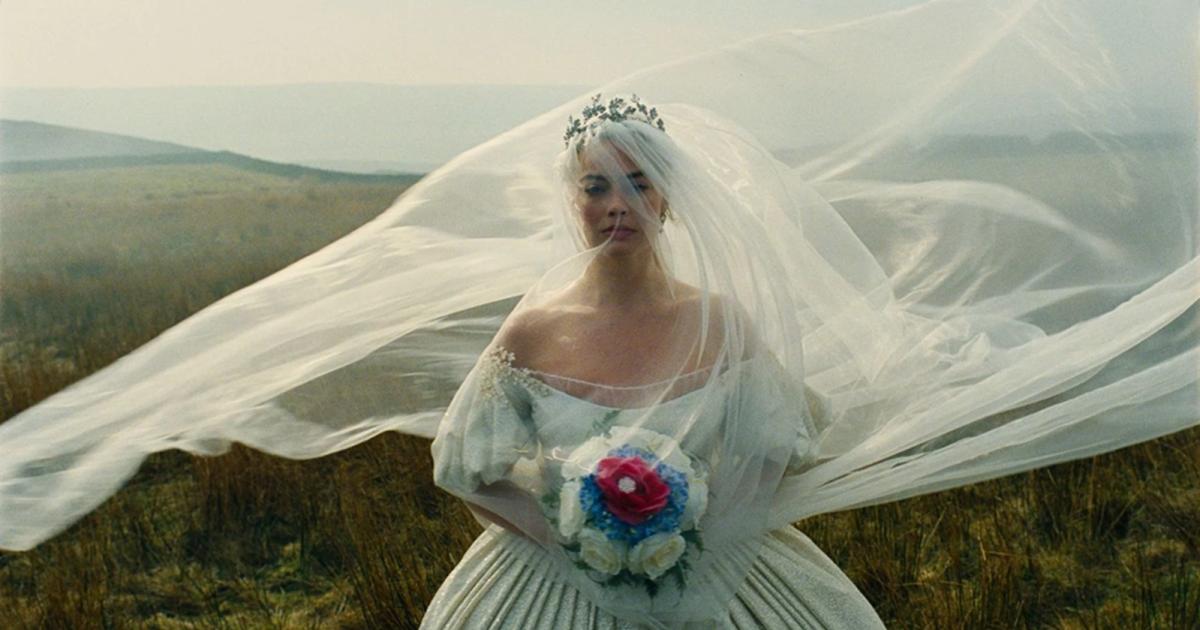
In her idiosyncratic version of Brontë's classic, Fennell tells a love story that does not exist in the novel.
Emerald Fennell, director of “Saltburn” and “Promising Young Woman”, has now reached into the classics cupboard and pulled out a piece of world literature. Anyone who knows her previous films can be sure that in “Wuthering Heights – Wuthering Heights” she doesn't just deliver a good retelling, but rather implements the epic love story with great passion, a sense of drama – and probably also joy in provocation. She can completely rely on her two stars Margot Robbie and Jacob Elordi.
Poisonous heather plant
Robbie displays an overwhelming sensuality, and Elordi, after his participation in del Toro's “Frankenstein”, transforms himself into a creature that in some features resembles a monster – at least on an emotional level – even without the help of a doctor; But at the same time he proves to be a great romantic. So Fennell couldn't have made a more appropriate choice.
The best symbol for Emily Brontë's novel is a dark poisonous heather plant. No wonder that this work initially caused uncertainty and rejection in Victorian England: the male protagonist Heathcliff is a vengeful creep with a macho demeanor who is prone to crude language and even cruder actions. However, we will never see many of his scandalous actions in the new film version because the director made serious interventions in the course of the story.
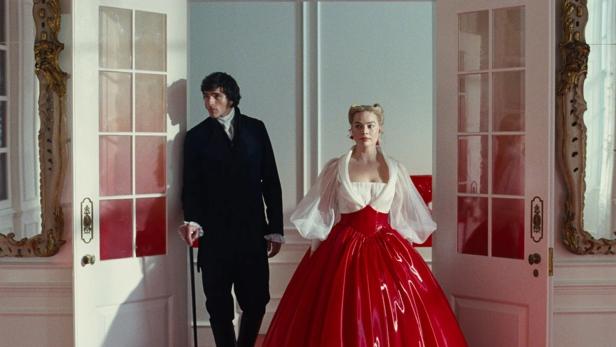
Scene from Wuthering Heights
A heart for lovers
A review is not the place to list all the differences between the book and the film – that needs to be reserved for its own article. Suffice it to say: the director actually only filmed the first half of the novel and omits important events that revolve around a second generation with the descendants of the main characters. Many characters are either eliminated entirely or several people are merged into one. Cathy's servant Nelly (Hong Chau) in particular is given an upgrade and becomes a secret center of power.
Fennell also has a heart for lovers: she helps Heathcliff and Catherine have intimate moments that never existed in the original and ends the film as an ode to tragic love. Sometimes it seems as if she had picked up the wrong novel in the dark and was now offering us her version of “Lady Chatterley's Lover”.
Scene from Wuthering Heights
Sexually charged
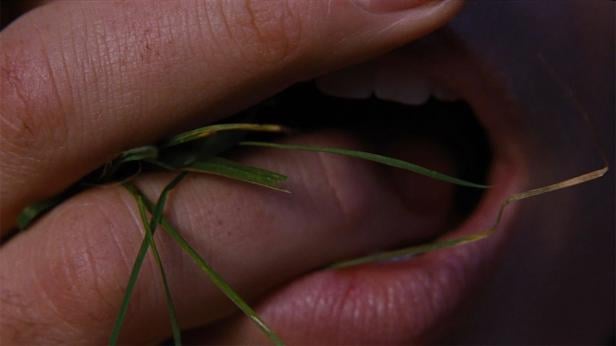
Thanks to Fennell, we can also look forward to a very sensual experience: This begins with the opening credits, when a crunching noise reaches our ears. Is it a rope or a creaking bed? One will tend towards the latter option when the rhythmic moaning of a man's voice is added and increases in intensity. As soon as the first images become visible, we see that it was the rope after all, because no act of love took place here, but someone was publicly executed. After all, the leitmotifs of sex and death are already heard here, since the hanged man – as is quite usual in such a situation – has an erection (which a street boy also trumpets loudly). Later, we are shown Catherine's sexual awakening through ambiguous close-ups of a slug or a kneaded bread dough. But it's even clearer when Cathy masturbates herself shortly afterwards in the shelter of a heather rock.
Scene from Wuthering Heights
Unforgettable images
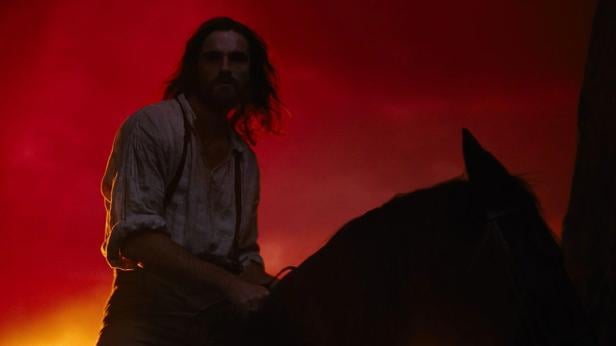
This film also develops suggestive powers in other ways: the Wuthering Heights estate becomes a prime example of dark romanticism, as it appears deeply threatening with its black rock masses and could be the backdrop from one of Guillermo del Toro's films. Fennell's sophisticated lighting is also often reminiscent of her director colleague's visual language. And when Cathy, in her white, flowing bridal robe, floats over the heath towards the church, her drunkard father finally dies next to gigantic pyramids of bottles, or Heathcliff rides away against a blood-red sky, This creates impressions that you won't soon forget.
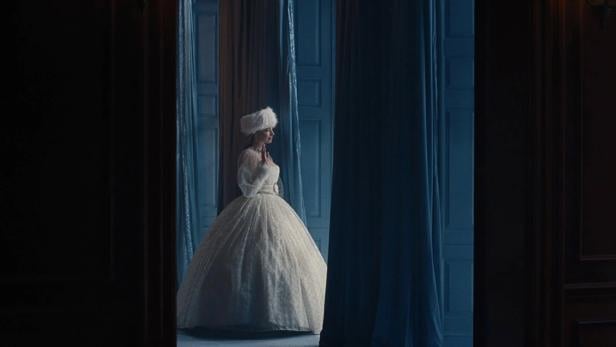
Scene from Wuthering Heights
Bold reinterpretation
“Wuthering Heights – Wuthering Heights” offers a remarkable reinterpretation, but at the same time shortens the original novel by an important dimension. Members of an Emily Brontë fan club may be horrified by the serious discrepancies and may object loudly. But that would be a hasty reaction. Emerald Fennell has courageously chosen a piece of world literature as a model, which she transforms in an idiosyncratic and ingenious way into a film that is beautiful, highly romantic and deeply sad. She took up and rewoven motifs that Emily Brontë was never allowed to put on paper – even if she had wanted to – in order not to completely offend her contemporaries.
4 out of 5 crushed bird eggs under the covers