
The first tremor went through the Internet when it became known that Heathcliff in Emerald Fennell's film adaptation of “Wuthering Heights” would not be played by a black actor, but by the newly Oscar-nominated shooting star Jacob Elordi (“Frankenstein”). But this casting decision was only the first blip on the seismograph of a much broader indignation about what the “Promising Young Woman” director would allow herself to do with her adaptation of Emily Brontë’s novel of the century.
The horror only really started rolling with the release of the first trailer. This fueled the suspicion that after “Saltburn” Fennell could once again rely on calculated provocations: on cross-border images that appear tailor-made for further use on Instagram and TikTok. After watching “Wuthering Heights,” however, no one should be able to seriously claim that the film is primarily about the pure, superficial shock effect.
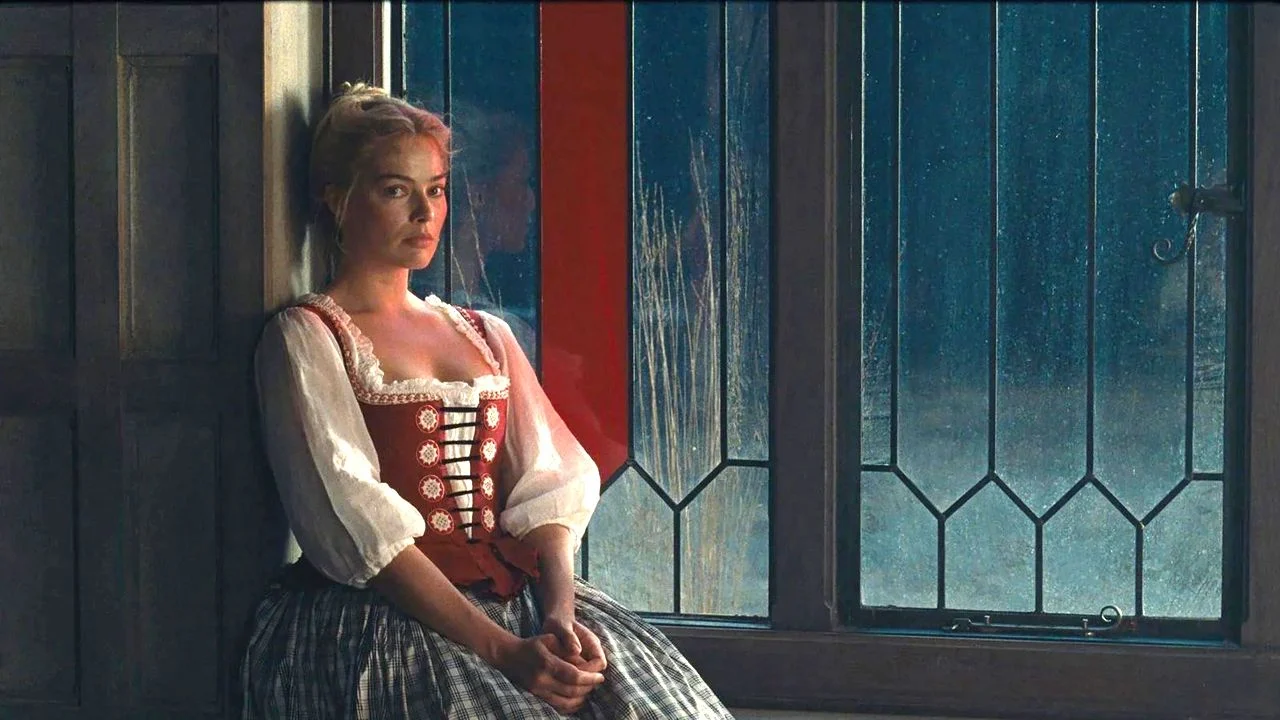
Cathy (Margot Robbie) chooses a life of decadence.
Out of a sense of charity, Mr. Earnshaw (Martin Clunes) takes foundling Heathcliff (Adolescence sensation Owen Cooper) into his family. From then on he grows up on the remote Sturmhöhe estate, where he is more tolerated than accepted. Only with Cathy (Charlotte Mellington), the daughter of the house, does he have an intense closeness right from the start. Day after day the two roam the moor and over the years grow together into an indissoluble unity, knowing full well that they are kindred spirits.
When Cathy (played by Margot Robbie in adulthood) finally decides to marry the wealthy Edgar Linton (Shazad Latif) out of social considerations, the world falls apart for Heathcliff (now played by Jacob Elordi). He leaves Wuthering Heights – and returns years later, hardened inside and driven by a plan that he pursues with cold consistency over a long period of time: He wants to humiliate and destroy Cathy just as he once felt degraded by her and the society she represents.
Only half the novel
Another circumstance that met with early rejection was Emerald Fennell's early clarification that her “Wuthering Heights” film adaptation would essentially only deal with the first part of Emily Brontë's novel. This leaves out those at least equally central motifs in which the destructive dynamic between Cathy and Heathcliff is passed on to the following generation. In fact, this decision is likely to offend literary purists in particular, who compulsively push the artless, often knee-jerk comparison between the original novel and the film adaptation and misunderstand any deviation from the original as betrayal.
The radical evaporation of the original – which can contain up to 460 pages depending on the edition – pursues a clear goal: the uncompromising concentration on the painful love relationship between Cathy and Heathcliff. Scenes in which the two protagonists are not present function less as independent moments of action than as metaphorical references. Right at the beginning, all we hear is a rhythmic creaking, which inevitably brings to mind a bed frame in which a couple sensually surrenders to each other. When a moan finally joins in, the sensual act seems clear. In reality, a man is fighting for his life on the gallows.
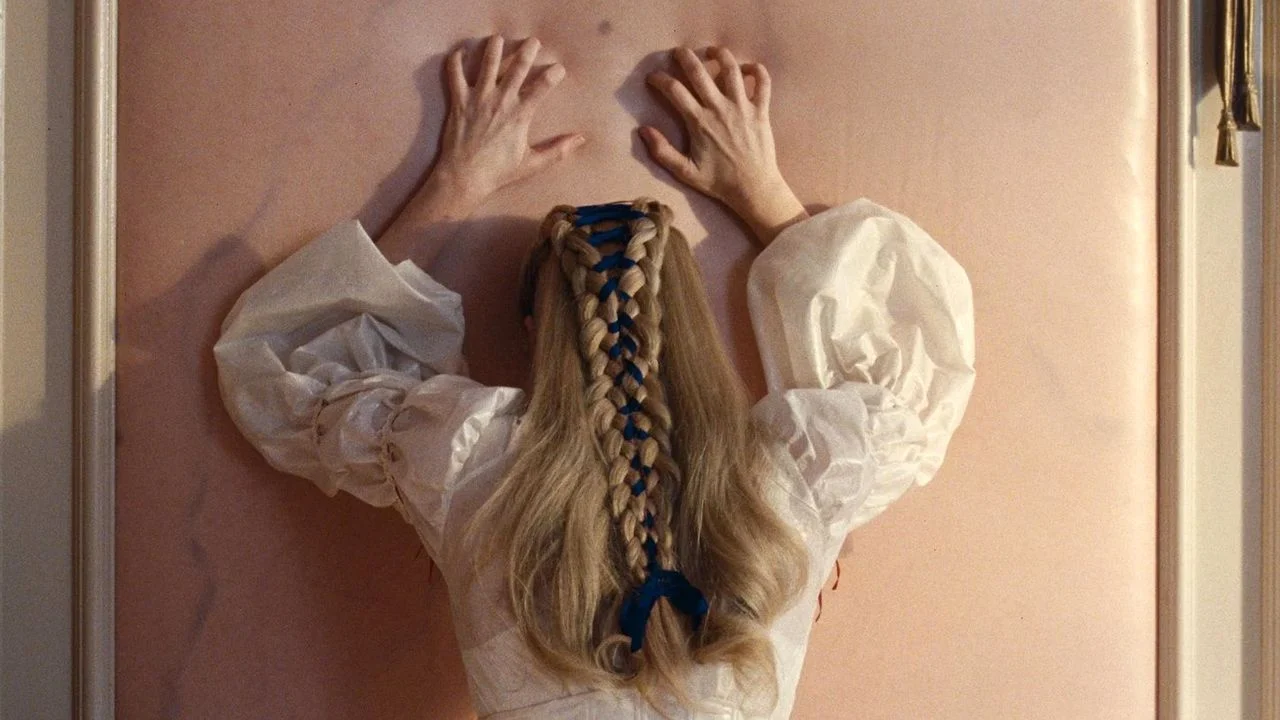
At some point, her desire for Heathcliff (Jacob Elordi) knows no bounds.
This is just one of the many examples of how Emerald Fennell draws attention to the torturous bond between Cathy and Heathcliff in her incredibly visually powerful production that specifically relies on intuitive feelings: love here not only means complete devotion, it also stands for self-extinction, condemnation, humiliation, suffering and, ultimately, death. This sacrifice of two people, which infects everything around them with torment, is of course also reflected in the windswept moorland landscape surrounded by thick clouds of fog, which cameraman Linus Sandgren stages in a way that is both sensual and ghostly. It is a place where you can discover and explore each other – but even more, a space in which you can get lost.
Based on these powerful, high-contrast 35-millimeter shots, which explore the depth of the screen and make the detailed details of costumes and sets appear even more tactile, one can only be grateful that Fennell decided against a larger budget from streaming giant Netflix. So the film can unleash all of its somnambulistic power on the big screen – especially when the spherically distorted sound of pop star Charli xcx is mixed in with the action.
The mother of all toxic relationships
With “Wuthering Heights” Emerald Fennell places herself entirely in the tradition of melodrama, which is overflowing with emotions and theatrical gestures, in order to illuminate the entire range of romantic forms in all their gradations: When Heathcliff forms an umbrella over Cathy’s forehead with his hands to protect her from the pelting rain, it seems deeply romantic in the most classic sense. However, as soon as it becomes clear that the two only get involved with other people in order to hurt each other with maximum malice, the villainy presented in “Wuthering Heights” also compellingly reveals why the material more than deserves its reputation as the mother of all toxic relationships.
You are excited and suffering throughout the entire almost 140 minute running time – precisely because Emerald Fennell focuses, without any false restraint, on staging the mutual consumption of these two characters in a disarmingly pompous, sensual and electrifying way. Cathy and Heathcliff's desires are so larger than life that they literally devour everything around them: This doesn't just apply to Cathy's bedroom, the walls of which are modeled on her skin, with veins, hairs and birthmarks. The well-cast supporting characters (including Hong Chau, Shazad Latif, Alison Oliver) are also swallowed up and ultimately serve as exploited extensions of the amorous destructive power that emanates from the two protagonists.
And what's with all the sex?!
Anyone who has seen the trailer mentioned at the beginning and now buys a cinema ticket for “Wuthering Heights” in the hope of experiencing polarizing sex and fetish scenes will definitely be disappointed. There are, of course, moments in which an execution causes orgiastic disinhibition, in which Margot Robbie masturbates among the wild rubble of Wuthering Heights or slowly pushes a finger into the mouth of a fish pickled in aspic – an act that inevitably links the memory of Heathcliff with a clear erotic component.
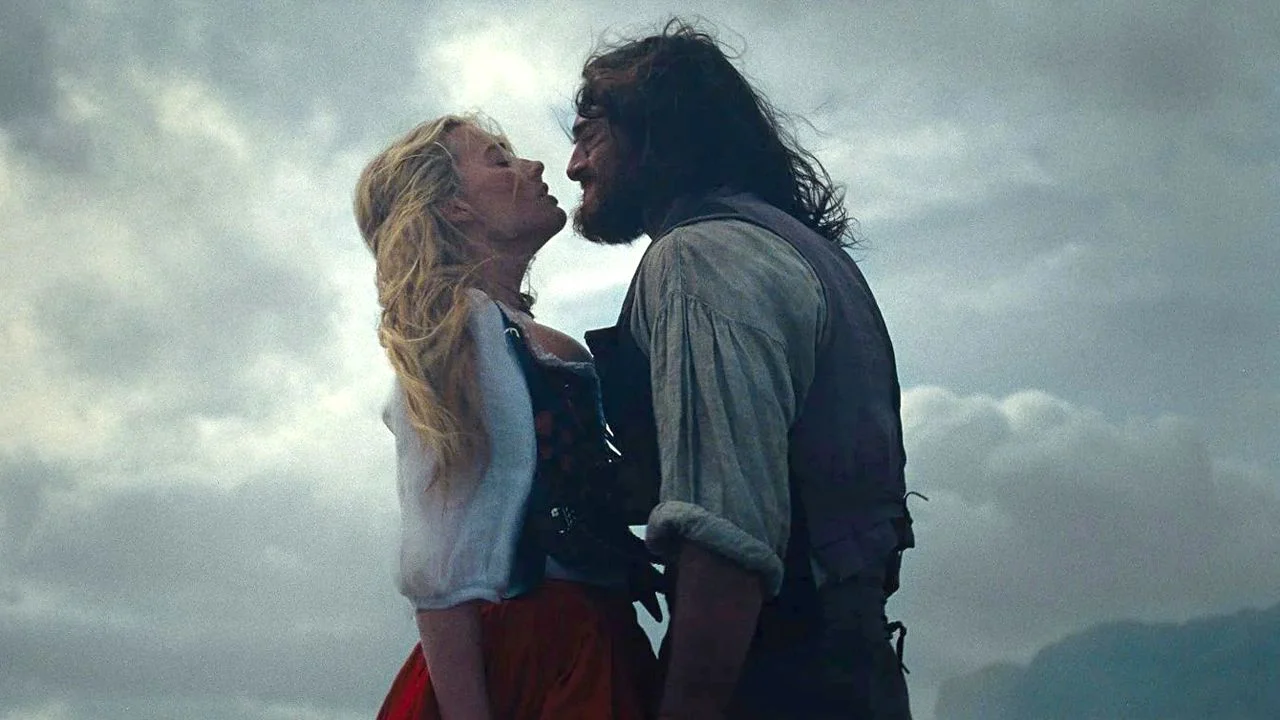
Cathy and Heathcliff are made for each other – and therefore must destroy each other.
Ultimately, however, these scenes only make up a fraction of the 140-minute running time – and are consistently in the service of the desire that Emerald Fennell constantly talks about. Also symptomatic of this is the much-described scene in which a horse harness is put on a maid before she is taken by a servant. Not for a second is it intended to provoke a shock effect borrowed from BDSM. Rather, Fennell uses the moment to create one of the film's most intense, lasting images: Cathy, watching the unsavory goings-on, is removed from view by Heathcliff – her eyes and mouth closed – so that only the sharp breathing from her nose can be heard.
Conclusion: On social media, “Wuthering Heights” could make waves similar to “Saltburn” simply because of the participation of Charli xcx and Jacob Elordi. Anyone who expects attempts to break taboos here will be disappointed: Emerald Fennell is responsible for a melodrama that is formally aesthetically powerful, strongly acted and positively overflowing with great emotions, which not least conjures up the power of cinema.