
Lothar Matthäus' solo run in the game against Yugoslavia, the spitting scandal involving the snotty Rudi Völler and finally Andreas Brehme's penalty in the final against Argentina, which made us world champions for the third time after 1954 and 1974: From a German perspective, these are the most iconic moments of the 1990 World Cup, which have since been burned deeply into the collective memory of a nation intoxicated by reunification have. However, the greatest strength of the cinema documentary “A Summer in Italy – 1990 World Cup” is that the directing duo Nadja Kölling and Vanessa Goll do not rest on these well-known highlights, but rather find their own approach – by retracing the events at the time exclusively from the team's perspective.
No other experts, no overarching context – just the memories of the players at the time and never-before-published recordings that goalkeeper Bodo Illgner took with his private video camera in the World Cup hotel on Lake Como. The result is not an aggressive, non-stop euphoria like “Germany. A Summer Fairy Tale” or “The Team”, but it actually offers fresh insights into a team that is probably no longer able to grow together in times of (anti-)social media and omnipresent (cell phone) cameras. The 1990s squad clearly contains the “team” that Oliver Bierhoff searched for in vain in his PR meltdown of the same name two and a half decades later.
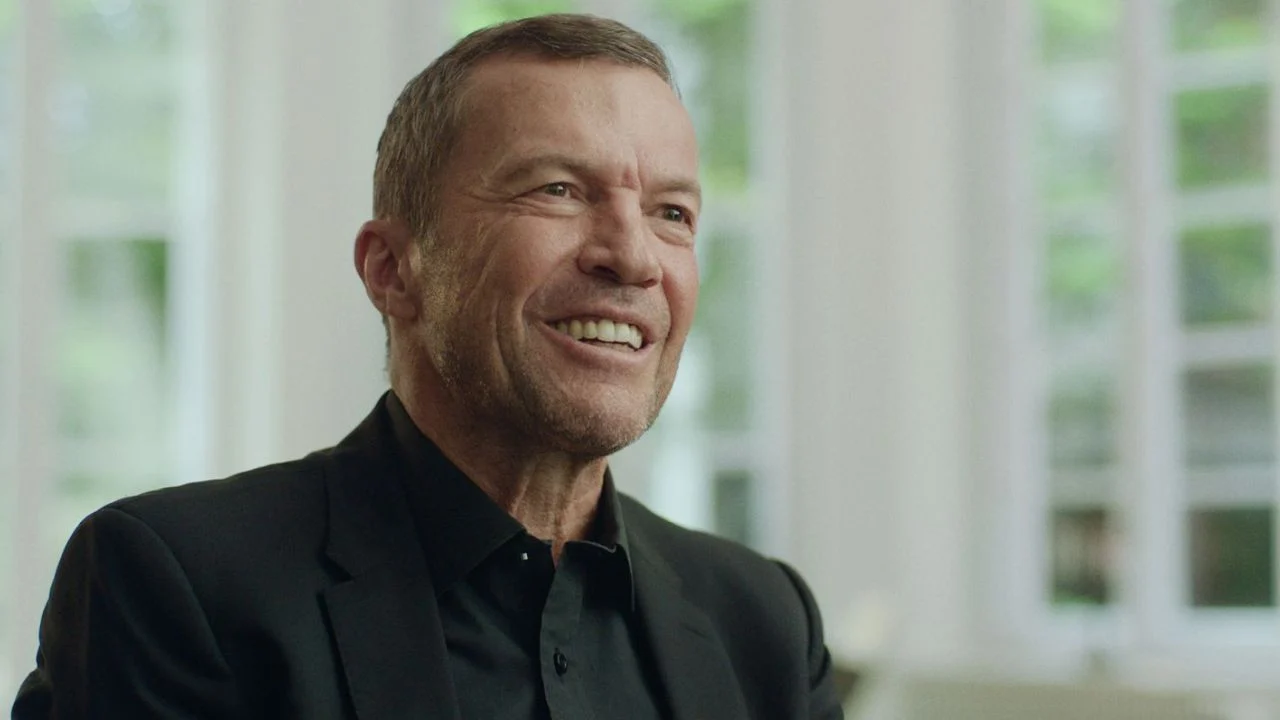
Lothar Matthäus was not only captain, he still regularly brings the world champion squad together for meetings to this day.
The conclusion of the FILMSTARTS review of “The Team”, the official DFB film about the 2014 World Cup victory in Brazil, is: “It offers little new insight into the inner workings of a team of professional athletes, but it does revive the euphoria and goosebumps moments of the tournament.” With “A Summer in Italy – 1990 World Cup” the exact opposite is the case – and that's why the better film came out of it: Of course, the very central moments are not left out, but Kölling and Goll even forego showing a few not-so-important German goals in order to instead delve deeper into the inner workings of a team in a way that has rarely been seen in sports documentaries.
Lothar Matthäus, who as captain at the time also looked after the good mood of players No. 13, 15 and 18, which was central to preventing the infamous cabin fever, still organizes an annual meeting of the world champions to this day – and it was the midfield superstar, who was elected the first world footballer in history in 1991, who played a key role in driving the cinema documentary: The collective pride and positive energy when remembering the six weeks together at the World Cup are unmistakable – and therefore also pass on to the audience, even if the documentary does not shamelessly increase the euphoria gas like comparable productions. “A Summer in Italy – 1990 World Cup” is tonally more reminiscent of Franz Beckenbauer's reverent, melancholic walk on the square after the final victory – than just a similar panning shot over the cheering masses.

The German No. 1 Bodo Illgner had a new video camera at the time, which he made extensive use of, especially in the first half of the tournament.
At one point, the players spontaneously borrow motor scooters – certainly not roadworthy ones – from camping fans in order to zoom to the next town. The coaching staff gets wind of the matter, but instead of issuing suspensions, road-worthy scooters and helmets are available for free use the next day. Now I'm certainly not one for heavy-handed, everything-was-better nostalgia – but even if it doesn't necessarily lead to better performances on the pitch, it's definitely good for the film if the players behave like adults in a sunny holiday camp and not like robots in a fully optimized company (it's hard to believe, but some of them even smoke).
Even Andreas Möller, who came to the tournament as an upcoming superstar but then had to make friends with the substitutes' bench, refrained from simply leaving in a rage in this communal atmosphere – and the tears when you remember Andreas Brehme, who died in 2024, always seem authentic. Hopefully there will be a fifth World Cup title for the German national team at some point, but we're unlikely to get a TEAM like the one we had in 1990 – the DFB can use whatever PR slogan they want.
Conclusion: empathetic insights instead of endless euphoria – and in the middle of it all, a team that unfortunately can hardly exist today.