
In winter it is cool and clammy even in Greece – and it hardly gets any warmer between Tara (Seyneb Saleh) and Robert (Trystan Prütter). At the beginning of Judith Angerbauer's “Sabbatical” they are sitting on the terrace of their stone house right by the sea and want to eat shrimp together. But the low temperatures are not equally comfortable for both of them. “Don’t we want to eat inside, it’s cold,” Tara asks her husband, but he insists, shrugging his shoulders, to stay outside: “It’s nice!”
Everyday microaggressions can destroy relationships more fundamentally than major dramatic changes and conflicts: the film observes this gradual process full of implied discord in a marriage in a calm visual language that uses the now rare 4:3 page format. There is already something restrictive and claustrophobic in the shots; the film refers with simple succinctness to the boxed-in world of a couple who actually wanted to open themselves up to new, expanded life plans by taking a sabbatical, a longer break away from their jobs in Berlin.
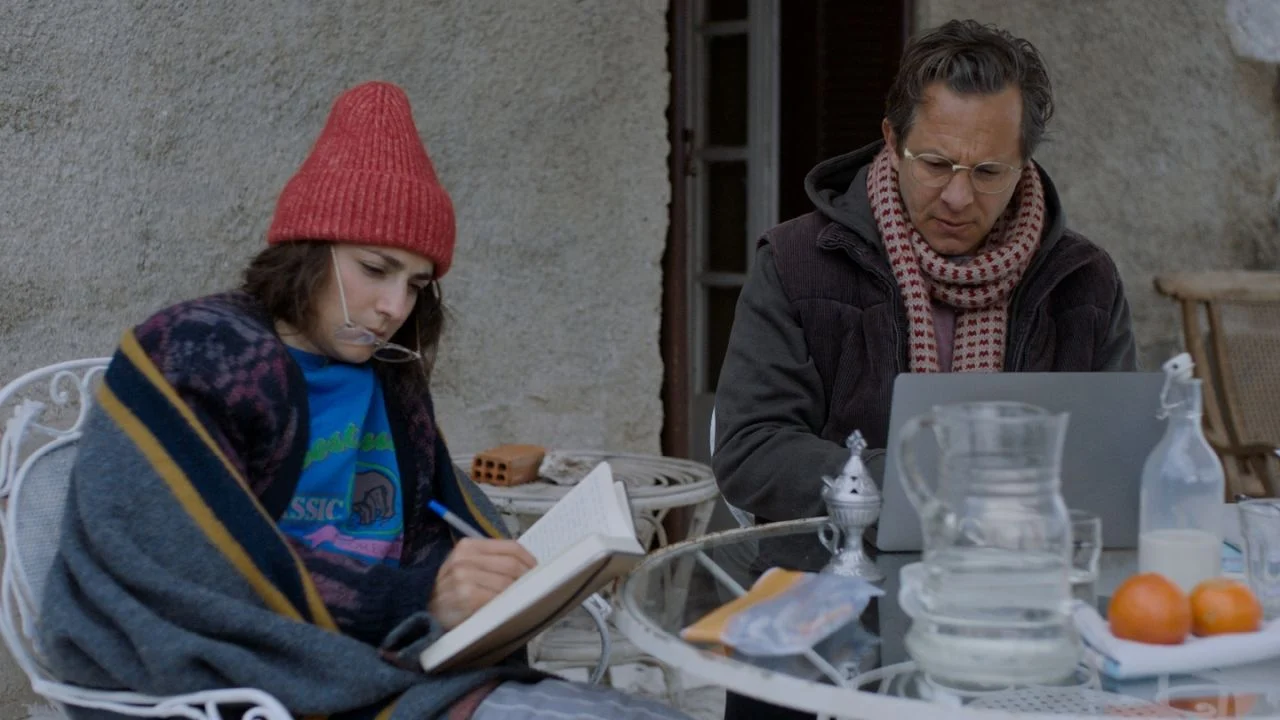
You suspect early on: things won't go well with Tara (Seyneb Saleh) and Robert (Trystan Prütter) for much longer.
But Robert and Tara have fundamentally different ideas about how they want to spend their free time with their daughter Nia (played by “Look into the Sun” and “22 Bahnen” children's shooting star Zoë Baier). She wants to start a new novel project without the pressure of expectations, in order to get into a new everyday life with informal writing routines from a long-standing one Writer's Block to come out. For him, the stay on the Greek coast becomes a new home office. Between shopping for the day, he conducts work conversations with in-ear headphones and casually starts new designs on his cell phone on the terrace. “Put the pedal to the metal and write a proposal”? You can probably manage it well during a sabbatical, thinks Robert.
Judith Angerbauer has been writing screenplays for over two decades. She became known through Matthias Glasner's “The Free Will”, a drama that is as relentless as it is drastically escalating about a rapist played by Jürgen Vogel who, released from prison, begins a toxic relationship with a younger woman that deprives everyone involved of air. In Angerbauer's own directorial debut, a marriage derails in a much less explicit way, even if “Sabbatical” constantly plays with ambiguous horror references, repeatedly driving subtly along the rough walls of the house and the removal of a fish bone from the neck with tweezers, and for a brief moment, skilfully moves the film into the body horror direction.
Passive-aggressive book review
For a good half of the film, the film wins through its concentrated, smaller form. Conflicts do not erupt into violence, but rather into dialogues written in a wonderfully passive-aggressive manner. What she has written so far for her new novel is “interesting,” Robert says to Tara when she gives him a few pages to read. But that means it's not good, she replies coldly and defensively. “Well, interesting,” he adds, a little more annoyed. “But maybe that makes it somehow not good.” One would have liked to see at what point such a relationship dynamic inevitably reaches a tipping point, when the moment comes when one person no longer wants to give in to all the little smug attacks from the other.
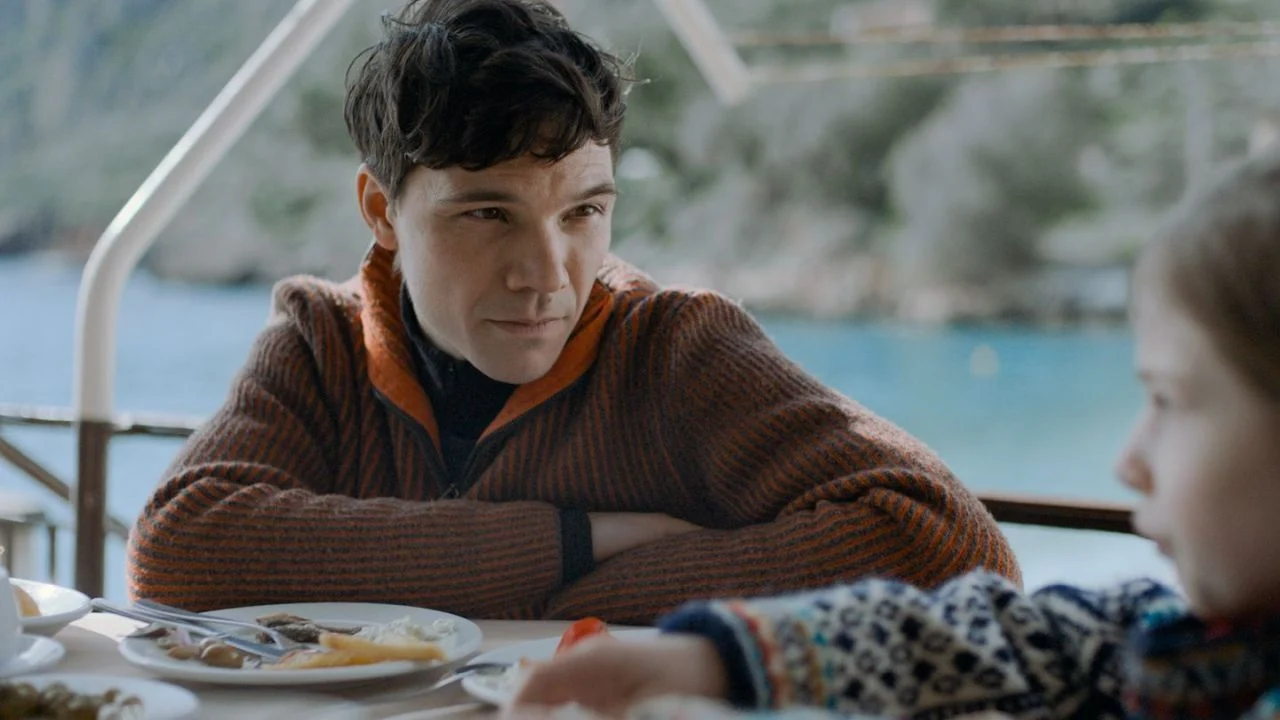
With his arrival, Joni (Sebastian Urzendowsky) breaks up everyday life on the Greek coast, which is characterized by microaggressions.
The film nevertheless evades this consequence and begins to set up hurdles and detours. Robert's younger brother Joni (Sebastian Urzendowsky) shows up at the holiday home without having done anything, first causing new tensions and finally greater drama: a momentous accident that also brings in Robert's parents. And with them a tangled web of unspoken blame and family conflicts that have dragged on for decades.
“I can’t even hear you in your text anymore,” is an accusation made in the film. Unfortunately, this can also be turned against the second half of the film: Everything that “Sabbatical” had built up within three quarters of an hour as a subtle melodrama between two people in a chamber play-like setting, is ultimately overloaded with overly big and well-constructed twists. Nevertheless, it remains a promising directorial debut.
Conclusion: “Sabbatical” is particularly convincing where Judith Angerbauer relies on reduction. In the dialogues and the consistently restrictive imagery, the film debut develops an intimacy that makes the erosion of a relationship gnawingly understandable. However, when the film reaches for greater drama in its second half, it quickly loses consistency. Despite this overload, “Sabbatical” remains a concentrated chamber piece that promises a lot – and that is precisely why it makes us curious about Angerbauer's further directorial work.