
It's a complicated feeling watching a beloved pet age. When, for example, the once nimble dog becomes a heap of misery that can barely move from its favorite spot, this symbolizes two things at the same time: the long, wonderful time that we spent together, but also its inexorably approaching end. Such a dawning realization is difficult for most animal-loving adults to bear – and even more so for children.
The Canadian animated film “Charlie the Super Dog” captures this feeling at the beginning: vaguely reminiscent of the beginning of Pixar's “Up”, it shows the years together of a boy and his golden retriever in a montage. Towards the end, the boy is visibly worried about his companion Charlie, who is growing tired of age, but then a cosmic coincidence plays into his hands: the loyal dog gains superpowers! The fear of death then gives way to new heroism – which, however, gives Charlie significantly more pleasure than the (adult) audience…
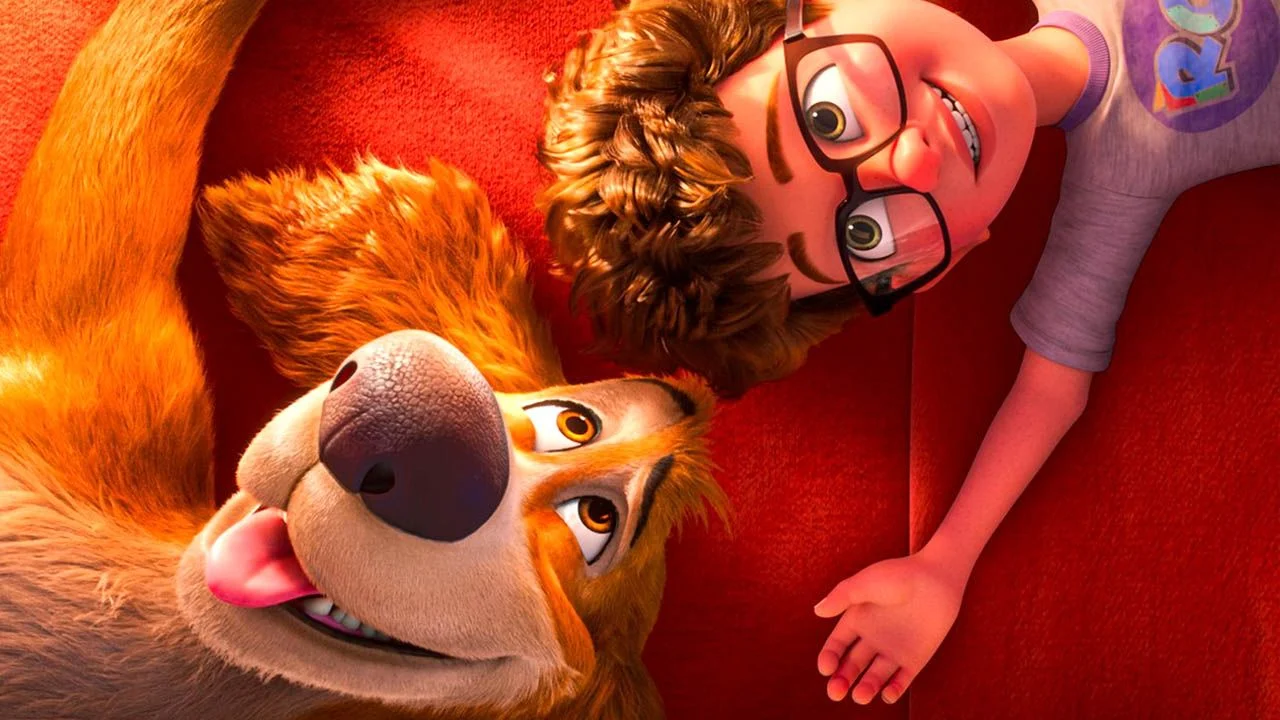
Danny and his golden retriever Charlie are the best of friends – but now their time together is seemingly inexorably coming to an end…
Danny (original voice: Dawson Littman) comes home with limited enthusiasm: As soon as his beloved golden retriever Charlie's doghouse comes into view, the boy pauses for a moment. Because Charlie has become old, slow and frail. But one night aliens kidnap the tired fur-bearer: a spoiled alien tot (Sebastian Billingsley-Rodriguez) is supposed to choose a pet according to tradition, and one of the choices is Charlie! However, the alien brat is not happy with Charlie and his moody neighbor cat Puddy, who has also been kidnapped.
They're too unspectacular – even after they've been modified by alien technology! So they are released back onto Earth, now equipped with superpowers and able to speak human language. Charlie (henceforth with the voice of Owen Wilson) wants to try his hand at being a superhero with Danny's help, while Puddy (Ruairi MacDonald) first torments his master and soon has more far-reaching, nasty plans…
Too little money, even fewer ideas
The boundaries between cinema and streaming are more fluid than some people want to realize: One of the biggest box office hits of 2024 was “Moana 2”, a Disney animated film that was originally conceived as a miniseries for Disney+. An absolute phenomenon in 2025 was the animated fun “KPop Demon Hunters”, which Sony Pictures Animation sold to Netflix, where it performed so outstandingly that it was ultimately released in a few cinemas.
The fact that behind “Charlie the Super Dog” is the small trick company ICON Creative Studio Vancouver, which, among other things, worked on the child-oriented Disney series “Star Wars: The Adventures of the Young Jedi” and “Disney Junior Ariel”, does not have to be a knock-out criterion. But the fact that “Moana 2” cost an estimated 150 million US dollars, the budget of “KPop Demon Hunters” is said to be over 100 million US dollars, but the team around director Shea Wageman only had just under 20 million Canadian dollars at their disposal, is very clearly noticeable on the big screen:
The ICON computer-animated film may look acceptable in stills: Charlie's fur is detailed for a film of this size, and the backgrounds could be more sparse. But in motion, the studio's meager budget and TV series roots are revealed, which, combined with bland production design, make for a dull, lifeless aesthetic. Nobody here had such outlandish ideas as the team behind the low-cost Oscar winner “Flow”. Instead, they try in vain to imitate the current standard look of large US computer animated films using tiny means.
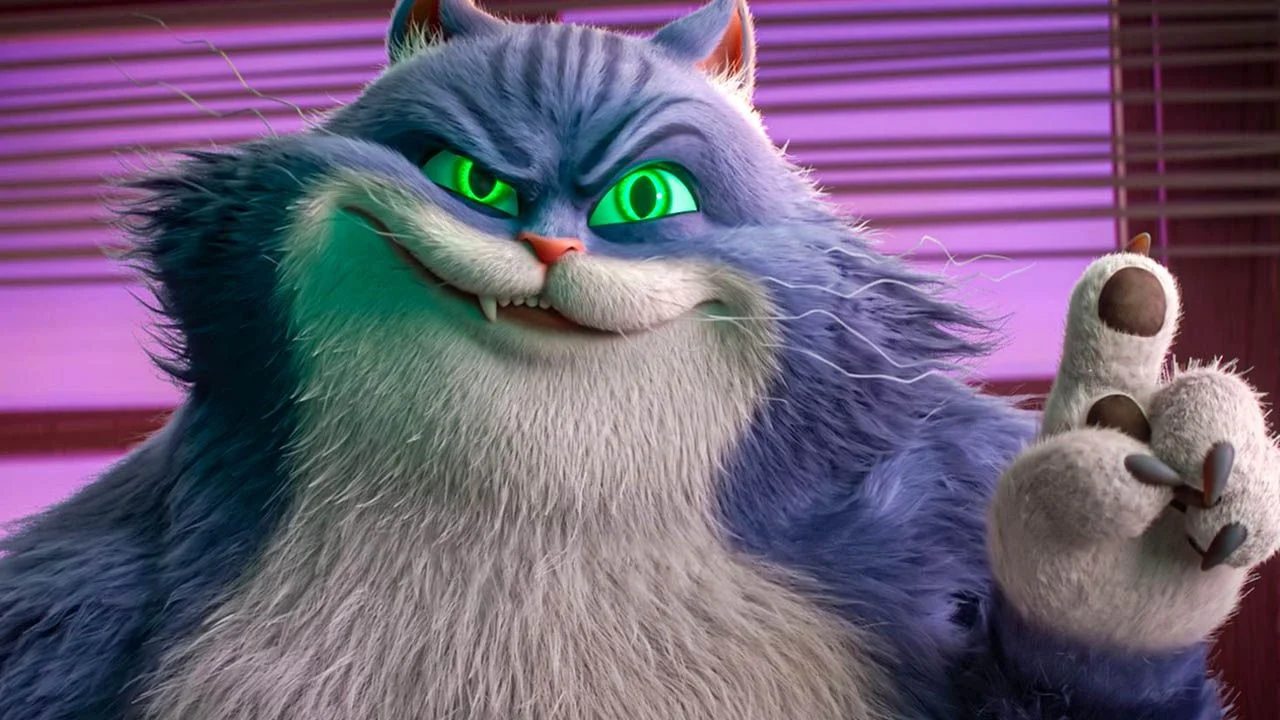
Neighborhood tomcat Puddy is also modified by the aliens – but unlike super dog Charlie, he turns to the dark side.
Superdog Charlie is so stiff and his facial expressions are so inexpressive that neither emotion nor agility is conveyed – and he is already the most animated character in the film. The obligatory animal and superhero slapstick during Charlie's escapades misfires almost continuously, and as soon as human supporting characters like a grotesque US president (who looks like a derogatory Hillary Clinton caricature but behaves like a warning about Trump greed aimed at preschool children) get involved, foreign embarrassment is inevitable thanks to the clunky script by Wageman and Steve Ball.
There are almost no laughs in the course of the confused story about heroic drive, the caring bond between master and dog and envy, solid smiles are hidden where the core target group will hardly find them: in tiny marginal details, such as pointed, stupid puns in lurid anti-Charlie headlines, when the super dog falls into disrepute due to a lousy deception by the envious cat Puddy device.
The message is also wrong
What in the middle part represents a disoriented, sluggishly told and irrelevantly staged sketch parade is then beaten with a crowbar in the direction of tear-jerking shortly after Puddy's attack on Charlie's reputation. But this turns out to be unconvincing and thematically completely incongruent: the message prepared at the beginning of the film about transience and gratitude for a short but shared time is thrown out the window.
In its place comes a statement conveyed through a cramped monologue about how you don't have to be a superhero to be good, since every small heroic act is valuable – all while showing off big-time, supernatural cape action. Well, the message is guaranteed to reach the youngest and most undemanding people in the cinema who haven't already fled as the end credits approach…
Conclusion: Rigid animation, a dull script and a thematically confused ending make “Charlie the Super Dog” the kind of inconsequential film that unnecessarily damages the reputation of animation, children's and superhero cinema.