
After the terrorist attack on Israel on October 7, 2023 and the subsequent attack by Israel on Gaza, it is hardly possible to approach a film with the title “Once Upon A Time in Gaza” unbiased. The numerous horror images spread in the media and the corresponding heated discussions are too persistent. The twin directors Tarazan Nasser and Arab Nasser further provoke such associations when they preface their film with Donald Trump's announcement that he wants to create a “Riviera of the Middle East” out of the completely destroyed war zone under the leadership of the USA. In contrast to this prologue from February 2025, the actual plot takes place in the past, but in a no less fateful time: in 2007, Hamas took control of Gaza after a short civil war and Israel then drastically tightened its blockade.
Given the political charge with which “Once Upon A Time In Gaza” comes across, it is irritating and even sobering that the script never really becomes political and in the end is content with the banal statement that cinema can also be a kind of political resistance. The big events continue to simmer quietly in the background – including in the form of newspaper wrapping falafel sandwiches. In the foreground, however, there is a reasonably entertaining but overall underdeveloped genre mix of crime, Italian Western and comedy, which shows that the two filmmakers are big fans of Quentin Tarantino.
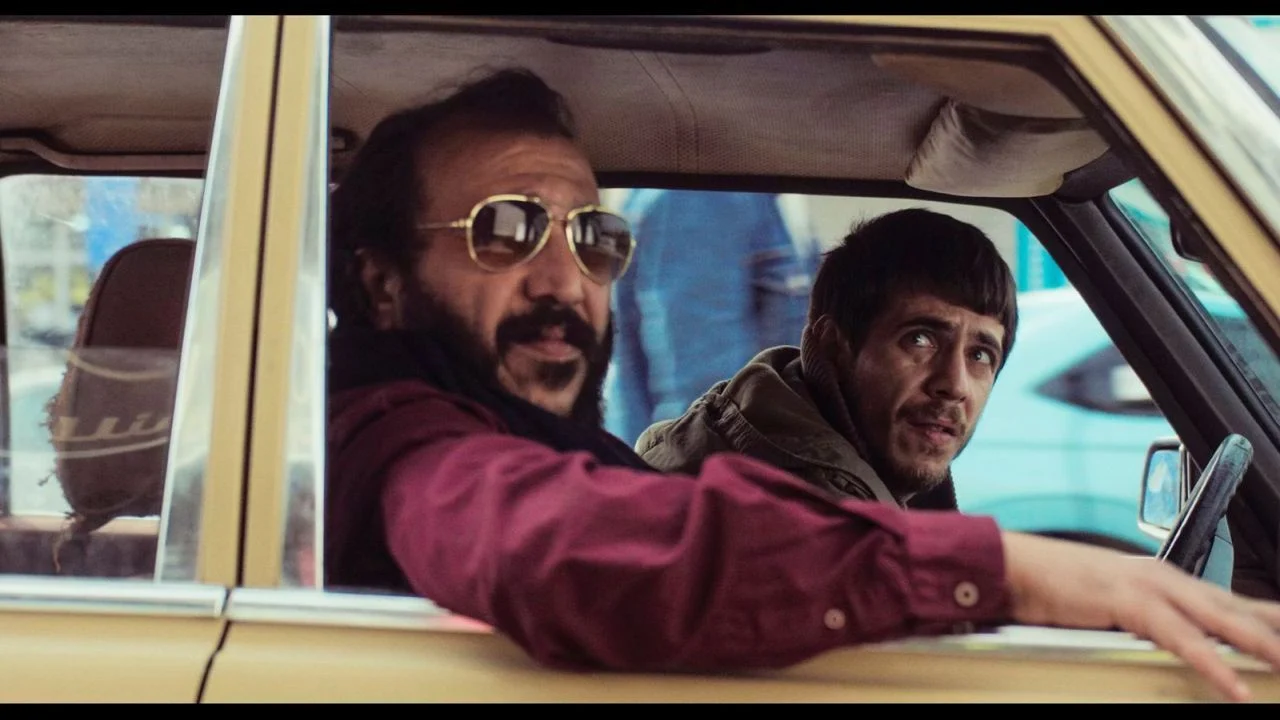
Osama (Majd Eid) refuses to be used as an informant – and pays for it with his life!
The action takes place in a completely run-down city: The beefy, stoic Osama (Majd Eid) not only sells falafel in his shop, but upon request there are also illegal painkillers included as an extra. He is supported by the lanky, often nervous-looking Yahya (Nader Abd Alhay). Everything could go smoothly if it weren't for the corrupt cop Abou Sami (Ramzi Maqdisi). He wants Osama to work for him as an informant and puts him under pressure accordingly. But the small-time dealer doesn't want to and thus seals his fate.
Two years later, Yahya, who hasn't gotten over the brutal murder of his friend, is asked if he wants to star in an action film financed by Gaza's Ministry of Culture. It doesn't matter that he has no acting qualifications, it's enough that he looks so much like a killed resistance fighter. Yaha reluctantly accepts the role, although the budget is so low that real weapons are used during filming – there are enough of them. Here the film slips into comedy territory until one day Sami, of all people, shows up on the set…
The Middle Eastern Riviera
In a scene near the beginning, Osama stares longingly at the television in his falafel shop, which shows shots of the Riviera. These stand in complete contrast to the dark, dim everyday world of the two friends. “Once Upon A Time In Gaza” depicts the lives of two lost people who are stuck in a kind of limbo. A better tomorrow only exists in the form of moving flickering images; reality appears rundown and gloomy. However, this openly political aspect is not deepened; instead, there is initially a (small-scale) gangster drama that at best scratches the surface.
No matter how well and charismatically Majd Eid and Nader Abd Alhay act in their roles, they remain strangers to you and their apparently deep friendship never really becomes tangible. The development of the shy Yahya into a self-confident actor remains largely a mere assertion – and the final confrontation with the villain Sami loses a lot of momentum due to the rather sudden change in tone towards an absurd, satirical film set comedy.
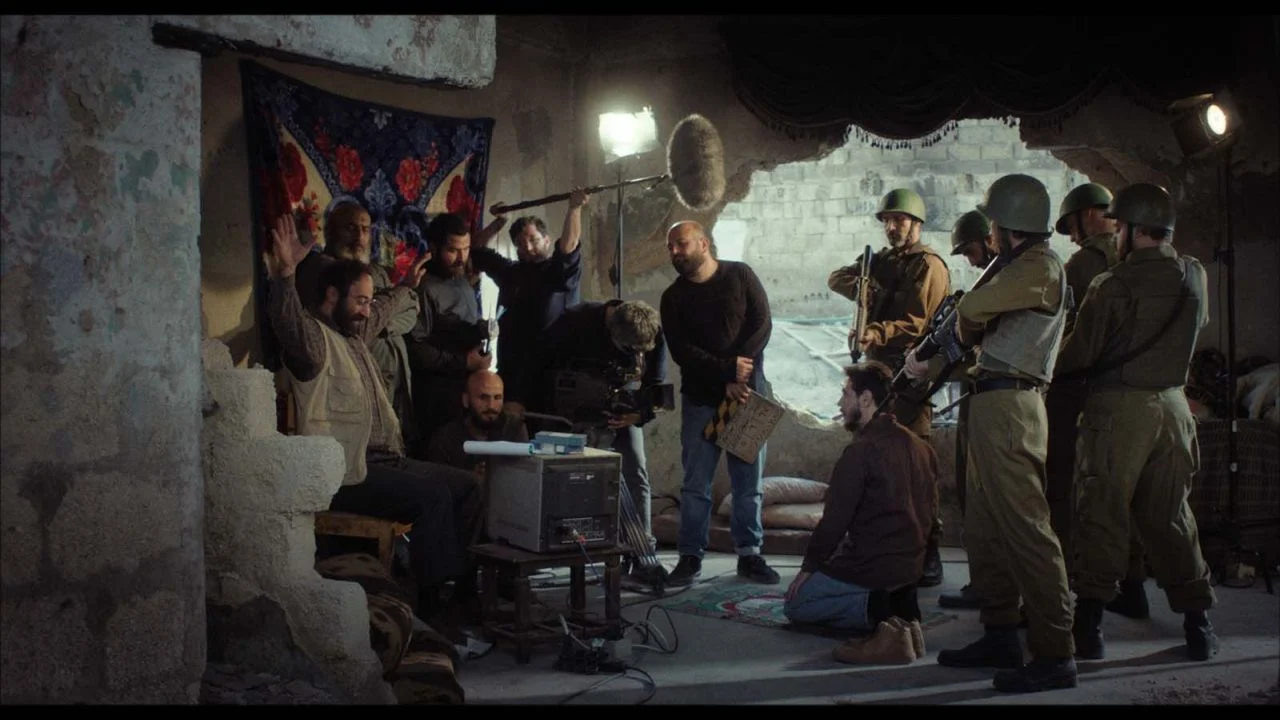
Yahya (Nader Abd Alhay) is persuaded to appear as a hero in a Hamas propaganda production.
It's not just the title of the 84-minute-long “Once Upon A Time In Gaza” that suggests a certain epicness. This is also supported by the soundtrack, which is also based on Ennio Morricone's western compositions or Nino Rota's music for “The Godfather”. But to actually seem epic, “Once Upon A Time In Gaza” is far too rushed and jumpy. Either there should have been a clearer focus or it should have been much more broad. But as it is, it's nothing half-hearted and nothing whole.
Conclusion: The title raises expectations that the film cannot live up to. The latest work by the Nasser twin brothers Tarazan and Arab, who have won multiple awards for “Gaza Mon Amour”, is only cautiously political, but is not really convincing as a meta-entertainment film. The characters remain alien to you, the satirical to dramatic content seems uneven. Thanks to the strong actors, the fascinating sets and the fact that there is always something going on, you stay tuned. But as the credits roll, you still sit there frustrated because there's undoubtedly a lot of untapped potential here.