
Twelve years ago, director Philipp Stölzl (“Schachnovelle”) staged the invention of modern medicine in “Der Medicus” as a lavish, visually stunning adventure journey across the Orient of the High Middle Ages. The film, based on the world bestseller of the same name by Noah Gordon, about the orphan Rob Cole and his development into a highly educated miracle doctor, did not receive overwhelmingly positive reviews at the time, despite its visual value. The trade press – including the official FILMSTARTS review – instead pointed primarily to dramaturgical deficiencies and the omission of central themes and storylines from the book. However, this didn't bother the audience much: “The Medicus” became one of the most successful German screen adventures in recent years and attracted more than three and a half million medieval fans to the cinemas.
There actually needs to be a sequel, but even though Noah Gordon published two more parts of his mammoth work after his novel was published in 1986, these have nothing to do with the film sequel. Instead, Stölzl developed a completely new story together with screenwriter Jan Berger and also swapped almost the entire crew. In the somewhat delayed “The Medicus 2”, the hero now returns to his Anglo-Saxon homeland in order to turn to his soul after his body. Some of the innovations are bold and bring a breath of fresh air to the scenario. On the other hand, the makers repeat some of the mistakes of the predecessor – including an sometimes annoyingly superficial treatment of many characters and themes.
Mental illnesses expand the spectrum
11th century: After fleeing Persia, the doctor Rob Cole (Tom Payne) is stranded in his old home of London, where he tries to spread his medical knowledge to the people. However, the methods of Cole and his loyal healers are met with skepticism by the local elite and the royal family. Nevertheless, the British King (Liam Cunningham) asks him to help his daughter, who is suffering from delusions and depression. A completely new field for the physician: for the first time he has to deal with soul healing and thus the complexity of the human psyche. Can he help the sick young woman? Where does her torment come from and what role does the king's opaque wife (Emily Cox) play?
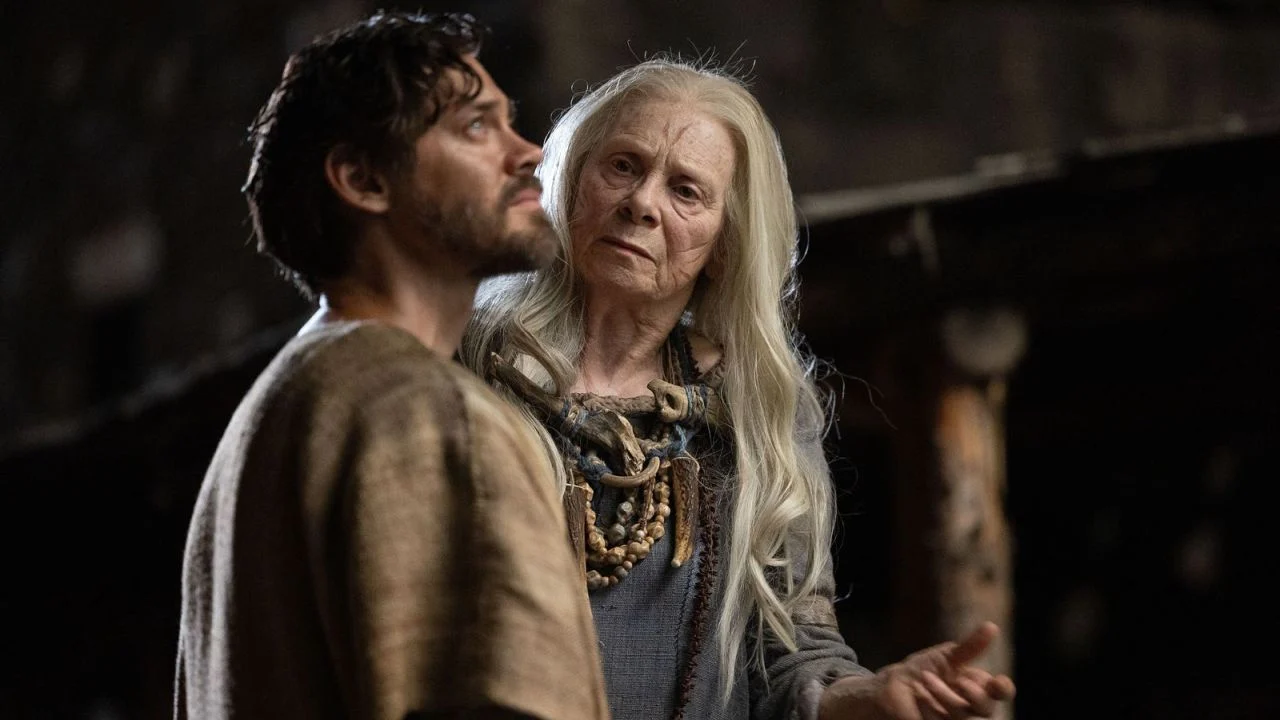
In the second part, the eponymous doctor (Tom Payne) takes on not only physical suffering but also mental suffering for the first time.
“The Medicus 2” begins like a fast-paced adventure spectacle and goes straight into action in the first ten minutes: Cole and his followers get caught in a violent storm on their ship after leaving Isfahan. Stölzl stages this almost hopeless fight for survival on the raging, relentless sea and against the forces of nature in such an audiovisual and captivating way that at times you feel like you are in Wolfgang Petersen's exciting catastrophe classic “The Storm”. But that was it for now with excitement and unexpected events…
… instead, in the following 60 minutes, Stölzl focuses on deceleration and, unfortunately, it has to be said like that, cultivated boredom. We spend most of the time watching Cole and his “team of doctors” perform their healing methods and unorthodox procedures on the townspeople suffering from all sorts of ailments in the slums outside the city walls (and occasionally in the royal palace). Strictly speaking, apart from one or two intrigues in the royal family, not much else happens in the first half of the film. The main difference from the first part: In addition to the physical ailments, in “Medicus 2” there are also mental torments and psychological illnesses.
Exorcism horror and dream sequences
Some alternative ritual healing methods, in which the doctor and his helpers use strange songs and abstruse dances, turn out to be unintentionally funny. The portrayal of the mentally ill in the film is also not free from shame – and at least unfortunate -: they are more animals than people. In a completely exaggerated manner, some of the “imbecilic people” run through the picture on all fours (and grunting loudly). Or they appear like possessed, uncontrollable and completely neglected creatures who urgently need the devil to be exorcised. The first scenes of the doctor with the king's daughter are reminiscent of exorcism horror films. But these excursions into the “possessed horror” segment are hardly scary.
The same applies to the metaphorical (nightmare) dream sequences, which reveal the secret of the cause of the daughter's illness after a short time – and quite predictably. Without giving too much away: it's about the origins and effects of untreated trauma. Unfortunately not really new or original. In addition, the big topics are missing. What exactly does the film want to tell? What is his message? It's never quite clear. “The Medicus 2” is always strongest when Stölzl remembers the advantages and bright spots of its predecessor: especially in the second half, when the Medicus moves to the north of England, the film impresses with its detailed backdrops and the vast landscape. The lavish sets, including an impressive medieval monastery complex and a castle, along with the magnificent costumes, credibly transport you to the time of the European High Middle Ages.
The bad guys are the best!
The actors also do their job well, but it is the antagonists who are remembered first and foremost: Aidan Gillen (“Peaky Blinders”), for example, is brilliant as the cunning personal doctor of the royal family who often changes sides. Emily Cox also gives her character an enigmatic aura. Both Gillen and Cox quickly captivate the audience with their acting, which oscillates between cool distance and emotional vulnerability. And Tom Payne as the titular doctor? Of course he has matured and is now the middle-aged, experienced naturalist and doctor – but it does it well again. Payne is charismatic and acts with a pleasant sensitivity; his character appears humanly believable and relatable. The physician has identification potential.
However, the same cannot be said about the other people. Stölzl spends little time and effort giving the other actors (and there are many of them!) emotional depth. They seem hastily and downright sloppy. The result: They remain strangely alien and you can't get through to them at any time (memories of part 1 come back).
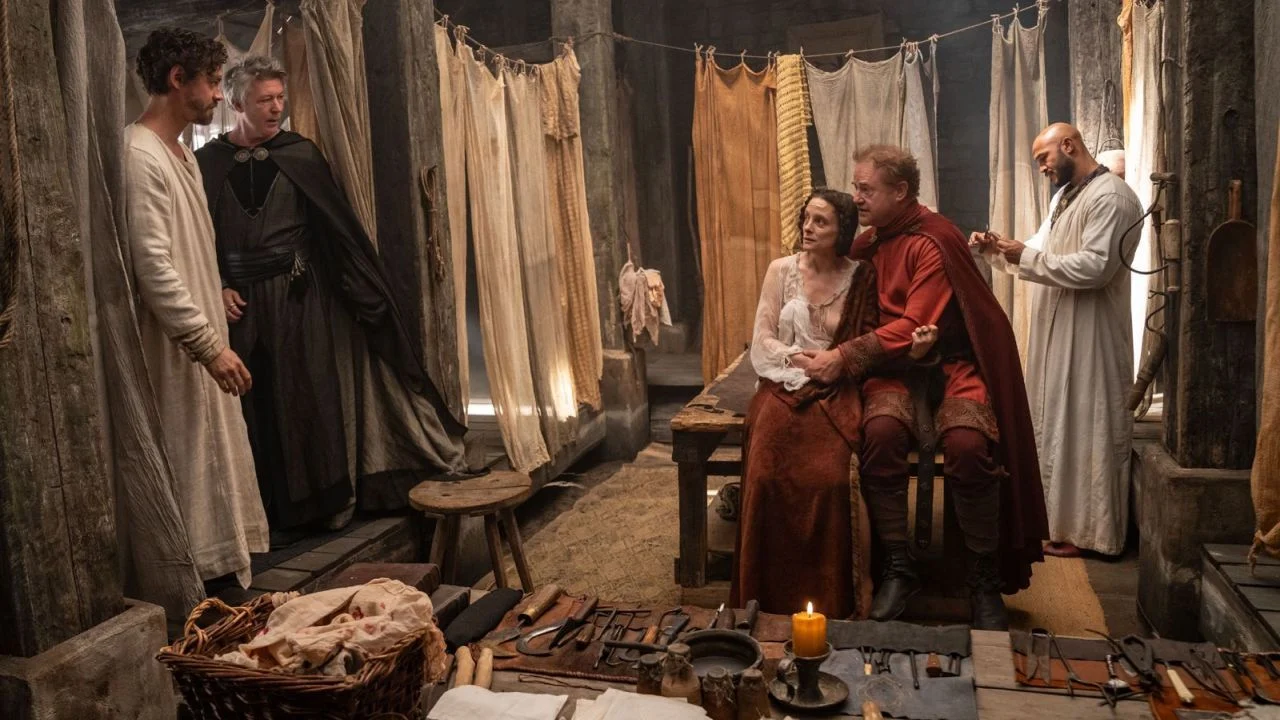
Aidan Gillen (to the left of the medicus) makes a brilliant villain!
The last third is also much too rushed, when events really pile up and you as a viewer can hardly keep up. From the city it goes to the royal palace, from there to the monastery and shortly afterwards to the north – to name just the most important locations, which are covered within a few minutes. Unfortunately, the frequent, hasty change of location fits in quite well with the overall effect of the film, which is characterized by a dramatizing, extremely dominant orchestral sound: “The Medicus 2” suffers from a cluttered script and an overly erratic, almost stressed production in the second and third acts. As if someone had tried to forcefully cram even more into the already generous running time of almost 150 minutes.
Conclusion: “The Medicus 2” is an exquisitely equipped, visually intoxicating historical adventure with a good cast. But acting values and good actors don't necessarily make a good film – especially if there is a lack of characters with depth and figures to identify with. So the fairly free sequel to the first film adaptation of the world bestseller remains pretty bloodless and not thematically urgent enough. And the attempts to establish horror elements in the midst of a solid travel, adventure and medical setting fail miserably.