Nanni Moretti is considered a phenomenon in the international film scene: he is a “totally filmmaker“, i.e. someone who can do everything and does everything. For him, filmmaking, politics and private life form a mosaic that is continually supplemented with new pieces over the decades. Since 1976, he has been writing and directing films in which he often plays the lead role. He became known for unconventional, autobiographical zeitgeist comedies such as “Dear Diary” (1993) or “The Italian” (2006), in which he describes his fight against the media tycoon and politician Silvio Berlusconi addresses. Nanni Moretti has been producing his own films for many years, he has curated film festivals and runs his own arthouse cinema in Rome. With “The Best is Yet Ahead,” Nanni Moretti was invited to the Cannes competition for the ninth (!) time, where he was already awarded the Palme d’Or in 2001 for the heartbreaking “My Son’s Room.”
“The Best Is Still Ahead” is another comedy with himself in the lead role, and once again it's about what he knows best: himself, film, politics and humor. Nanni Moretti plays the film director Giovanni, who, together with a French producer, is planning a major film about the separation of the Italian Communist Party from the Soviet Union after the popular uprising in Hungary in 1956. The focus is on the members of a local association of the then Partito Comunista Italianothe Hungarian circus Budavari invited to Rome – a welcome change for the working-class district Quarticciolo in the Roman East, where the communist party, staunchly loyal to Moscow, holds the majority.
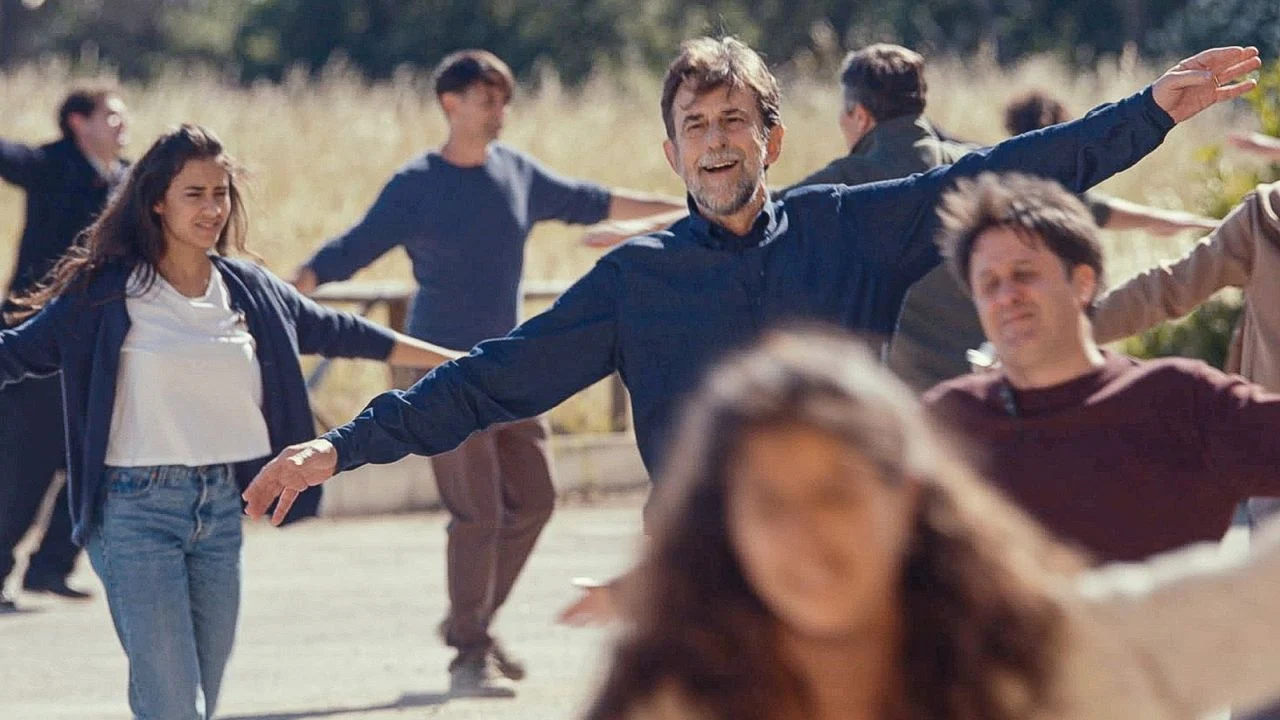
The playful dance performances are among the most beautiful scenes in “The best is yet to come”.
“There were communists in Italy?” one asks during the director’s meeting. But Giovanni can't really laugh about it; in fact, he can hardly concentrate on working on the film because he has to deal with a bunch of other problems at the same time: his relationship with his wife Paola (Margherita Buy) is in serious crisis – she works as a producer of strange action crime films and is more successful than him. Giovanni's daughter has also fallen in love with a man who is older than her father and even wants to marry him. Meanwhile, his leading actress thinks she's in a romantic film instead of a political drama – and then Giovanni's producer is arrested, while a planned Netflix deal turns out to be a bubble bursting. But somehow the filming progresses.
A film within a film – the so-called “reflexive cinema” – is fundamentally a risk. The difficulty lies in the possible tendency towards self-reflection, in the self-referential handling of allusions, film quotes and ironic references, which are usually particularly accessible to a cinematically educated audience. “The American Night” by François Truffaut is a good example of how a film within a film can work perfectly. The many small stories about individual members of the film team and the countless details about the filmmaking itself ultimately culminate in Truffaut's one big declaration of love for cinema, accompanied by Georges Delerue's atmospheric soundtrack.
Back when films still made you dream
Nanni Moretti, whose first name is the pet form of Giovanni, probably didn't create an immortal classic with “The best is yet to come”. But at least it's a lovable, entertaining comedy about an aging artist who isn't at peace with himself and is therefore at odds with the whole world. The beginning is surprisingly playful, but that fits well with a film that could have been a melodrama: Giovanni, the director, Nanni Moretti's alter ego, is on the verge of finally slipping into depression because of the events. He tries to prevent this with antidepressants and sleeping pills. He presents himself as a grumpy old-school filmmaker who has long since ceased to be believed by anyone to be the rebel he once was. At the same time, no rooster crows anymore about what used to be. What remains from the old, better times is his chronic know-it-all attitude… and the memory of a time when films still invited you to dream.
Nanni Moretti plays Giovanni as a teacher-like wisecracker – an aging man who goes on tirades about the deplorable state of the world and the cinema. That's quite self-ironic, and it's probably due to Nanni Moretti's well-used, albeit limited, acting skills that he comes across as so believable: Above all, the man plays himself, and he's good at it. Sometimes he gets away with it, like when Giovanni visits his wife while she's filming one of her hardboiled neo-noir films and ruins her entire day of filming with his endless sermons about the true art of film. Like a priest calling on God and the Holy Spirit, he turns to Renzo Piano and Martin Scorsese. He presents, out of a hat, so to speak, a mathematician and an art expert who are supposed to support his well-intentioned theses.
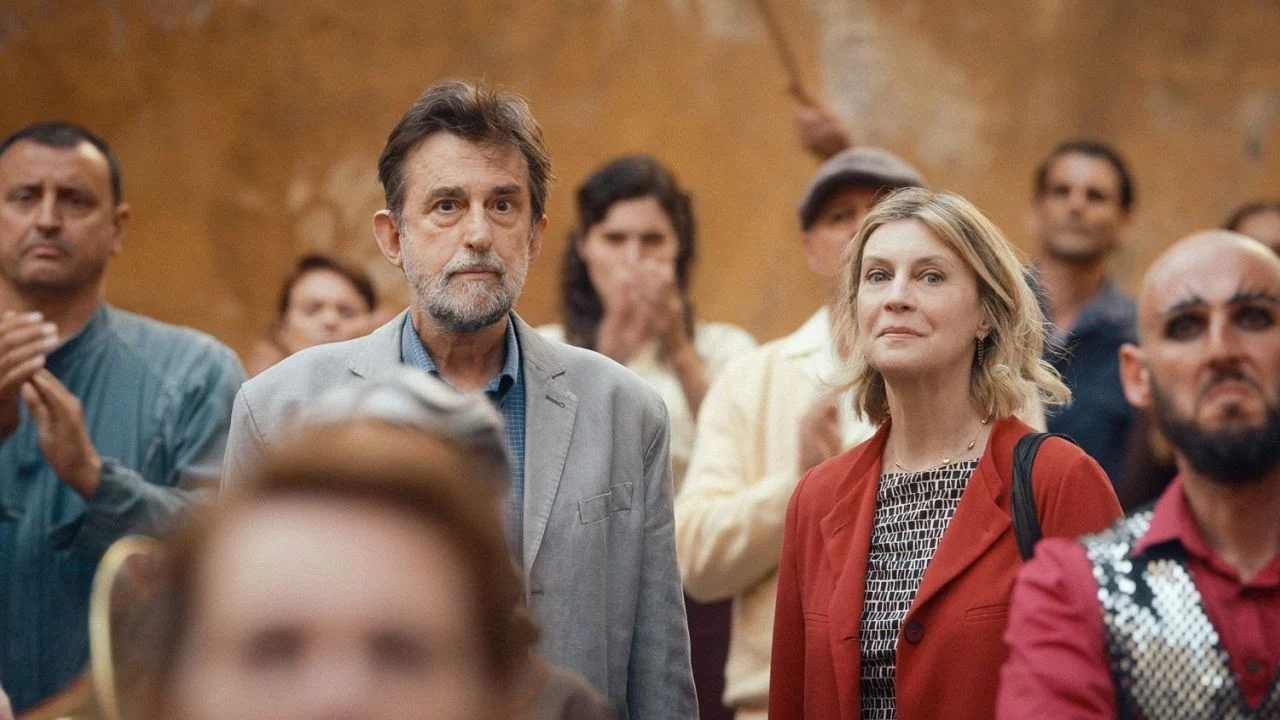
Paola (Margherita Buy) is now seriously wondering whether she should put up with this with Giovanni (Nanni Moretti) any longer…
But the only thing that happens is: he makes a fool of himself. The whole thing – actually an absolute subplot – becomes a bit too loud-mouthed, but for fans of true, good and beautiful arthouse cinema, the scene is a real feast. This applies even more to the episode in which Giovanni meets with Netflix representatives for cooperation. This is where you can really laugh, the pace and timing are perfect when the two elastic, brisk Netflixers repeat almost mechanically over and over again that Netflix is present in 190 countries. In 190 countries! In addition, Giovanni's film would lack the WTF moment – the “what the fuck” moment… in short: nothing comes of the Netflix deal, and Giovanni sinks even further into the swamp of depression.
No wonder his wife wants to leave him. Margherita Buy plays her with the attitude of a slightly exasperated mother who finds her child's whining getting on her nerves. But Giovanni picks himself up, and just in time he ensures the decisive turn – in his film the Italian Communist Party is saved, and in real life Giovanni is reconciled with the world.
Conclusion: Just as Giovanni gets things going again, so does Nanni Moretti with his film, which becomes increasingly lighter and funnier. There are also a few singing and dancing interludes and they seem almost as cathartic as a downpour after a long, far too hot summer day in Rome.