
It's hard to believe, but when Haifa Al-Mansour made The Girl Wadjda in 2011, it was actually the first film ever made in Saudi Arabia. However, the social realist drama was not allowed to be shown in the Arab country itself: cinema screenings have only been possible there since 2018. A lot has happened in Saudi Arabia since then, but it is still a deeply patriarchal society. This is exactly what Al-Mansour tells in her new film “Unidentified”, which was shot again in the capital Riyadh and is at least ostensibly a crime thriller when the young protagonist, who is a passionate listener of true crime formats, gets on the trail of a crime. But beneath the surface, Al-Mansour shows the conservative structures of a system in which some things have changed, but many things have not.
Newly divorced, young Noelle (Mila Alzahrani) has moved to Riyadh, where she lives alone in her apartment. She works for the police, but she's not allowed to do more than scan files. Noelle is a kind of crime junkie and an enthusiastic fan of a true crime podcast, where, in addition to reports on sensational crimes, makeup tips are also given. This experience comes in handy for Noelle when the body of a young woman is found in the desert outside of Riyadh. The police don't show much interest in intensive investigations and so Noelle goes alone to search for answers. She quickly comes across a cousin of the dead woman, in whose car she also discovers traces of blood. But their successes are met with more headwind than support within the police…
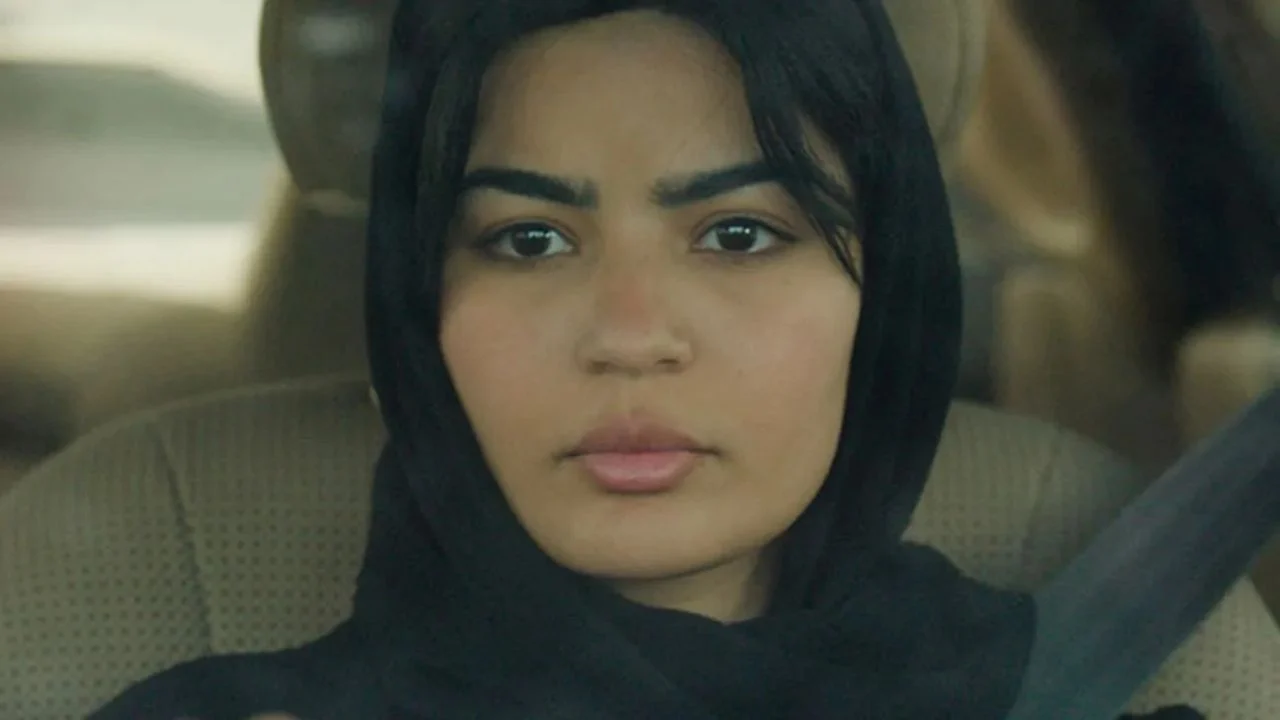
Noelle (Mila Alzahrani) is a huge fan of a true crime podcast – in which the listeners are also given make-up tips.
“Unidentified” is the conclusion of a loose trilogy of films in which Haifa Al-Mansour focuses on young girls or women who are fighting for their rights in conservative Saudi society: In “The Girl Wadjda” it was initially just a bicycle that the main character absolutely wanted to be given as a gift. “The Perfect Candidate” is about a young woman's desire to run for public office (which in reality only became possible a few years before the film was released). Finally, “Unidentified” revolves around criminal career goals – and at the same time, of course, the desire to be able to lead an autonomous, independent life.
It may be obvious to viewers in the West, but seeing Noelle driving and living alone in an apartment are all things that were impossible for women in Saudi Arabia until just a few years ago. At the beginning, however, these are just incidental observations in a tightly staged crime story that develops little differently than we know from western series or films: a curious person investigates on their own, comes across unexpected connections – and thanks to their nose, trained by true crime podcasts, gets closer and closer to the truth. But this smooth surface is repeatedly broken by moments in which Haifa Al-Mansour suggests how Saudi society still functions despite all progressive developments.
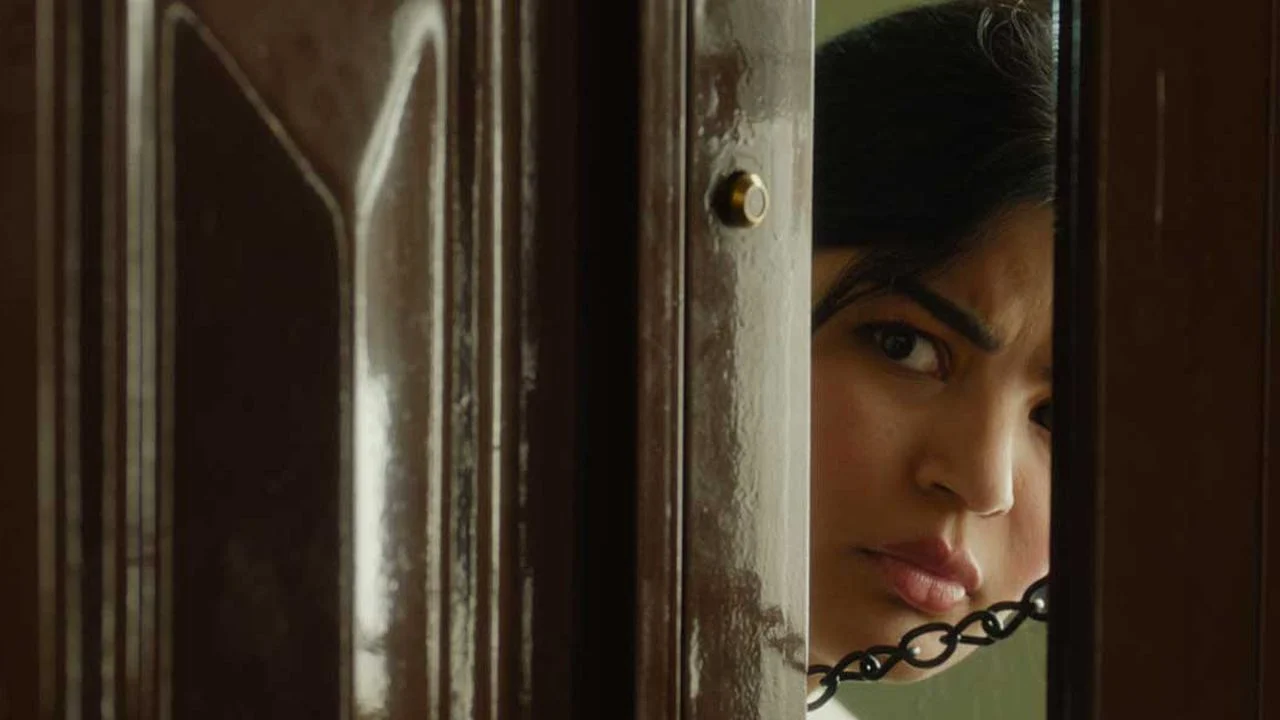
Noelle quickly comes across the first clues during her investigation – but her police colleagues still only fall on deaf ears.
“It’s easier to get away with murdering a woman,” it says at one point, “because society doesn’t care when a woman dies.” Especially not if, like the young dead woman who is found in the desert at the beginning, she may not have subjected herself to the conservative rules, if she may have even been on a date with a man (in Saudi Arabia, this is an absurdity, and not just for an unmarried woman). In such a situation, even the relatives of the dead would sometimes prefer that the murderer not be looked for at all, because if the woman's behavior were known, it would be a shame for the entire family. The police are also aware of these structures, especially when it comes to a wealthy family like this. Without directly attacking religious institutions or even the royal family, Haifa Al-Mansour hints at these structures and also has a pretty spectacular twist in store at the end.
The twist is so extreme that it makes some of what was seen before no longer seem entirely logical, but the ending still works perfectly for the film's socially critical intention. It's almost astonishing that the Saudi Film Commission, which financed the film, approved this script and apparently didn't recognize the subversive potential that lies beneath the surface of a seemingly simple genre narrative. For a Western audience, “Unidentified” offers a fascinating look into the structures of another world in which things are moving, but the patriarchy still has power.
Conclusion: Under the guise of a crime story, the Saudi director Haifa Al-Mansour dissects the structures of a society in her confidently staged “Unidentified” that, despite all the progress, still functions in a deeply patriarchal way. An exciting, unusual look into a world that is otherwise often closed to the West.
We saw “Unidentified” as part of the Red Sea International Film Festival in the Saudi city of Jeddah.