
Similar to Fatih Akin for Hark Bohm on “Amrum,” “120 BPM” director Robin Campillo stepped in for “Enzo” for a good friend who was unfortunately no longer able to complete his dream project himself – in this case for the Palme d’Or winner Laurent Cantet (“The Class”), who died in April 2025: “Enzo” is a coming-of-age story set in the blazing summer heat of southern France Mediterranean region, which instead of a classic rebellion full of loud gestures tells of a quiet rebellion.
The 16-year-old title character grows up in a well-off family who have created a lifestyle that combines beauty and control in their modern property with a pool and sea views. However, behind the glass facades, the young person feels frozen. With “Enzo,” Campillo devotes himself to both the first painful longing and the diffuse youthful restlessness that arises when family expectations and one’s own desires collide for the first time.
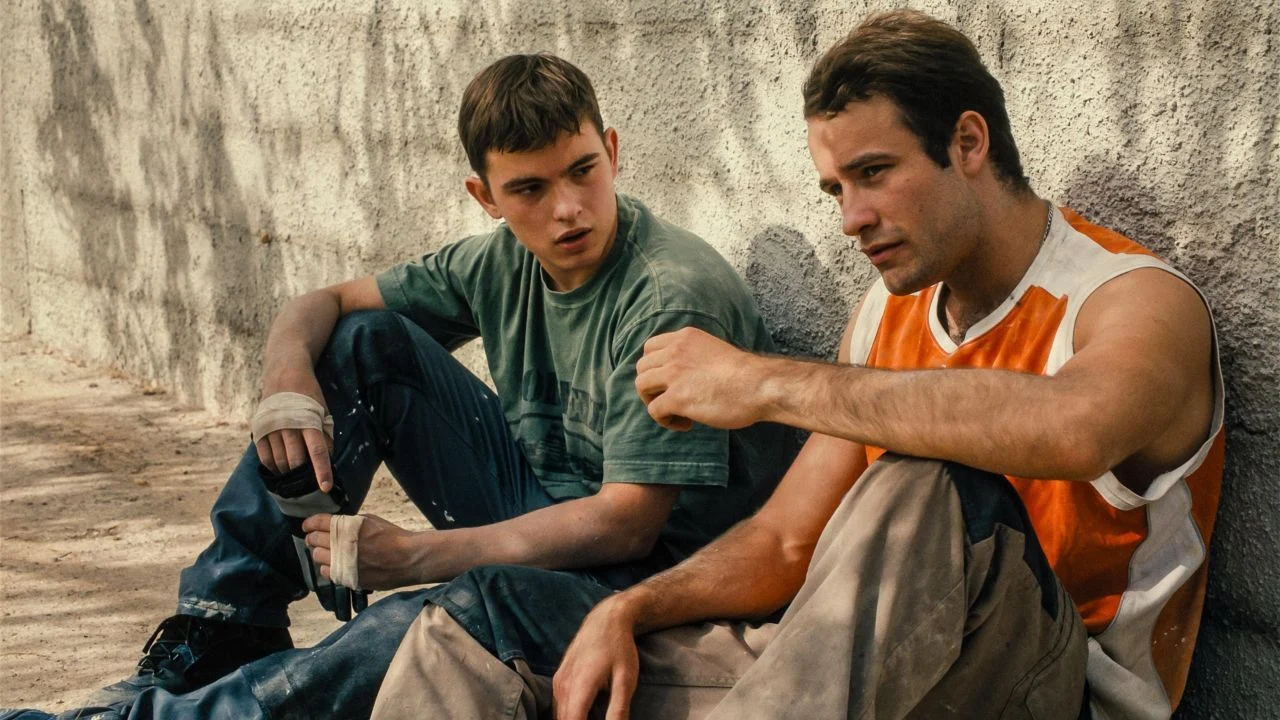
So far, Enzo (Eloy Pohu) has had little to do with people like the construction worker Vlad (Maksym Silvinskyi) in his well-protected rich-people youth…
At the age of 16, Enzo (Eloy Pohu) makes a decision that his wealthy family cannot understand: instead of continuing on the prescribed academic path, he leaves school and begins training as a bricklayer. The elegant house in the south of France becomes the scene of simmering conflicts as his worried parents (Élodie Bouchez, Pierfrancesco Favino) react with disappointment and increasing pressure.
While tensions grow at home, a new world opens up for the young person on the construction site. The self-confident Ukrainian colleague Vlad (Maksym Silvinskyi) becomes an inspiring but also increasingly irritating person for Enzo, giving rise to new thoughts and desires in him…
Construction instead of university
Enzo's decision to evade his parents' expectations and instead take up a career in which he creates something with his own hands is less an expression of a clearly formulated life plan than of a defiant attempt at distancing himself. The bourgeois security in which he grew up acts like a restrictive corset for him. In his youthful naivety, he is hardly aware of how happy he could actually think he is. He is too caught up in his inner emotional confusion to understand the advantages of his origins and the doors that are open to him. After all, the work on the construction site is anything but easy for him – at least at first. As with school, he finds it difficult to concentrate. Only when his superior gave him a chance for the last time and he slowly became friends with two more experienced colleagues did he start to get more involved in the work.
In particular, Vlad, who is a few years older, fascinates the taciturn Enzo. The teenager admires the muscular Ukrainian's determination and independence. He projects onto Vlad everything he misses in himself. However, this fascination is not without breaks: Enzo can hardly grasp the tragedy of the two Ukrainian workers who have to toil in France far from a war-torn homeland and whose future prospects are infinitely more fragile than his own. With youthful exuberance, he once explains to Vlad that he would like to go to the Ukraine with him if Vlad is drafted – a statement characterized by great innocence, to which his work colleague reacts with absolute incomprehension.
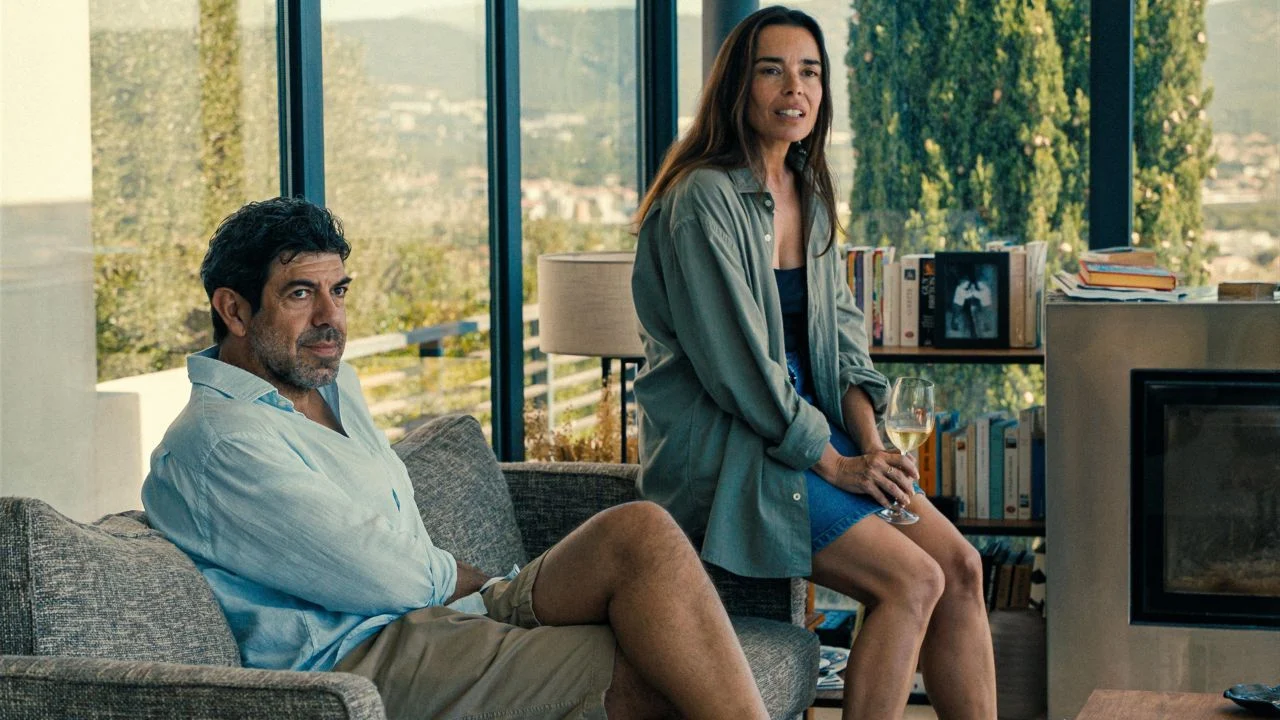
Enzo's parents (Élodie Bouchez, Pierfrancesco Favino) simply cannot understand why their son volunteers to work in construction.
In his debut, Eloy Pohu impresses with a credible portrayal of the inner conflict of the withdrawn youth. His performance allows the viewer to directly participate in Enzo's tentative steps towards adulthood: in the search for professional orientation, but especially in the contradictory feelings towards Vlad. So his gaze wanders along Vlad's body again and again on the construction site full of shyness and longing. Small gestures, like passing on a cigarette, seem to have a crackling charge; At the same time, Enzo also invites a girl to his storm-free luxury house. Whether this visit is an expression of genuine interest or merely serves to present a picture of the “pretty girlfriend” to colleagues who are making jokes remains deliberately left open. His feelings for Vlad, however, increasingly go beyond mere admiration.
While Enzo struggles with his emotional turmoil, the loving but controlling parents, played by Élodie Bouchez (“All Your Faces”) and Pierfrancesco Favino (“Maria”), find less and less access to the young person. Father Paolo in particular is intensely concerned about his son's path and tries increasingly desperately to get him back on what he believes is the right path. So he spends sleepless nights on the sofa waiting for Enzo to come home.
Summer memories of “Call Me By Your Name”
The production skilfully captures the summer heat and the young person's self-centered attitude to life. The modernist house with its glass fronts becomes a reflection of the family dynamic: the open rooms allow views, but apparently no real closeness. At the same time, Campillo highlights the social differences between Enzo and his Ukrainian colleagues. While all doors are open to the young person, Vlad is dependent on income. He lives in simple circumstances and must expect to be called up soon. Enzo hardly notices these different heights – he is too caught up in his own emotions. In the moving final sequence, Enzo's youthful longing and Vlad's existential needs collide once again in a bittersweet phone call that is inevitably reminiscent of “Call Me By Your Name”.
Conclusion: In a summer of quiet rebellion, “Enzo” unfolds a sensitive picture of youthful rebellion between oppressive heat, suppressed longings and social differences.
We saw “Enzo” at the Seville Film Festival.