
For a few months now, the internet has always been leading the funny sounding, but at its core sobering question, whether as a woman you would rather be exposed to a man or a bear alone in the forest. With its second directorial work “Animal”, the Emma Benestan (“Fragil”) covers this question from a bear to a bull – and ultimately gives a clear answer. In the footsteps of films such as “RAW” or “Titane”, “Animal” tells the story of a small community in southern France, in the middle of which the 22-year-old Nejma (Oulaya Amamra) not only fight against bulls, but also against the patriarchal structures that determine sport and everyday life. The film quickly takes a dark turn when more and more men from the village are found dead – with wounds that indicate that one of the bulls is out of control.
What initially sounds like classic (animal) horror increasingly turns out to be an almost meditative discussion about gender, role models, dominance and oppression. Fortunately, Benestan continues significantly than the only conclusion that the most dangerous of all animals is to dismiss us from the cinema. Rather, she draws fashionable parallels how animals and women suffer from out of control.
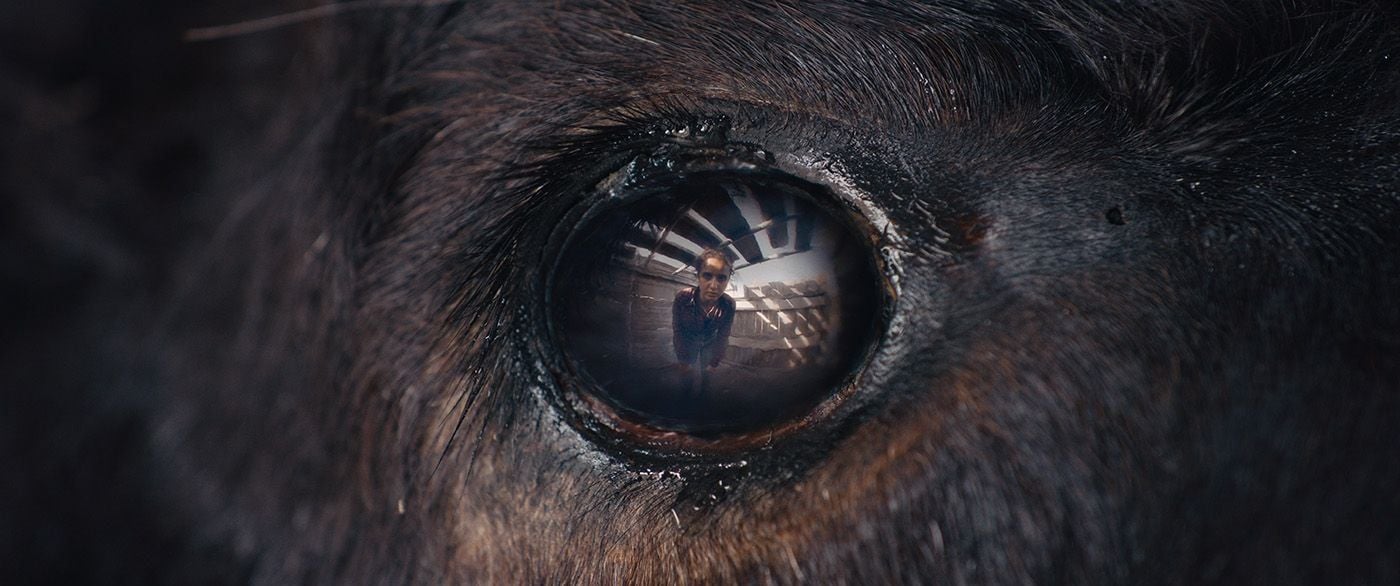
Nejma (Oulaya Amamra) and the bull face each other's eye.
The Course CamarguaiseA variation of bullfighting anchored in French culture, in which the participants have to get trophies from the horn of the animal, provides an incredibly immersive backdrop. Sport is considered more humane than the classic variant because the bulls are not killed at the end of the spectacle. But in the first minutes of the film, the pain -filled scream of a young animal echoes through the air when a farmer literally puts on his stamp in the form of a fire.
A comparable branding always floats over NEJMA invisibly. Certainly none of the men would openly deny a woman like her, but still a arrogant claim for her swings in her words. Or a certain shame when they are put in the shade by the young colleague, who then likes to turn into anger. The respect is a facade. Behind it hides the same animosity with which the men always get their hands dirty on the blood of bulls over the course of the film. A particularly intensive scene contrasts this handling directly with Nejma's fate – and misses a long punch into the stomach, without becoming too graphic.
Benestan chooses the bear
As a counter -design, Benestan finds a few refreshingly gentle moments of vulnerable, healthy masculinity, but above all beautiful pictures to stage nature and the community of bulls as a refuge. The comparison with the urgency of “Titane” does not move from somewhere, even with the Golden-Palme winner, cameraman Ruben Impens was at work, which in “Animal” now conjures up picturesque motifs of melancholy on the screen.
When Nejma falls asleep on the beach in the lap of a white horse, kneeling down in front of a bull or in the twisting through the swamps of Provence, while the day behind it slowly bleed down in a deep red evening sun, then it not only looks like a postcard motif, but also transports a tangible feeling of security, which is increasingly emotionally resonant. In the end, this culminates in one of the most urgent final pictures that has been seen in this kind of film for a long time.
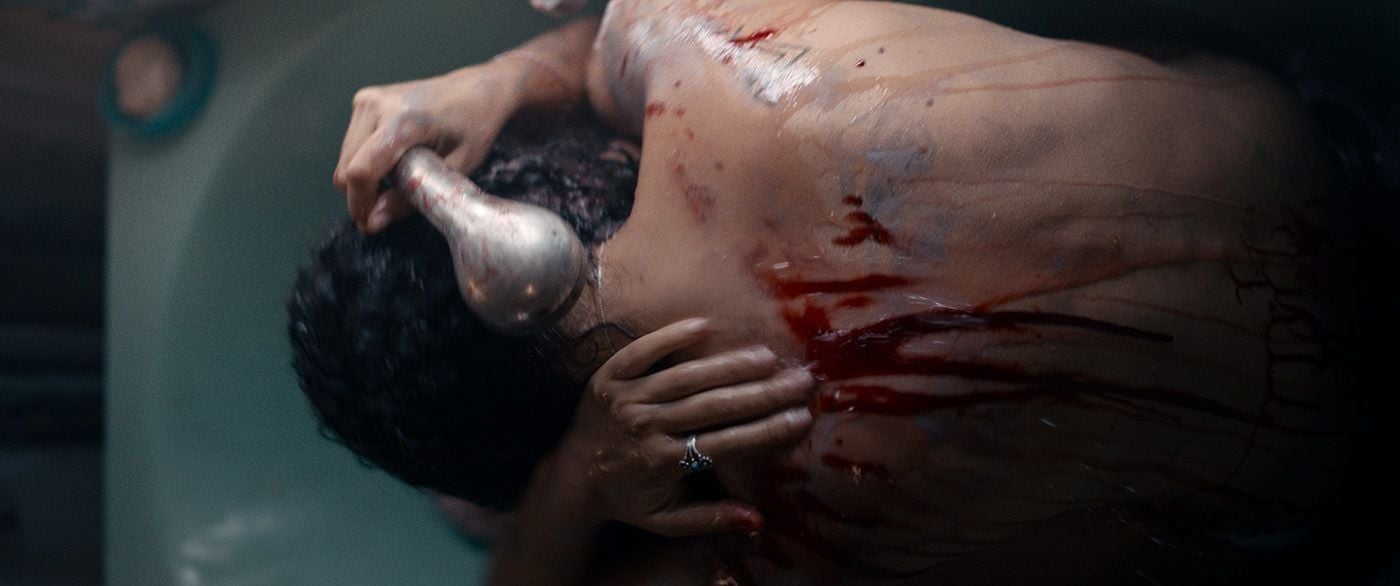
“Animal” also drives up a certain level of body horror!
Many of the actors remain pale away from Oulaya Amamra (“Smoking Causes Couugging”), but the focus is also fully on the leading actress. What is therefore much more likely to mend the film is that it is structured his plot so that you always get the feeling that you are a little bit ahead of the plot than the director is ready to disclose at this point. Some of the tension -oriented scenes suffer considerably from the fact that they try to keep a secret from us that is actually none (which applies even to the final).
“Animal” would have probably played with open cards here, and the effect of the film would hardly have done a demolition. Benestan not only uses the horror genre here as a vehicle to express female anger, that would also have been a little flat. Instead, “Animale” is not the best when he looks red and takes the men between the horns, but when he illustrates the pain and a possible way out of it. So if it shows the reason why the bear may actually be the better alternative.
Conclusion: “Animal” skin not necessarily from the socks as a horror film, but the graphic show values are missing and the twists are often one step ahead. For this he shines as an immersive drama with a decent pinch of French Weirdness. If “Titane” is too crazy and provocative, you get a much easier digestible, but no less powerful alternative here.