
130 million dollar budget, some sources even speak of up to $ 175 million, Warner allegedly made Paul Thomas Anderson available to make a film that is inspired by Thomas Pynchon's novel championship “Vineland”. It is an impressive sum when you consider that Anderson's most successful from nine previous films – “There will be be Blood” – has just recorded $ 77 million worldwide. But while some of the profit are worried about the Hollywood studio, “One Battle After Another” is a guaranteed profit for cinema fans.
While Anderson still adapted a pynchon novel very verbatim with “Inherent Vice”, he only used individual elements such as the father-daughter history of the novel and the politically charged, but at the same time ironically playful message of the template. The result is a film that is completely crazy in a positive sense, in which you never know what comes next. Any moment can drift in complete absurdity, but then remind you again terrifyingly of current realities. This incredibly powerful adventure is held together not only by an outstanding cast, a sensational score and really a lot of humor, but above all from great Vistavision images with terrific action.
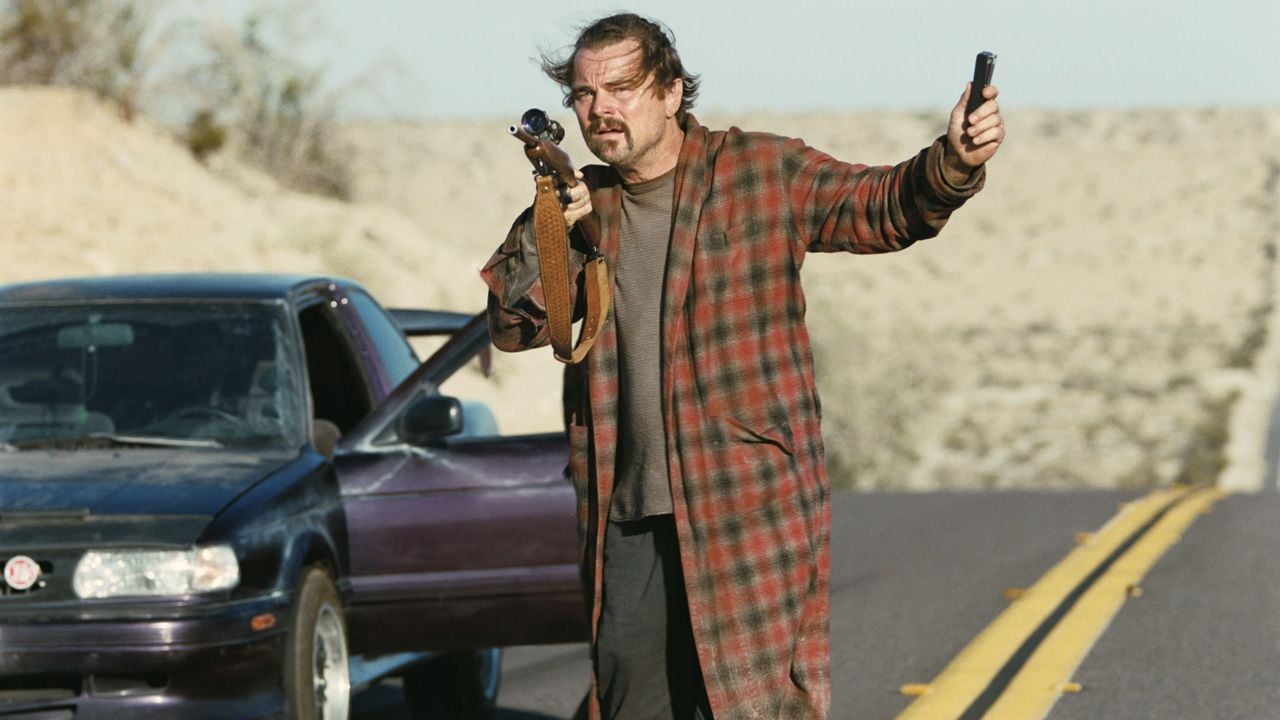
“One Battle after another” has UA Leonardo DiCaprio and great desert pictures.
Bob (Leonardo DiCaprio) and Perfidia (Teyana Taylor) are part of a revolutionary group. Bombs on banks and the power supply are fought against the capitalist system. In the event of raids, immigrants are also freed from camps on the American-Mexican border. In one of these actions, the paths of Perfidia and the US military general Steven Lockjaw (Sean Penn), who from then on become an obsessive pursuer of the group, cross-although his obsession even increases in sexual games with her power over the man. Even getting a child as a perfidia does not get calmer. While Bob is playing the housekeeper, she continues to fight for the revolution – until a bank robbery gets out of hand.
16 years later, Bob is a stoner who still prefers to look at the TV with a few joints, but is still much too tight to get involved in TV to get involved. With his daughter Willa (Chase Infiniti) he was submerged in a small town after the mother's arrest, which is also a safe port for many illegal immigrants. But that's exactly where the past catches up with. Lockjaw is about to fulfill his lifelong dream and to be included in a Nazi sect that steered the fate of the USA. He cannot afford that somewhere there may be proof that he had sex with a black man. In order to save Willa, Bob has to quickly become sober and grow beyond herself. Fortunately, the tough young woman has also known for 16 years that such a day could come …
Strong men, but an even stronger heroine!
Paul Thomas Anderson's last clever joke in this adventure full of volts is that at the end of “One Battle After Another” Tom Petty's classic classic “American Girl” heralded the credits. Because as much as the audience's attention has concentrated over long distances on the duel of the opposing men Bob and Lockjaw, it is actually the film by Willa. The young girl who breaks out of her small town – although not like in Petty's song because of her great dreams of life out there, but because she is forced to flee.
This culminates in one of the best action scenes of the year. Three cars ply with each other with a loud engine along a long desert road that consists of high heights and deep lowering. The camera is once on board, but mostly on the bumper so that we see the steadily lifting and lowering street. It is almost endless until it comes to a twist and we understand why Anderson has made us a passenger for so long. This captivating final is also a clever idea. Because in all its straightforwardness, in contrast to the film that is repeatedly decreasing, it stands in front of it.
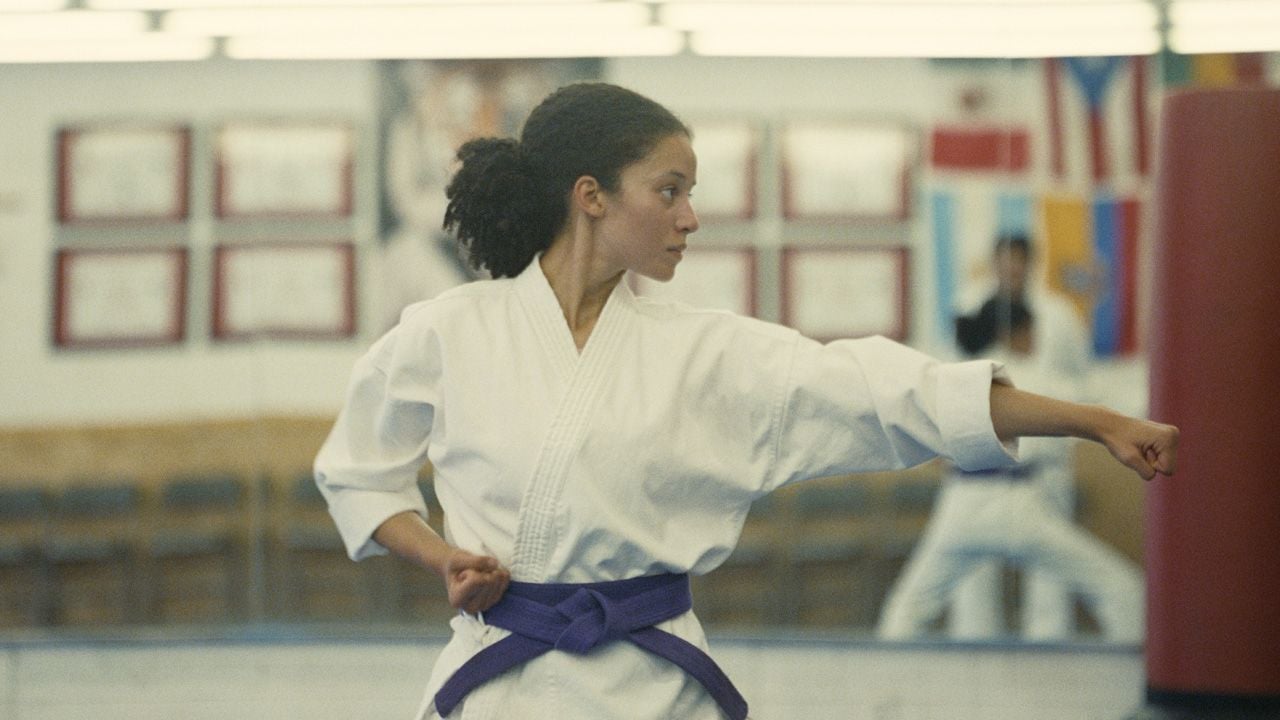
“One Battle After Another” not only offers auto-action.
Contradictions are the order of the day in “One Battle after another”. The introduction of the mighty white men of the Nazi organization takes place in an underground bunker that would look good for every James Bond-Böse weight. The fleeing Willa gets help from nuns that not only earn money with the cultivation of drugs, but are also armed to the teeth. Such an absurd humor is known from Pynchon, and “Inherent Vice” was also crossed. But here-also with significantly more rapid-he is so much driven to the extreme that sometimes you think you think you are in a trashy 70s robber gun. This also fits that Sean Penns, as a tough racist, begins to masturbate when observing a strong black woman.
When Lockjaw takes over a small American town with an army of heavily armed police officers and soldiers under the pretext of a drug and immigrant raid, one feels reminded of brand new images from the current reality of the United States. How the soldiers set the employees of a chicken nuggets factory or even storm the school ball with assault rifles is strikingly reminiscent of recordings of the operations of immigration and deportations controlling ICE. The fact that Anderson shows how hooded provocateurs from the ranks of the police ensure an escalation with the litter of Molotov cocktails and thus create a justification to put down the still peaceful protests of the population with sticks and tear gas is a clear statement.
Nonstop action, non-stop humor, non-stop feeling
Although it takes around an hour for the central history of Willa's escape at all, “One Battle Another” is not boring for a second of the whopping two hours and 40 minutes – on the contrary. Even the attack on an ICE interior warehouse, which opens the film, is a high-voltage sequence that is always rotated in long, but at all times rapidly. It makes it clear that non-stop action awaits you here that is only briefly interrupted to give a foretaste of the film's humor: Perfidia forces the Lockjaw warehouse with a pistol to get a stand now.
“One Battle Another” has intensive action and/or humor at all times. The great line -up is thanks to the fact that the figures also captivate emotionally. Both singer Teyana Taylor and “for lack of evidence” Newcomer Chase Infiniti in her very first cinema roll wear her two film parts as the highest opposite power women. Both each develop a wonderful chemistry – both with Sean Penn and especially with Leonardo DiCaprio. Thanks to Infiniti and DiCaprio, father-daughter history works as a loud emotional heart of the film-but also because it is refreshing how it doesn't matter for Bob that he may not be the biological father of Willa.

Chase Infiniti is the discovery of the film.
“Titanic” superstar DiCaprio also plays this bomb-legend revolutionary and hunted stoners so well because he brings us this figure in a way into this figure with Anderson without explaining it in big words. A long, turbulent sequence in which Willa's karate trainer (Benicio del Toro in a scene thief tie-like) helps him to flee) is the perfect combination of tension, humor and storytelling. The running gag is hilarious about the not yet fully sober Bob, who desperately is looking for a place to charge its old underground phone. But whenever he finds a job, the Sensee continues to shine through some courses full of busy people.
At the same time, the tension continues to attract because Lockjaws are getting closer to the city to the duo. And by the way, the audience gets an insight into what is going on in this place if it perceives a little more carefully than the stressed bob. Because the supposed martial arts teacher has a fairly tight and well prepared for an ICE raid, gigantic organization.
Sean Penn: The insane highlight in a masterpiece
But the real event is Sean Penn. The 65 -year -old two -time Oscar winner (for “Milk” and “Mystic River”) gives – and that means a lot of his career in his vita. It combines all the pages of the film. The fact that he moves in every scene as if a huge stick is in his ass, gives him a grotesque appearance together with the absurdly pumped up upper arm muscles. When his Lockjaw enters the scene, you have to laugh again and again – before the figure does various bizarre things. Nevertheless, this military general does not become ridiculous, but at the same time remains a fearsome villain who keeps the tension up with its determination.
Paul Thomas Anderson and his co-cameraman Michael Bauman use the almost forgotten Vistavision format for their second collaboration according to “Licorice Pizza”. The 35mm system developed in the 1950s by Paramount, for example, used Alfred Hitchcock at “Vertigo”. But it has actually long since fallen out of fashion-even if Brady Corbet dusted the Oscar success “The Brutalist” last year. After all, the cameras are difficult to handle, and for a long time the format was no longer projective at all. Only Anderson did it work to ensure that in Los Angeles, New York and London there are now special projections in his film worldwide.
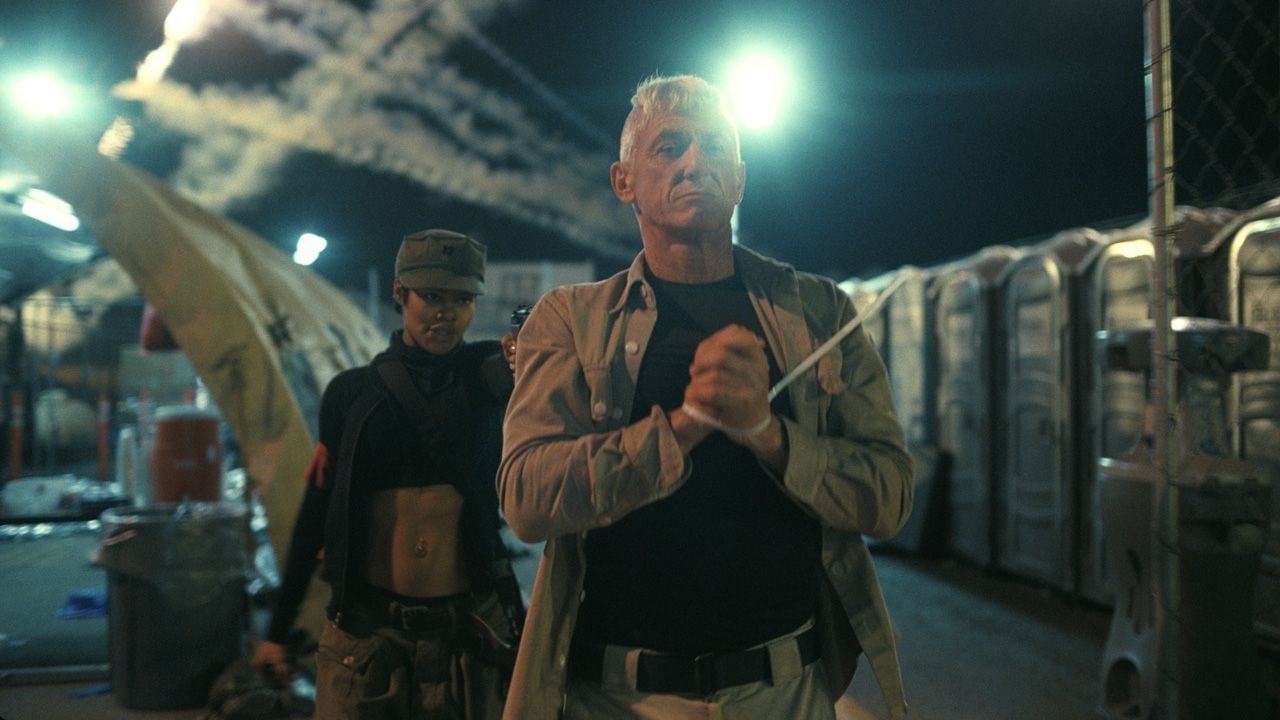
Another highlight: Sean Penn!
So why the effort? Like Anderson, who has been experimenting with Vistavision for years and has already used it for the music short film “Anima”, the pictures look unique in the interview-also when transferred to other special formats. Anyone who has seen “the brutalist” on 70mm can perhaps understand this special experience. The most likely the large-format IMAX 70mm demonstrations-as they also exist for “One Battle After Another”-come close to the original Vistavision. But even in a regular IMAX in which we saw the film, the advantages are very clear: the pictures look incredibly sharp, detailed and almost plastic. They develop their very own suction, which contributes to the fact that the almost three hours of the term of the film, despite all these technical gimmicks and content issues, pass incredibly unpretentious film.
The music of radiohead guitarist Jonny Greenwood is also a decisive factor: his sometimes nervous, then melancholy-flowing compositions are driving the action forward or causing tension to swell. The score is complemented by the targeted use of suitable songs-such as the thematically significant Black Liberation classic “The Revolution will not be televished” by Gil Scott-Heron. And the Black power poet was just right. Because this “revolution”, which Paul Thomas Anderson is on in “One Battle after another”, truly does not take place on television – it has to be experienced on the greatest possible cinema screen that you can only find!
Conclusion: a crazy, wild experience. Paul Thomas Anderson used the huge budget to present a touching father-daughter story in the robe of a left action film with “One Battle After Another”-you have to see that to believe that it exists.