
More than ten million people live in Bangkok – there are also 32.4 million tourists annually, which is where the Thai metropolis is currently the most visited city in the world. The strong influx of travelers from all over the world is probably the most important economic factor in the country. However, if you change from the macro level, from the large whole on the individual, another picture arises: Although there are still numerous people from the poorer rural regions to the capital, because there are opportunities for earning- but capitalism rarely means well with those who work in the lower segment of the service industry.
This is also experienced by Jen (Jutamat Lamoon) and Wason (Wason Dokkathum), the tragic protagonists from “Funeral Casino Blues”, some of whom stay afloat with several jobs – and yet can hardly expect the bare essentials. Among other things, he stands in a bar behind the counter, but is still besieged by the hungry of a loan shark, in which he has high debts. She not only has to provide herself, but also her family that stayed in the country. To do this, she sells her time and her body to wealthy men from abroad.
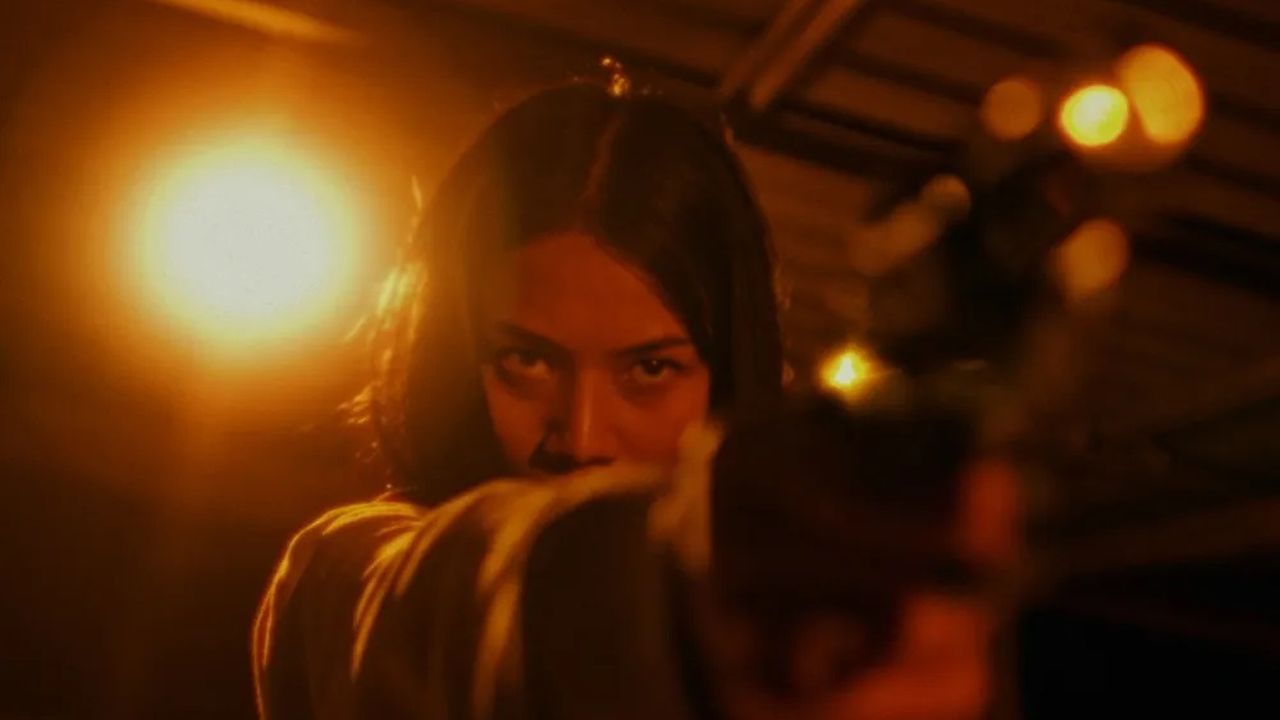
Jen (Jutamat Lamoon) always knows exactly how many cartridges are still in the course of the revolver.
When Jen and Wason meet for the first time and she is enough for him a pack of matches, the time freezes for a short moment – a casual touch that will no longer be as it was before. Afterwards, their approach takes place almost without a word, naturally of course. Both are suddenly just present in the life of the other, with the director Roderick, who lives in Berlin, has the exact nature of their relationship for a long time. Are you a couple now? Or is Wason, who soon becomes a kind of protector for Jen and even goes to the meetings with your customers, falls in love with her one -sided? On the one hand, this encounter in the middle of the “Funeral Casino Blues” outlined, something utopian, through and through precarious reality, has something, if only because it seems to evade every trade logic.
On the other hand, real intimacy cannot even arise in a world determined by economic constraints and is based on inequality. Jen and Wason rarely share a frame, and if they do, they are separated from each other within the picture, for example by striving for a window, which was literally cut. In moments of carefree, there are quickly interference noise, mostly in the form of digital rippling the cell phone noticeable direction if Jen is contacted by one of their free. Soon we catch a first glance at the revolver in Wason's trousers – and a few scenes later, Jen counts how many balls are in the drum: six pieces are. “That means I can change six people,” she concludes. At the latest here it becomes clear that we are not least in a genre film – and that the escalation is only a matter of time …
A ghost film in neon colors
Roderick Warich, who shot in Thailand for the second time according to his directorial debut “2557” and was involved in films such as “The Trouble With Being Born” and “The theory of everything” as a screenwriter. As relentless as its inventory of social disparities is, as Cinephil and artificial is his aesthetic access to the Southeast Asian Megacity – in the numerous shots from the outside, the directors' outer perspective is also reflected, which is visibly fascinated, but never exotits the neon -colored melting pot.
“Funeral Casino Blues” is a night film through and through, after 152 minutes of which Bangkok can no longer be imagined during the day-a crowding of the city, worn by Wabernd-Sphaherish ambient carpets and a sometimes reminiscent of Hong Kong-Soundtracks, gently reminiscent of melodramatic, sliding piano score. One thinks of such different films as “Millennium Mambo”, “Fallen Angels”, “Personal Shopper”, “Life in Bangkok”. And of course sometimes also to Apichatpong Weerasethakul, the Great Thai ghost filmmaker, whose films are not located in urban metropolitan areas, but rather in the country or on the city.
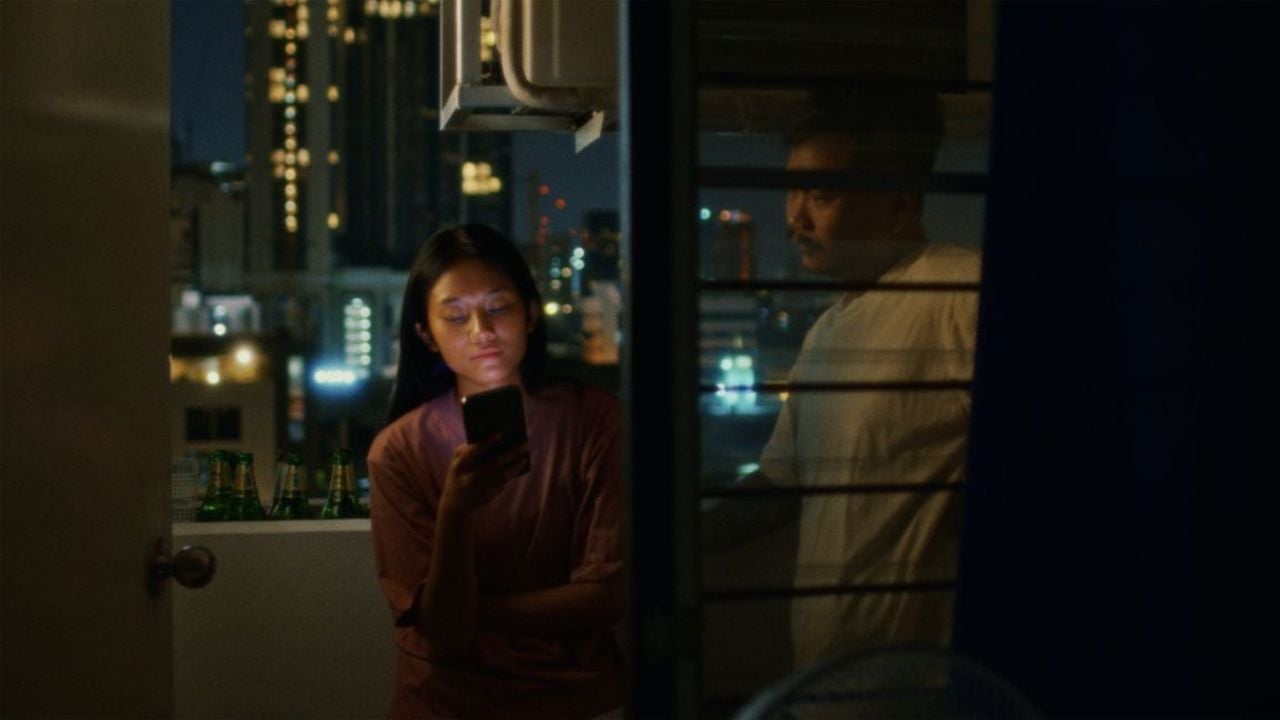
Even if Jen and Wason (Wason Dokkathum) can be seen together in a frame, they always seem to be separated from each other by anything …
In contrast to Weerasethakul's Goldene-Palme winner “Uncle Bonmee remembers his previous lives”, the ghostly here is not a result of mysticism or spirituality, and it does not lead to a state of transcendence. The spirits of “Funeral Casino Blues” are a birth of reality in which the film is located: they first appear as anonymous messenger messages, then on surveillance camera images that agree to everyone, standardize ghost presence by the room.
The customers of Jen also appear as threatening entities that the film does not give a face for good reasons: we only see them from behind or in the half -dark. In the end, “Funeral Casino Blues” (the atmospheric and puzzling title, by the way, refers to a funeral ritual in the rural regions of the Isaan), consequently really refers to the ghost film after it has built up an atmosphere of the constant delivering in the course of his three chapters. Something or someone in the dark could lurk constantly. A violent freelance, a debt enforcement, a haunted shape – at some point that no longer makes a difference.
Conclusion: “Funeral Casino Blues” translates the social upheavals in the Thai metropolis of Bangkok into an atmospherically drifting night and ghost film, which is increasingly gliding into the scary in the course of its three chapters.
We saw “Funeral Casino Blues” at the Venice Film Festival, where he celebrated its world premiere in the Orizzonti series.