
The central question to the sensational directorial debut “The Plague“To approach, is about the middle of the film:” Would you rather fuck a dog without anyone knowing it? The 13-year-old protagonist Ben (Everett Blunck) does not have to think twice to choose the bestiality and against damage to the reputation. And so to speak, everything you have to say about this coming-of-age horror story is said. Or would it be at least if Charlie Polinger's script did not come up with such a clever observation gift and his direction did not score with such control over voltage structure and, above all, discharge.
This obscene experiment is pronounced by Eli (Kenny Rasmussen), a boy who is a little different from the other participants in the Tom learner Water Polo Summer Camp in 2003. Or at least as such is marked: on the one hand by the rash, because of which he wears the same dermatable longsleeve shirt for the day, and on the other hand from the “cooler” boys who literally avoid him like the “plague”. The English -language title also refers to this “plague” – and with this infectious disease, at least the others claim, Eli was infected. The bullying, the group, which is listed by the inconspicuous Jake (Kayo Martin) on Eli, does not express itself in aggressiveness, but rather in a decisive avoidance.
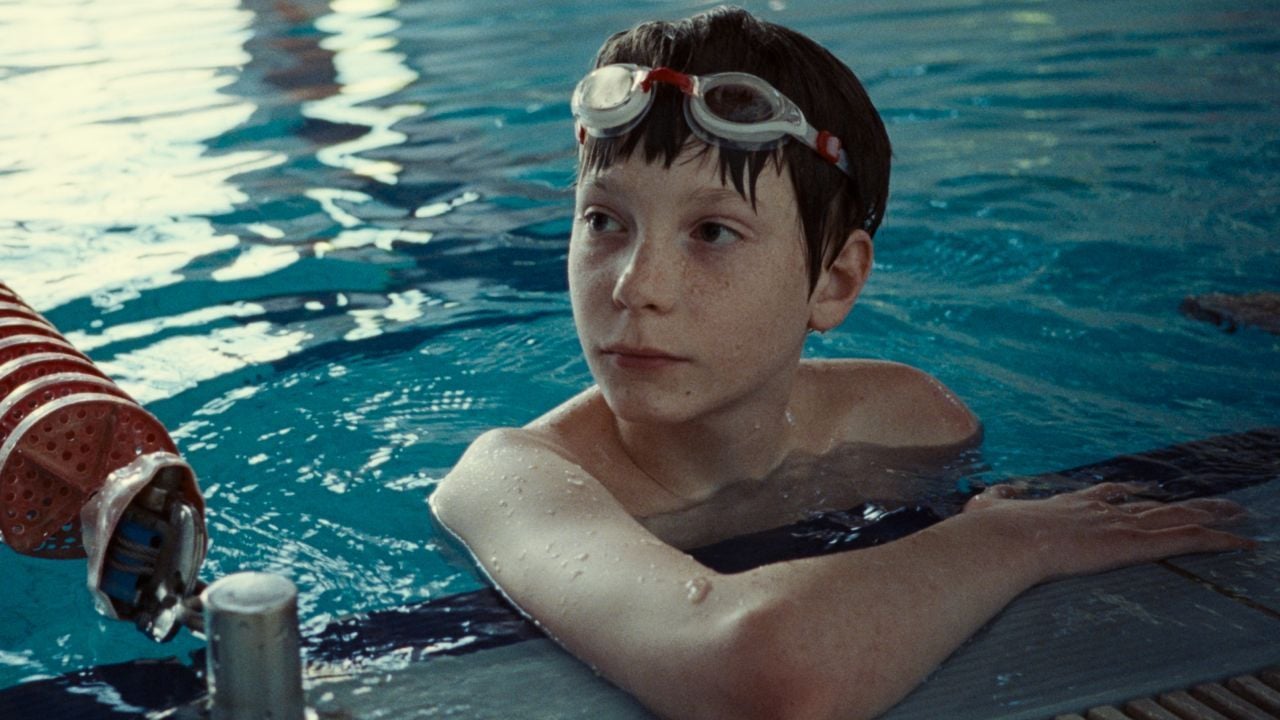
Ben (Everett Blunck) is mainly due to not attracting attention in the group.
The protagonist of “The Plague” is neither the main bully nor his initial victim, but Ben, who lets it happen as a supposedly outsider, or even participates in self-protection-until one day he exchanges too much friendliness with the ELI falling out of the grid and suddenly declared himself a leper. This pattern is by no means new, you remember the Lindsay-Lohan classic “Girls Club”.
The fact that “The Plague” does not feel formula -like has to do with the fact that Polinger returned to his own diary entries from his youth in Australia for his debut. In this way he comes close to the horror of growing up. As a model for this anti-nostalgic view of the early 2000s, films such as the cannibalism horror “RAW” and Bo Burnams “Eight Grade”, both, whether allegorically or realistically, put the otherness of their protagonists in the foreground and emphasize the price that this deviations can cost.
A cacophony of breathing and gasping
Remarkably, Polinger does not have to choose between allegorically and realistically, rather it connects the supposedly opposing approaches as playfully as it is captivating. For example, by the score, which-especially at the beginning-is crucial by man-made noises such as rhythmic-shock-like breathing and gasping. Again and again it swells and leaves us permanently in the uncertain about what the title -giving infectious disease is actually all about. It is often difficult to make out whether Ben actually threatens due to his teammates, not least, not least, since Jake in particular mutates from the best friend of the oppressor.
Water polo sport is a coherent expression for youthful-male toxicity (the girls camp, meanwhile, makes synchronized swimming), but in the end nothing more than an outskirts. Joel Edgerton, who is also involved as a producer, plays the good -hearted, but sometimes somewhat awkward coach Daddy Wags, who tries to oppose the dynamics in the camp. In one of the most memorable scenes in the film, the coach sits at a Diner table with Ben and speaks to him about the different decades that he has lived through so far. In doing so, he confesses to the helpless adolescents in a careless, but sincere way that the teenage years were actually the worst, but then – at the latest in the forties (!) – will definitely get better at some point. But where the teenage years are as bad as it is with childhood, Ben hooks. Well, it will never be as beautiful as in childhood, the coach admits.
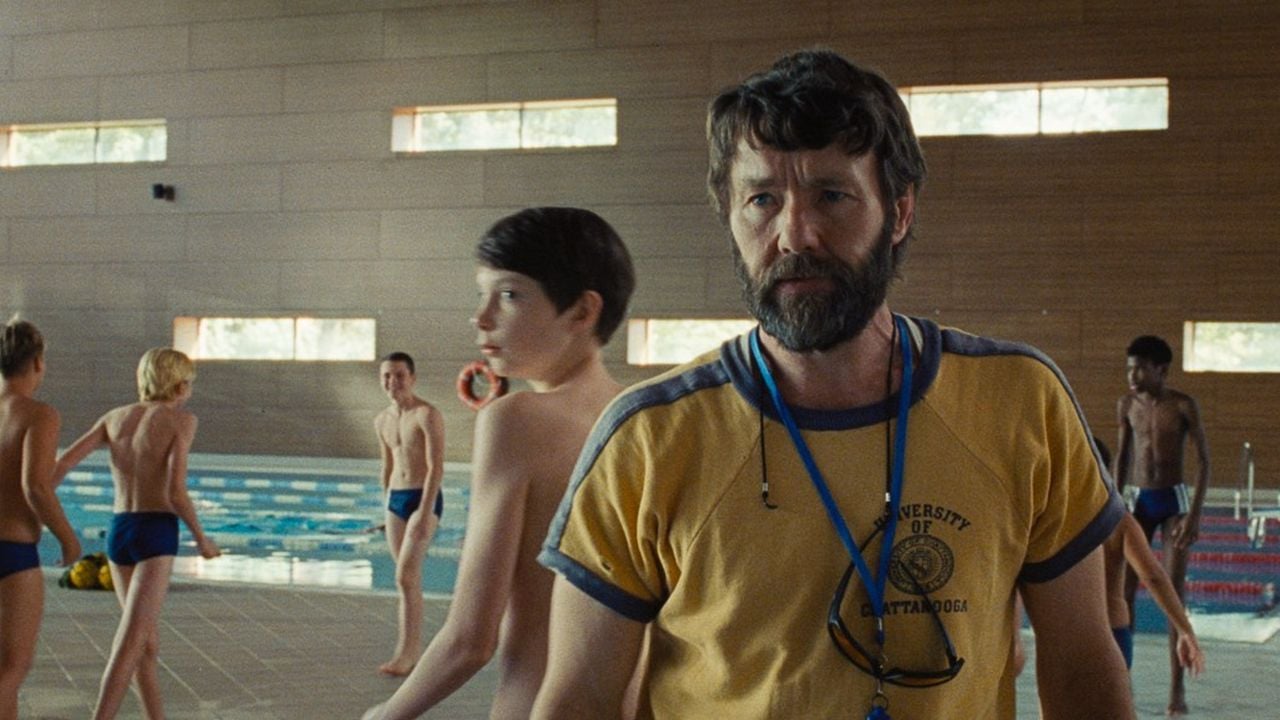
Joel Edgerton can not only be seen in a supporting role as a coach, but also involved in “The Plague” as a producer.
A less ambitious film would possibly end with such a bitter -sweet moment, but Polinger consistently emphasizes that he is far more about truthfulness than harmony and conflict resolution. The young actors are almost consistently in front of the camera for the first time and are also at the same age as their characters. What scenes like that at night, in which the boys say more or less pronounced sexual fantasies to masturbate at the same time, makes it all the more remarkable. (When working with the intimacy coordinator, after a careful palpation, it was quickly noticed that the young actors already know a lot more about sexuality than you could imagine on the production page, said Polinger in an interview).
However, this truthfulness also means that protagonist Ben does not take the abrupt turning turn, as so many similarly stored scripts like to fantasize. In a brilliant end sequence we see him dancing, keeping around. The present and all the people who may hold this or that of it become a mere sea of lights. Nothing is solved, the problem of puberty – the plague – in no way out of the way. But the earth will continue to turn, and Ben joins it in step – not knowing, but hoping that the future can only get better.
Conclusion: With “The Plague”, Charlie Polinger delivers such a sensual and carefully observed comeing-of-age debut, which skillfully opened the burdens of puberty under the surface and dares to consist of the instability of these youth years instead of a clean happy ending.
We saw “The Plague” at the Cannes Film Festival 2025, where he celebrated his world premiere in the “Un Certain Regard” section.