
It may have something relieving if, as a documentary filmmaker, you can not only fall back on facts, but should also say that it should be. The fabric is so tightly lashed, the rules are more or less clearly defined. With which it should not be said that everything shown for bare should be taken in documentation (Mati Diops often offers insufficiently as documentation of categorized Berlinale winners “Dahomey”, which later turned out that the particularly gripping discussion scenes were staged among the students).
Sergei Loznitsa, which is also often documented, also works in his drama “Two prosecutors“Consciously for fiction, but feels so firmly committed to historical realism in his spirit and dramaturgy that you soon ask yourself why it needed this fictionalization at all. Whether you need the one answer that may shoot in your head – namely:“ To make the history lesson more gripping ”, then also decide what quality you can do strictly procedural historical film is ready to promote during the Stalin terror.
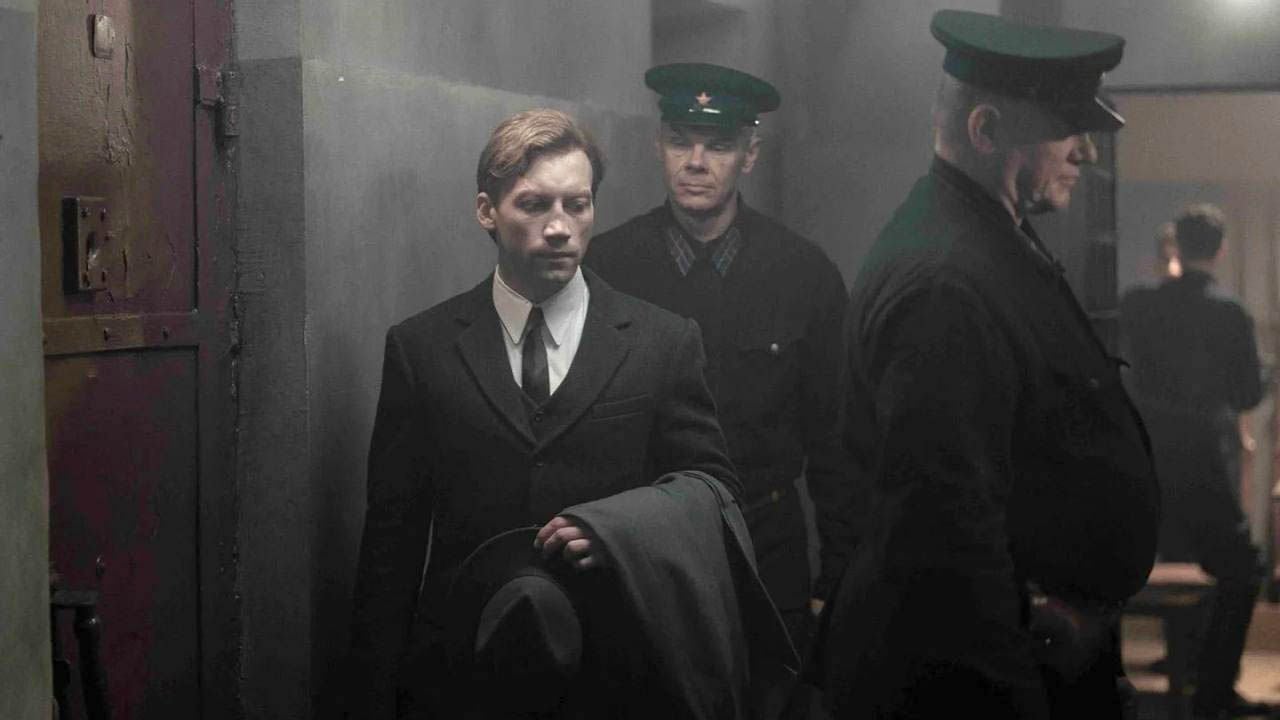
For the freshly washed public prosecutor Alexander Kornyev (Aleksandr Kuznetsov), the struggle for justice is primarily due to grueling.
The premise, together with the protagonist, comes from Georgy Demidov's novel of the same name, who in turn spent 14 years in the Soviet Gulags. The manuscript was written in 1969 at a time when the text could already be known would have already ended up in danger. As a result, the text was confiscated by the KGB in 1980 and finally only appeared in printed form in the current millennium: In it, the sincere young prosecutor Alexander Kornyev (Aleksandr Kuznetsov) in a miraculous way from a high-security cell, which gives him the methodically carried out torture of the Soviet police NKVD.
The Politburo has long since had no control over the unit. The intention of the idealistic Bolsheviks Kornyev to put an end to local corruption can hardly be different from pulling the viewers. And yet everyone will quickly be able to imagine where the journey for the institutions – or at least to the inherent justice potential – believing Kornyev goes. Which quickly becomes clear to us as an audience that Loznitsa cannot be about the “what”, but only about the “how”.
A young idealist against a corrupt system
What concretely means: As soon as the young protagonist is working through the institutions seeking him to melt him-first to listen to a resistant, later in order to initiate criminal investigations against the local NKVD unit-he is confronted with barriers. The project is quite obvious here, and it is also effective for the approach: if we accompany the Kornyev, which is freshly changed from the university, how he is again and again encouraged to wait for the responsible authorities, not only people and procedures stand in the way. In a prison, which extends over countless tracts, after those responsible, a metal gate opens after the other, which, as soon as its threshold is exceeded, is immediately completed by one of the many guards.
In total, perhaps 30 minutes are spoken of in the two hours of “two prosecutors”. The rest of the time consists of waiting, walking along prison ores from opening and closing doors and gates. One could imagine this as a real film version of the legendary passenger certificate 38a-Seuqenz from “Asterix conquers Rome”-just in a contrastless grayish gulag. As one would expect in such a film (not to say: as the art house regulation requires!), These corridors in the static, quasi-square 4: 3 image format are literally “captured”.
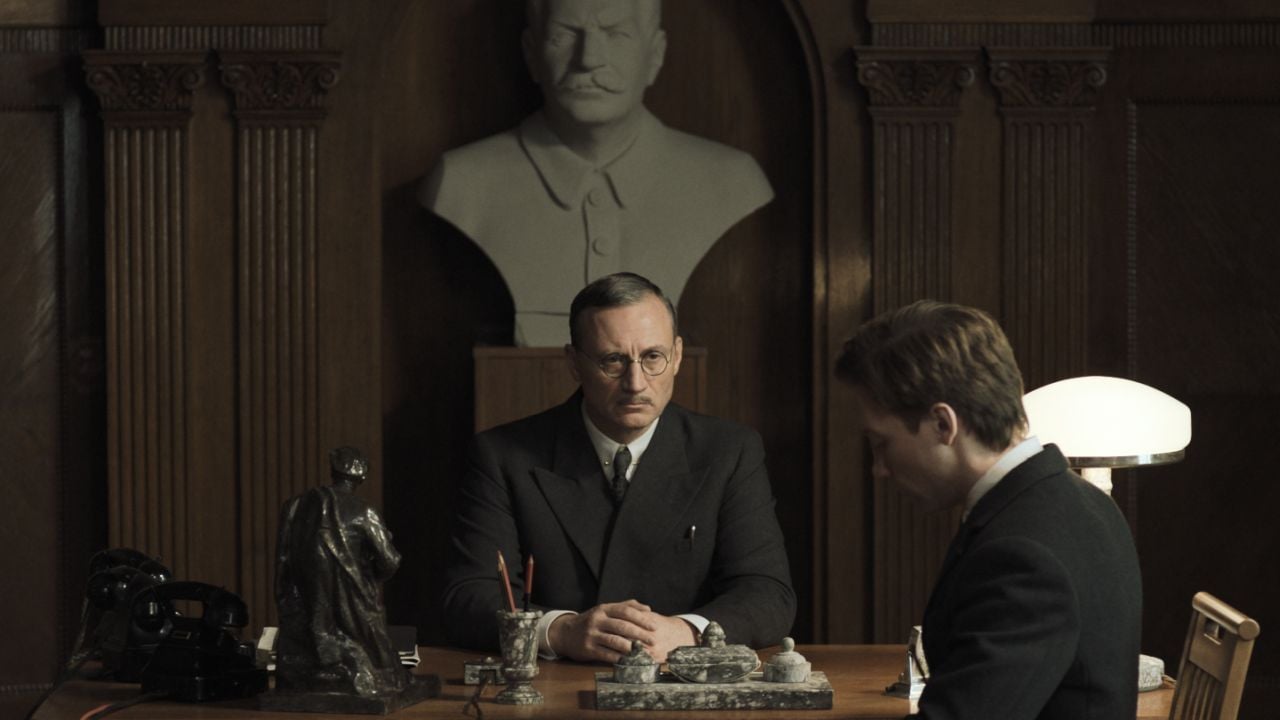
The Soviet chief prosecutor should help. But in contrast to the good -faith protagonist, the audience knows very well that this cannot go well.
This does not change after Kornyev's conversation in the special cell with the last resistance of the NKVD. After he, close to the organ failure, shows which devastation was committed to his body, Kornyev goes with the next train to Moscow, where he visits the chief prosecutor to obtain an impartial examination procedure. It is obvious that Loznitsa publicly declared that in addition to the original text in addition to the origin text, and especially Kafka. But what Kafka may most distinguishes – the bureaucratic absurdity of a (sometimes malignant) humor – is painfully missed here.
And even the tragedy, when the Loznitsa describes its film, must be questioned as such, as such does not want to set a real tragedy in “two prosecutors”. All of this is too clear from the start to the logical end point. The pure realism that Ukrainian filmmakers born in Belarus pursues may interpret one or the other as a seriousness owed to the topic. However, this device is mainly monotonous. Especially since his excessive images reject so strongly on your own digitality (which wants to say here: on your presence) that the actors sometimes appear to have a video game with their smooth faces and the emphatically strong contours.
Conclusion: There is probably no director who has both documented and edited the (crime) history of the USSR in the past few decades and processed them in a fictional way as Sergei Loznitsa. The fact that his Cannes competition title “two prosecutors” does not add a decisive new impulse to this work is not least due to the unity of the plot and the gruesome digital aesthetics, which makes it impossible for us both the critical argument and the historical immersion.