
Rarely was a German film being hyped as much as “Look into the sun“. Perhaps it was also because the applause was somewhat behavior after the first performance. The second feature film of the Berliner Mascha Schilinski (“ Die Daughter ”) is not a second“ Toni Erdmann ”, in whom nine years ago only can Cannes and then the whole world shocked-and yet the pre-laurels were absolutely justified: you have to process such a film for now has seen outstanding.
“Look in the sun” is a masterful and rousing meditation about the (female) pain that accumulates in a four -sided courtyard in the Altmark over the course of 100 years. A (ghost) film, which is as great as it is fascinated and fascinated, touches it as well as deaf-and always surprises with a macabre humor. For a long time, it has hardly been a German film into the Cannes competition-and yet it is no surprise that Cannes and the Berlinale have literally beaten up to be able to show it so special film.
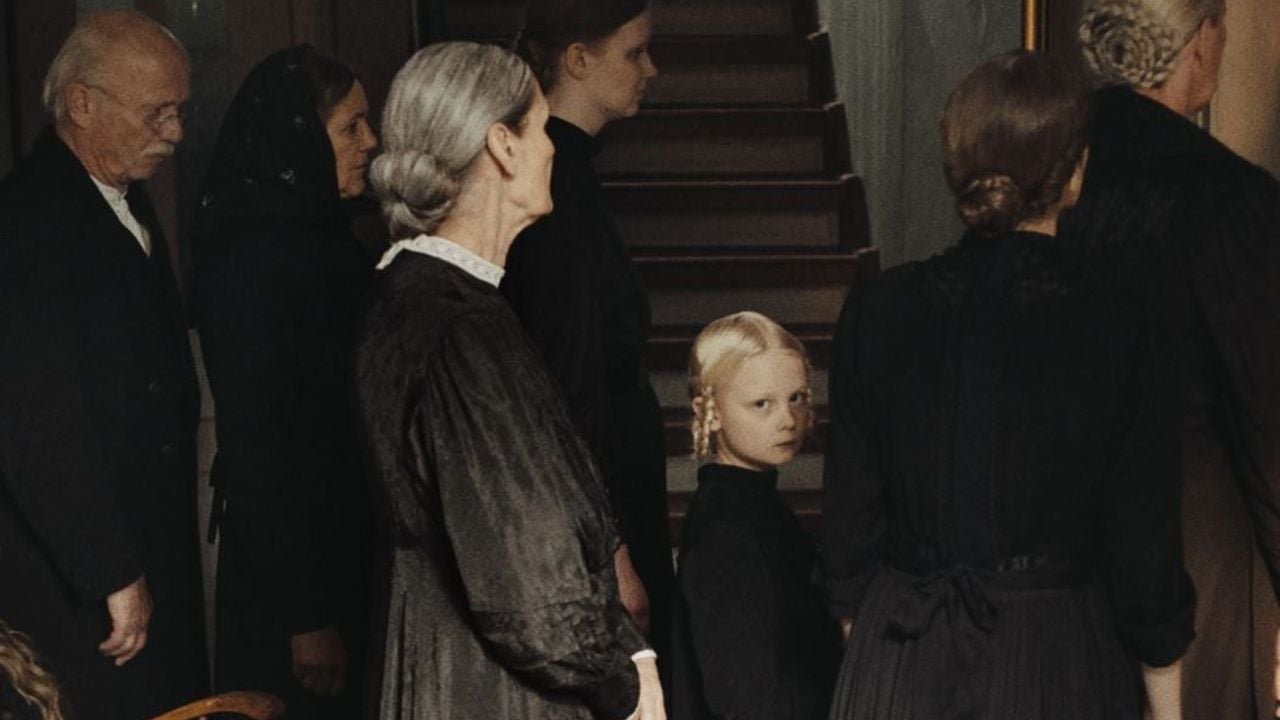
Who is the little Alma (Hanna checks) just looking at it? Again and again the fourth wall is broken with looks alone …
There are three generations and then a modern Berlin family who wants to make the dilapidated courtyard in their own work, which we observe here over more than one millennium. The associative act does not work chronologically, but jumps back and forth between the decades. Sometimes in the already a single 4: 3 image format we look even through door crevice or key holes-and very often a handheld camera follows the back heads of the protagonists, as if portable camcorders for family shots were not only in fashion in the 1980s, but had come into fashion for half a century earlier.
This reminds a little – even in its sensual tactility – of the great “A Ghost Story”, in which Casey Affleck is a spirit with bed sheet in the corner of a room and watches over the centuries who comes and goes there. Or also to the animal trilogy of the Zürcher brothers, which is just ending with “The Sparrow in the Fireplace”, which, even in a confined space, heat up the boiler so much that their family arrangements (usually with a dark black-humorous bang) fly apart. At the same moment, “look into the sun” is also completely original and original. You have to get used to the very own film language of Mascha Schilinski – although it may even be the most exciting when you as a viewer yourself are still on shaky legs.
Push out of the comfort zone
Anyway, Mascha Schilinski pushes us off the track in a variety of ways at the beginning: starting with the Low German dialect, which is spoken in the most popular scenes and in which most German cinema goers will also be dependent on subtitles. And then “look into the sun” also starts with all sorts of sewers, the background of which are only unveiled in the course of the film-starting with a Michel-Aus-Lönneberg prank, in which the little Alma (Hanna checks) and her sisters tie up the mite's slippers on a door strip, whereupon you slip into the top Charlie-Manner Nose lays.
It continues with shadowy appearances on historical photographs and Angelika (Lena Urzendowsky) growing up in the GDR, which with her cousin is running a racing over a freshly mapped grain field, only to count afterwards, who has carried away the most stab wounds on their feet. In the 1940s, the farmer's daughter Erika (Lea Drinda) was again fascinated by the amputated lower leg of her uncle, which she not only produces countless drawings of it, but also sneaking into his room at night in order to taste the sweat that runs in his navel.
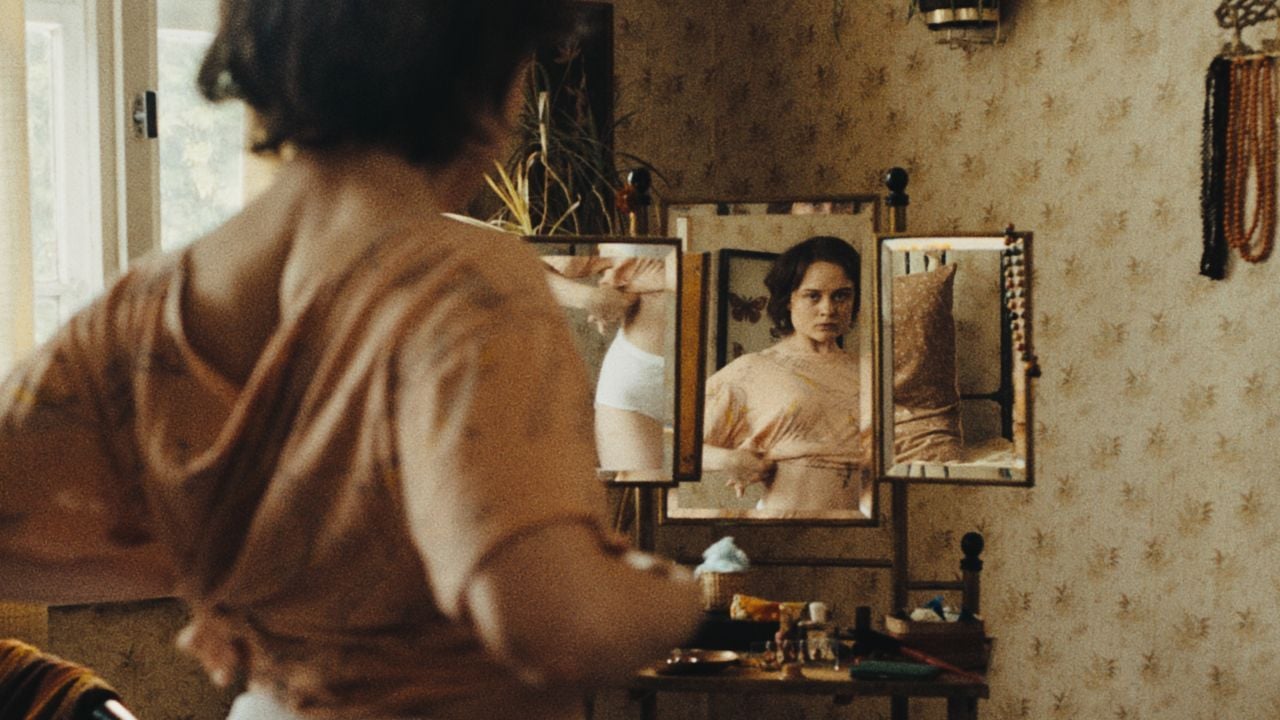
Angelika (Lena Urzendowsky) wants to try out and her sexuality, but also has to defend itself from the attacks by her uncle.
In the best sense, “looking into the sun” always feels a bit dangerous because you can never rely on what happens next. In one scene, even the entire cinema has held its hands together when one of the protagonists nestles in a cornfield to a sleeping fawn in order to be overlooked in this position by a combine harvester that only approaches in the sound track – and then also rushes up. Or was that possibly just a (suicide) imagination? In contrast to “A Ghost Story”, where coming and going has something comforting over the centuries, because it always goes on somehow, it is such a thing with the hope in “Look into the sun”.
The protagonists (or their spirits) also seem to have increasingly affect the other stories because they still suffer very similar pain and trauma decades later. Women and girls disappear, die, several of them commit suicide – and often no word is lost afterwards. Films that release you without a classic happy ending with such a devastating morality from the dark cinema hall, but please give you enough other lasting things – and in this regard you deliver “look into the sun” fully, but sometimes something of it.
Conclusion: “Looking into the sun” is already very clumsy because its merging action spanned 100 years. But in the opinion of the author of this text (and in view of the first, consistently exuberant reviews in the most important film magazines in the world next to film starts), the chances are pretty good that Maschha Schilinski could actually make the leap from the red carpet in Cannes to a permanent place in film history. But that will show the next 100 years.
We saw “look into the sun” at the Cannes Film Festival 2025, where he celebrated its world premiere in the official competition.