
What was not accused for her: she destroyed the Beatles, John Lennon bewitched, was a shaman or worse. At the beginning of the 1970s, Yoko Ono was hardly exposed to sexism, as an asian as an asian as well as racism. In the meantime, the view of the artist has changed, who is still active at over 90 and has just opened a great retrospective of her work in Berlin. The director Kevin Macdonald (“The Mauritanian”) also throws in his documentary “One to one: John & Yoko“A differentiated view of a couple that often consciously looked for the light of the public, which acted extrovert and often irritatingly, ancient and moved people. Even more than the portrait of a power coouple, the collagen-like film is a picture of the highly political early 1970s.
August 1971, the separation of the Beatles was one year ago, but the wounds are still deep. The interest of the public is still enormous, especially in New York, where John Lennon has recently lived in a rather modest apartment with his second wife, the Japanese artist Yoko Ono. Before that, the two had lived in the country, but there it was too quiet for the activistly busy couple. In New York they hardly ever seem to be alone, cameras and tape devices record almost every movement, every remark. And the possibly most famous couple of his time uses attention to commenting on political and social grievances: the Vietnam War, the Civil Rights Movement, but also the catastrophic conditions in a home for people with restrictions – “School for Retarded Children”, as was said in the language of the time. To collect money, Lennon played a benefit concert on August 30, 1972 …
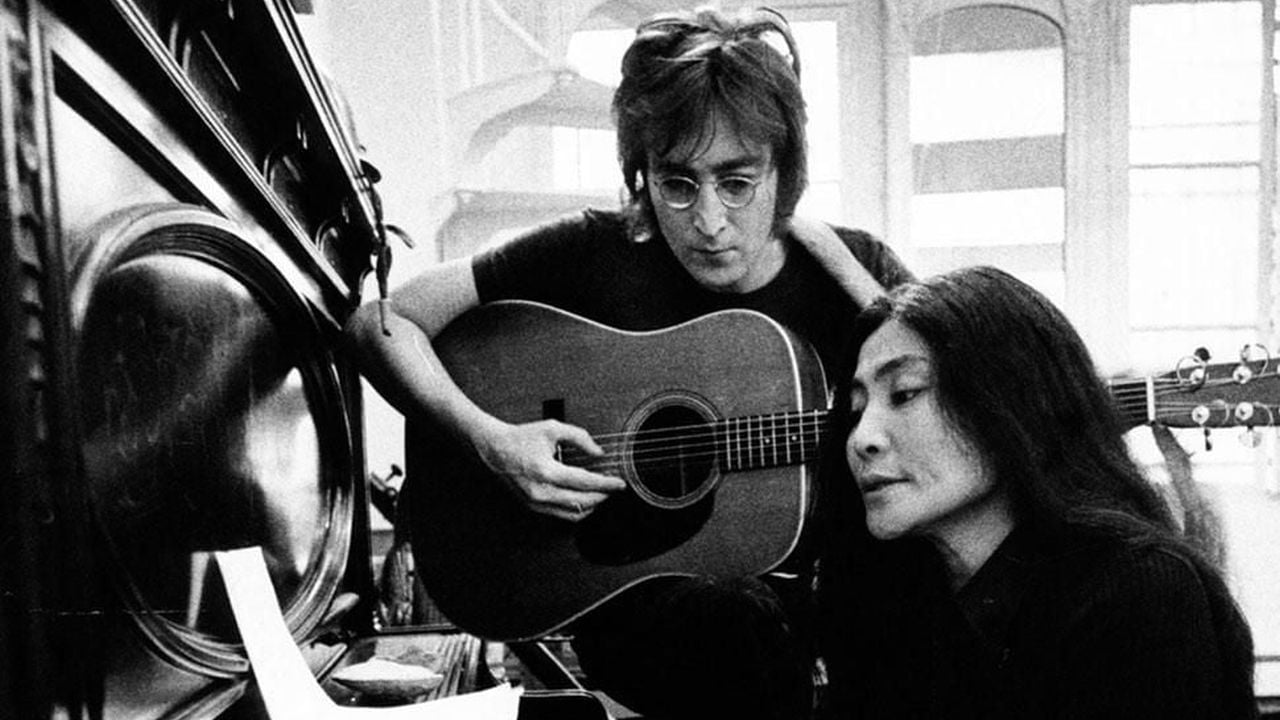
The IT couple of the 1970s: In New York, Yoko Ono and John Lennon were no longer able to take a step without being filmed cameras.
Anyone who is familiar with the Beatles knows, of course, that this concert should be the last in John Lennon's life. In “One To One” it forms the dramaturgical backbone for a documentary that, in the form of a collage, creates a portrait of John Lennon and Yoko Ono in New York at the beginning of their time, but also designs the image of an entire era. Richard Nixon was an American president, the Vietnam War raged, the cold war smeared. The fear of communist or socialist sympathizers was great – and so the proven peace activist John Lennon quickly became a target of the secret services. The fact that Lennon on talk shows or on the radio or actually, whenever you kept a microphone in front of his face, liked to talk bluntly and criticized the mighty, made him the goal of the conservative class. Especially since with Yoko One there was a Japanese woman at his side who had survived the American air raids on Tokyo as a child.
In view of the couple's political activism, it could almost be forgotten that she had long since been an established artist and he was one of the most famous musicians of all time. Kevin Macdonald is now able to indicate all facets of the couple. Already in documentaries about Bob Marley (“Marley”) or Whitney Houston (“Whitney”), he had almost exclusively shot differentiated portraits of two icons with the help of archive material – an approach that he now continues. About 18 months in the life of Lennon and Ono describes “One To One” – from mid -1971, when the couple moved to New York, until the end of 1972, when she was moving to the famous Dakota Building, before which Lennon was to be murdered in 1980.
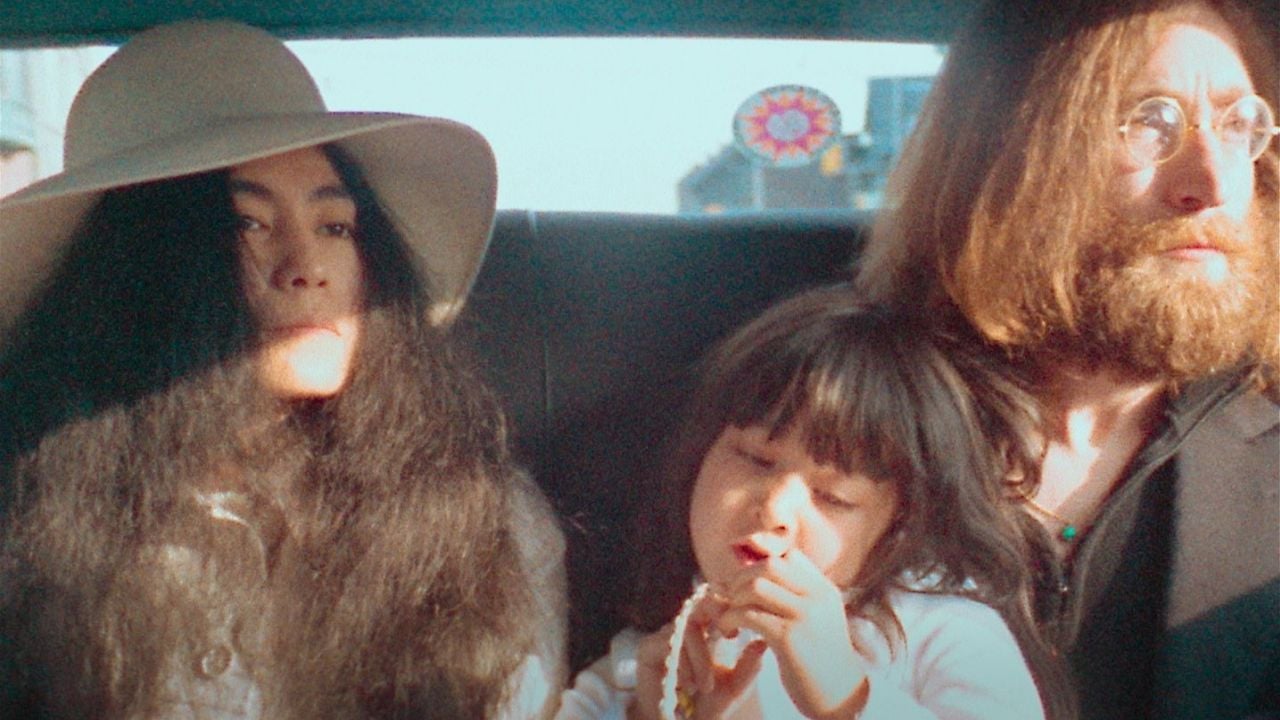
Kevin Macdonald had almost unlimited access to the image and sound recordings of the time.
In between, Lennon's notorious Lost Weekend, English slang was for a crazy weekend that you have no more memories of. In Lennon's case, however, the weekend not only lasted two or three days, but was also a good one and a half years of drug and alcohol excess, during which he also had an affair, with an assistant from Yoko Ono. The “one to one” has also broken down beforehand, may also be due to the fact that MacDonald paid his unlimited access to image and sound recordings with the fact that his film is a kind of authorized picture of the couple: Sean Ono Lennon, the couple's son, born in 1975, acted as a producer and music coordinator. On the one hand, it gave access to the fascinating concert images, in which Lennon, among other things, classics such as Imagine plays. At the same time, however, he should have had at least a watchful eye on how his parents are shown in the film.
In this respect, MacDonald's decision does not make a classic portrait film that one would expect that at least at least ambivalent, if not critical with his subjects, makes an additional sense. Instead, “One To One: John & Yoko” works as a film about an era, about a phase of American history, which was full of conflicts between the conservative older and the liberal younger generation. An era in which demonstrated and protested was as rare before and after – and in a way, in a way, John Lennon wrote the soundtrack.
Conclusion: Kevin Macdonald uses his practically unlimited access to image and sound material about John Lennon and Yoko Ono for a rousing collage that wants to be less classic portrait film, but shows the couple in the context of a historical era that was shaped by particularly drastic social conflicts.