
Marseille is only the second largest city in France, but the oldest. Even in ancient times, the lively harbor metropolis was a hub of the sea deal, and nothing has changed to this day. At the same time, Marseille owed his port to his port and its surroundings for many decades as a center for drug trafficking, prostitution and gang crime, which also found itself in numerous films from the 1930s. For example in the iconic gangster drama “The Man from Marseille” with Jean-Paul Belmondo. However, the city's image has improved a lot since the turn of the millennium. This was probably responsible for this, the election as the cultural capital of Europe (2013) and an increased municipal policy commitment, which was triggered by a catastrophe: the collapse of two dilapidated old town houses in Rue d'Ubagne, in which numerous people were buried under the ruins.
This event also forms the loose framework for the new film by the French social romantic Robert Guédiguian (“The House by the Sea”), who was born in Marseille himself and has always been watching the development of his hometown with a critically loving look. In “The festival continues!“The confessing socialist has managed to accommodate practically all of his favorite topics in a film: his sympathy for the weakest of society, the love of Marseille and Armenia, the country of his ancestors, as well as his preference for social issues, for strong women's figures and for certain actors, with which he always works – including here -.
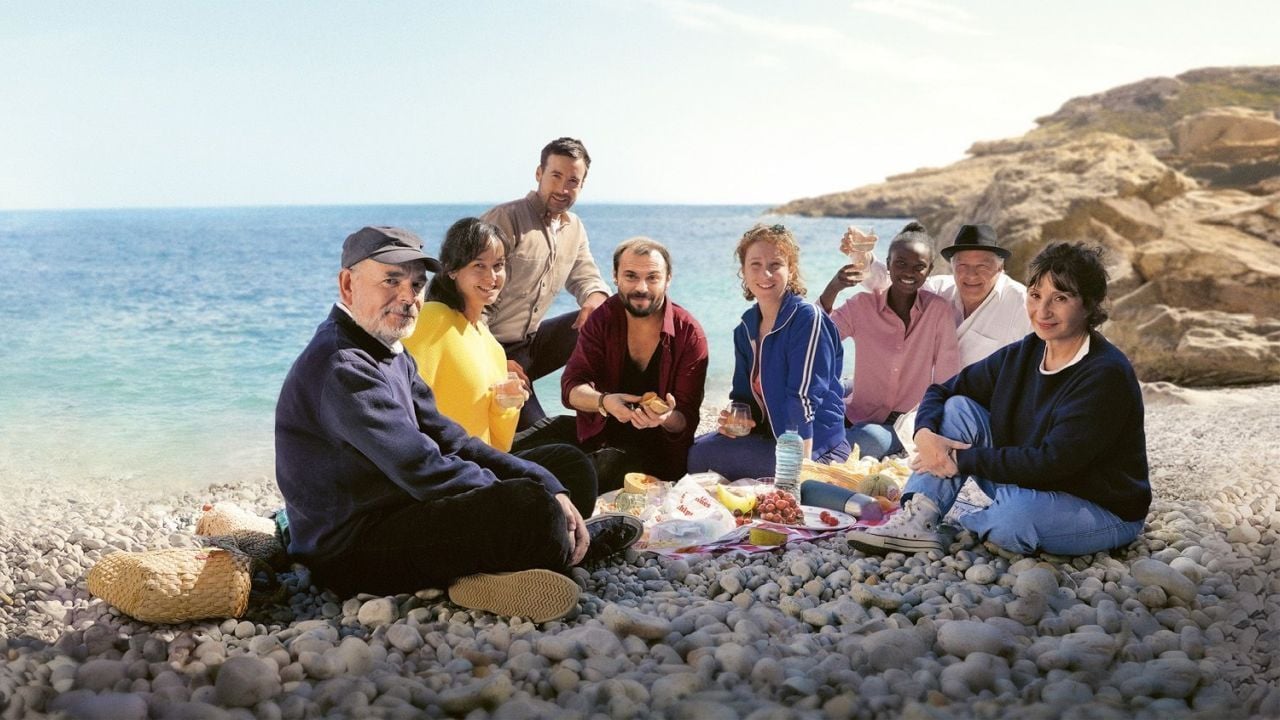
The coastal city of Marseille also plays one of the main roles in “The festival continues!”.
The focus is on two women: Rosa (Ariane Ascaride) and Alice (Lola Naymark). Rosa has been a widow for a long time, has raised two sons on its own and is at the end of her professional life as a nurse, which does not prevent her from being on the move around the clock and taking care of everyone and everything. Rosa's family is a happy round of spirited hardcore socialists who love their hometown Marseille as much as the legendary origin of the city in today's Armenia. Alice, the girlfriend of Rosa's son Sarkis (Robinson Stévenin), is taken up by them with open arms. She is an actress and is currently working in a social project where she is designing events that are revolving around the anniversary of the disaster in Rue d'Ubagne.
In a way, Rosa and Alice are quite similar: their social engagement combines them, but also their tendency to hyperactivity. The biggest difference between them is that Alice is in love and Rosa no longer knows how to do it. That changes abruptly when she gets to know Alice's father Henri (Jean-Pierre Darroussin). This has just sold his bookstore and wants to enjoy retirement. Henri is a friendly, older gentleman, literary and with a sense of the beautiful things of life, in short: a romantic. Rosa and Henri are becoming a couple, and for the first time in their lives, Rosa is tempted to think more about itself than to others. But that's not that easy, because Rosa runs for the local elections …
Agitprop in the best sense
Rosa and Alice pursue noble goals: they are passionate about the poorest and weakest and are ready to sacrifice their private life. And now both women have to decide how important social commitment is to them. Robert Guédiguian does not make them smooth -ironed heroines, but he comes quite close. The two are not only idealistic to the tips of their fluffy hair, they are also ideally idealized. Robert Guédiguian hardly or does not hide the fact that he presents an Agitprop film here-the older ones will remember.
He sees himself in the tradition of Dsiga Wertow, Majakowski and Brecht, but also from Pasolini, who, according to Guédiguain's opinion, also staged an agitprop film with “Great Birds-Little Birds”. Guédiguain's concern is to take up political developments and to use them as the basis for looking into an optimistic future. He succeeds quite well here by using the love story between Rosa and Henri as a common thread and using the real catastrophe in Rue d'Aubagne as a clasp that initiates and decides on the film.
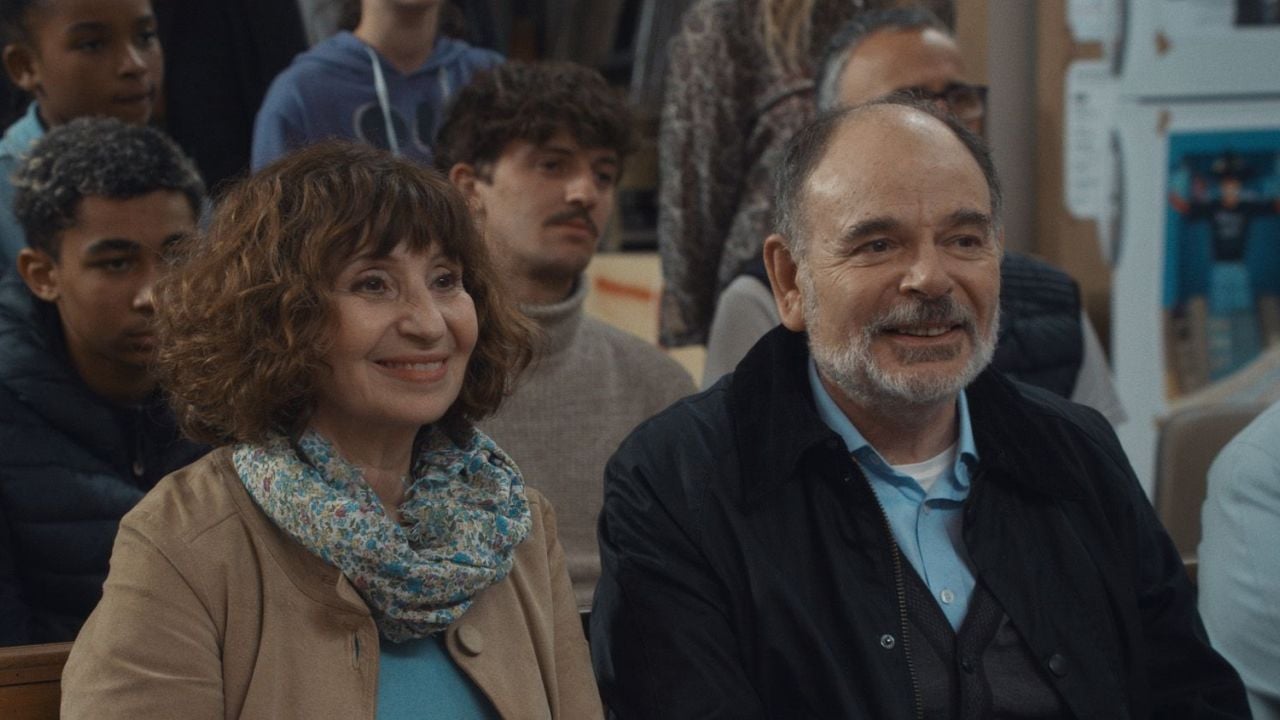
The French cinema stars Ariane Ascaride and Jean-Pierre Darroussin already have in many films by Robert Guédiguian.
The consequences of the disaster are still visible: Guédiguian often lets the camera wander over the empty property, which has become a reminder today. And Rosa, her family and her allies from the municipal initiative help that further old town houses at risk of collapse are cleared and the residents receive replacement quarters. This social aspect runs through the entire film. There is a role model for Rosa: Michèle Rubirola, the Mayor of Marseille. It was clear from the start that Ariane Ascaride (“The Madame Anne students' students”) took on this role. She also comes from Marseille and is married to Robert Guédiguian and one of his preferred actresses, e.g. B. in the class struggle drama “The Snow on the Kilimanjaro”.
Lola Naymark as Alice also played in some films by Guédiguian, for example in “Gloria Mundi – Return to Marseille”. Both actresses have in common that behind their delicate shape there is tremendous dynamics, with Lola Naymark looks a bit less tangible in the film, more like a slightly translucent, pale fairy, while Ariane ascarides like a goblin does through life, always ready to do good. The third in the group of the Guédiguian regular is Jean-Pierre Darroussin, most recently in the cinema with “The equation of her life”. He plays with a golden charm the reserved Schwerintellectual Henri, who unexpectedly meets love. The city of Marseille also plays a very clear leading role with its overwhelming mix of urban hustle and bustle and Mediterranean ease.
Conclusion: Robert Guédiguian combines elements of Agitprop and Romcom into an optimistic drama in front of a realistic background, in which he portrays two strong women and his hometown Marseille. Very honorable and entertaining.